Understanding area Geometry Worksheets for Ages 4-8
3 filtered results
-
From - To
Discover our "Understanding Area Geometry Worksheets" designed specifically for children aged 4-8. These engaging resources provide a fun and interactive way for young learners to grasp the fundamentals of area through hands-on activities. With colorful visuals and relatable examples, kids will explore concepts like measurement, shape recognition, and basic calculations, all while developing their critical thinking skills. Perfect for parents and teachers, these worksheets are ideal for reinforcing classroom lessons or supplementing home education. Unlock your child's mathematical potential today and help them build a strong foundation in geometry with our comprehensive and easy-to-use worksheets!
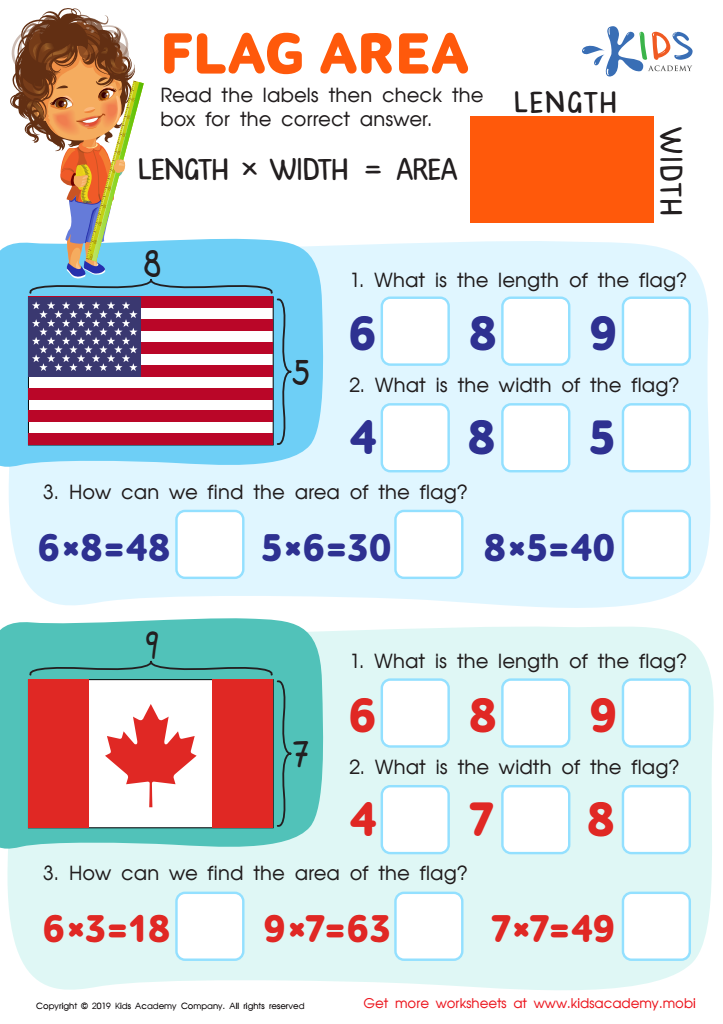
Flag Area Worksheet
 Assign to My Students











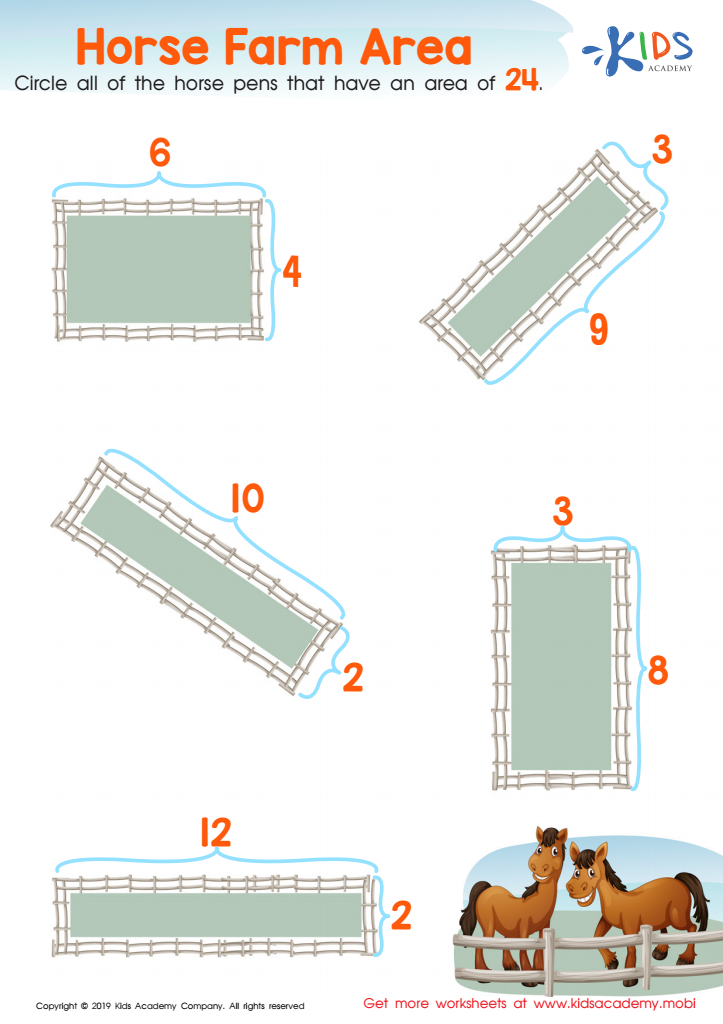
Horse Farm Area Worksheet
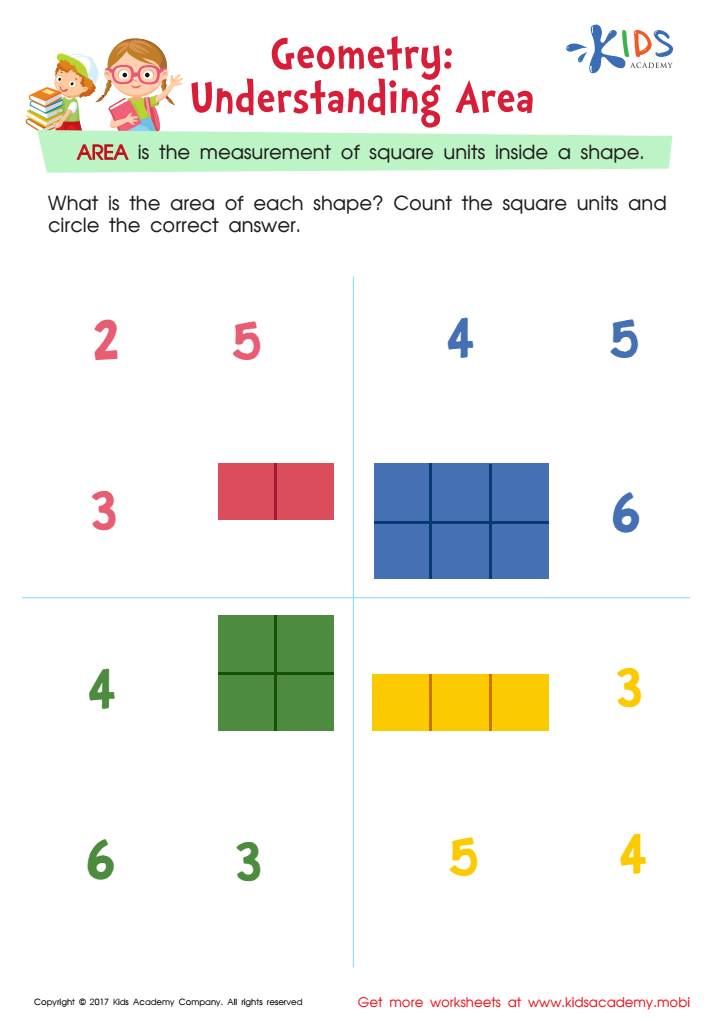
Understanding Area Worksheet








Understanding area geometry is crucial for children aged 4-8 as it lays the foundation for their mathematical comprehension. At this early developmental stage, children are naturally curious about their environment. Teaching them about area helps them recognize and compare spaces, fostering critical thinking skills and spatial awareness.
Engaging with concepts of area encourages children to explore measurements, shapes, and spatial relationships, making math relatable to their everyday experiences. For instance, when children learn to measure the area of a rectangle using playful activities, they grasp the idea of multiplication and addition in a tangible way. This understanding is vital, as it serves as a building block for more complex mathematical concepts in the future.
Moreover, learning about area supports problem-solving skills and enhances creativity. Children can participate in projects like creating art or planning spaces, which requires them to use geometry concepts actively. This hands-on learning approach encourages teamwork and communication as they collaborate with peers or family members.
Ultimately, fostering an appreciation for area geometry in young learners empowers them with essential skills that contribute to their confidence and success in mathematics and related disciplines as they grow. Parents and teachers play a pivotal role in nurturing this foundational knowledge, thus expanding children's horizons.








