Understanding Perimeter Geometry Worksheets for Ages 4-8
3 filtered results
-
From - To
Enhance your child's math skills with our "Understanding Perimeter Geometry Worksheets for Ages 4-8". Our engaging and educational worksheets introduce young learners to the concept of perimeter through fun activities and colorful illustrations. These age-appropriate exercises are designed to build a solid foundation in geometry by guiding children in measuring and calculating the perimeter of various shapes. Ideal for classroom practice or additional home study, these worksheets stimulate critical thinking and problem-solving, offering endless learning opportunities for curious minds. Inspire confidence in math and spark a love for learning with our expertly crafted geometry resources.
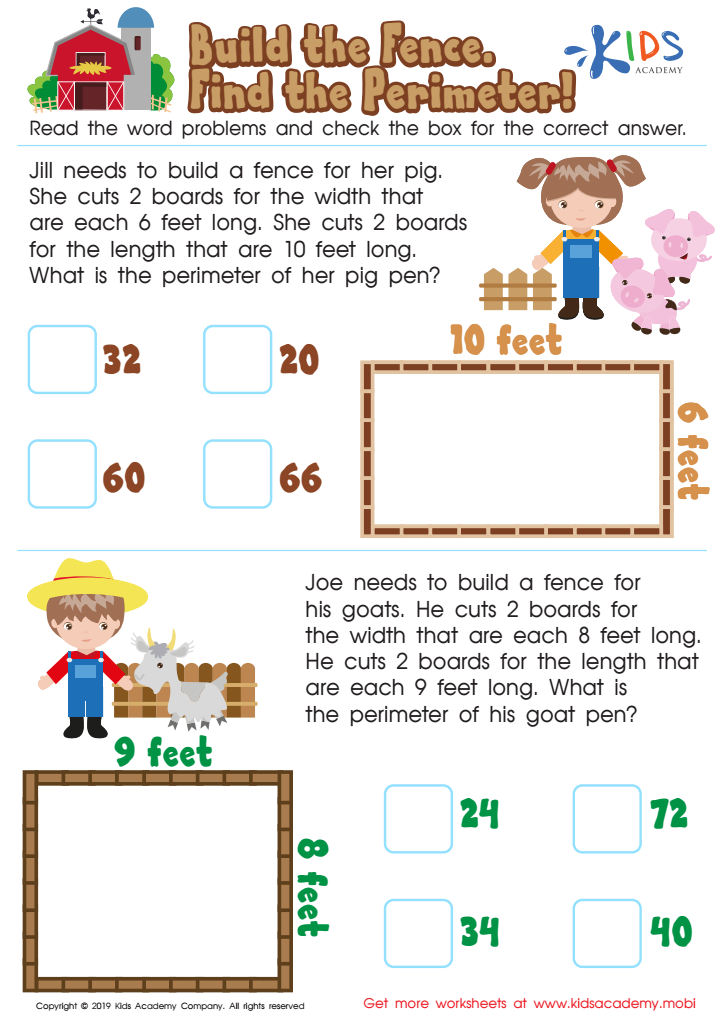
Build the Fence, Find the Perimeter Worksheet
 Assign to My Students











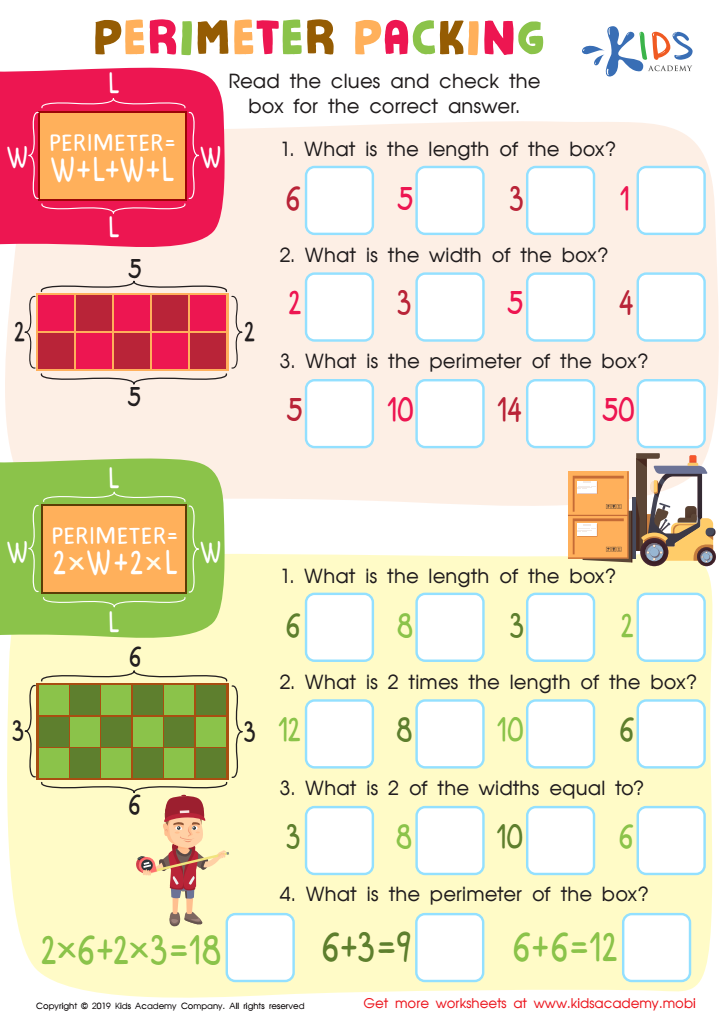
Perimeter Parking Worksheet
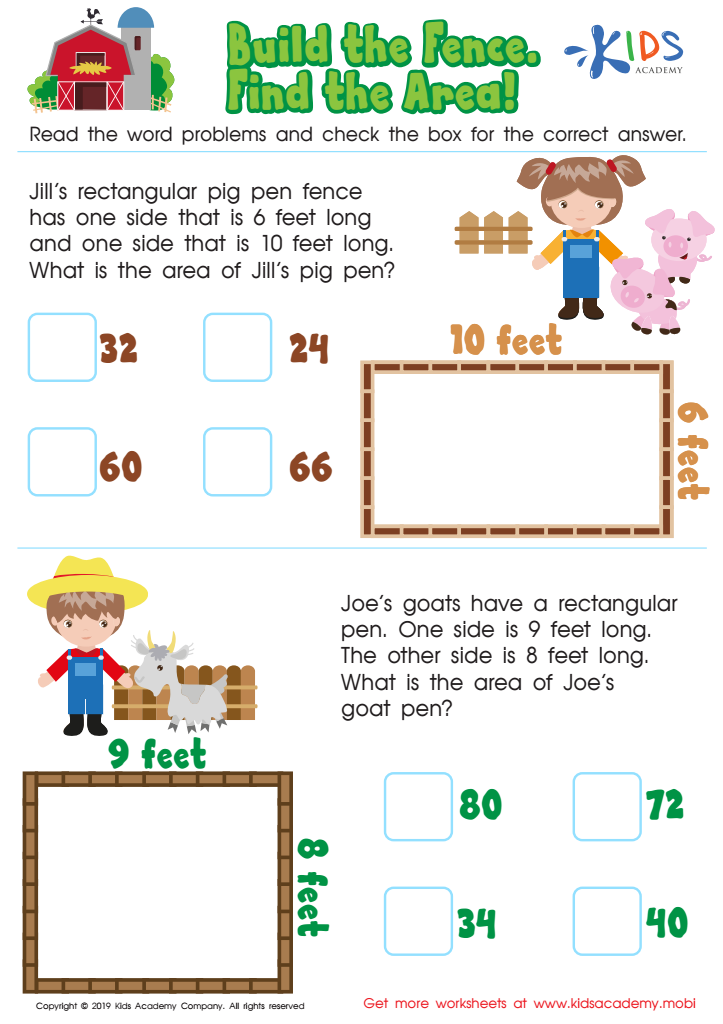
Build the Fence, Find the Area Worksheet








Understanding perimeter geometry is crucial for young children aged 4-8 because it helps establish foundational skills integral to their cognitive and academic development. First and foremost, learning about perimeter introduces basic geometric concepts and vocabulary, such as sides, edges, and shapes. This early exposure builds a foundation for more advanced mathematical learning in later grades.
Moreover, understanding perimeter helps develop critical thinking and problem-solving skills. For instance, by measuring and comparing the boundaries of different shapes, children practice adding and understanding units of measurement. Such activities encourage logical reasoning and spatial awareness as kids learn to visualize and manipulate shapes in their minds. Teachers and parents can use simple activities like measuring the perimeter of a garden or a room to make these concepts relatable and fun.
Additionally, integrating geometry into early education fosters a sense of curiosity and exploration. Children who engage with practical and hands-on activities are more likely to develop a love for learning and an enduring interest in mathematics and the sciences. This enjoyable interaction with learning materials sets the stage for a positive attitude toward school.
Lastly, achieving competence in basic geometry enhances a child’s confidence. When young learners understand basic concepts like perimeter, they gain a sense of accomplishment that encourages them to tackle more challenging subjects with enthusiasm. For these reasons, parents and teachers should prioritize teaching perimeter geometry in early education.








