Associative learning Numbers Worksheets for Ages 4-8
4 filtered results
-
From - To
Discover our engaging "Associative Learning Numbers Worksheets for Ages 4-8". Specifically crafted for young learners, these worksheets strengthen number recognition, counting, and basic arithmetic skills by utilizing associative learning techniques. Through vibrant visuals, fun activities, and simple instructions, children can effortlessly connect numbers with objects, sequences, and concepts. Ideal for in-class or at-home practice, our worksheets not only help kids build foundational math skills but also foster a love for learning. Embrace this interactive approach to ensure your child’s early math journey is both educational and enjoyable. Explore and download now to kickstart their numerical adventure!
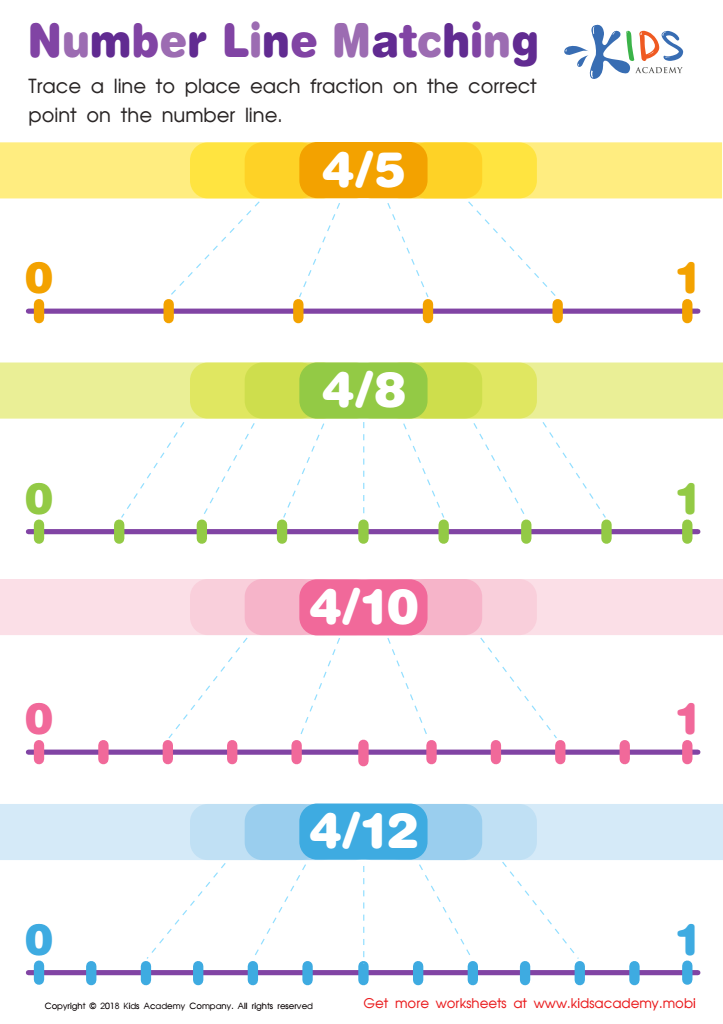
Number Line Matching Worksheet
 Assign to My Students
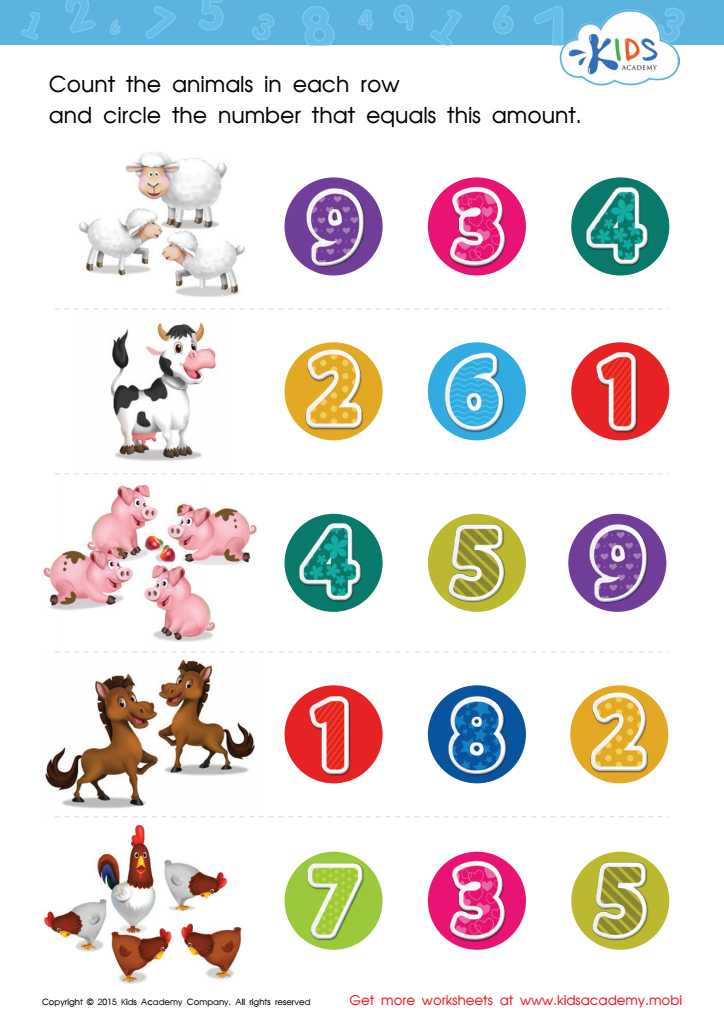
Count and Match 1 – 5 Math Worksheet
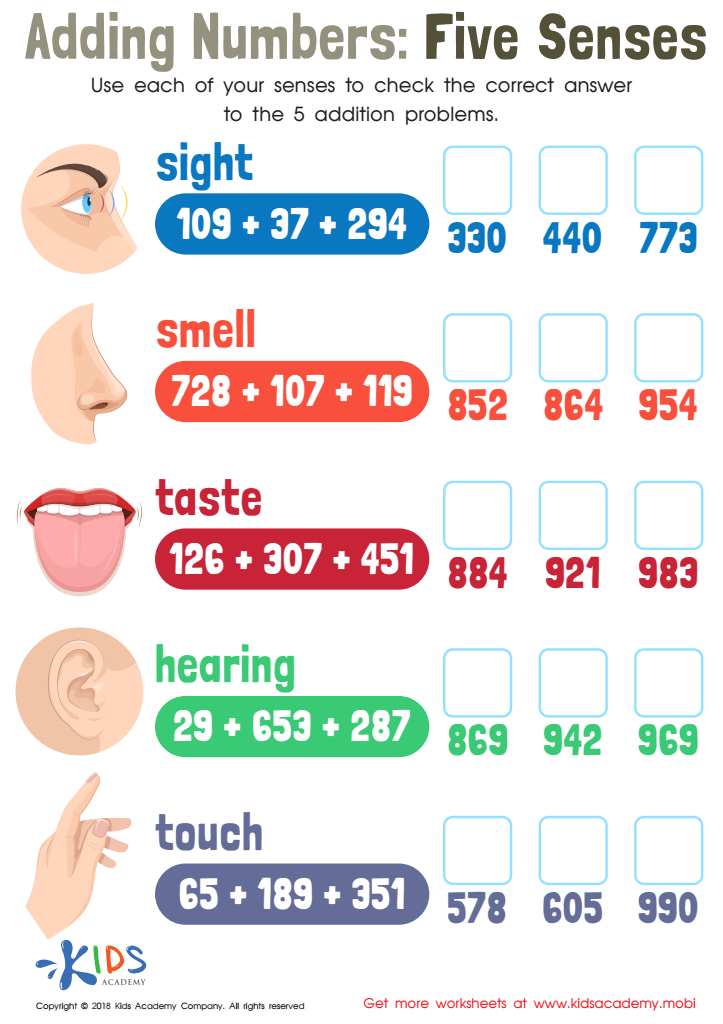
Adding Numbers: Five Senses Worksheet
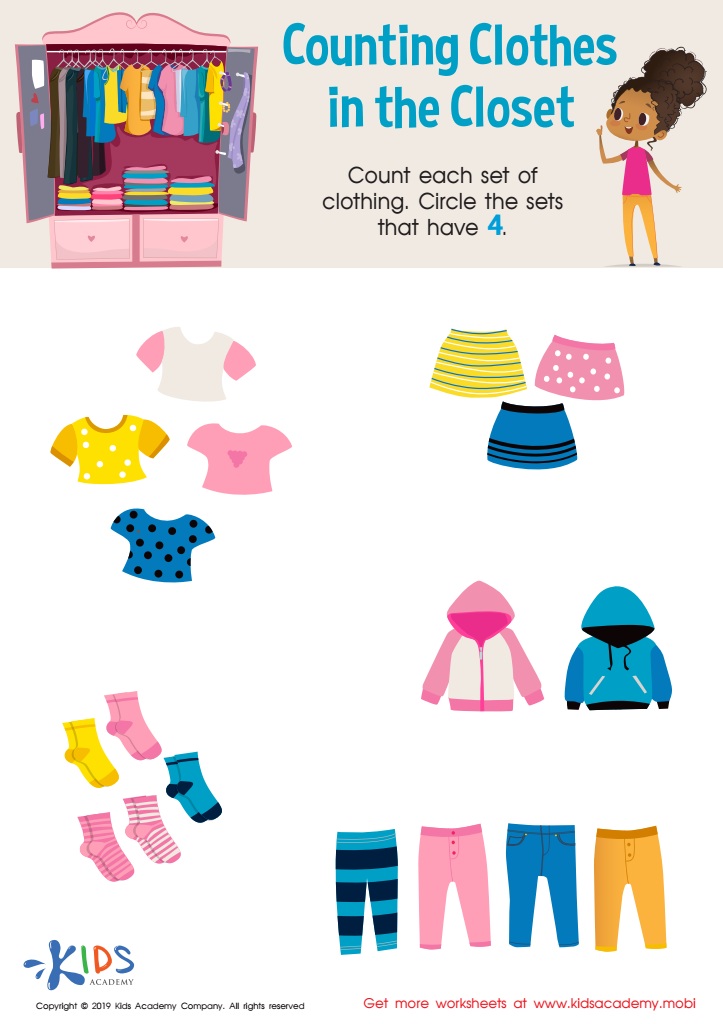
Counting Clothes Worksheet








Associative learning in numbers for children aged 4-8 is fundamental to their cognitive development and lays a strong foundation for later mathematical proficiency. When young learners engage in associative learning, they link new information to existing knowledge, facilitating better comprehension and retention. For young children, learning numbers through associations can involve connecting numerical symbols to physical objects, visual patterns, or everyday experiences.
This linkage enhances enjoyment and engagement, making abstract concepts more concrete and accessible. For instance, associating the number "5" with five apples or fingers helps children grasp the concept of quantity more effectively. As they encounter these numerical relationships repetitively in different contexts, their ability to recognize and manipulate numbers improves.
Parents and teachers should prioritize associative learning because it builds a robust framework for understanding more complex mathematical ideas such as addition, subtraction, and sequencing. Additionally, early numerical competence is an essential predictor of future academic performance across various subjects.
By fostering an integrative and playful environment that encourages associative learning, adults can help children develop critical thinking, problem-solving skills, and confidence in number-related tasks, setting a positive trajectory for their educational journey.








