Multiplication practice Numbers Worksheets for Ages 4-8
5 filtered results
-
From - To
Unlock the world of multiplication for your child with our engaging "Multiplication Practice Numbers Worksheets for Ages 4-8" from Kids Academy. Designed to spark a love for math, these worksheets offer a variety of fun and interactive exercises that help young learners grasp the fundamentals of multiplication. Ideal for children aged 4 to 8, each worksheet features colorful visuals, strategic problem-solving tasks, and age-appropriate challenges. Boost your child's confidence and skills in math through our carefully crafted exercises, perfect for homeschooling or supplementary practice. Explore our collection and watch your child flourish in math!
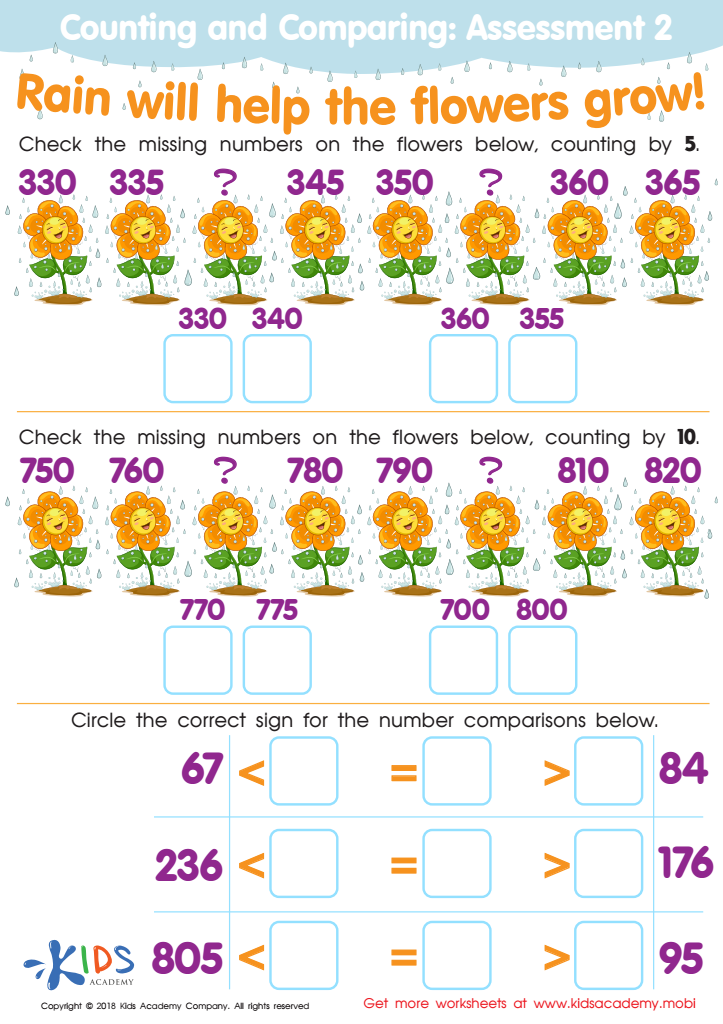
Counting and Comparing: Assessment 2 Worksheet
 Assign to My Students
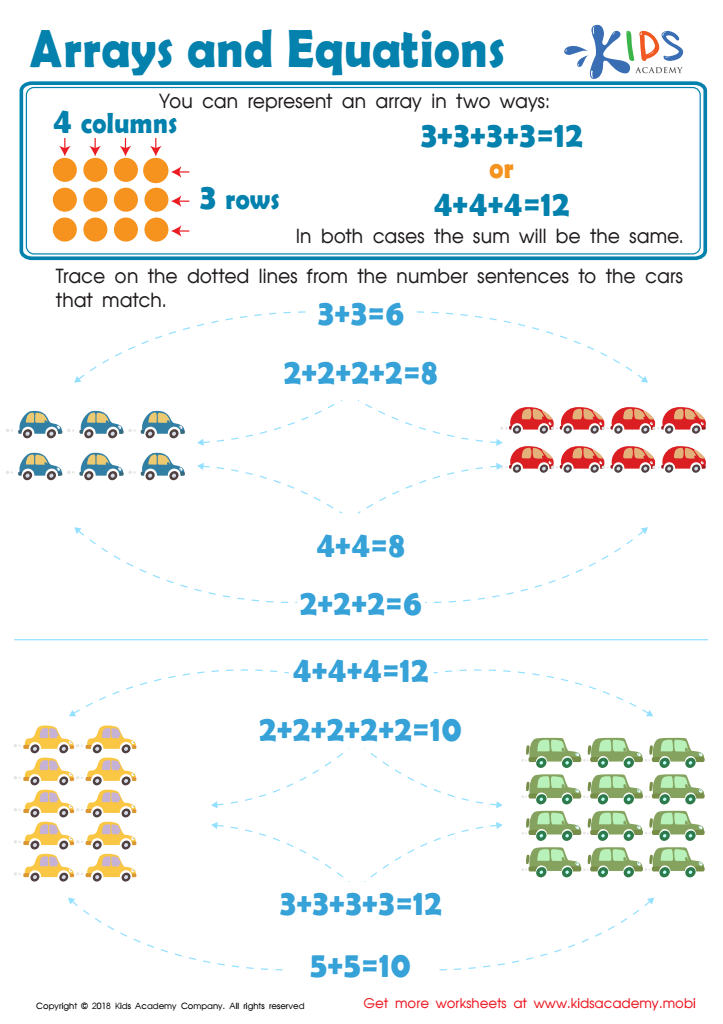
Arrays and Equations Worksheet
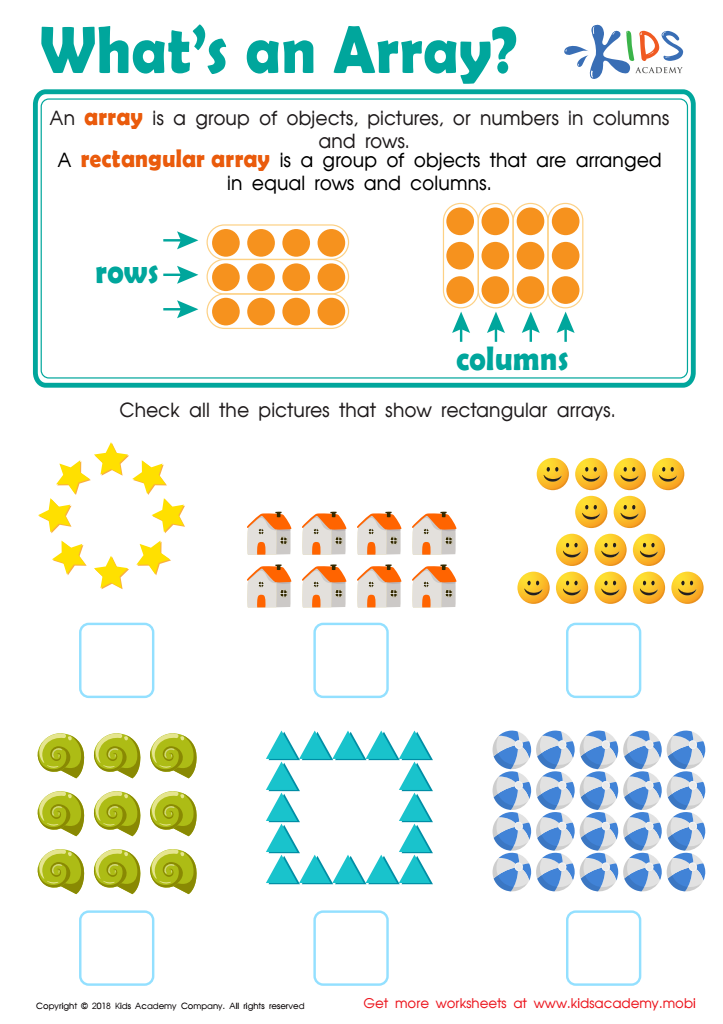
What's an Array? Worksheet
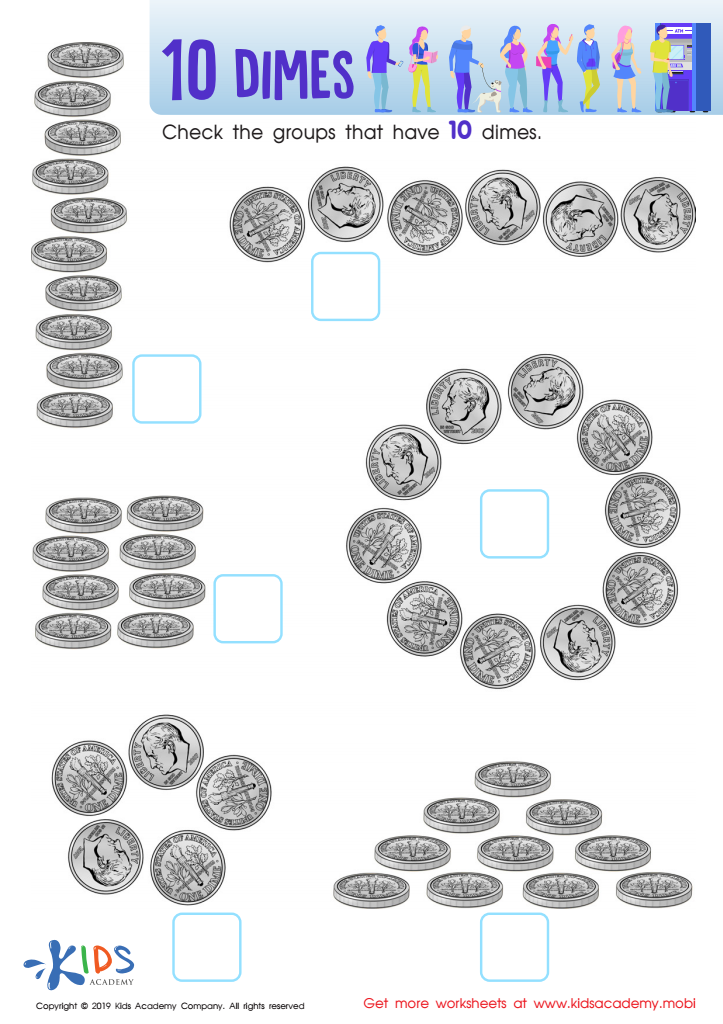
10 Dimes Worksheet
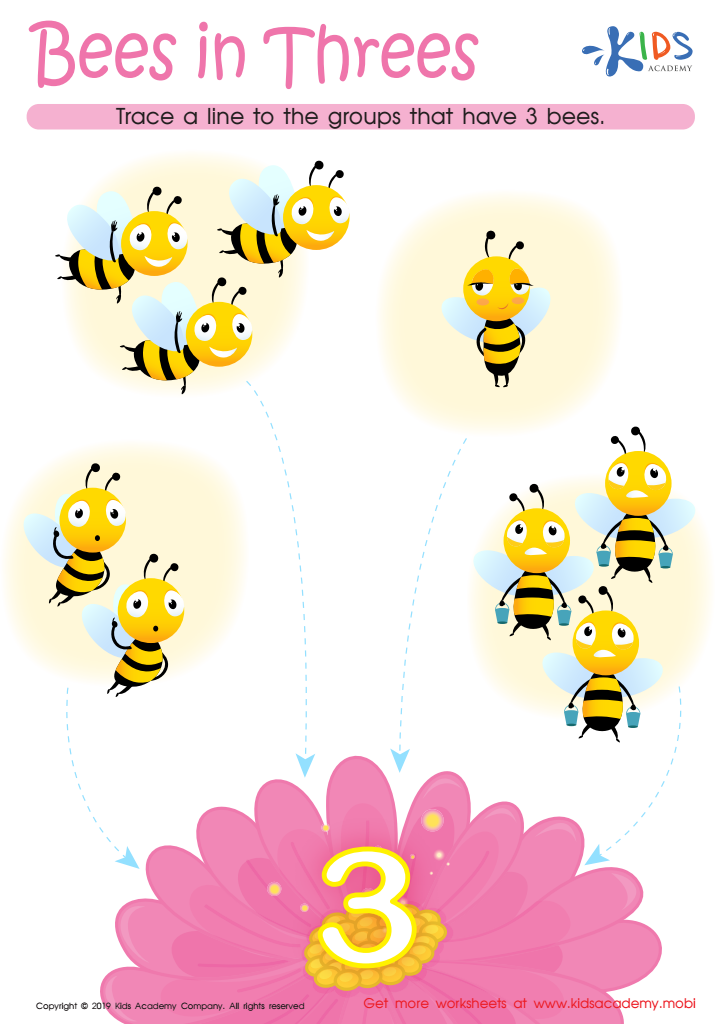
Bees in Threes Worksheet







Multiplication practice for children ages 4-8 is crucial because it lays the foundational blocks for essential math skills. At this age, children's brains are highly adaptable and receptive to new information, making it the perfect time to introduce fundamental concepts in a fun and engaging way. Understanding multiplication early not only helps kids grasp basic math principles but also enhances cognitive skills such as problem-solving, memory, and analytical thinking.
Parents and teachers should care about multiplication practice because it encourages numerical fluency, making more complex math problems easier to tackle later on. Mastery of multiplication tables solidifies a child's ability to perform quick mental math, which is invaluable for both academic and real-life situations. Additionally, the confidence gained from understanding and correctly applying multiplication can foster a positive attitude towards learning and could open doors to STEM subjects, nurturing future careers in science, technology, engineering, and mathematics.
Moreover, regular practice can create a routine, build discipline, and instill a growth mindset, showing children that effort leads to improvement. Interactive and playful methods, such as games and hands-on activities, can make learning multiplication enjoyable, ensuring that children develop a lifelong interest in academic pursuits. Therefore, investing time in multiplication practice early on is instrumental for a child's future educational success.








