Problem-solving practice Numbers Worksheets for Ages 4-8
3 filtered results
-
From - To
Unlock your child's potential with our Problem-solving Practice Numbers Worksheets for Ages 4-8! Designed to develop critical thinking and numerical skills, these engaging worksheets provide fun, educational activities that captivate young learners. Each worksheet focuses on enhancing problem-solving abilities through interactive exercises involving basic math, puzzles, and logic challenges. Perfect for preschoolers and early grade students, our worksheets offer a joyful learning experience that boosts confidence in mathematics. With vibrant illustrations and clear instructions, our resources ensure children grasp foundational concepts with ease, paving the way for academic success. Explore now to make learning numbers a delightful adventure!
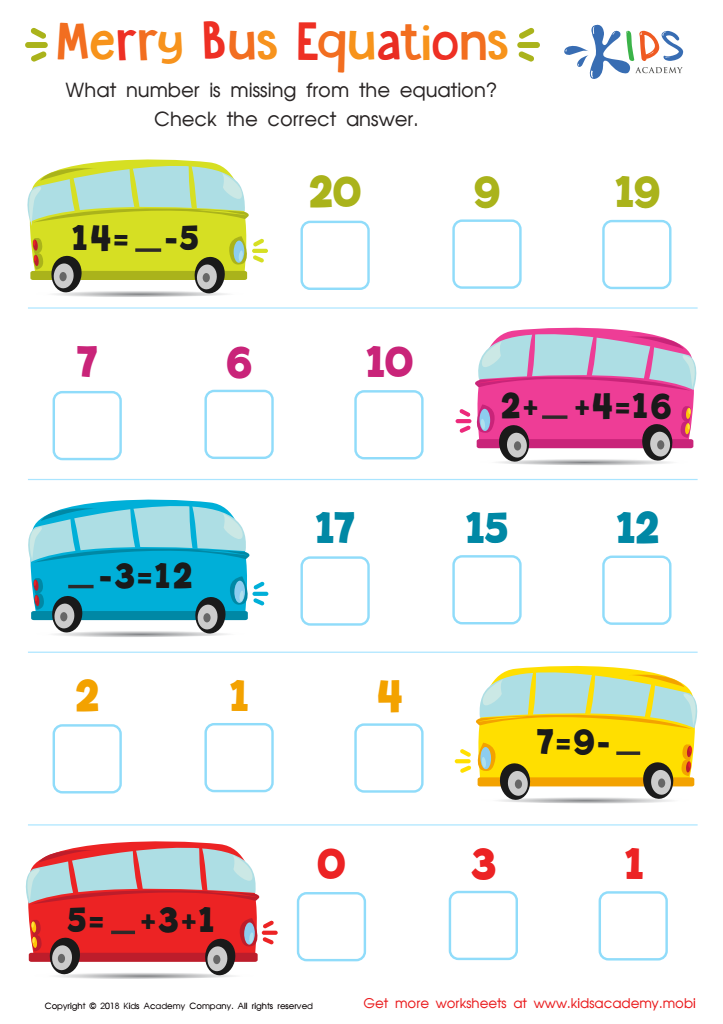
Merry Bus Equations Worksheet
 Assign to My Students
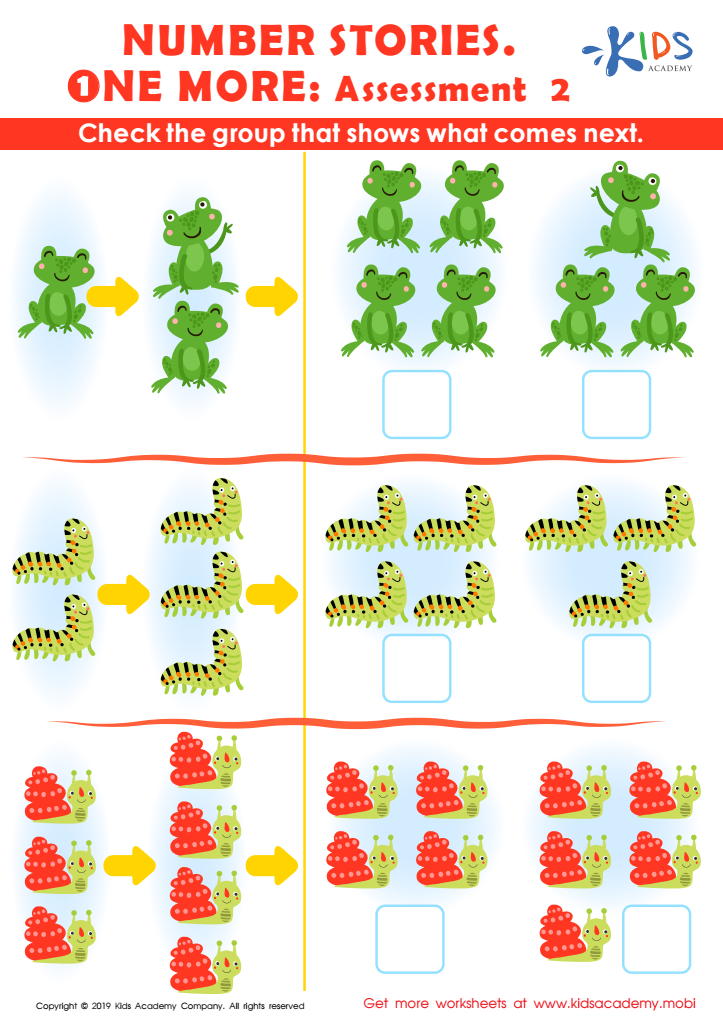
Number Stories One More – Assessment 2 Worksheet
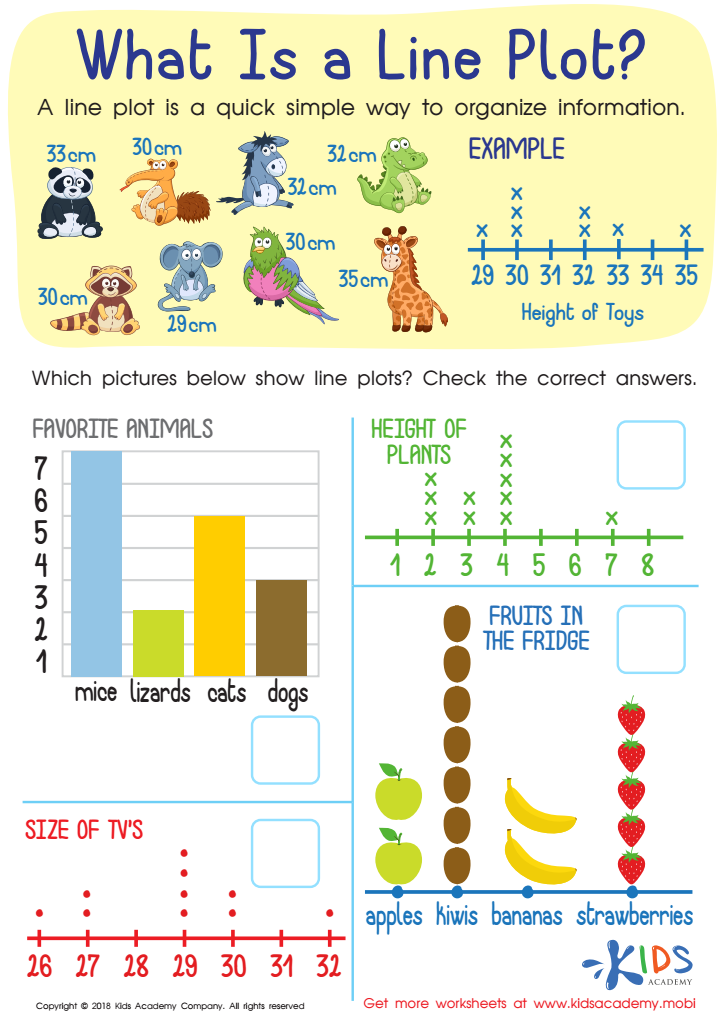
What Is a Line Plot? Worksheet








Problem-solving practice with numbers is crucial for children aged 4-8 as it lays the foundation for critical thinking and numeracy skills that are essential in everyday life. At this developmental stage, young minds are highly receptive and capable of absorbing fundamental concepts that will dictate their success in future mathematical endeavors.
Engaging in number-related problem-solving activities helps children understand and apply basic mathematical operations such as addition, subtraction, multiplication, and division in a practical context. This early exposure demystifies math and can foster a natural affinity and confidence towards the subject, reducing math anxiety later in life.
Moreover, solving problems involves logical reasoning, abstract thinking, and pattern recognition, which are valuable cognitive skills across all areas of learning. When children work on these problems, they learn to approach challenges methodically, enhancing their perseverance and ability to think critically.
For parents and teachers, facilitating a child’s journey in math through problem-solving means providing opportunities for exploration and discussion, thus strengthening the child-parent or child-teacher bond. Encouraging and celebrating efforts and improvements nurtures a positive learning environment. By prioritizing these skills early on, children build a strong mathematical foundation that supports academic success and practical life applications.








