Recognizing number patterns Numbers Worksheets for Ages 4-8
4 filtered results
-
From - To
Enhance your child's math skills with our engaging "Recognizing Number Patterns" worksheets designed for ages 4-8. These worksheets from Kids Academy make learning fun and interactive, helping young learners identify sequences and understand the logic behind number patterns. Perfect for preschool to second grade, our printable activities support cognitive development and foundational math proficiency. With vibrant graphics and easy-to-follow instructions, children can practice recognizing, completing, and creating number patterns with confidence. Ideal for both classroom and home use, these worksheets pave the way for future math success. Unlock your child's potential today with Kids Academy!
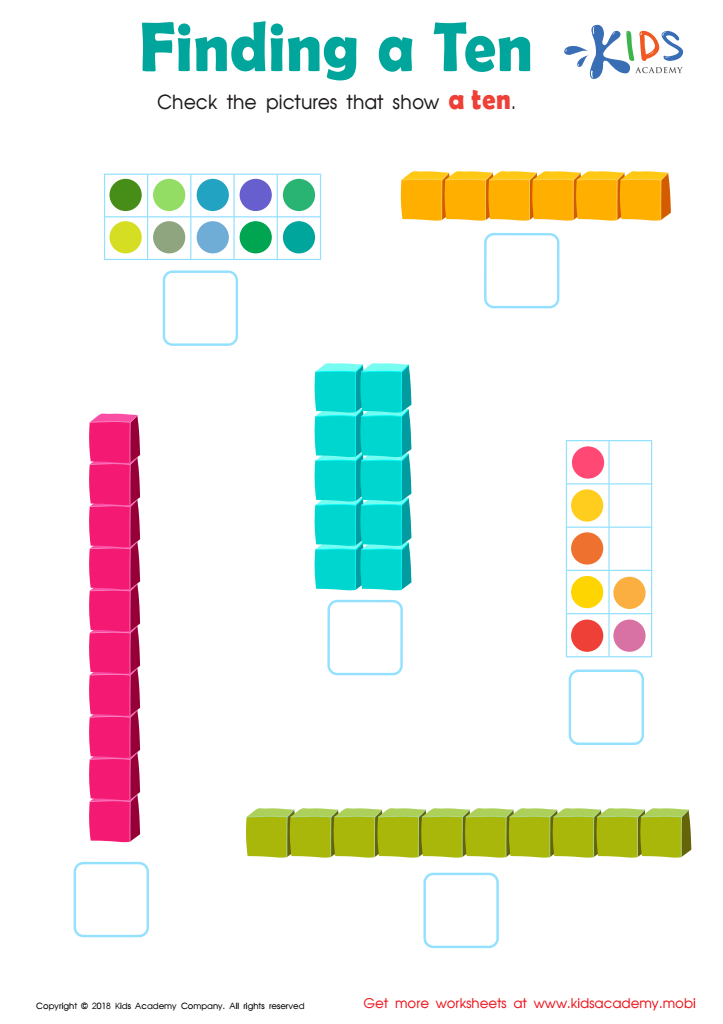
Finding a Ten Worksheet
 Assign to My Students
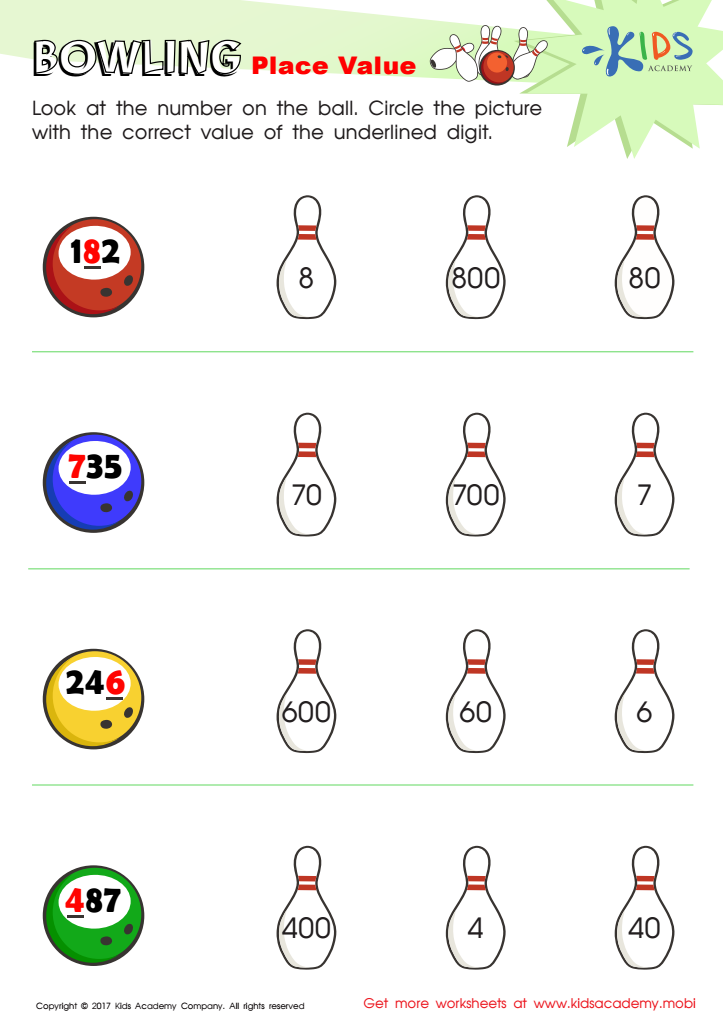
Place Value Worksheet
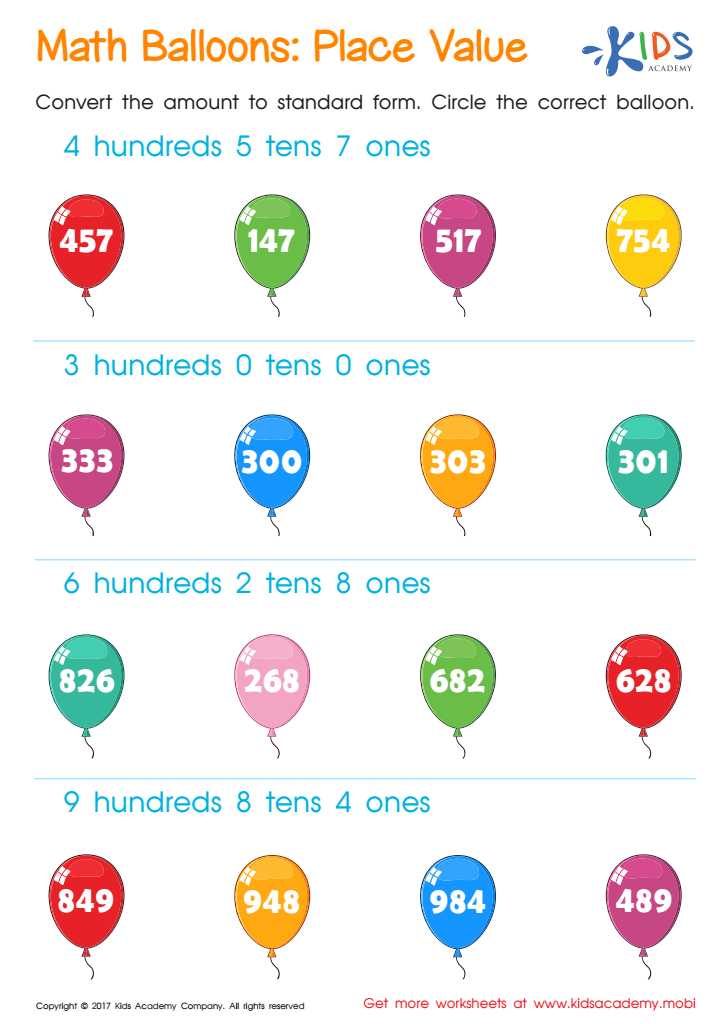
Place Value Printable Worksheet
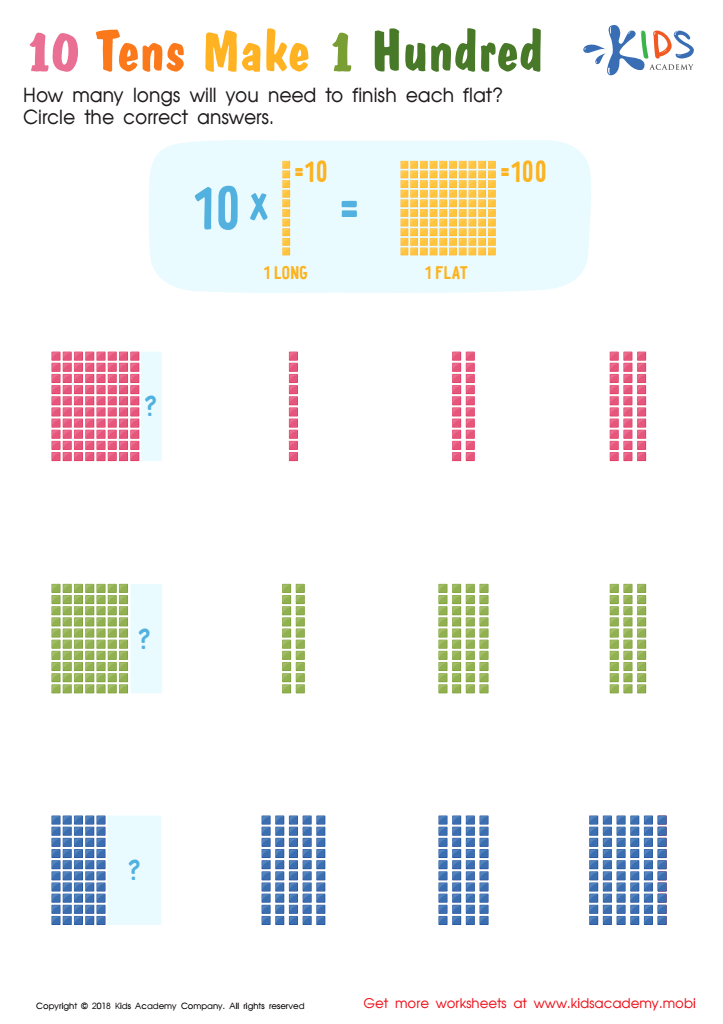
10 Tens Make 1 Hundred Worksheet








Recognizing number patterns from an early age is crucial for young children as it lays the foundation for their future mathematical understanding and cognitive development. For ages 4-8, identifying and understanding patterns in numbers strengthens not only their arithmetic skills but also critical thinking and problem-solving abilities. Recognizing patterns helps children grasp more complex mathematical concepts, such as skip counting, addition, subtraction, multiplication, and even division, which are essential in their academic journey.
Furthermore, pattern recognition stimulates a child's brain to think logically and sequentially. It encourages them to predict what comes next, make connections, and understand relationships between different numbers and structures. This skill is valuable not only in math but also in other subjects and real-life situations. It aids in developing reasoning skills that are transferable to reading comprehension and scientific reasoning.
For parents and teachers, nurturing these skills early on can ensure children are well-prepared to tackle more challenging mathematical ideas in later grades. It instills confidence in their abilities and fosters a positive attitude toward learning mathematics. Engaging young children in activities that emphasize pattern recognition can make learning fun, interactive, and deeply embedded in their everyday experiences, ensuring a strong mathematical foundation for future success.








