Recognizing numbers Numbers Worksheets for Ages 4-8
3 filtered results
-
From - To
Introducing our "Recognizing Numbers" worksheets for ages 4-8, designed to engage and educate young learners in number identification and counting. These expertly crafted activities help children easily grasp numerical concepts in a fun and interactive way, promoting confidence in math. Through vibrant visuals and engaging exercises, kids will explore numbers, enhance their problem-solving skills, and develop a strong mathematical foundation. Perfect for classroom or at-home learning, our worksheets cater to different learning styles while keeping kids entertained and enthusiastic about math. Unlock your child's potential with these essential educational tools, right here!
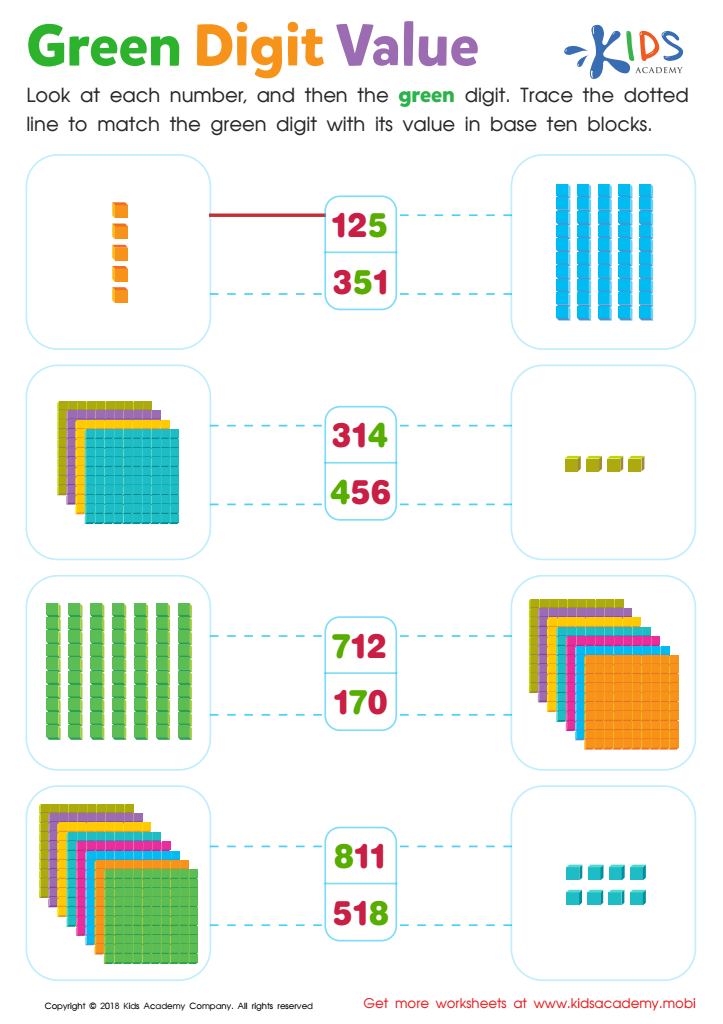
Green Digit Value Worksheet
 Assign to My Students
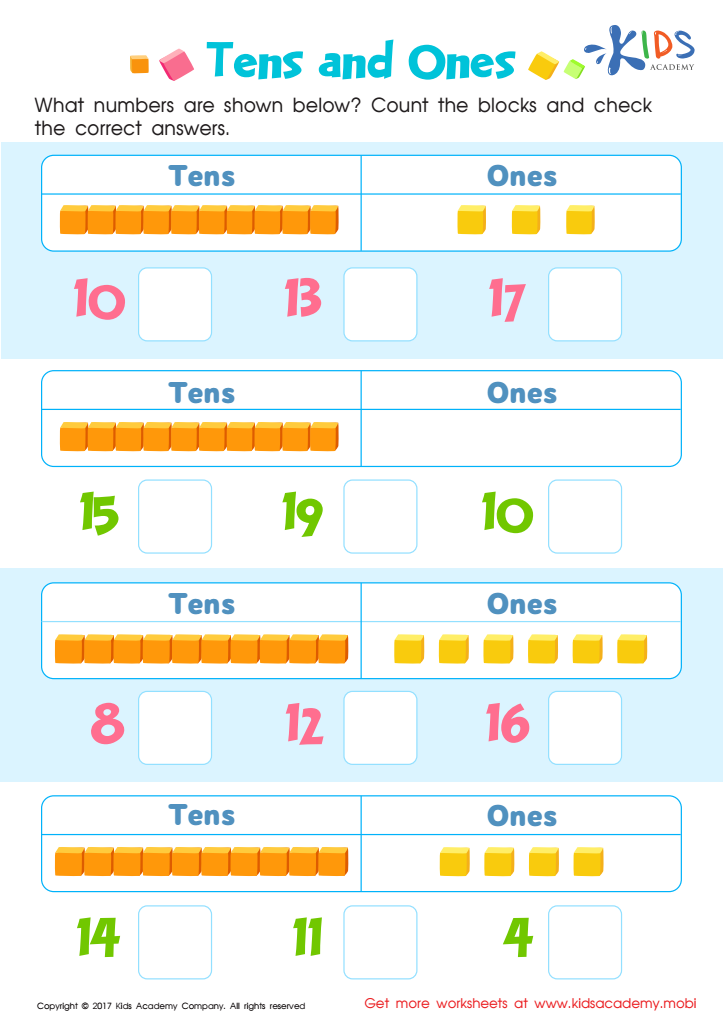
Tens and Ones Worksheet
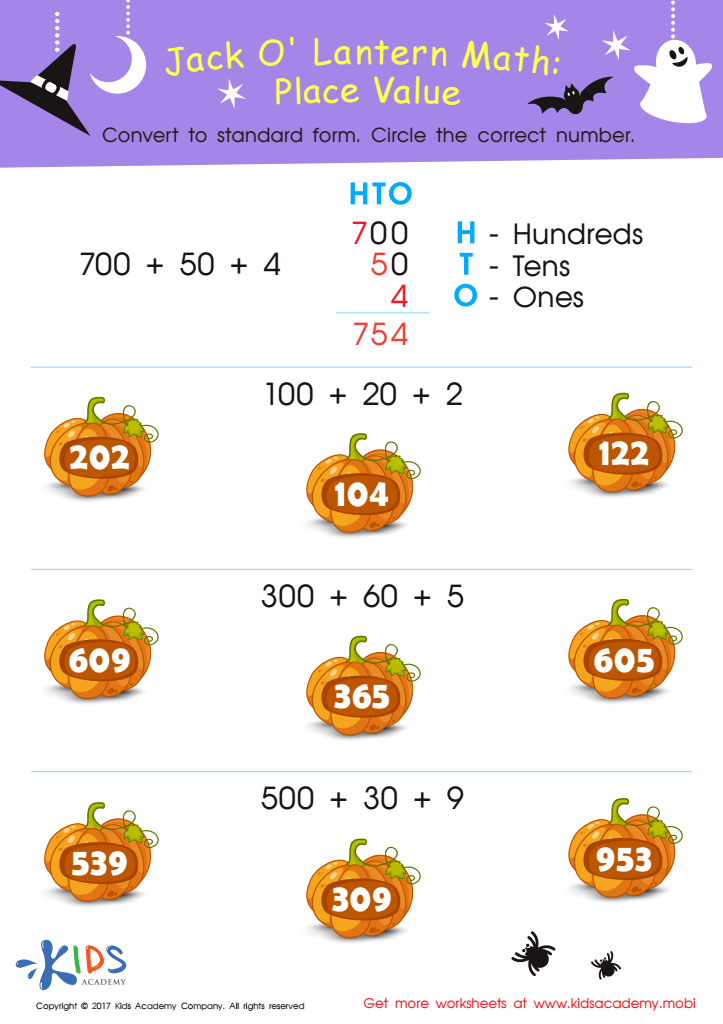
Free Place Value Worksheet





%20(1).jpg)


Recognizing numbers is a crucial milestone for children aged 4-8 as it lays the foundation for their mathematical development and overall cognitive growth. For parents and teachers, fostering this skill in young learners is essential for multiple reasons. Firstly, number recognition is fundamental for basic arithmetic operations like addition, subtraction, multiplication, and division, which are vital for academic success and everyday life.
Understanding numbers also enhances a child's ability to understand concepts of quantity, order, and value. This knowledge enables them to make comparisons, measure objects, and understand time and money. Moreover, recognizing numbers boosts children's problem-solving skills and logical thinking, which are invaluable for their overall cognitive development.
Early number recognition also contributes to improved fine motor skills, as children often practice writing numbers, thereby enhancing their hand-eye coordination. Furthermore, engaging in number-related activities, such as counting games or puzzles, promotes social and emotional development through cooperative play and boosts their confidence as they achieve new milestones.
Ultimately, preparing young children with the ability to recognize numbers ensures they have the tools needed for future academic success and encourages a lifelong interest in learning. Parents and teachers play a crucial role in ensuring that this foundational skill is developed through engaging, consistent, and supportive educational experiences.








