Understanding base ten Numbers Worksheets for Ages 4-8
3 filtered results
-
From - To
Discover our engaging "Understanding Base Ten Numbers Worksheets" designed for children aged 4-8! These interactive worksheets help young learners grasp the concept of base ten, a fundamental math principle that forms the backbone of numerical literacy. Through fun activities and colorful visuals, kids will explore place value, grouping, and number representation, making math enjoyable and relatable. Suitable for home and classroom use, our worksheets enhance critical thinking skills while ensuring a solid foundation for future mathematical concepts. Try our versatile resources to make learning about numbers a fun and exciting journey for your little one!
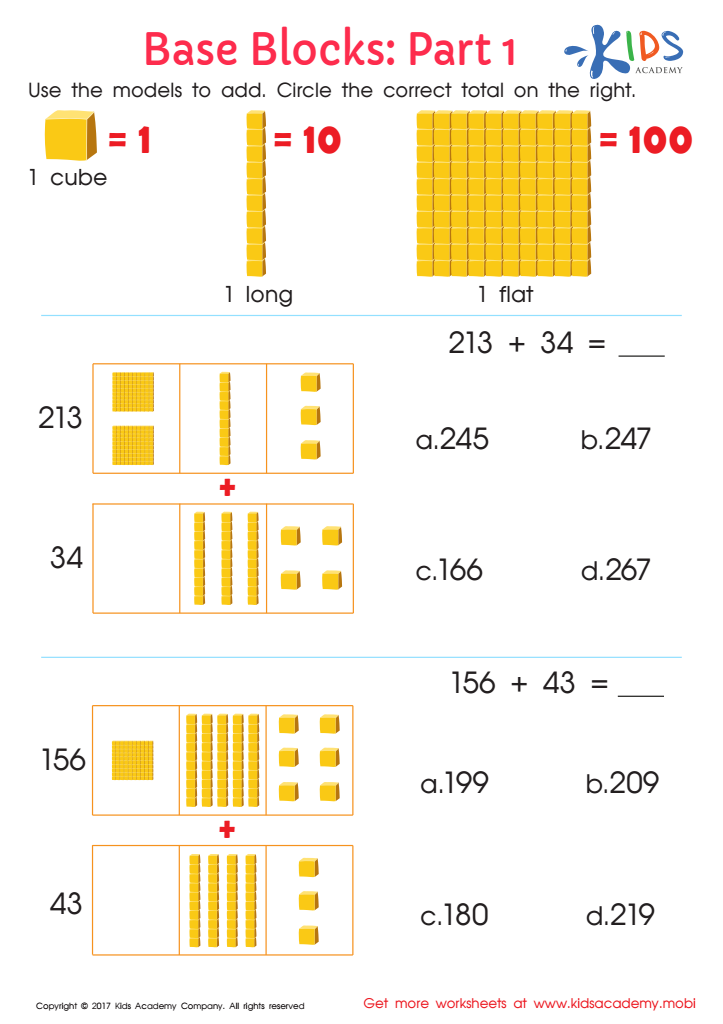
Base Ten Blocks Worksheet: Part 1
 Assign to My Students
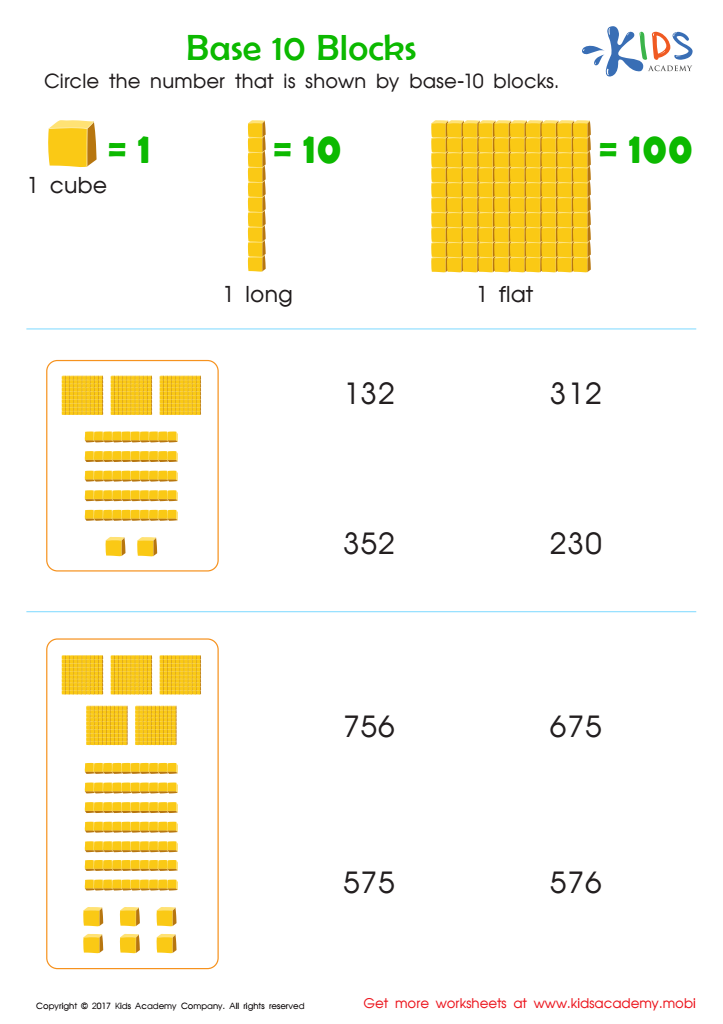
Base Ten Blocks Worksheet
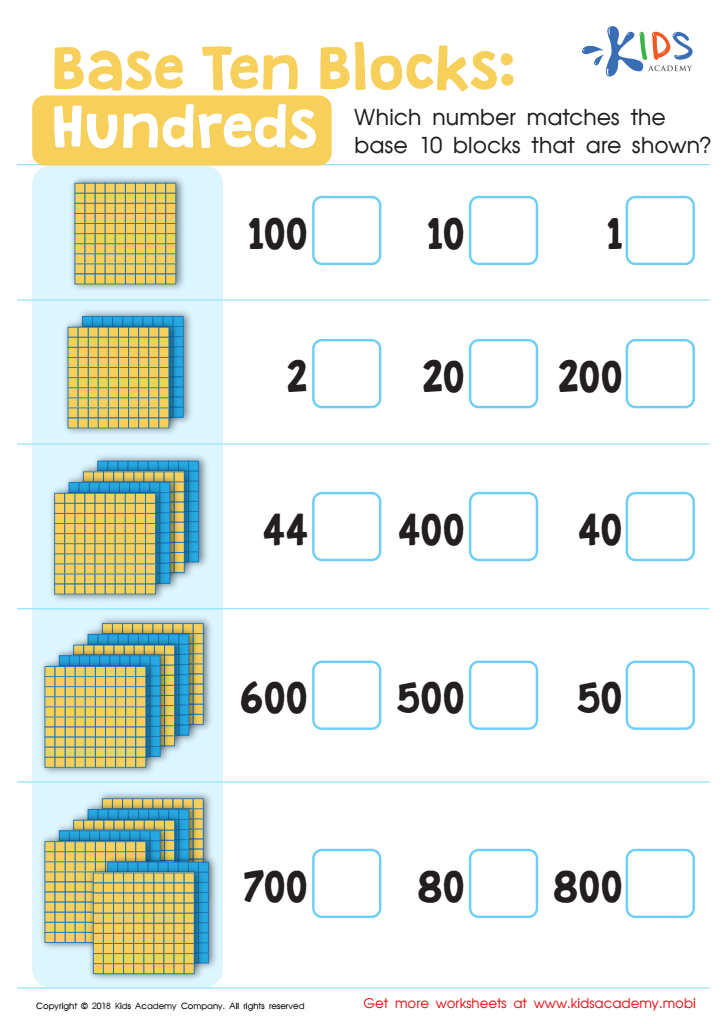
Base Ten Blocks: Hundreds Worksheet








Understanding base ten numbers is crucial for children aged 4-8, as it forms the foundation for their mathematical skills and literacy. This number system, based on groups of ten, helps children grasp essential concepts such as place value, addition, and subtraction. When children learn about base ten, they understand that each digit's position represents a different value, fostering a clearer understanding of how numbers work. This understanding is pivotal for developing mental math skills.
In early education, children begin to recognize numbers through counting and simple arithmetic. Mastering base ten allows them to intuitively compare quantities, develop problem-solving strategies, and build confidence in handling numbers. Furthermore, it enhances their ability to manipulate larger numbers as they progress to higher math concepts, ultimately facilitating their transition to more complex operations.
Parents and teachers play an essential role in reinforcing these concepts through everyday activities, such as counting objects or measuring ingredients while cooking. By emphasizing the importance of base ten, they foster a strong mathematical foundation that students will carry throughout their educational journeys. Therefore, prioritizing understanding of base ten numbers is beneficial not just for current learning, but for lifelong quantitative reasoning and critical thinking skills.








