Understanding comparisons Numbers Worksheets for Ages 4-8
3 filtered results
-
From - To
Our "Understanding Comparisons Numbers Worksheets for Ages 4-8" are designed to make learning math fun and engaging for young learners. These worksheets help children grasp the concept of comparing numbers using playful and age-appropriate exercises. Kids will practice identifying greater than, less than, or equal to numbers through various activities like number sorting, matching, and number line exercises. These resources are perfect for developing critical thinking, boosting confidence in math skills, and providing a solid foundation for future mathematical learning. Ideal for parents and educators looking to support children's early math development in an enjoyable way.
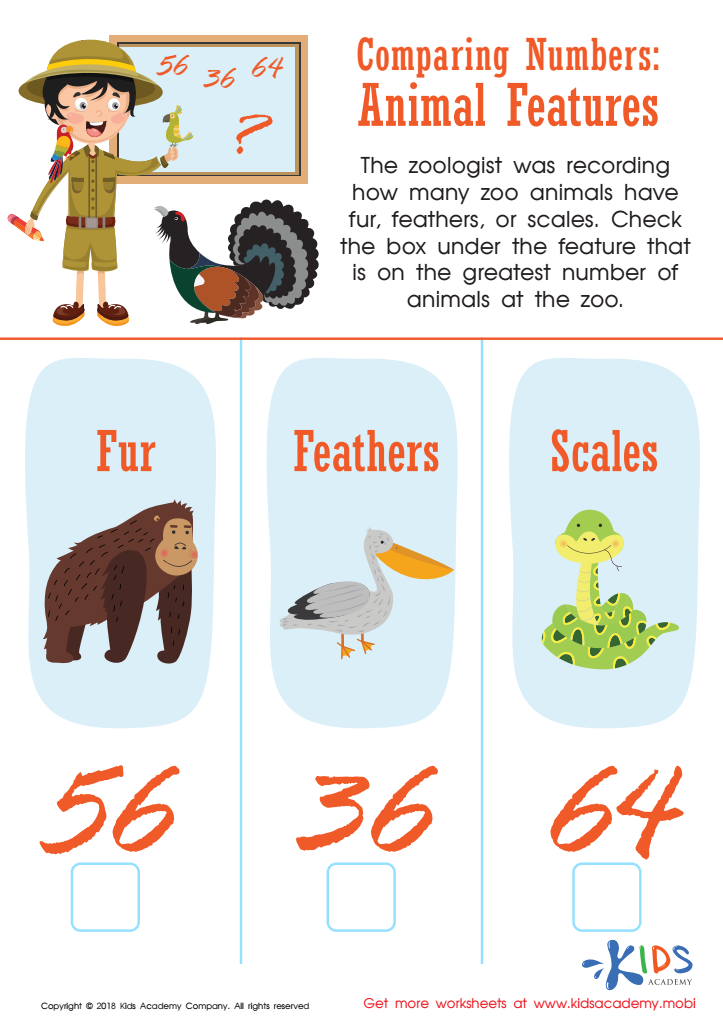
Animal Features Worksheet
 Assign to My Students
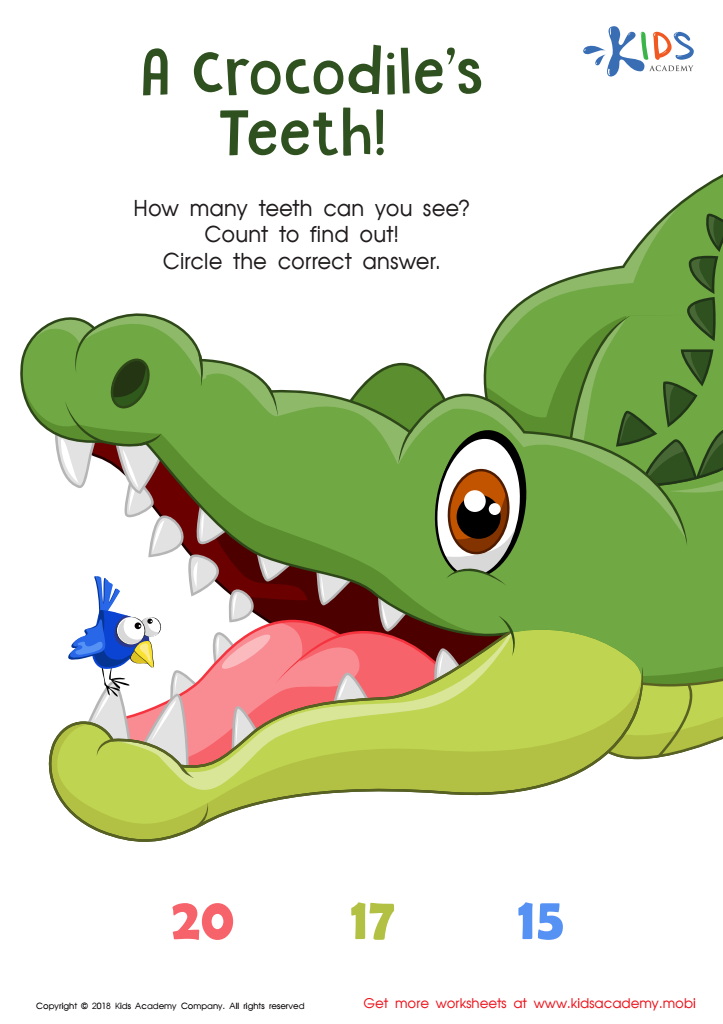
A Crocodile's Teeth Worksheet
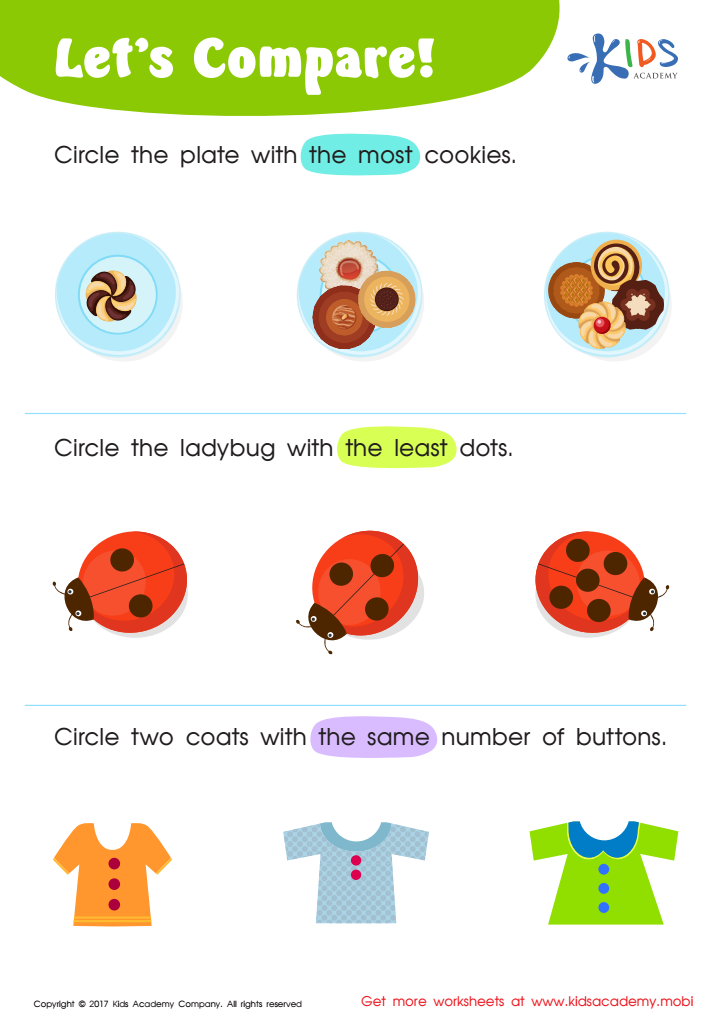
Matching: Classifying Toys by Size Worksheet






.jpg)

Understanding comparisons and numbers for children aged 4-8 is fundamental for several reasons. During these early years, children's brains are highly receptive and can form significant cognitive foundations that impact future learning. Grasping simple number comparisons, like understanding which of two quantities is larger or smaller, sets the stage for more advanced mathematical concepts, such as addition, subtraction, and measurement.
Additionally, these skills are not just limited to math class; they play a crucial role in daily life. For example, when children can compare numbers, they're better at managing time, money, and even following multi-step directions. This helps them develop critical thinking and problem-solving skills.
From a developmental perspective, learning number comparisons can enhance a child's confidence and independence. When children successfully complete counting or comparative tasks, they experience a sense of accomplishment, which encourages a positive attitude towards learning in general.
Moreover, having strong number comparison skills supports academic readiness. These skills are often part of school readiness assessments and can give children a significant advantage as they enter more formal educational environments.
Therefore, parents and teachers should prioritize teaching these concepts, incorporating playful, hands-on activities that make learning fun and engaging. Emphasizing the importance of understanding comparisons and numbers lays a strong foundation for a child's educational journey and everyday life skills.








