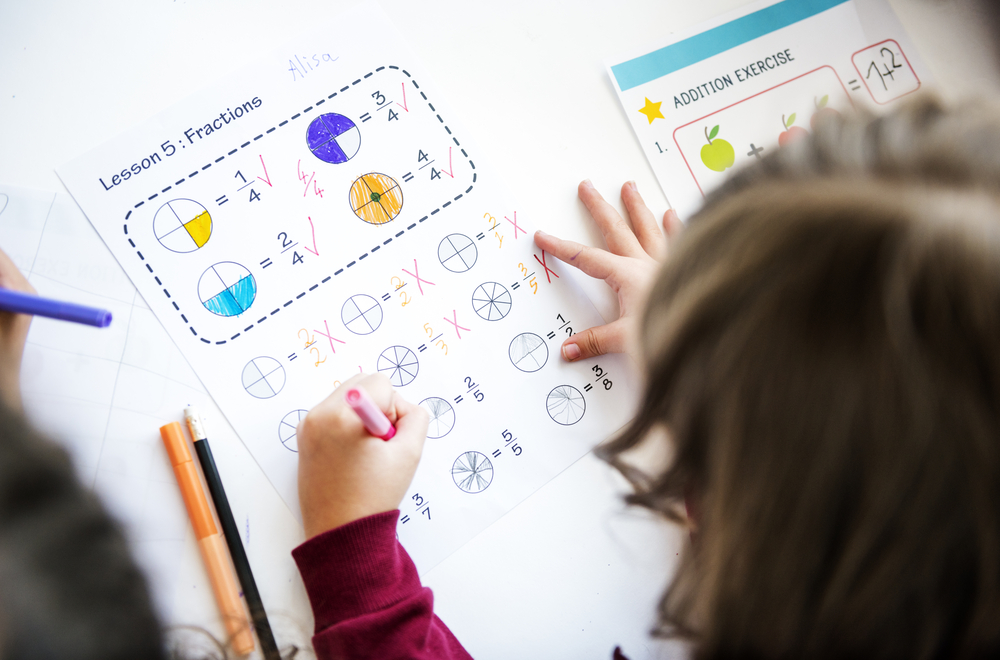
Unlock your child’s potential with our engaging "Analyzing Data Math Worksheets for Ages 4-8"! Our expertly designed worksheets make learning fun, introducing young learners to essential skills like counting, graphing, and interpreting data. Perfect for home or classroom use, these activities foster critical thinking and problem-solving abilities in a colorful, easy-to-understand format. Whether your child is just beginning or looking to sharpen their skills, our worksheets offer endless opportunities for growth and achievement. Build a solid foundation in math while enjoying the process. Visit Kids Academy to explore our collection and boost your child's confidence today!

Check out this FREE Trial Lesson on Math for age 4-8!

Bar Graphs 1 Step Word Problems

Favorites
With answer key
Interactive
  • 4-8
  • Analyzing data
  • Math
Recycling Picture Graph Worksheet

Recycling Picture Graph Worksheet

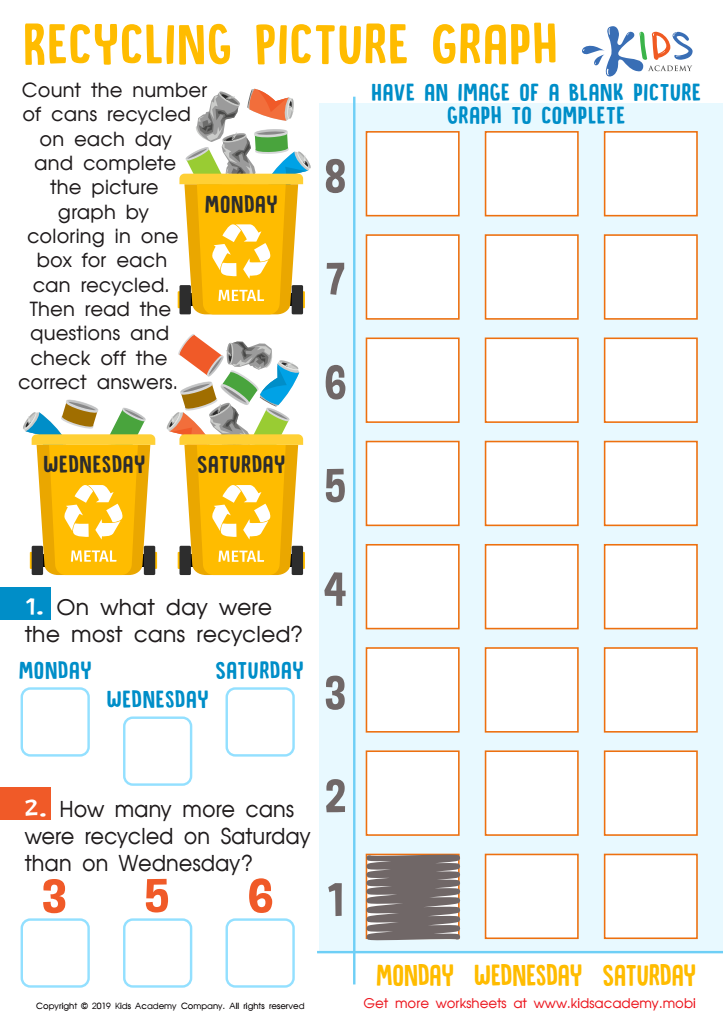
This worksheet can help kindergartners learn numbers and why recycling is important. After using items and materials, they can turn them into new materials instead of throwing them away. Guide your students to follow the instructions and answer the questions at the end. Help them understand how recycling benefits our environment.
Recycling Picture Graph Worksheet
Worksheet
Planets Bar Graph Worksheet

Planets Bar Graph Worksheet

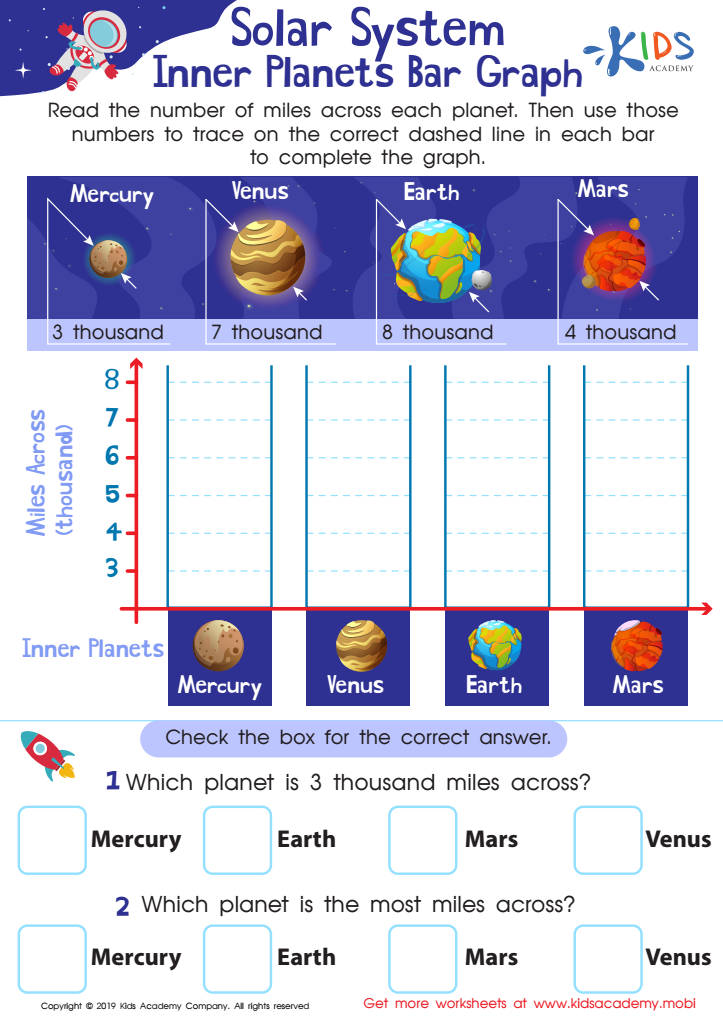
With this fun, educational worksheet, kids can learn about bar graphs and the solar system simultaneously. Introduce them to the concept by reading out the number of miles for each planet, then help them trace the dashed lines in each bar to complete the graph.
Planets Bar Graph Worksheet
Worksheet
Counting: Assessment 2 Worksheet

Counting: Assessment 2 Worksheet

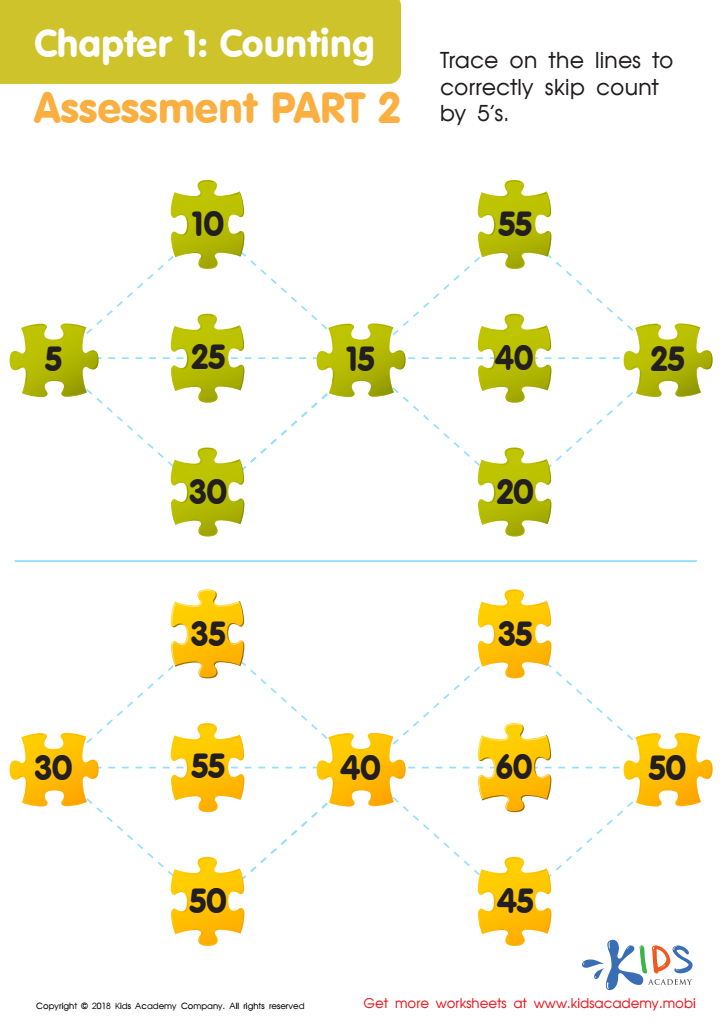
By now, your child should be able to count up to the hundreds. If they're still learning the tens, that's okay - as long as they're going at their own pace. This worksheet will be easy if they can count to ten. Ask them to trace the lines and skip count by 5's.
Counting: Assessment 2 Worksheet
Worksheet
Tricky Graphs Worksheet

Tricky Graphs Worksheet

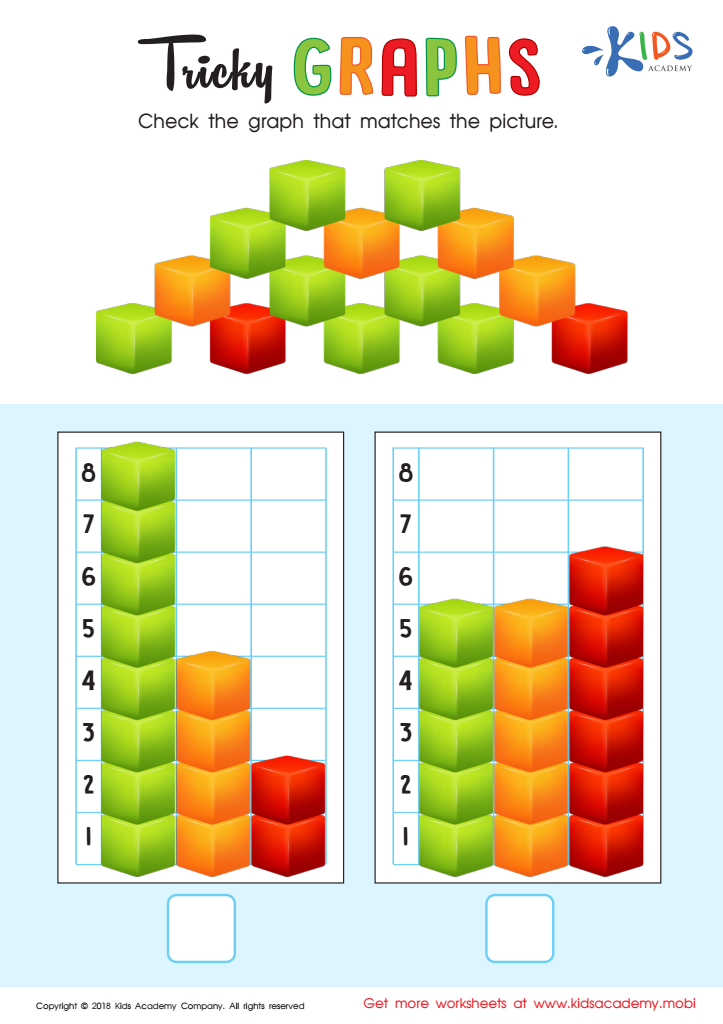
Looking for a fun way to sharpen your kid's graphing skills? Get this colorful PDF worksheet! They'll get to practice visual discrimination, counting, and creating bar graphs. Plus, graphing and reading graphs are essential for problem-solving in math.
Tricky Graphs Worksheet
Worksheet
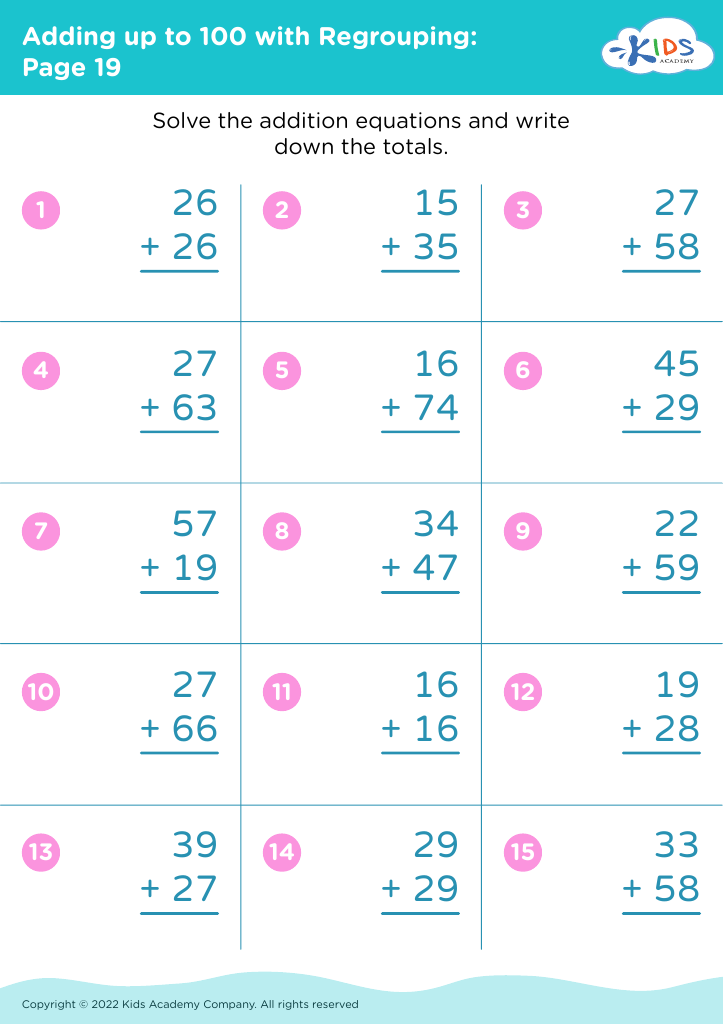
Adding up to 100 with Regrouping: Page 19
Worksheet
Patterns in Temperature Worksheet

Patterns in Temperature Worksheet

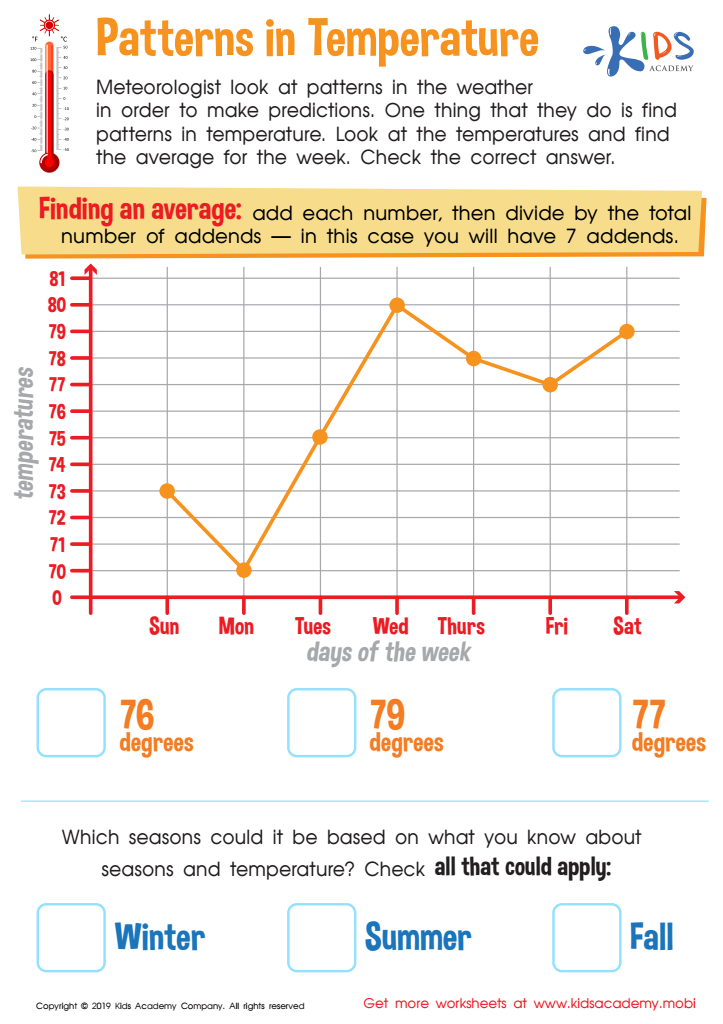
Kids need to learn how to read and interpret data from graphs and charts. This free worksheet on temperature patterns helps them to do just that. They'll practice finding averages and answer questions in multiple-choice format. Plus, it provides a great learning experience!
Patterns in Temperature Worksheet
Worksheet
Egyptian Bar Graph Worksheet

Egyptian Bar Graph Worksheet

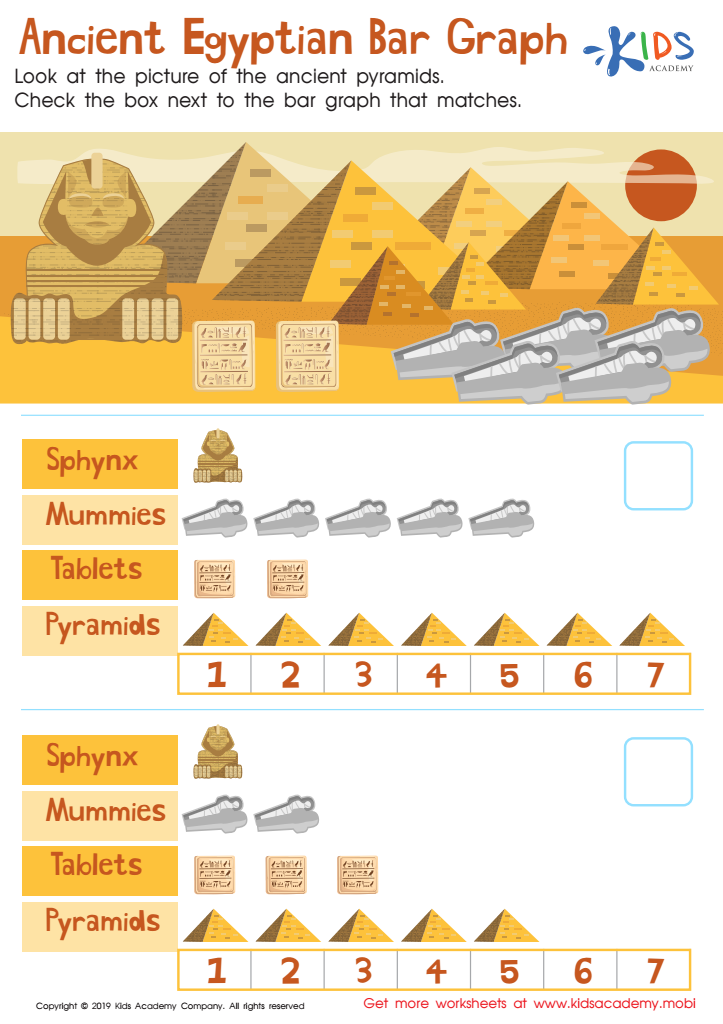
Help your kids get a hang of bar graphs with this fun worksheet. Examine the picture of the ancient pyramids and help them match the bar graph to it. Check the box next to the correct bar graph and watch your little ones learn quickly!
Egyptian Bar Graph Worksheet
Worksheet
Aircraft Line Plot Worksheet


Aircraft Line Plot Worksheet

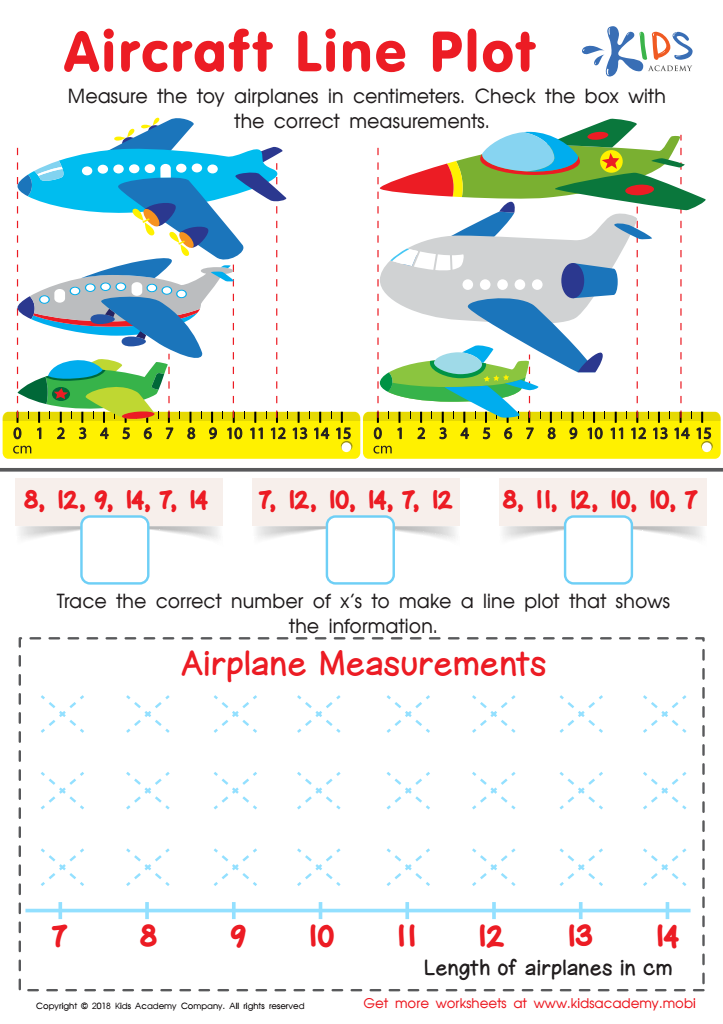
If your kids are aviation enthusiasts, they'll love this worksheet! Look at the picture with them, then ask them to measure the toy planes in cm. Check the box with the right measurements and then trace the x's to make a line plot with the data.
Aircraft Line Plot Worksheet
Worksheet


Analyzing data is a crucial skill that forms the foundation for logical reasoning and critical thinking, which are essential in various aspects of everyday life. For children ages 4-8, early exposure to data analysis primes their brains for future academic success and equips them with the ability to make sense of the world around them.

For parents and teachers, fostering these skills means creating a curious, innovative, and analytical mindset in young learners. At this nascent stage, children are particularly receptive to learning new concepts. Introducing them to data analysis—in a simple, engaging, and age-appropriate manner—helps them grasp basic mathematical concepts like counting, sorting, and comparing. By observing patterns and depicting information visually through charts and graphs, children learn to communicate effectively and interpret information contextually.

Moreover, these foundational skills encourage an inquisitive attitude, prompting children to ask questions and explore solutions. This can translate into better decision-making abilities and problem-solving skills later in life. Developmentally, mastering data analysis promotes cognitive growth by enhancing their memory, boosting their concentration, and sharpening their focus.

Therefore, parents and teachers investing time in teaching data analysis are giving children tools that benefit their academic journey and empower them with lifelong intellectual and practical skills.