Animal identification Math Worksheets for Ages 4-8 - Page 2
33 filtered results
-
From - To
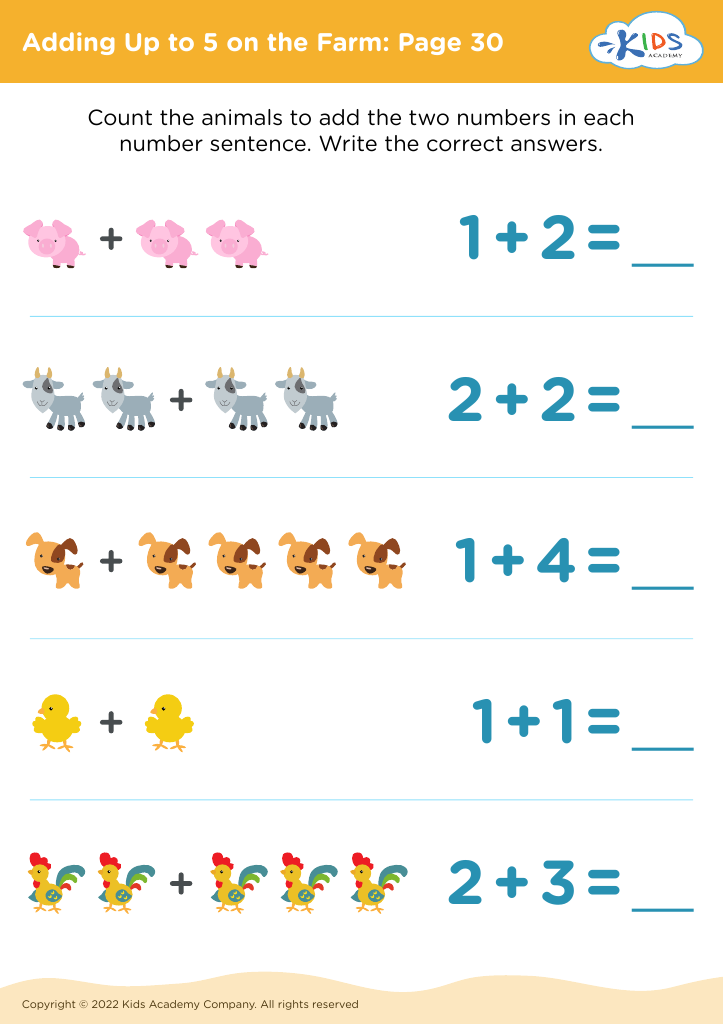
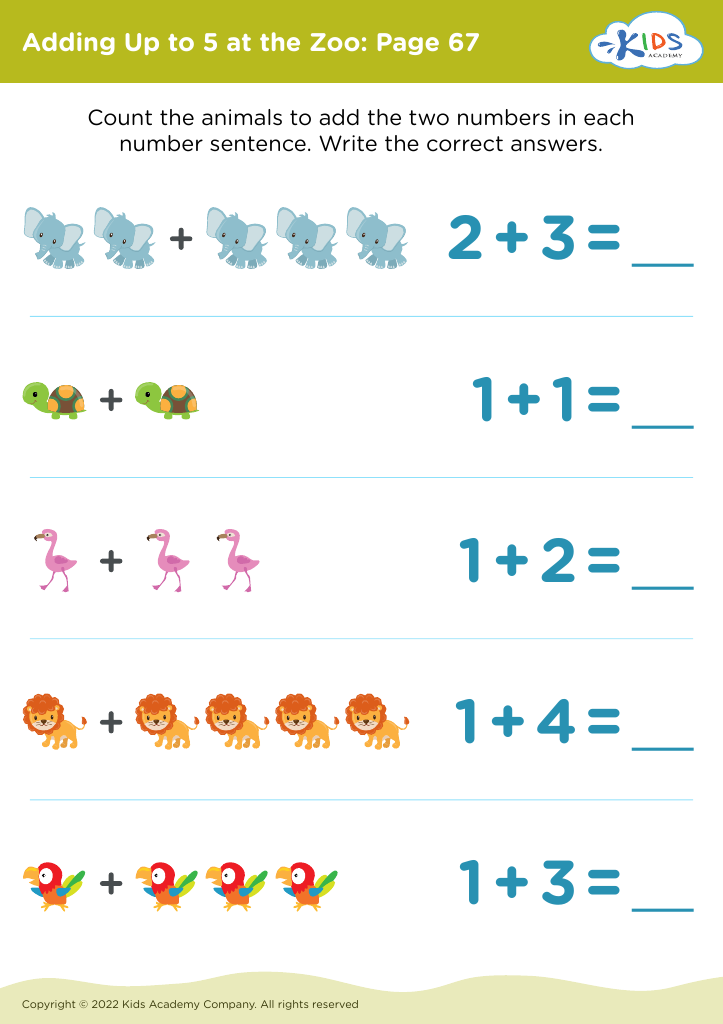
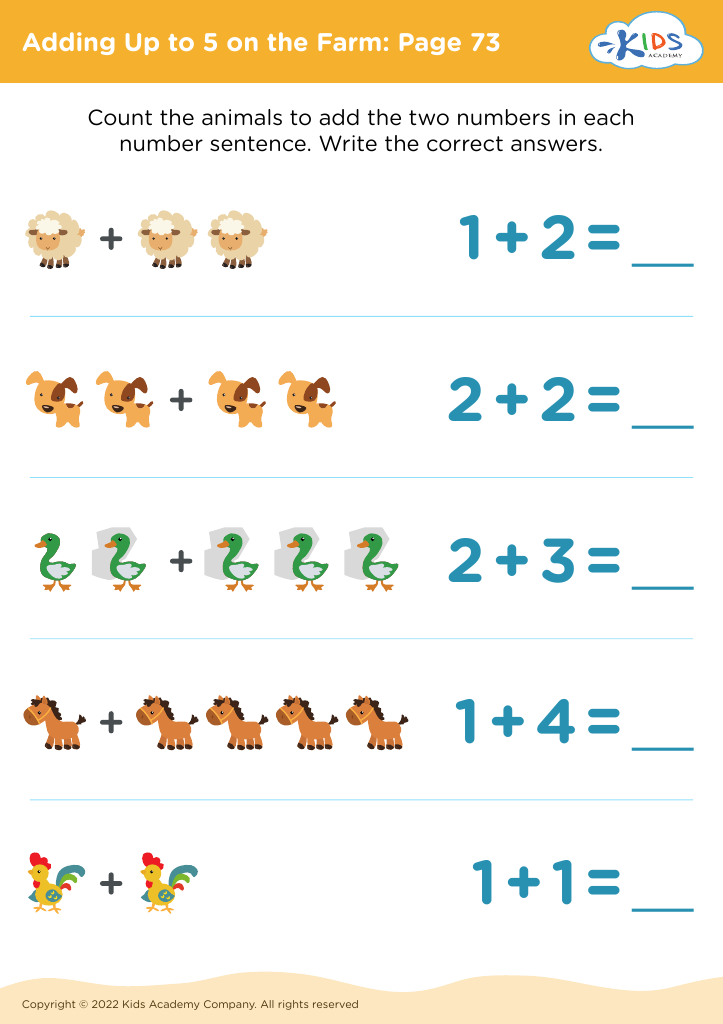
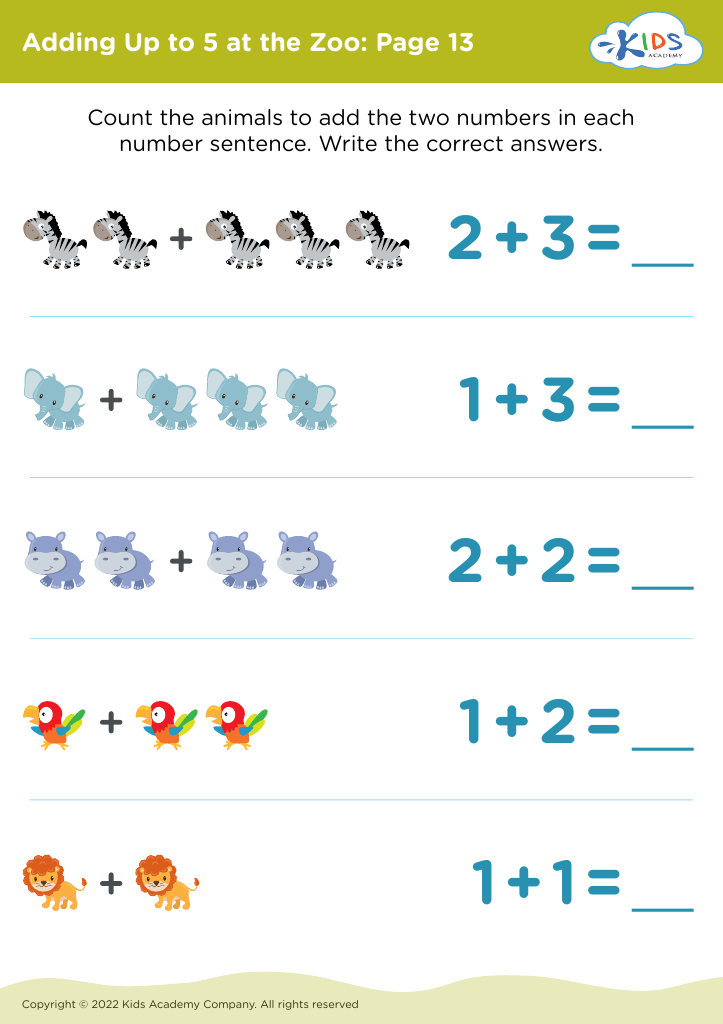
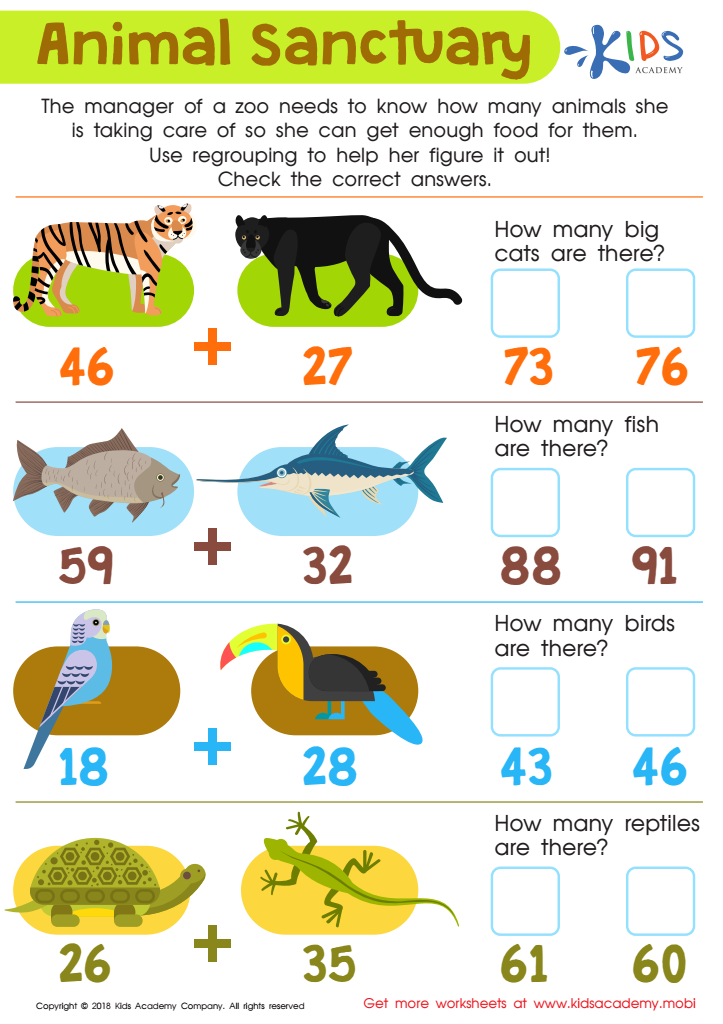
Animal Sanctuary Worksheet
 Assign to My Students








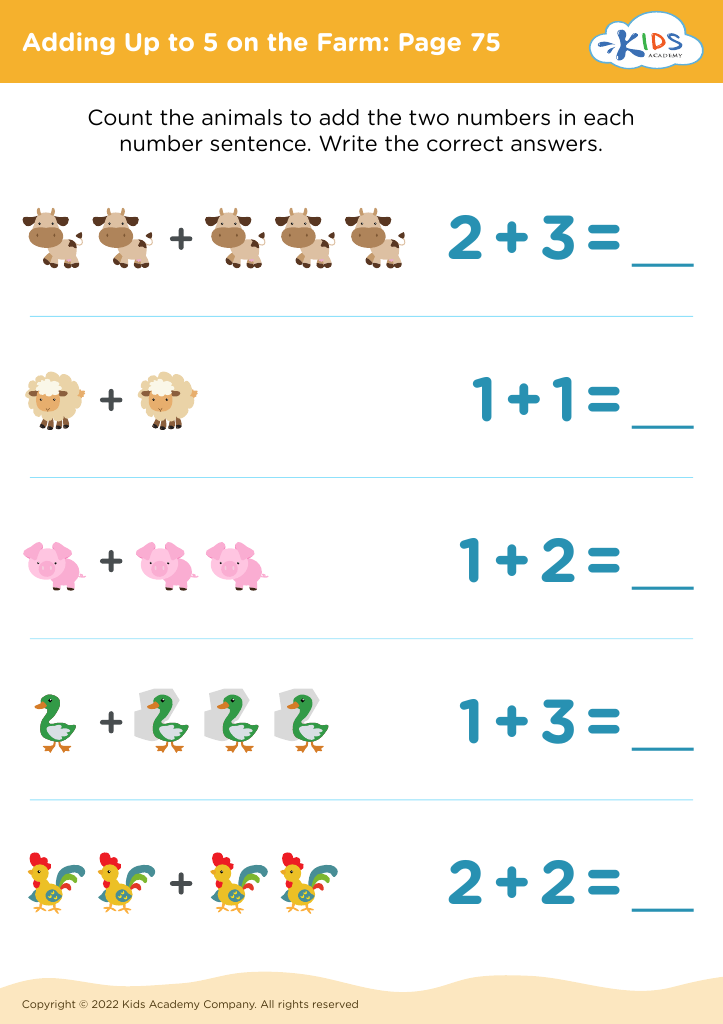
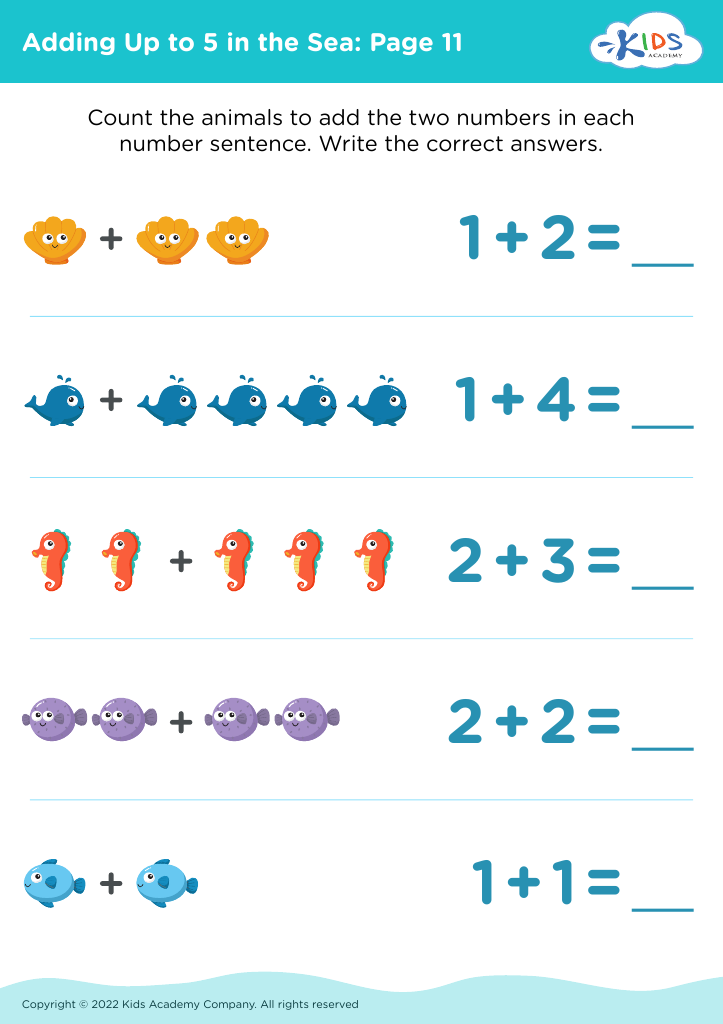
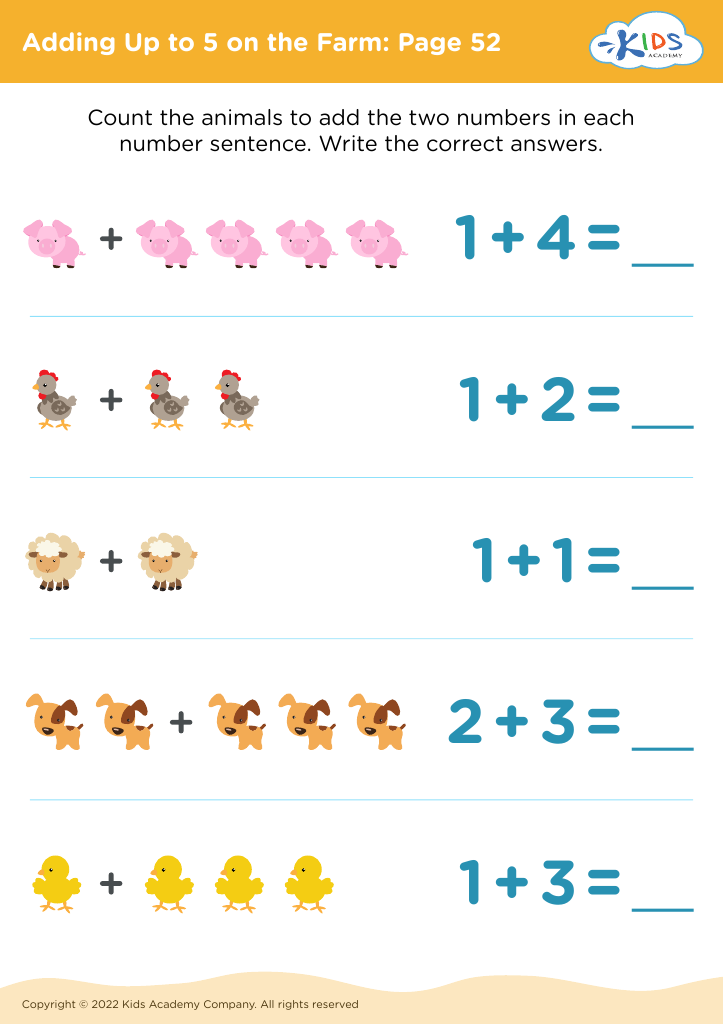
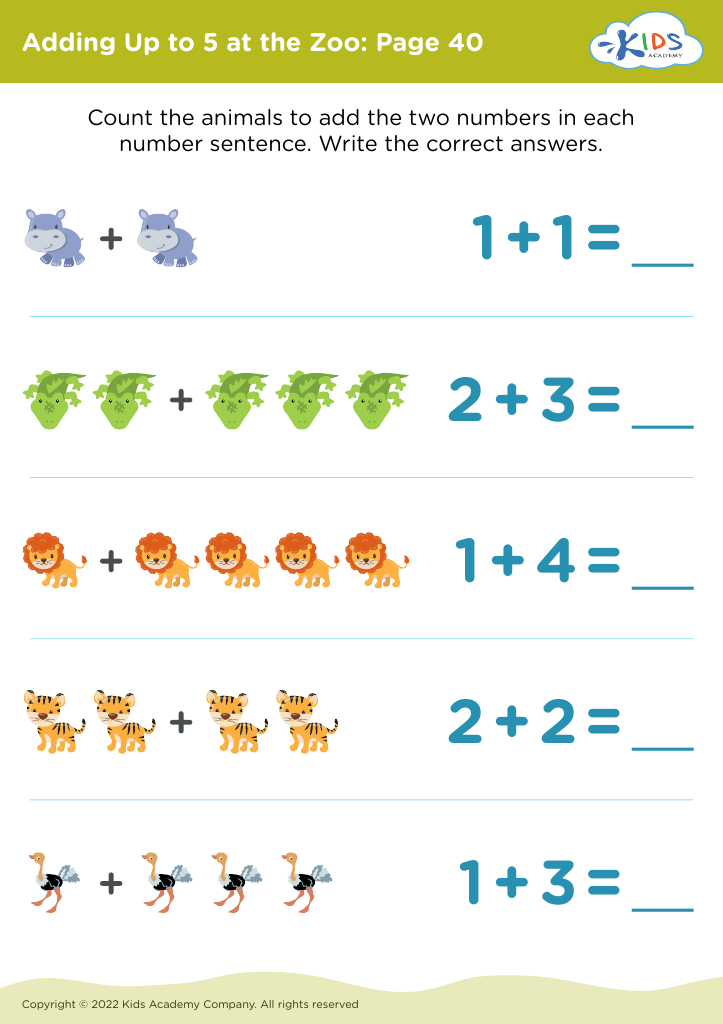
Animal identification math is a valuable tool for children aged 4-8, combining essential math skills with engaging, real-world applications. At this age, children are naturally curious about animals, making this topic both relatable and exciting. Incorporating animal identification into math helps young learners develop counting, sorting, and pattern recognition skills in a context they find enjoyable.
Moreover, this approach fosters critical thinking as kids learn to categorize animals based on characteristics such as size, color, or habitat. It promotes observational skills and encourages awareness of biodiversity, which can instill a sense of responsibility toward animals and the environment.
By engaging with animal-themed math activities, parents and teachers can create a fun learning atmosphere, sparking a lifelong love for math and science. This method caters to varied learning styles—visual, auditory, and kinesthetic—ensuring that all children have the opportunity to thrive. Furthermore, it strengthens parent-teacher collaboration, as families can partake in home-based learning activities that reinforce classroom concepts. In essence, prioritizing animal identification math lays a strong foundation for holistic development, promoting both academic and social-emotional growth in young learners.








