Check out this FREE Trial Lesson on Math for age 4-8!

Short and Long Vowel Sort

Favorites
With answer key
Interactive
  • 4-8
  • Basic Addition Skills
  • Math
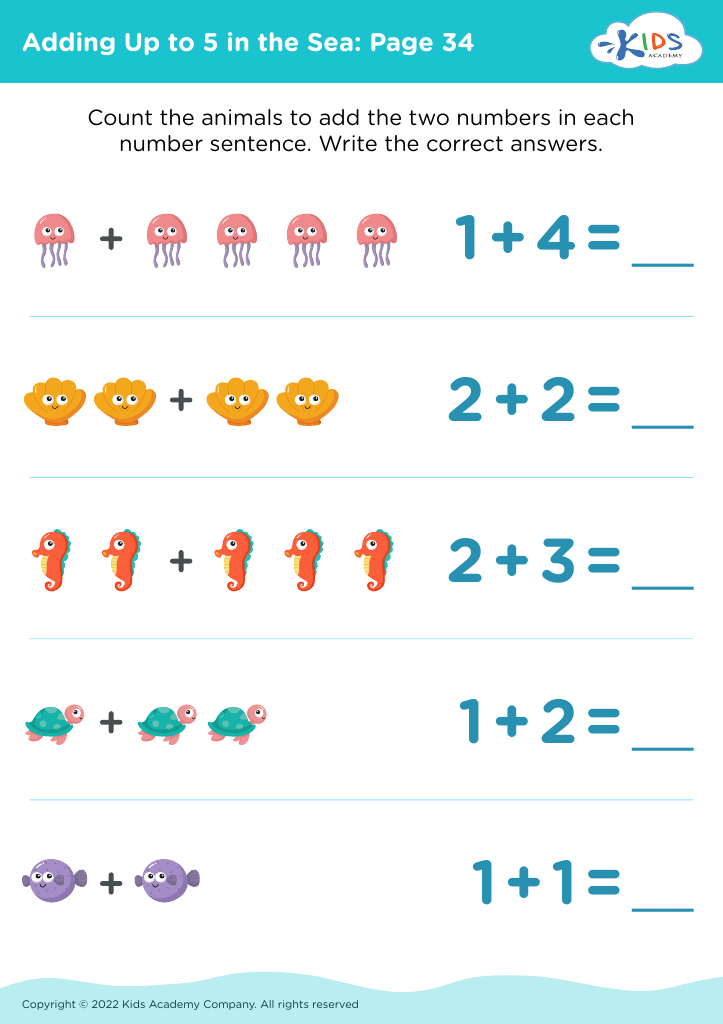
Adding Up to 5 in the Sea: Page 34
Worksheet
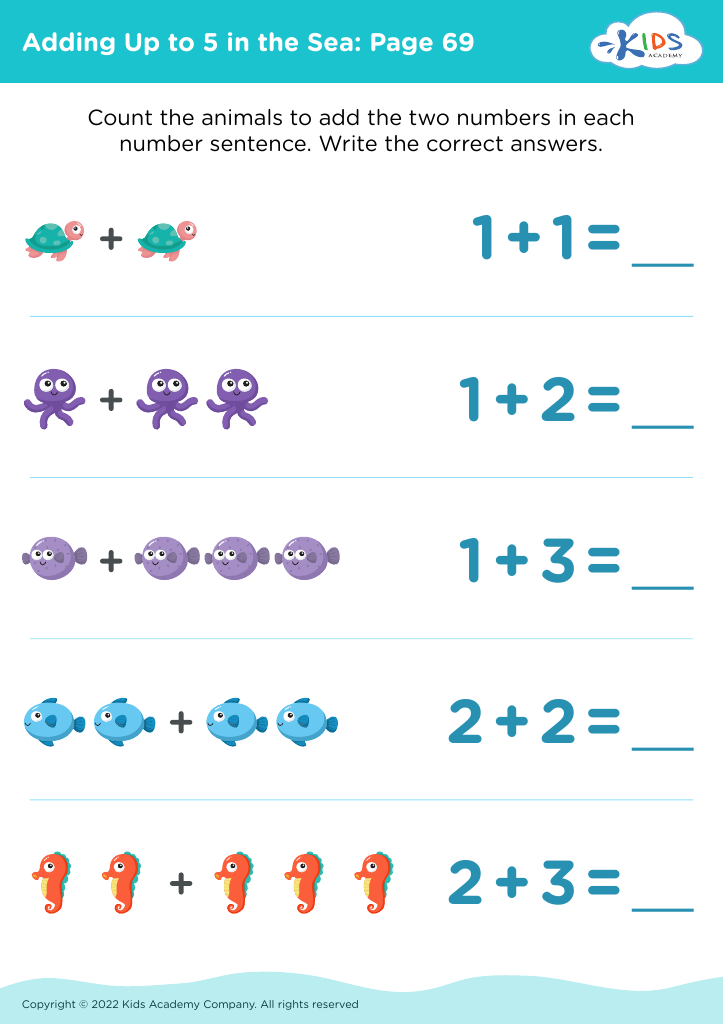
Adding Up to 5 in the Sea: Page 69
Worksheet
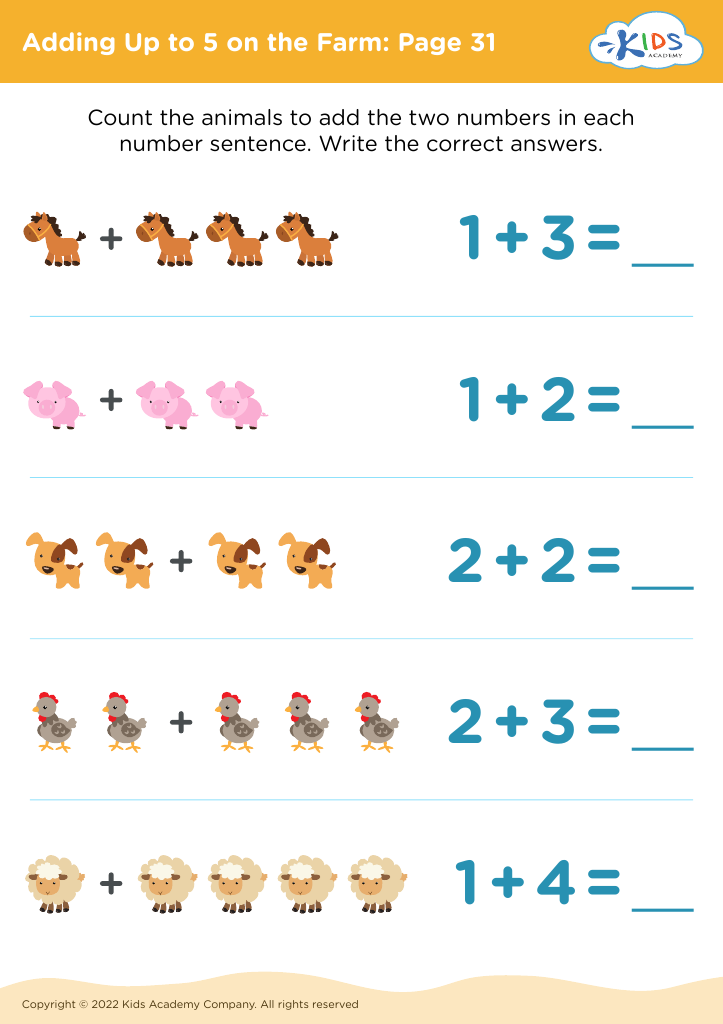
Adding Up to 5 on the Farm: Page 31
Worksheet
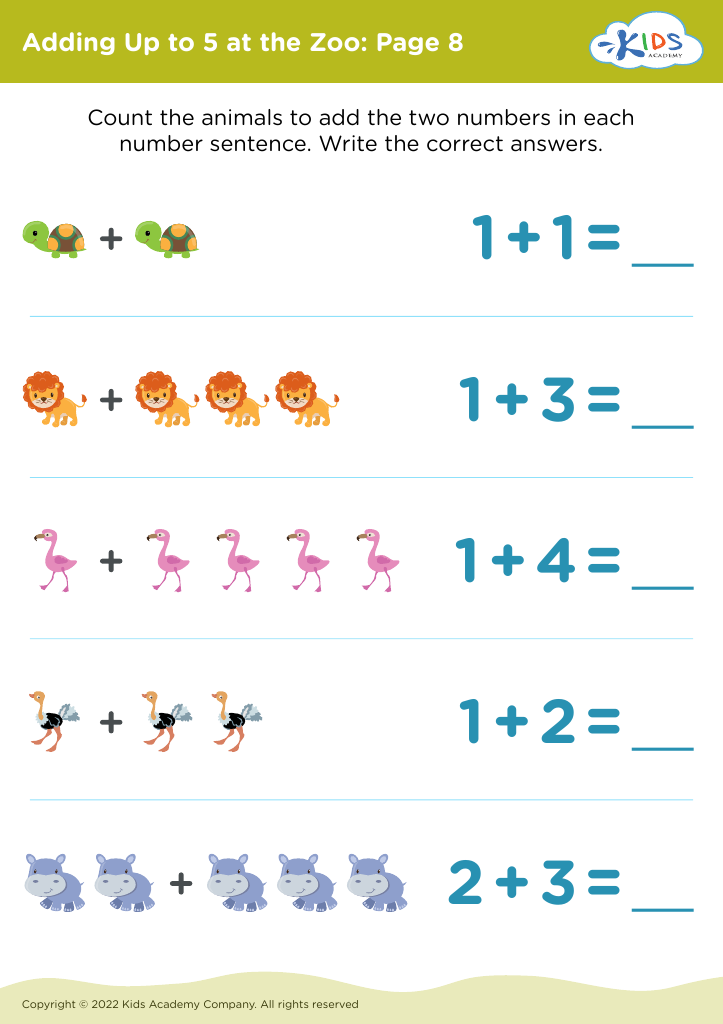
Adding Up to 5 at the Zoo: Page 8

Adding Up to 5 at the Zoo: Page 8

Adding Up to 5 at the Zoo: Page 8
Worksheet
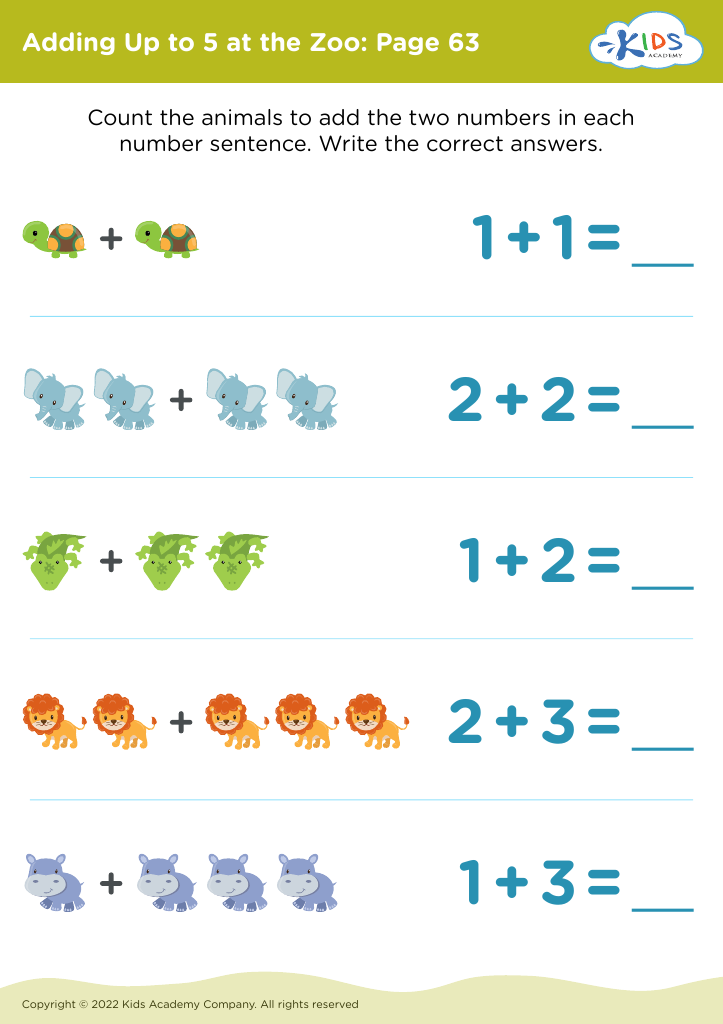
Adding Up to 5 at the Zoo: Page 63
Worksheet
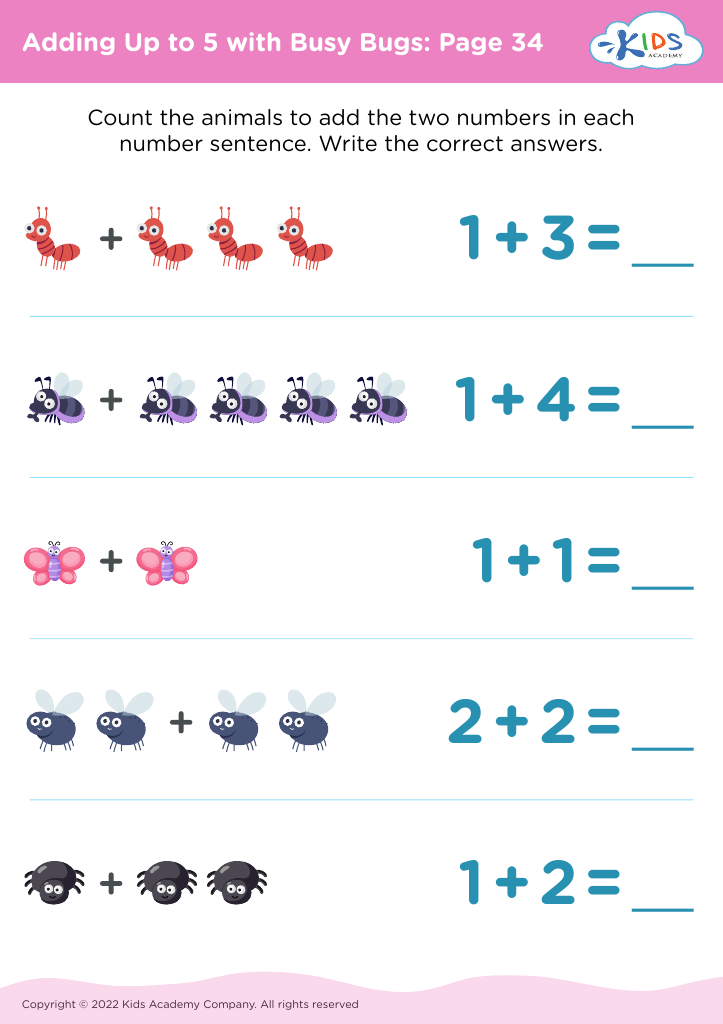
Adding Up to 5 with Busy Bugs: Page 34
Worksheet
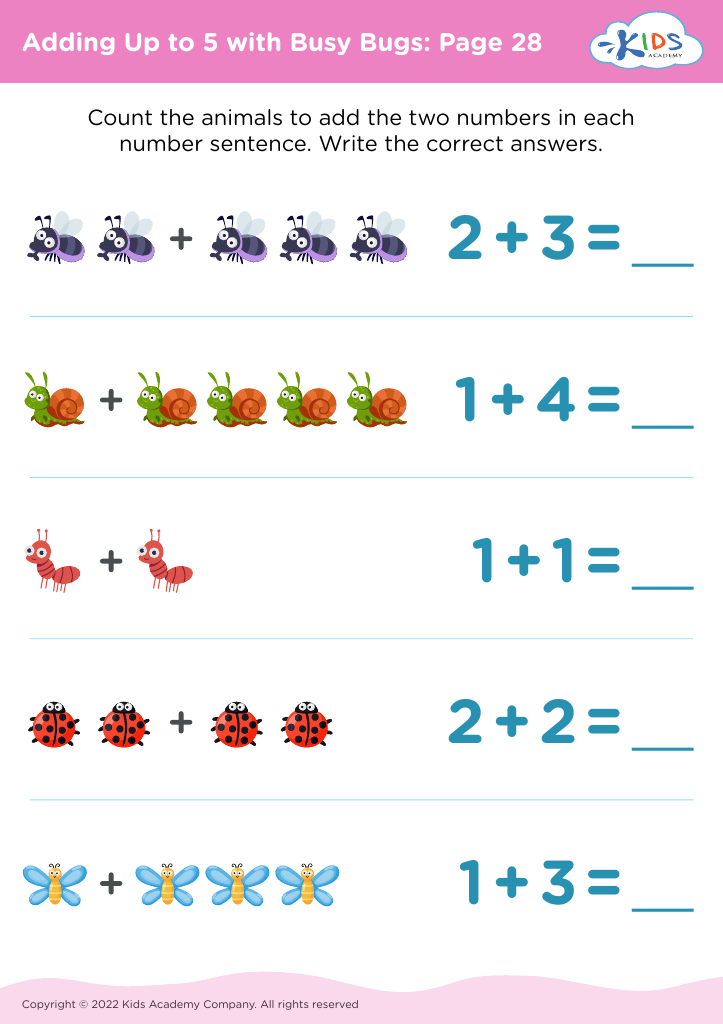
Adding Up to 5 with Busy Bugs: Page 28
Worksheet
Simple Addition PDF Worksheet

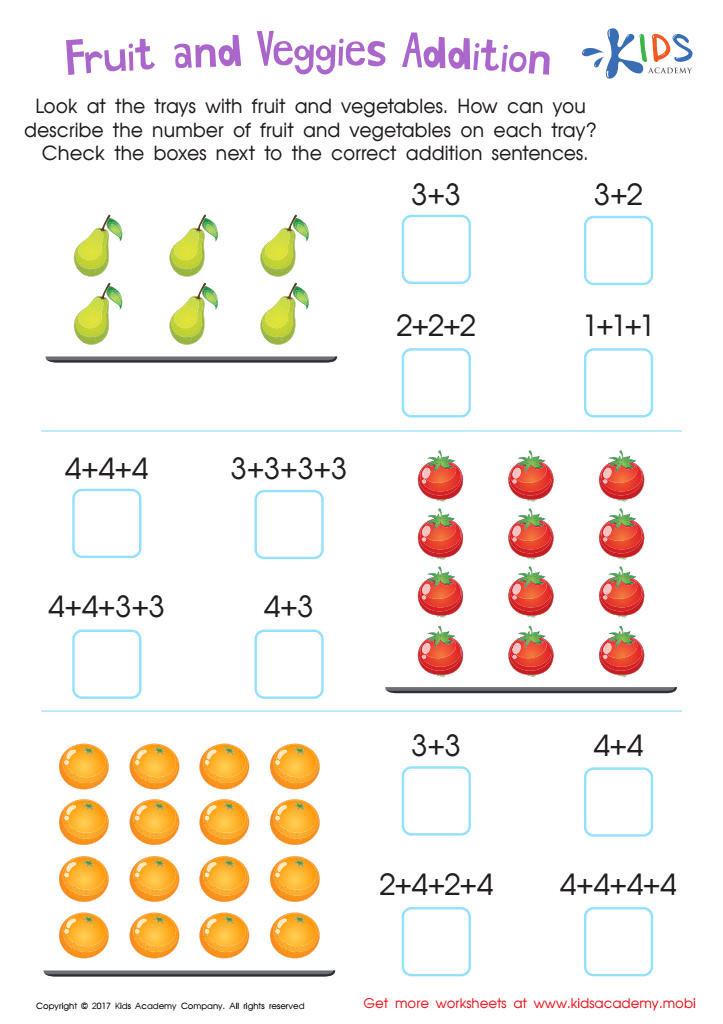
Fruit and Veggies Worksheet

It promotes problem-solving and analytical skills as kids match pictures to correct addition sentences. Help your child go beyond simple addition with this PDF worksheet!
Fruit and Veggies Worksheet
Worksheet
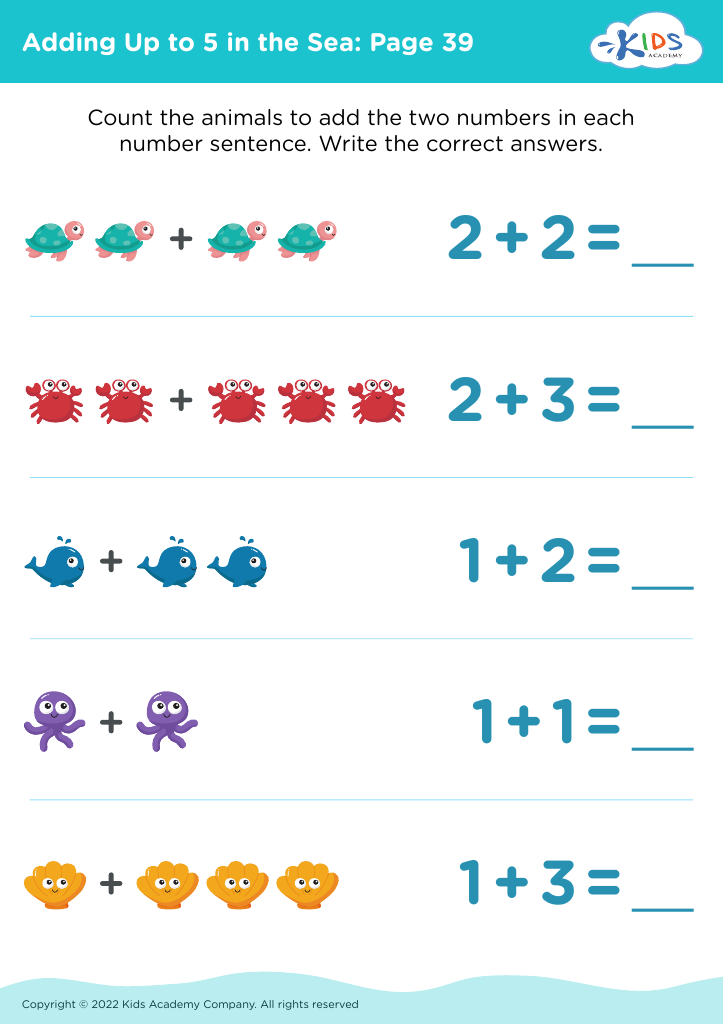
Adding Up to 5 in the Sea: Page 39
Worksheet
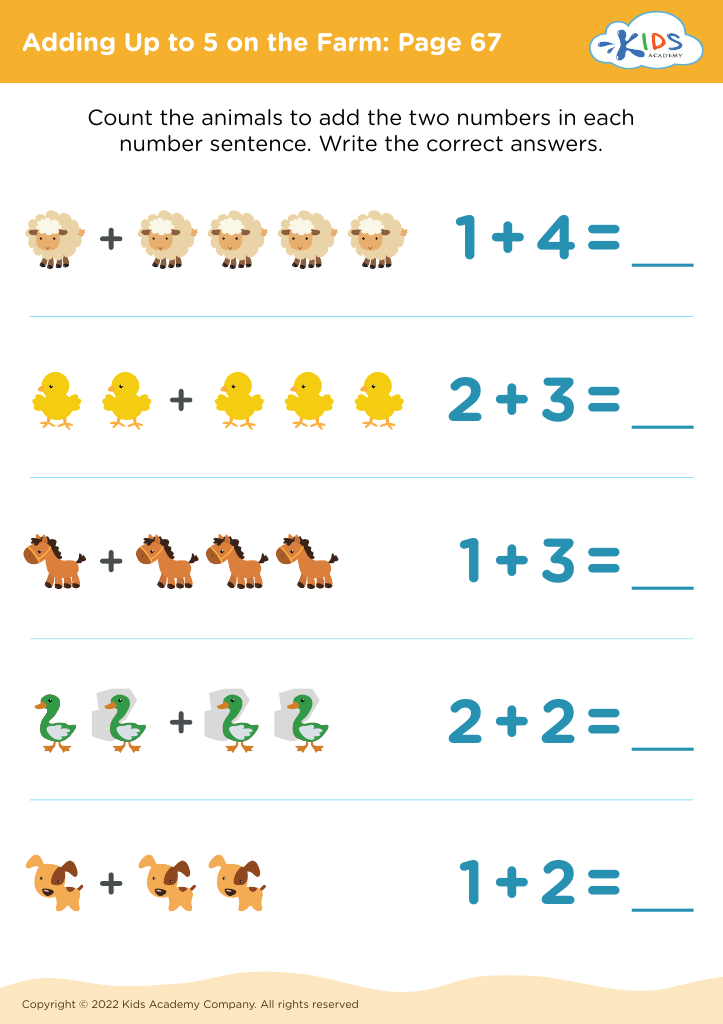
Adding Up to 5 on the Farm: Page 67
Worksheet
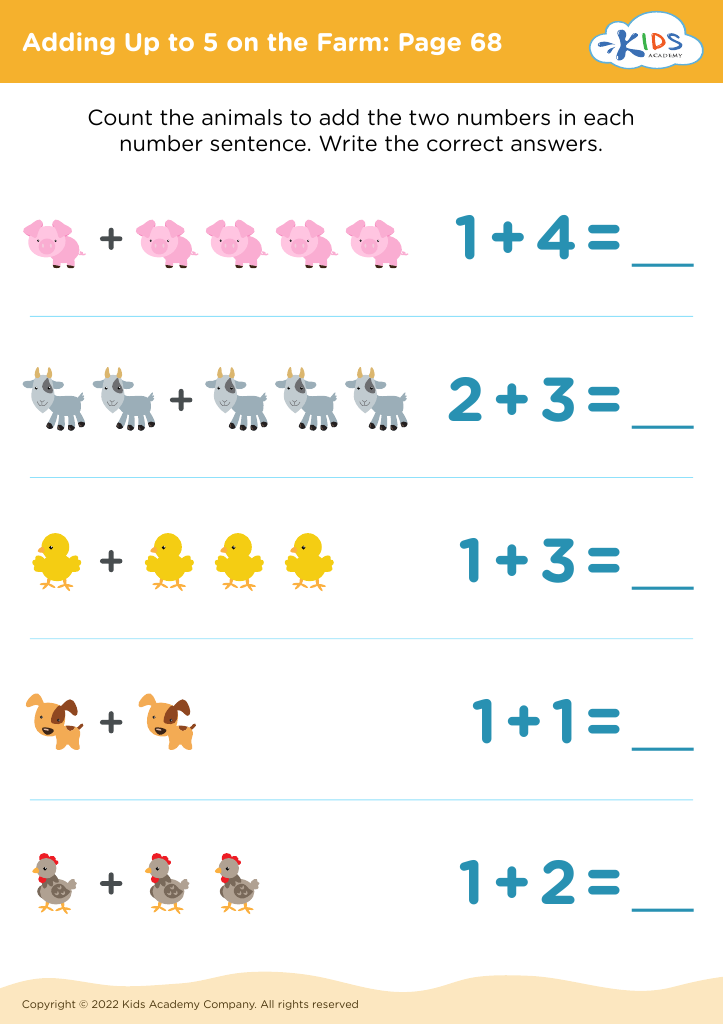
Adding Up to 5 on the Farm: Page 68
Worksheet
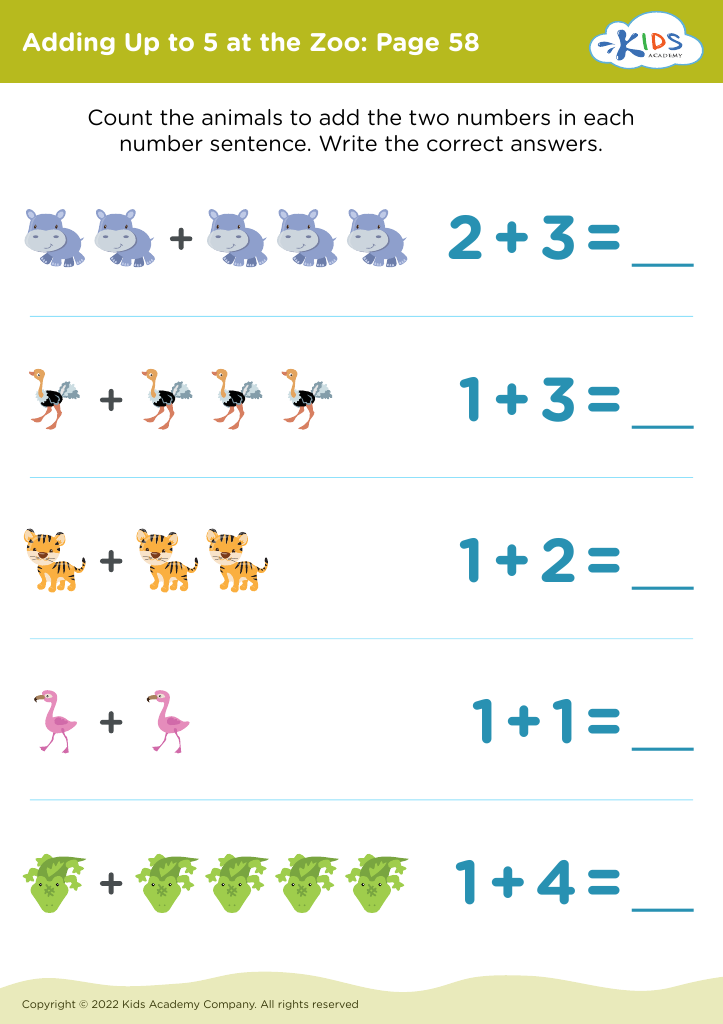
Adding Up to 5 at the Zoo: Page 58
Worksheet
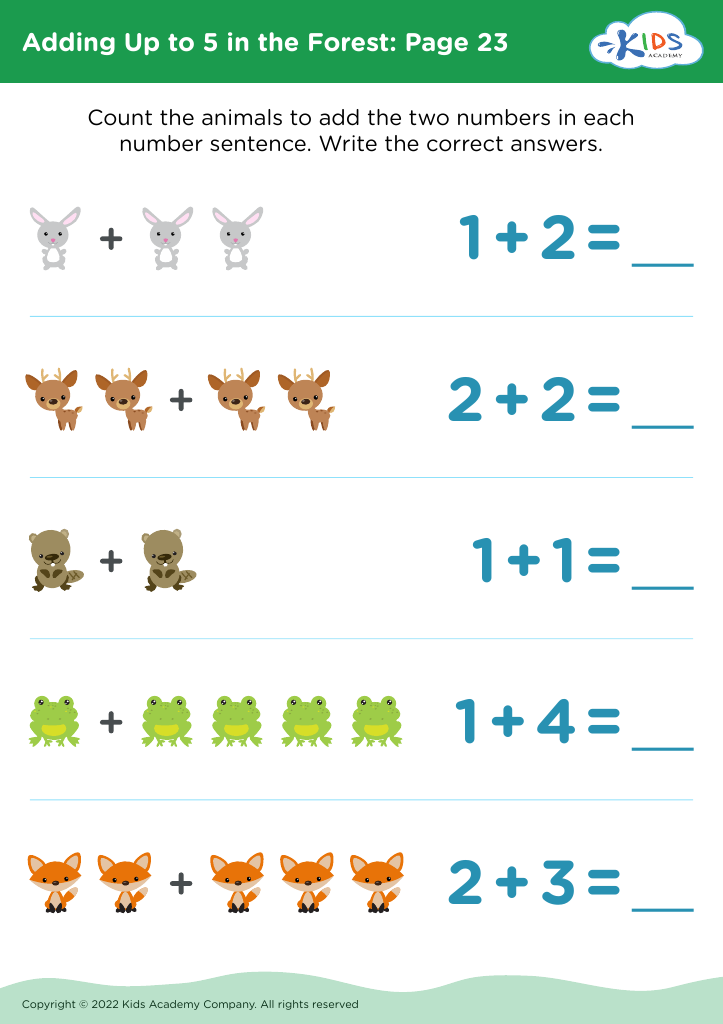
Adding Up to 5 in the Forest: Page 23
Worksheet
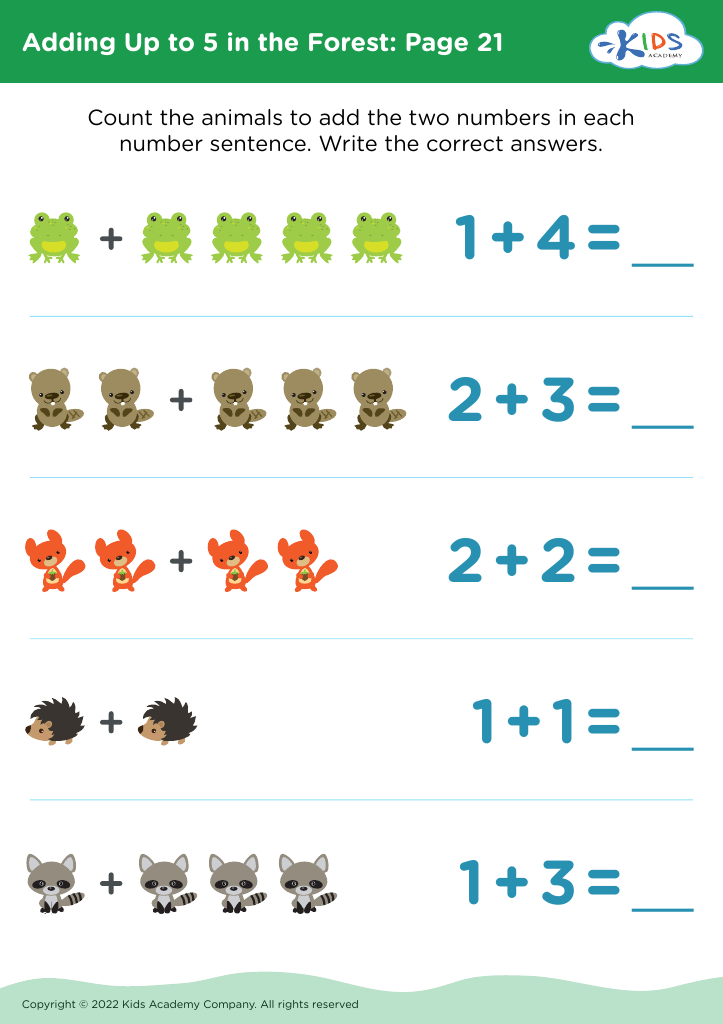
Adding Up to 5 in the Forest: Page 21
Worksheet
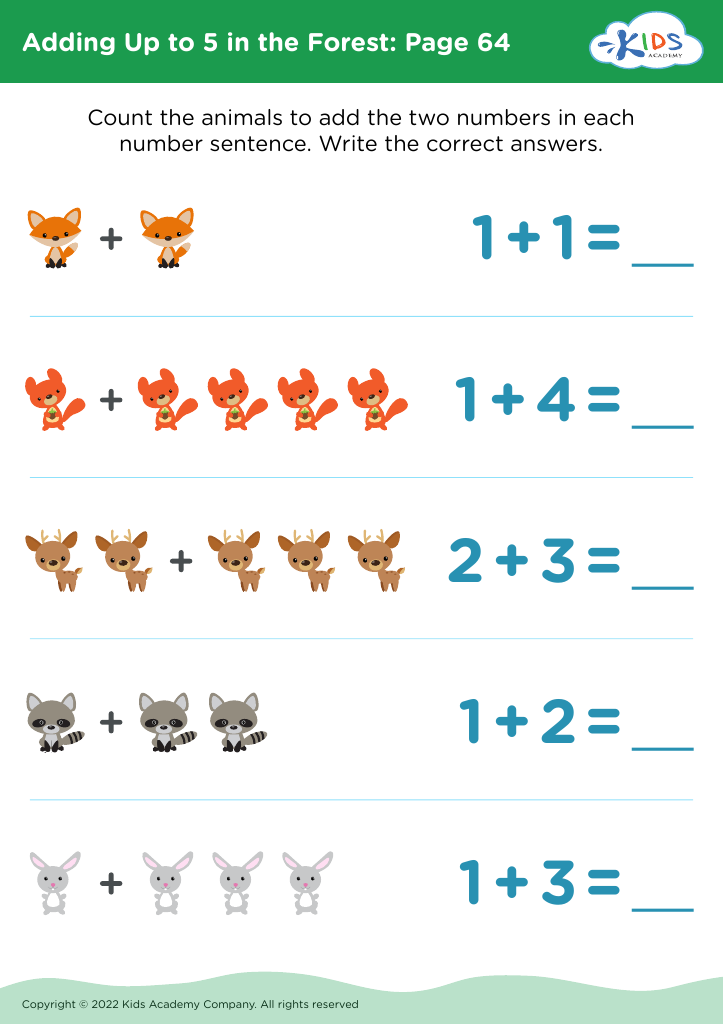
Adding Up to 5 in the Forest: Page 64
Worksheet
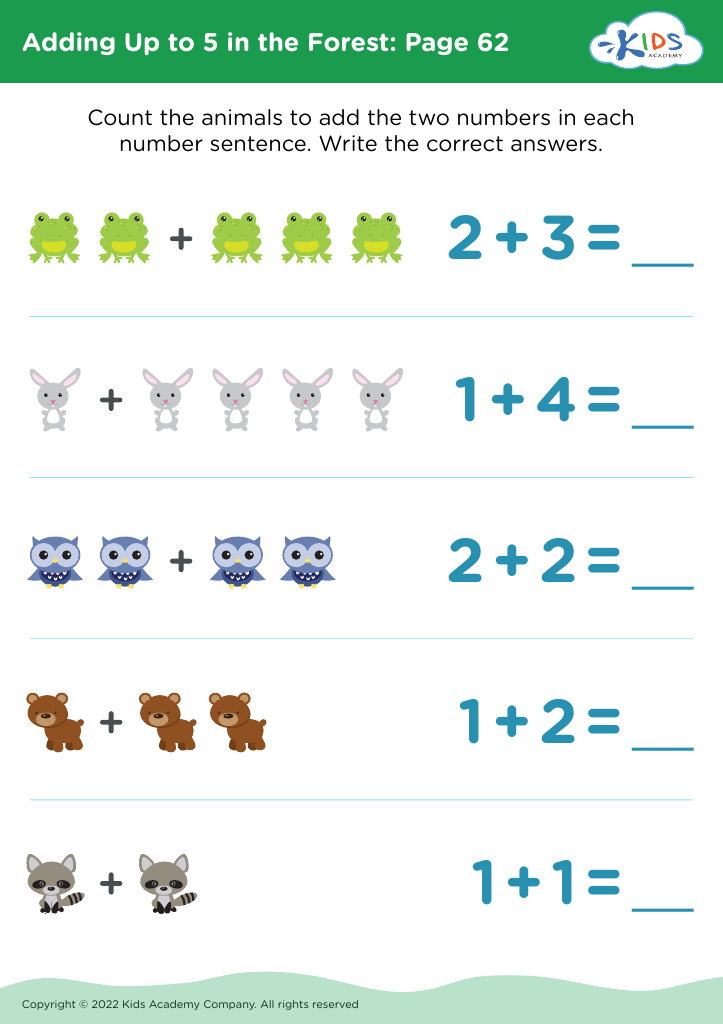
Adding Up to 5 in the Forest: Page 62
Worksheet
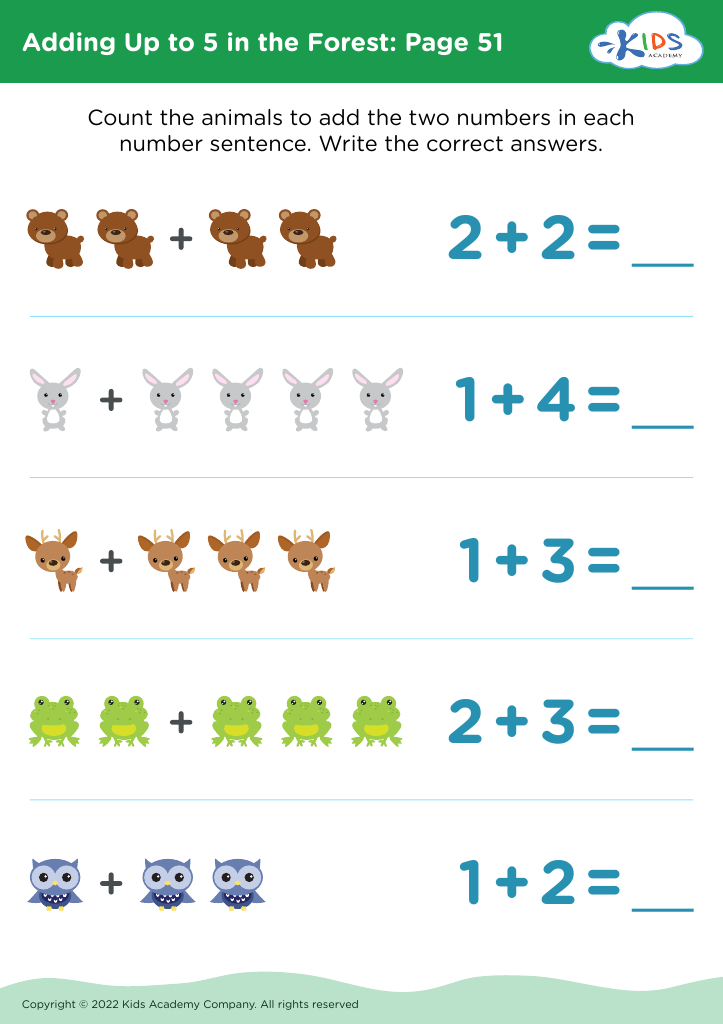
Adding Up to 5 in the Forest: Page 51
Worksheet
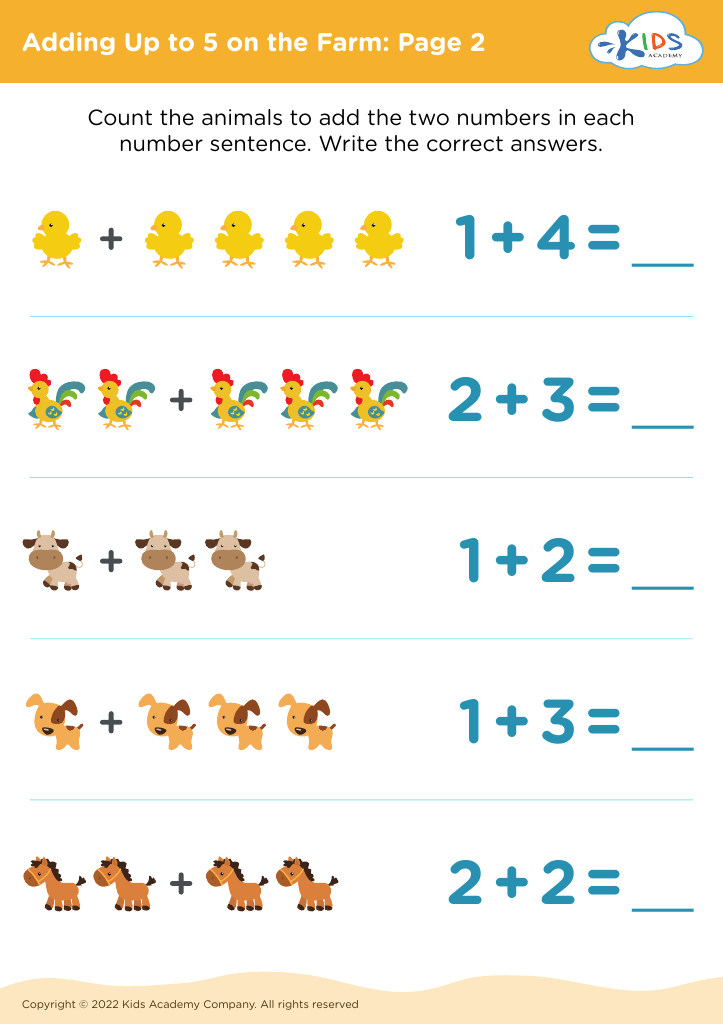
Adding Up to 5 on the Farm: Page 2
Worksheet
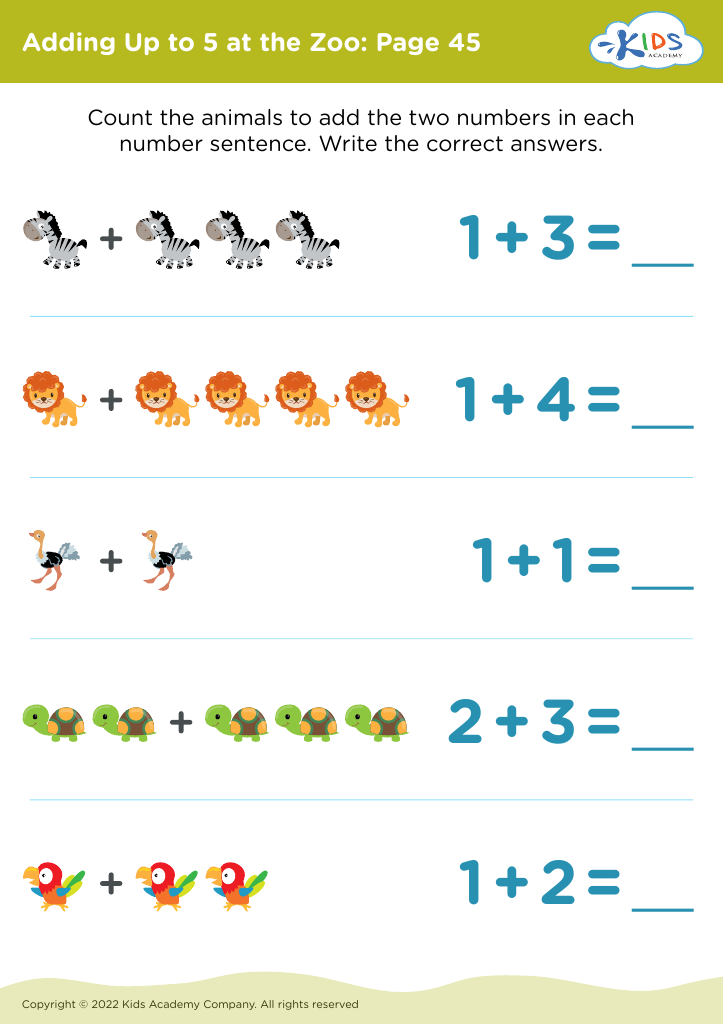
Adding Up to 5 at the Zoo: Page 45
Worksheet
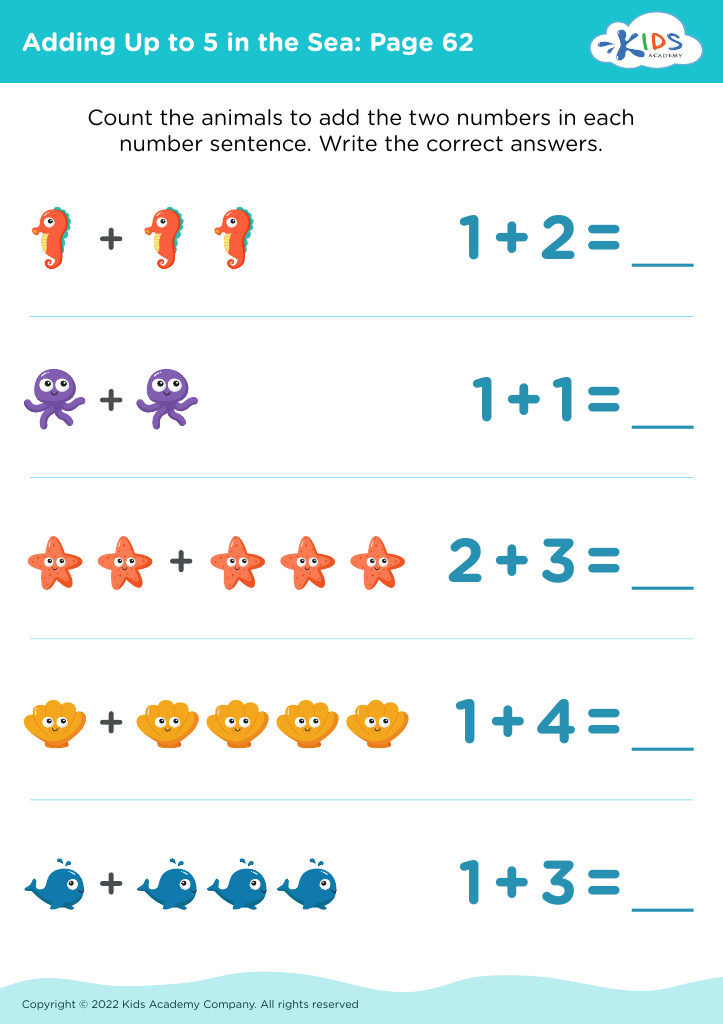
Adding Up to 5 in the Sea: Page 62
Worksheet
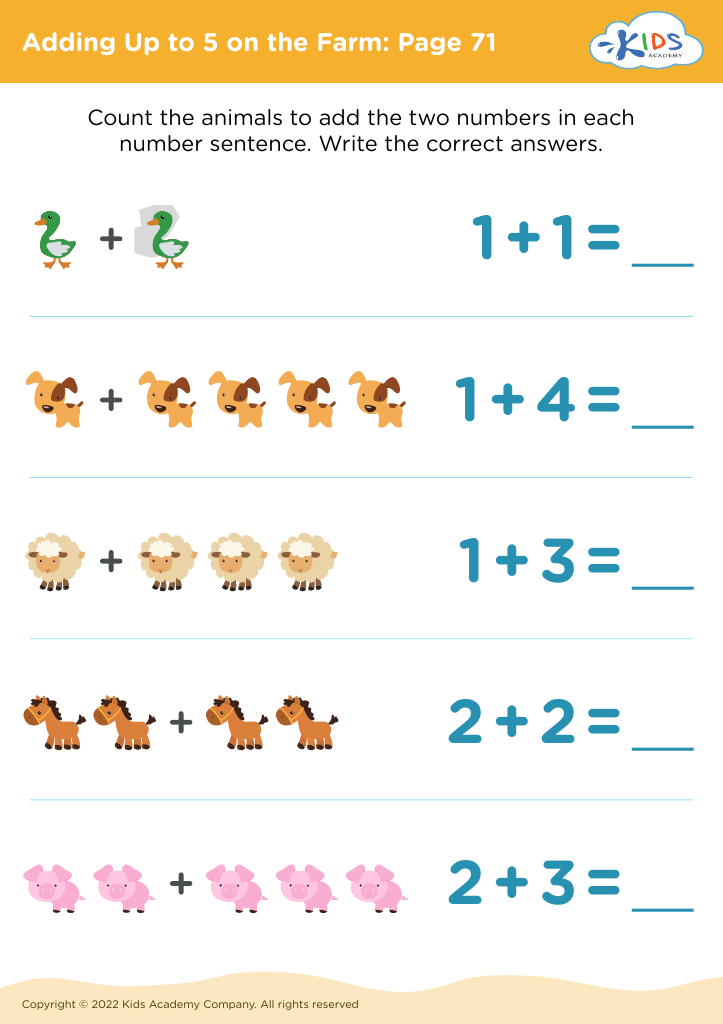
Adding Up to 5 on the Farm: Page 71
Worksheet
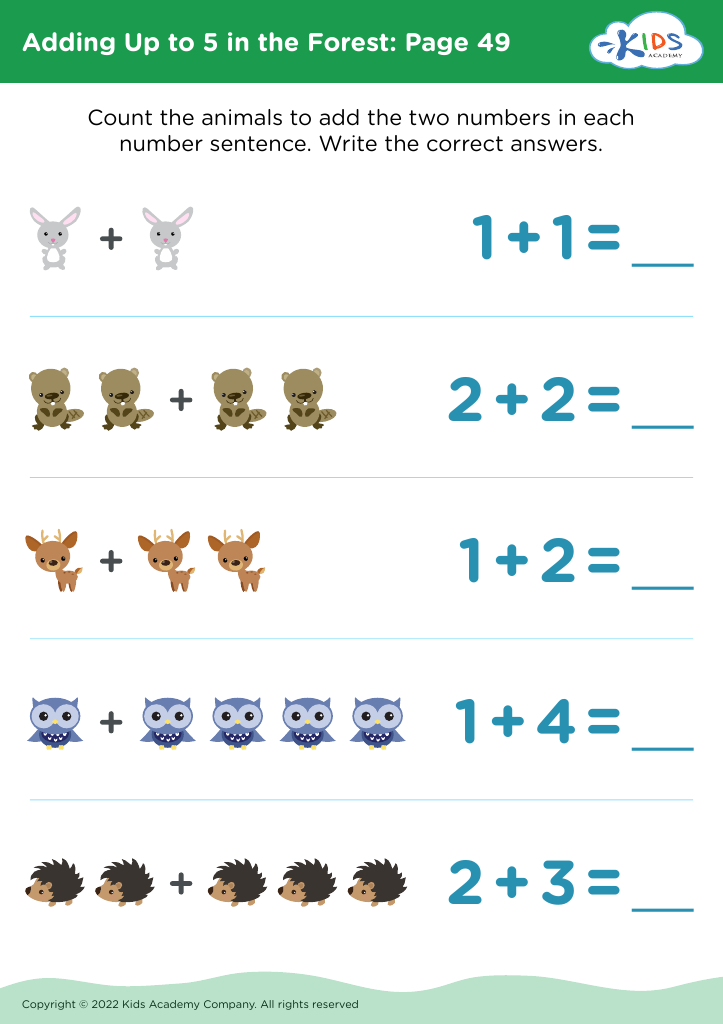
Adding Up to 5 in the Forest: Page 49
Worksheet
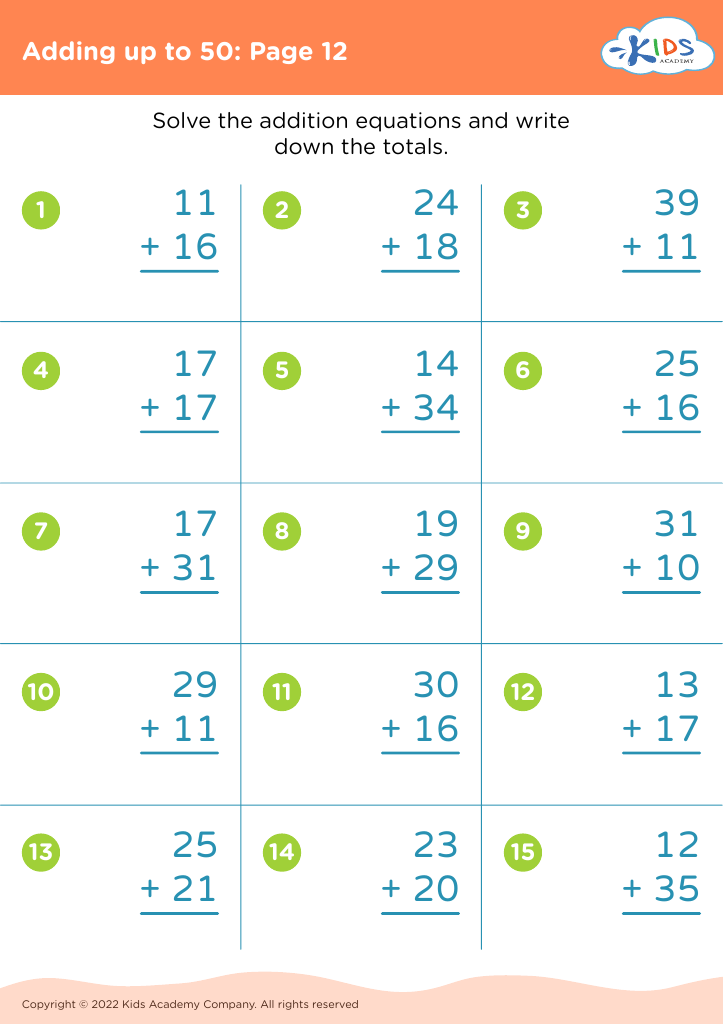
Adding up to 50: Page 12

Adding up to 50: Page 12

Adding up to 50: Page 12
Worksheet
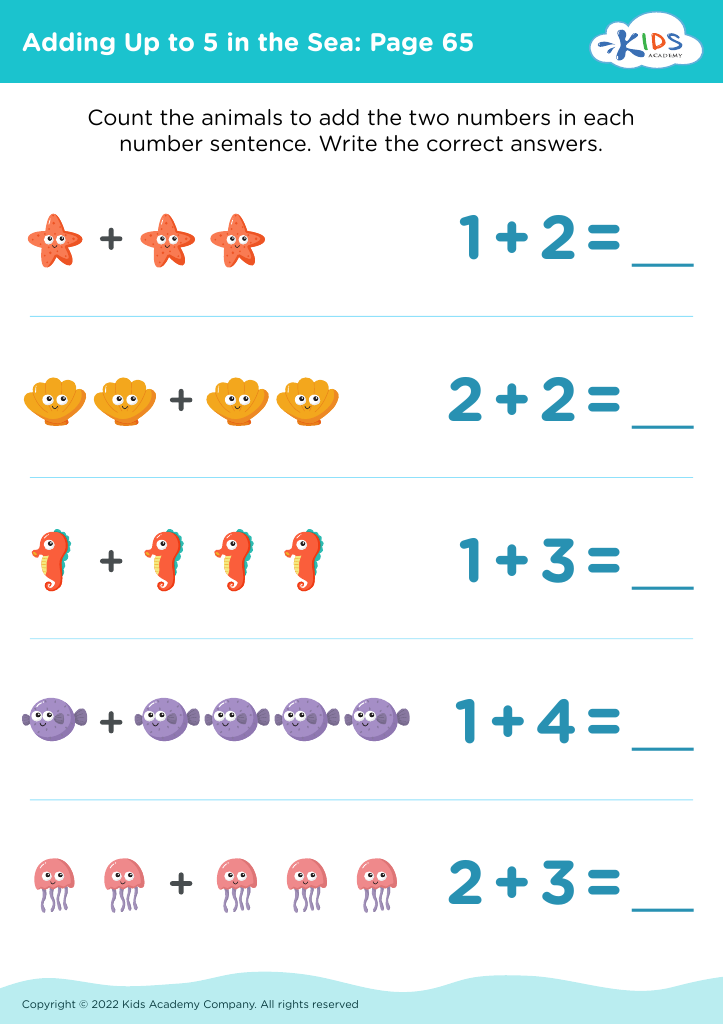
Adding Up to 5 in the Sea: Page 65
Worksheet


Parents and teachers should care about basic addition skills for children aged 4-8 because these foundational skills paves the way for future mathematical understanding. During these formative years, children develop cognitive abilities and critical thinking skills necessary for more complex concepts later on. Mastering addition establishes a sense of number sense and enhances problem-solving skills, which are crucial in daily life.

Basic addition skills also promote confidence. When children successfully solve simple addition problems, they gain a sense of achievement that encourages them to tackle more challenging math. Additionally, early proficiency in math correlates with better academic performance across subjects, as many areas used mathematical reasoning.

Furthermore, learning addition lays the groundwork for essential life skills, such as budgeting and time management. Incorporating fun activities, like games or real-life applications, into learning makes it engaging and helps solidify these concepts.

Lastly, as future problem solvers and innovators, children with strong early math skills are better equipped to navigate a rapidly changing world. By prioritizing these skills, parents and teachers SET children on a path for academic success, fostering both an appreciation for mathematics and the capability to utilize it effectively in various aspects of life.