Basic math learning Math Worksheets for Ages 4-8
3 filtered results
-
From - To
Introduce your child to the exciting world of numbers with our Basic Math Learning Math Worksheets for Ages 4-8. These engaging worksheets from Kids Academy are designed to captivate young learners, enhancing their understanding of foundational math skills such as counting, addition, subtraction, and number patterns. Children will enjoy fun activities that promote critical thinking and problem-solving in an enjoyable, interactive way. Perfect for both classroom settings and at-home practice, our worksheets provide a solid math foundation that sets the stage for future academic success. Help your child build confidence and a love for learning math today!
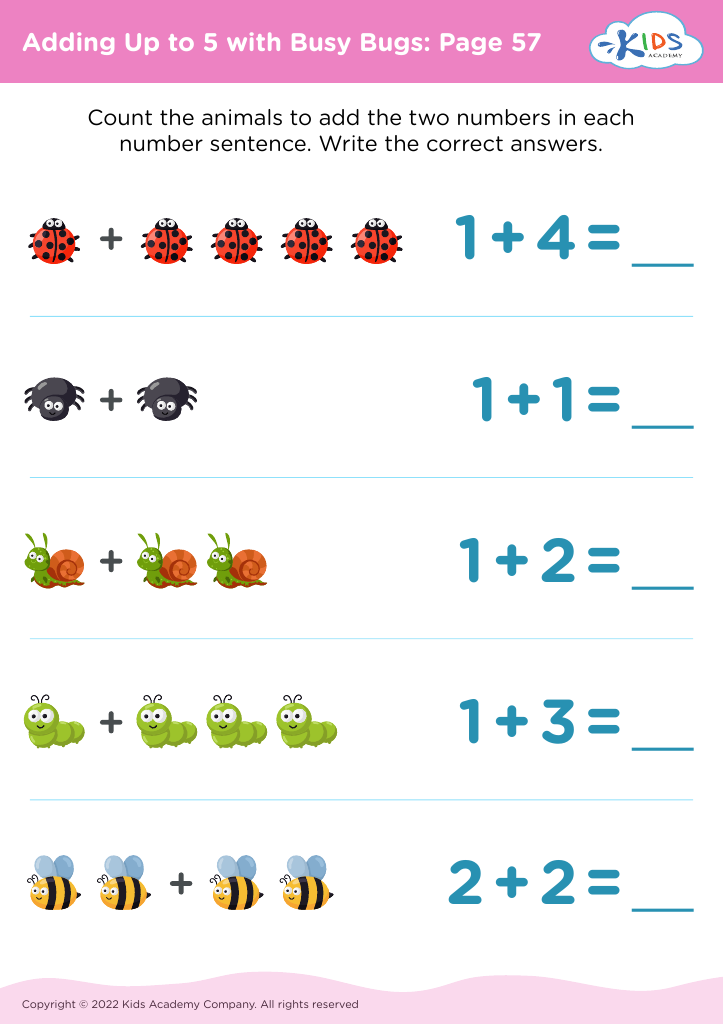
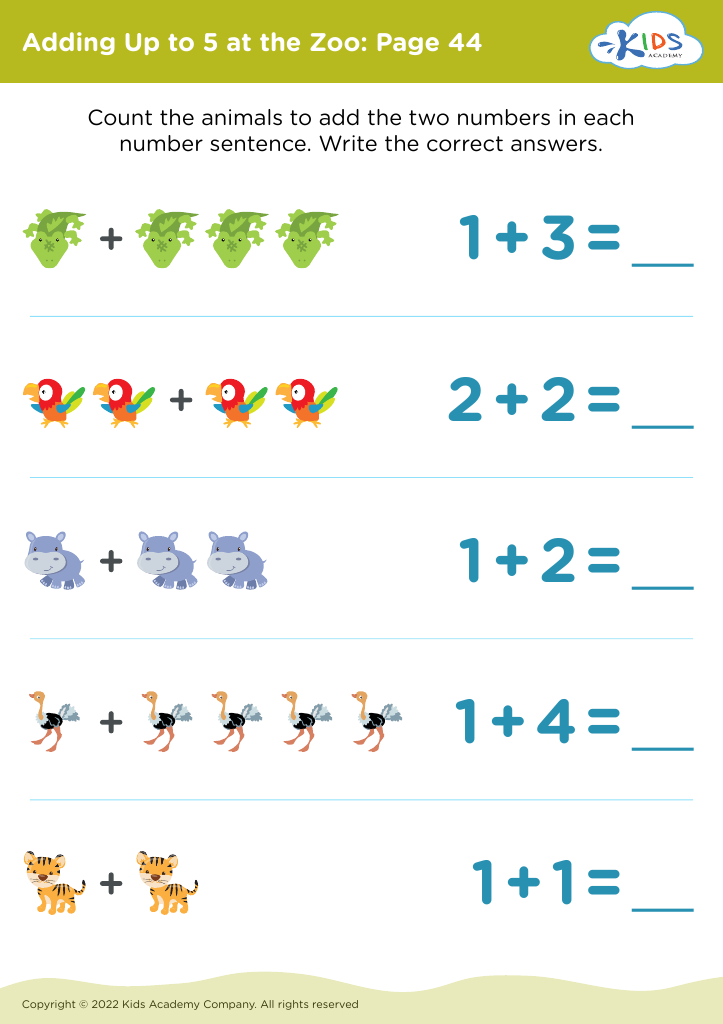
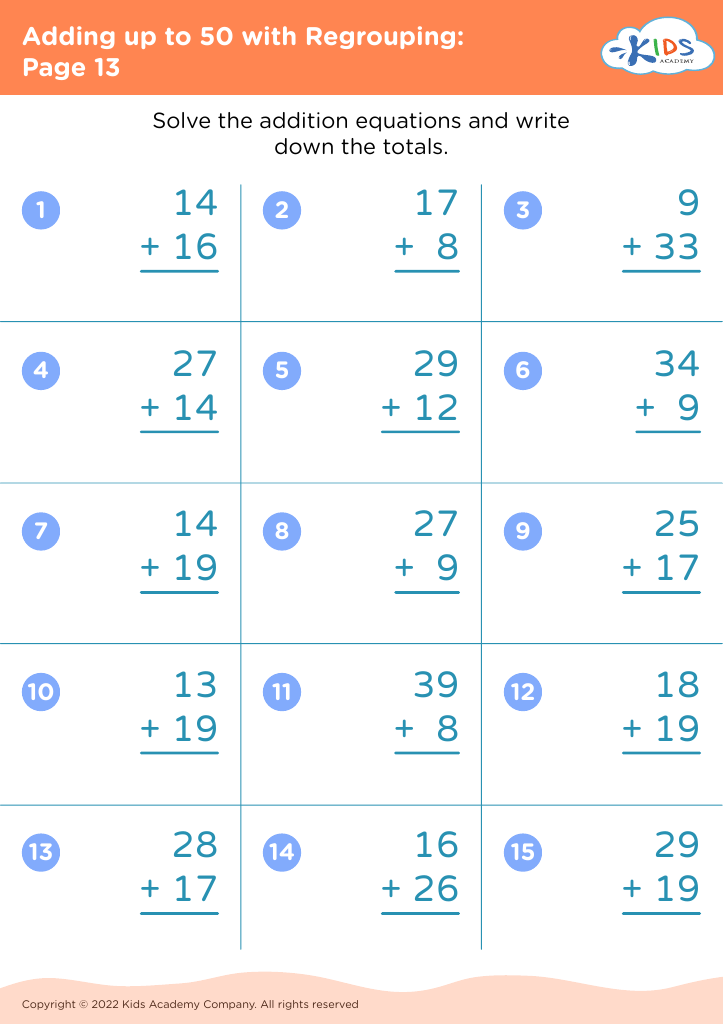








Ensuring a strong foundation in basic math for children ages 4-8 is crucial for several reasons. At this developmental stage, young minds are highly receptive and capable of absorbing new concepts quickly. Early math skills, such as counting, recognizing numbers, understanding simple addition and subtraction, and identifying shapes and patterns, form the essential groundwork for more advanced mathematical learning in later years.
Firstly, basic math fosters logical thinking and problem-solving skills. By grasping early math concepts, children learn to approach problems methodically and develop critical thinking abilities, which are valuable in academic and real-life situations. Secondly, early success in math builds confidence and a positive attitude towards the subject. Children who feel competent in math are more likely to enjoy it and pursue advanced courses, which can open doors to various careers in STEM (Science, Technology, Engineering, and Mathematics) fields.
Moreover, math is intertwined with everyday activities. From telling time to handling money, cooking, and even playing games, a solid math foundation enhances daily living skills. Lastly, early math proficiency is a strong predictor of later academic achievement. If parents and teachers focus on developing these skills during the formative years, they set the child on a path to overall academic success, ensuring they are well-prepared for future educational challenges.








