Comparative skills Math Worksheets for Ages 4-8
3 filtered results
-
From - To
Enhance your child's mathematical understanding with our Comparative Skills Math Worksheets designed for ages 4-8! These engaging resources help young learners grasp essential concepts like more vs. less, greater than vs. lesser than, and sorting items based on size and quantity. With colorful illustrations and age-appropriate exercises, these worksheets make learning fun and interactive. Perfect for both classroom and home use, these activities foster critical thinking and early math skills. Give your child a strong foundation in comparison and measurement with our carefully crafted worksheets, building confidence and competence in math from a young age. Start your learning journey today!
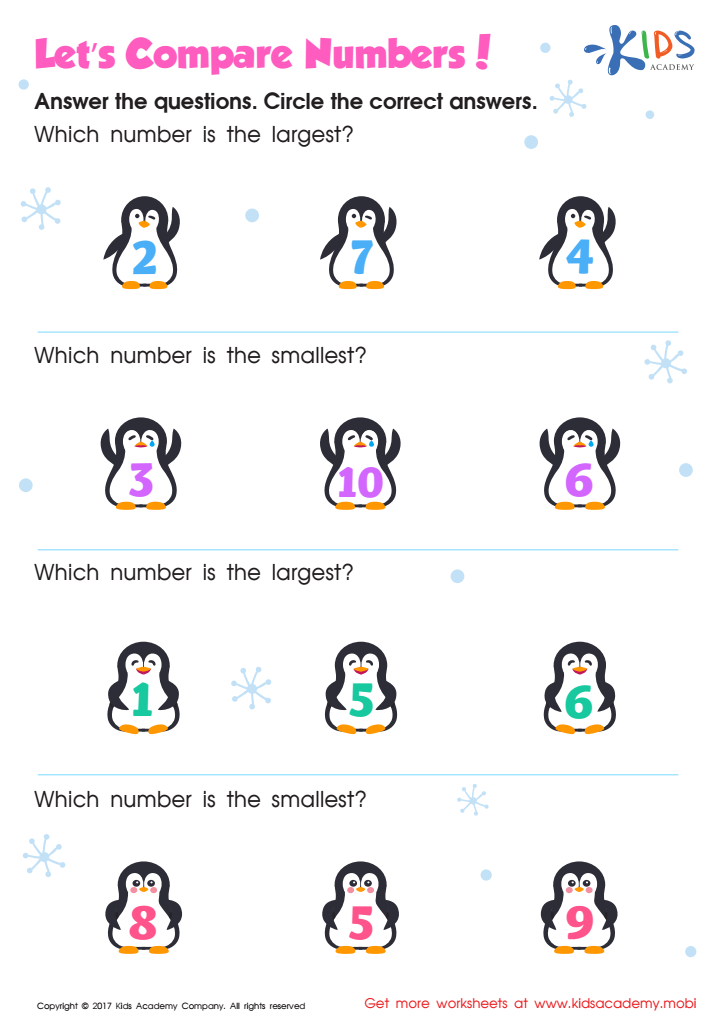
Comparing Numbers 1–10 Worksheet Kindergarten
 Assign to My Students
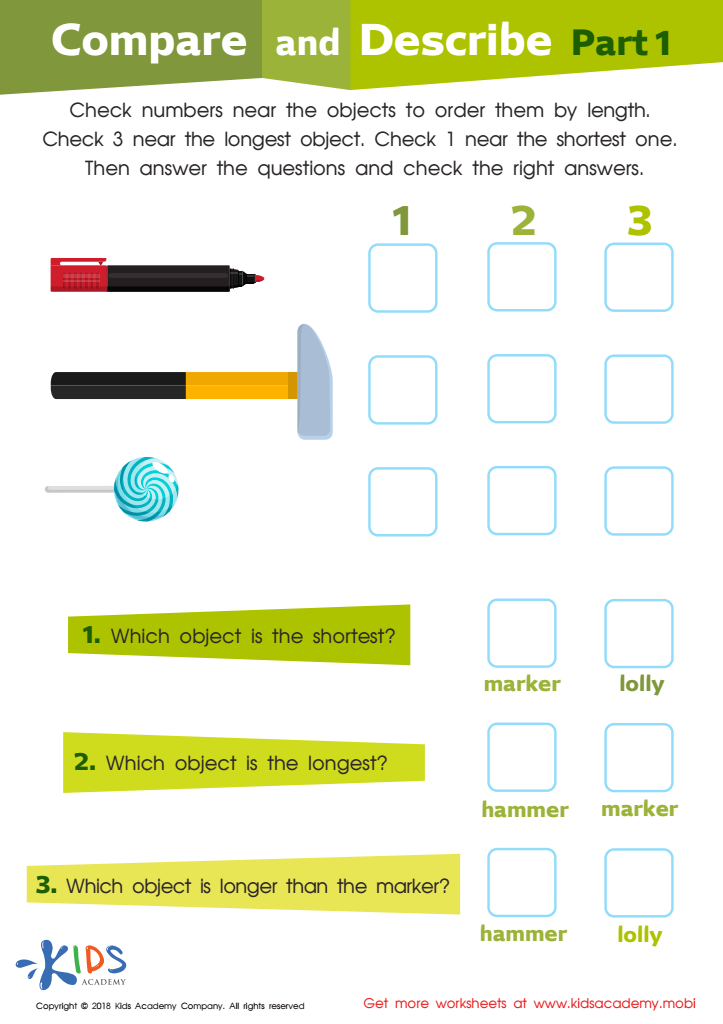
Compare and Describe: Part 1 Worksheet
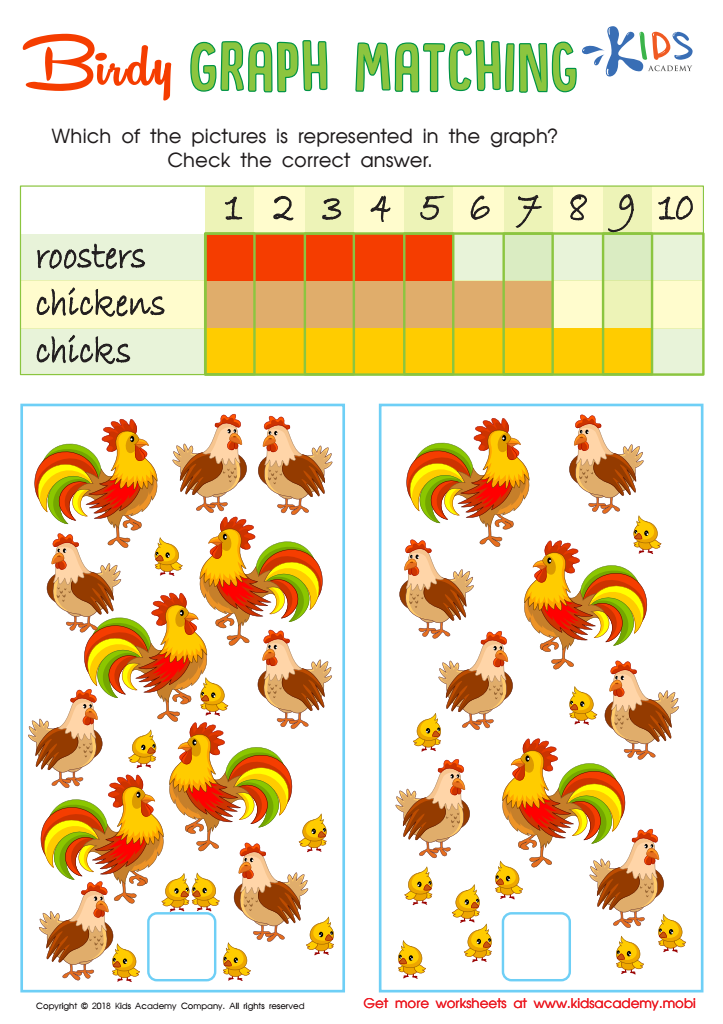
Birdy Graph Matching Worksheet


.jpg)




Comparative skills in math are crucial for children aged 4-8, as they form the foundation for more advanced mathematical concepts. At this developmental stage, children begin to explore relationships between numbers and objects, which helps them understand key concepts like more vs. less, bigger vs. smaller, and equal vs. unequal.
Encouraging the development of these skills supports critical thinking and problem-solving abilities. Children learn to analyze, categorize, and compare various elements, laying the groundwork for analytical skills necessary in everyday life. As children engage in activities that involve comparisons, such as sorting objects or comparing quantities, they also enhance their language and communication skills, helping them articulate mathematical concepts more effectively.
Moreover, mastering comparative skills can boost children’s confidence in their mathematical abilities and foster a love for learning. Early exposure to these concepts can lead to improved performance in later math education, as children who grasp comparisons are better equipped to tackle addition, subtraction, and other operations that rely on a strong understanding of number sense.
Both parents and teachers play a valuable role in nurturing these skills through engaging activities, real-life comparisons, and discussions, forming a vital part of children’s overall cognitive development.








