Comparison Skills Math Worksheets for Ages 4-8
10 filtered results
-
From - To
Enhance your child's mathematical understanding with our "Comparison Skills Math Worksheets" designed specifically for ages 4-8. These engaging worksheets focus on helping young learners distinguish between more and less, bigger and smaller, and understanding numbers through comparison. Each activity is crafted to foster critical thinking and promote number recognition in a fun way. With colorful visuals and kid-friendly themes, these worksheets make learning enjoyable. Encourage your child's confidence in math while developing essential comparison skills that form the foundation for future learning. Ideal for parents and educators seeking effective resources for early mathematics education, consider our comprehensive collection today!
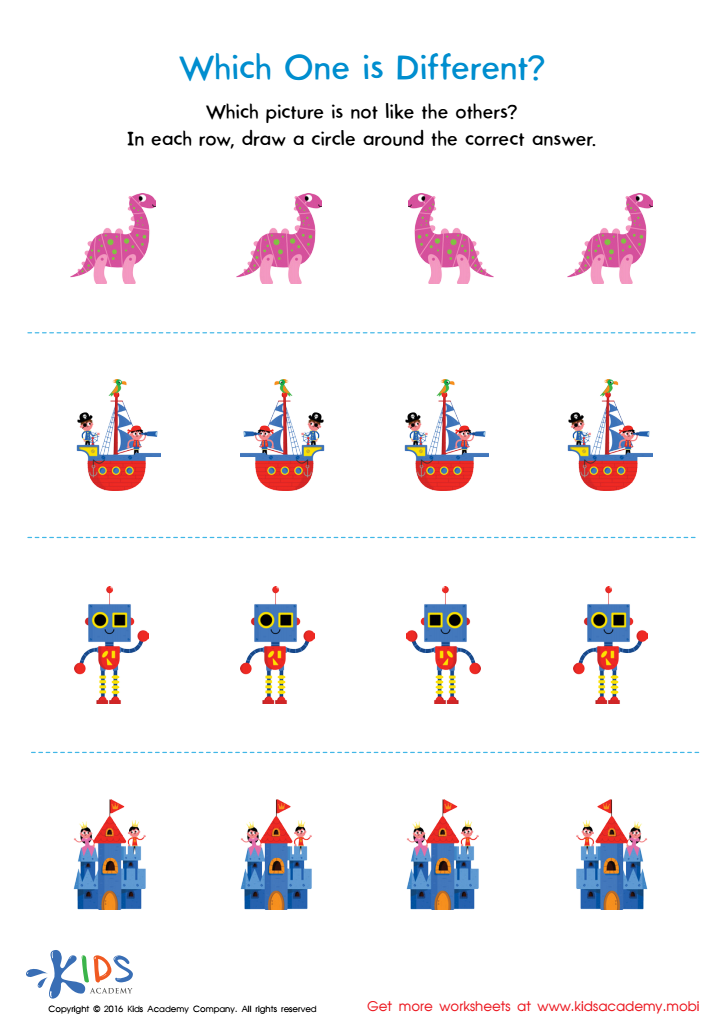
Which One Is Different Worksheet
 Assign to My Students
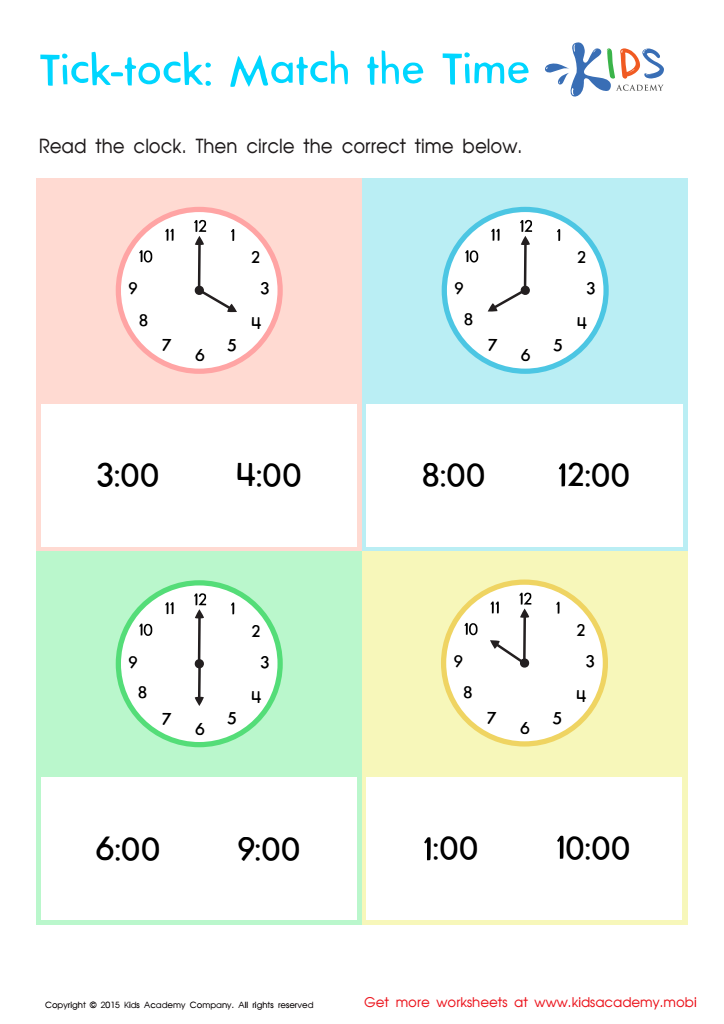
Telling The Time Worksheet: Part 4
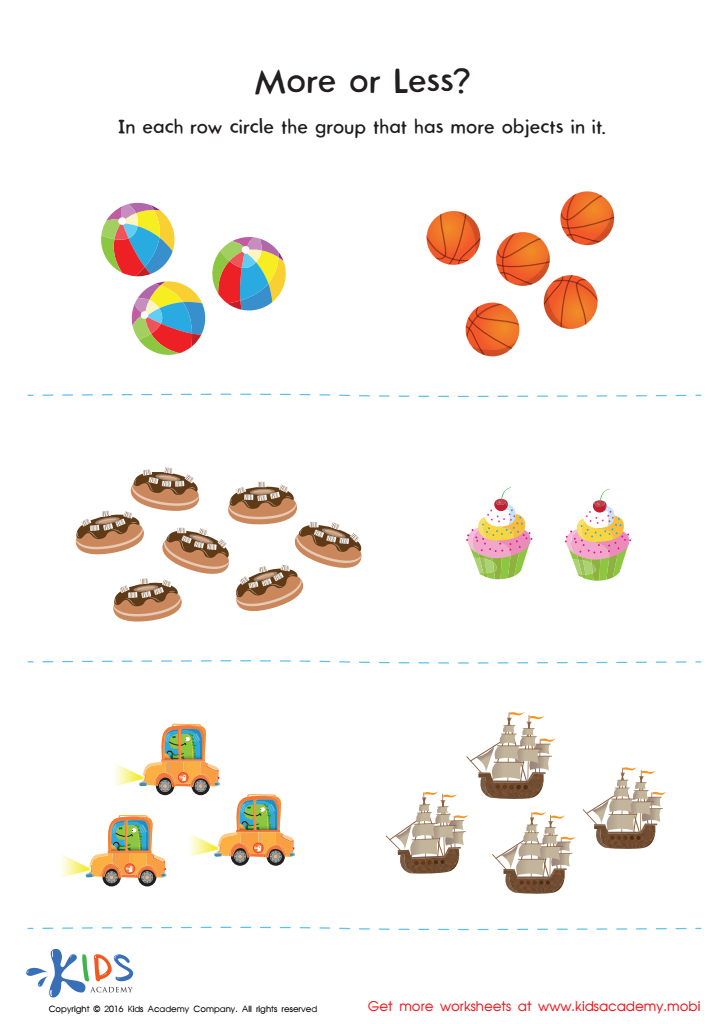
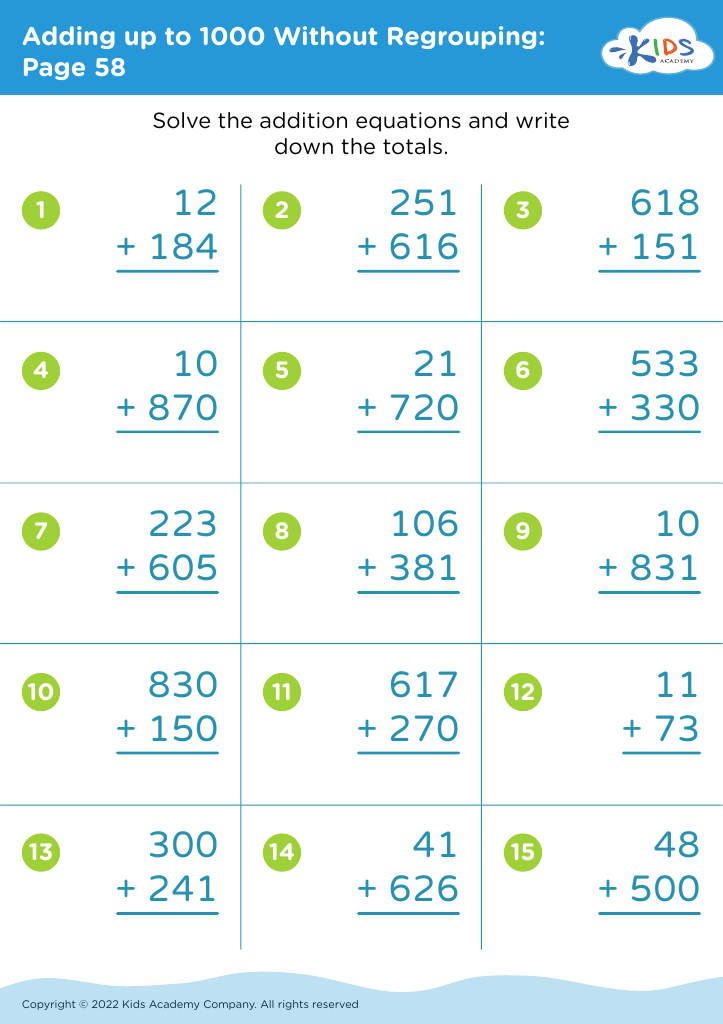
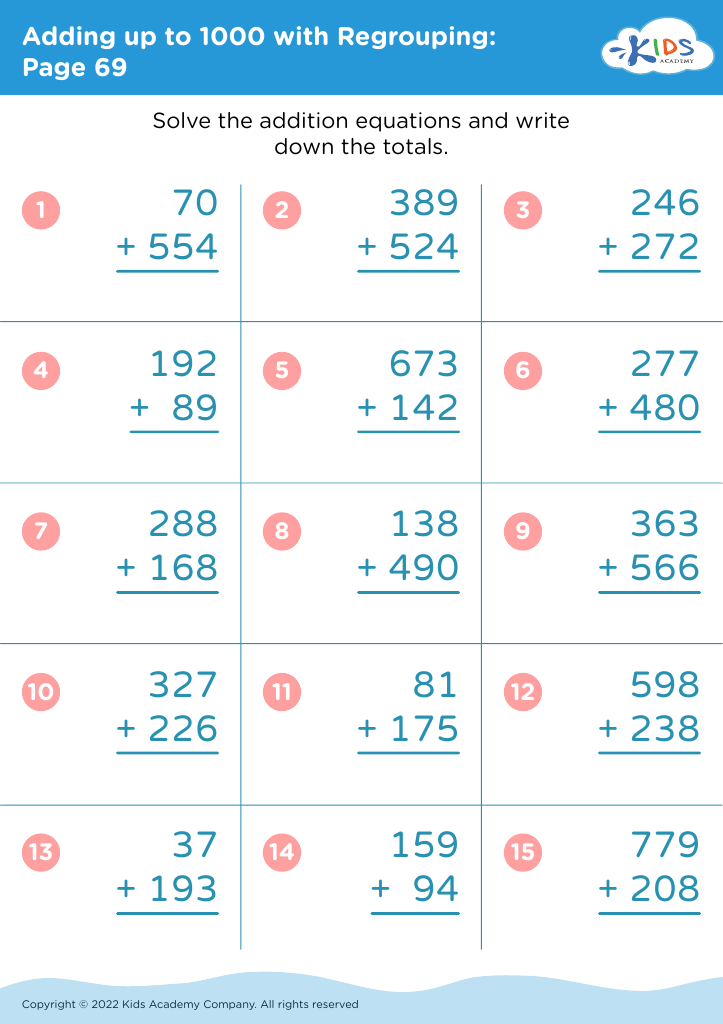
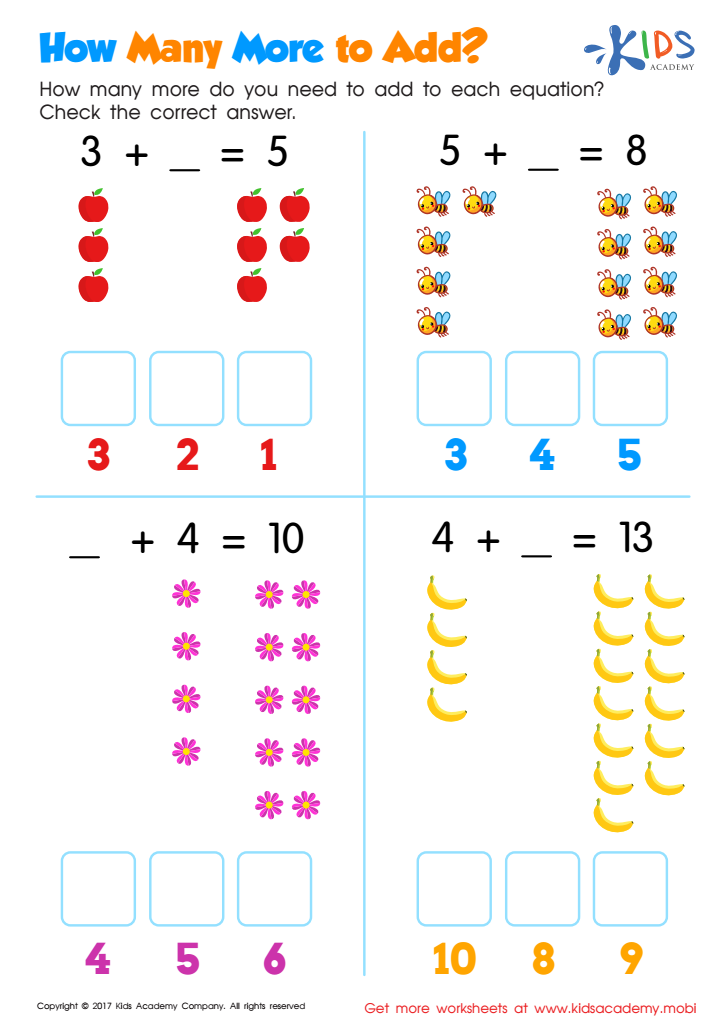
How Many More to Add Worksheet
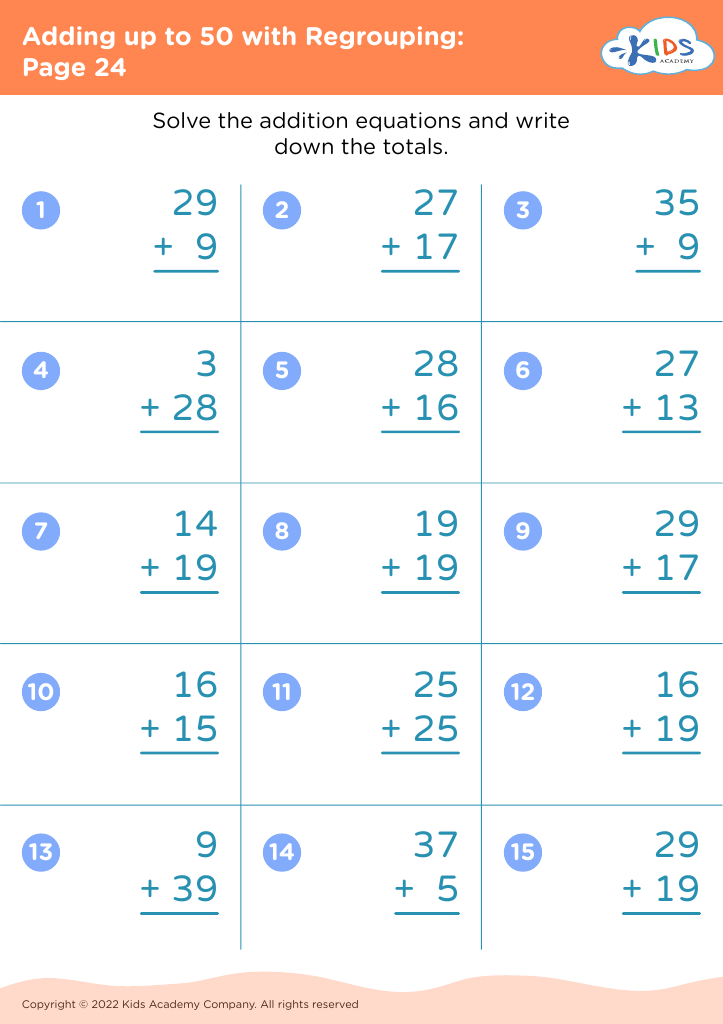
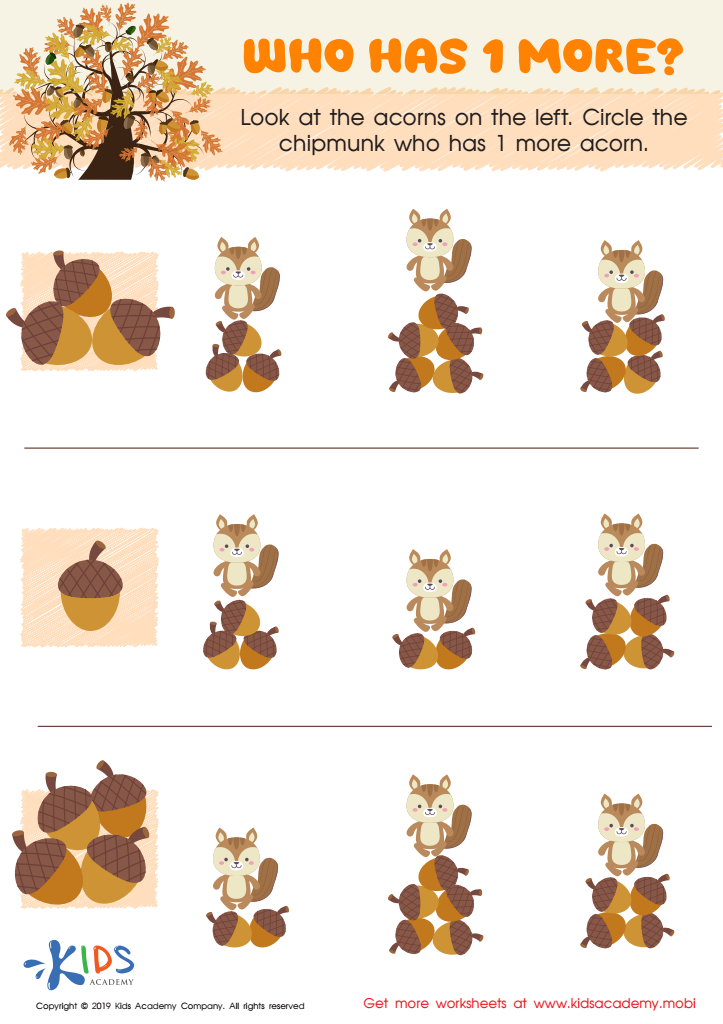
Who Has 1 More? Worksheet
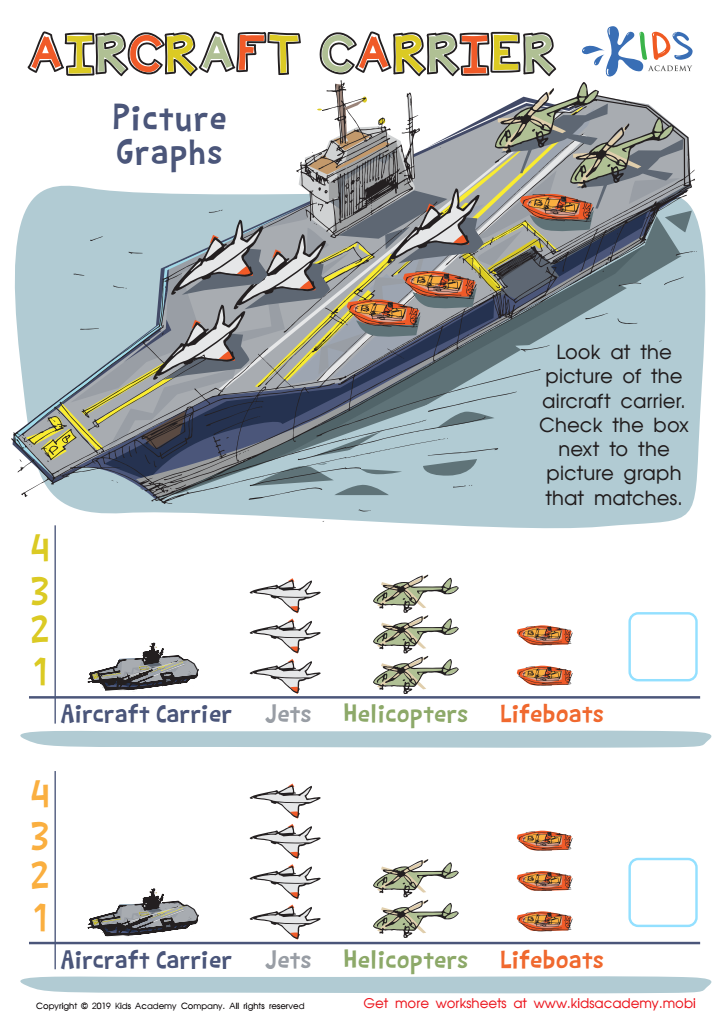
Aircraft Carrier Picture Graphs Worksheet
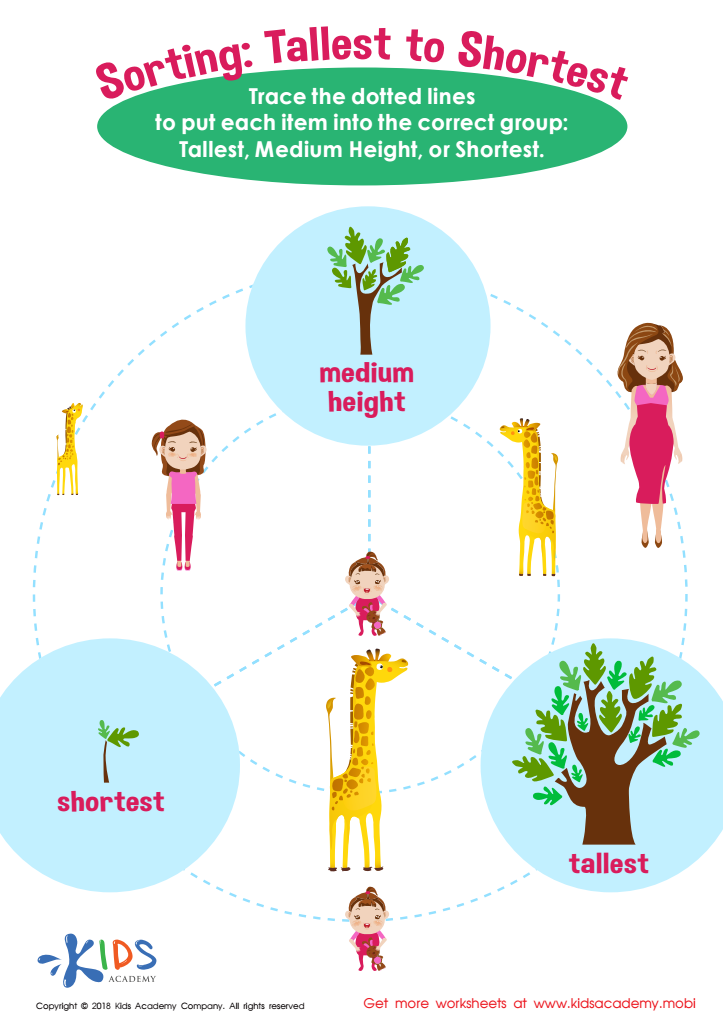
Sorting: Tallest to Shortest Worksheet







Comparison skills in math are crucial for children ages 4-8, as they lay the foundation for critical thinking and problem-solving abilities. During these formative years, children are naturally inclined to explore differences and similarities in their environment. Encouraging this innate curiosity through comparison skills helps them develop a deeper understanding of mathematical concepts, such as size, quantity, and measurement.
When parents and teachers emphasize comparison skills, they enhance children's ability to classify objects, make informed decisions, and understand relationships between numbers. For instance, comparing quantities introduces basic subtraction and addition principles, which are foundational for more complex math tasks later on. This early experience sets the stage for higher-level cognitive skills, such as analytical thinking and logical reasoning.
Furthermore, learning to compare develops a child's language skills—using terms such as "greater than," "less than," and "equal to" enriches their vocabulary and enhances communication skills in broader contexts. Moreover, fostering comparison skills can increase a child's confidence in math, making them more willing to engage with challenging concepts. By prioritizing these skills, parents and teachers can cultivate a love for math that encourages lifelong learning and success in academics and beyond.








