
Counting money Math Worksheets for Ages 4-8
3 filtered results
Difficulty Level
Grade
Age
-
From - To
Subject
Activity
Standards
Enhance your child’s math skills with our "Counting Money Math Worksheets" designed for ages 4-8. These engaging and educational printables from Kids Academy help young learners master the basics of counting coins and bills. With colorful, fun activities, children practice recognition and addition of different denominations, building a solid foundation for financial literacy. Ideal for preschoolers to second graders, these worksheets gradually increase in difficulty, making learning to count money an enjoyable challenge. Spark curiosity and confidence in mathematics with our expertly designed resources, perfect for both classroom use and at-home practice. Download now and watch your child excel!
Favorites
With answer key
Interactive
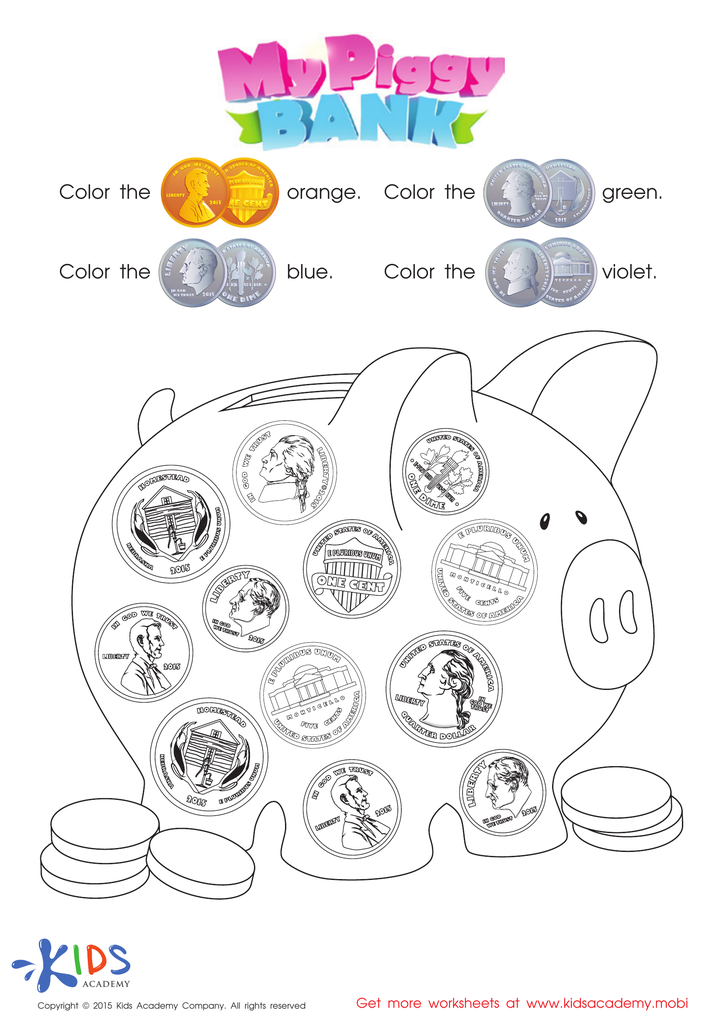
Recognizing Money Money Worksheet
Help the piggy bank by coloring its coins with Kids Academy's free money worksheets! Learn the different coins and their values with your kids. Printable worksheets are available to continue the lesson. Let's learn and have fun!
Recognizing Money Money Worksheet
Worksheet
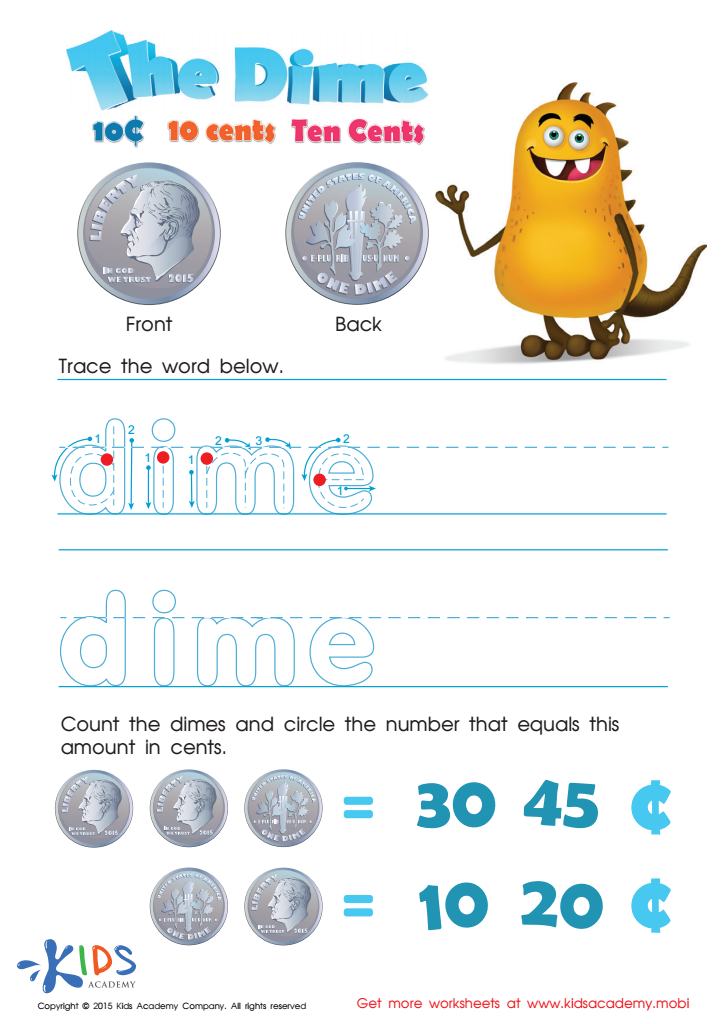
Ten Cents or the Dime Money Worksheet
Introduce your kids to coin games! Start with a dime: trace the word on both sides and count the dimes. Kids Academy has printable worksheets to help your kids learn how to count money.
 Assign to My Students
Ten Cents or the Dime Money Worksheet
Worksheet
Join Kids Academy for Free
Who is primarily going to use this learning content?







Counting money is an essential skill for young children ages 4-8 for several reasons. First, it serves as a practical application of basic math concepts, such as addition, subtraction, multiplication, and division, reinforcing their importance and making learning enjoyable and relevant. Understanding currency helps children grasp the value of numbers and the concept of quantifiable worth, which is fundamental for financial literacy.
Second, learning to count and manage money promotes problem-solving skills and critical thinking. When children figure out how much change to expect or how to split an amount, they develop strategic thinking that can be applied to other learning areas and everyday life situations.
Third, an early introduction to money encourages responsibility and independence. It provides children with the confidence to handle small transactions, fostering a sense of accomplishment and self-reliance. Even at a young age, interacting with money helps children understand the basics of earning, budgeting, saving, and spending wisely, setting the groundwork for healthy financial habits in adulthood.
Lastly, counting money can be a fun and engaging way for parents and teachers to bond with children. It offers numerous interactive and hands-on learning opportunities, from playing pretend stores to using educational games, which enhance both cognitive and social development. Overall, prioritizing this skill can significantly impact a child's future educational and personal success.








