Unlock the power of quick calculations for kids aged 4-8 with our specially designed math worksheets! These age-appropriate exercises aim to boost your child's calculation speed and enhance their numerical skills through engaging and fun activities. Our worksheets cover essential arithmetic operations and help children build a solid math foundation while encouraging critical thinking and problem-solving. Perfect for young learners, these printables foster a strong mathematical mindset, preparing them for future academic success. Make math exciting and accessible today with our expertly crafted resources designed to turn learning into an enjoyable adventure!

Check out this FREE Trial Lesson on Math for age 4-8!

Mental Math -Subtract and Add by 10

Favorites
With answer key
Interactive
  • 4-8
  • Enhancing calculation speed
  • Math
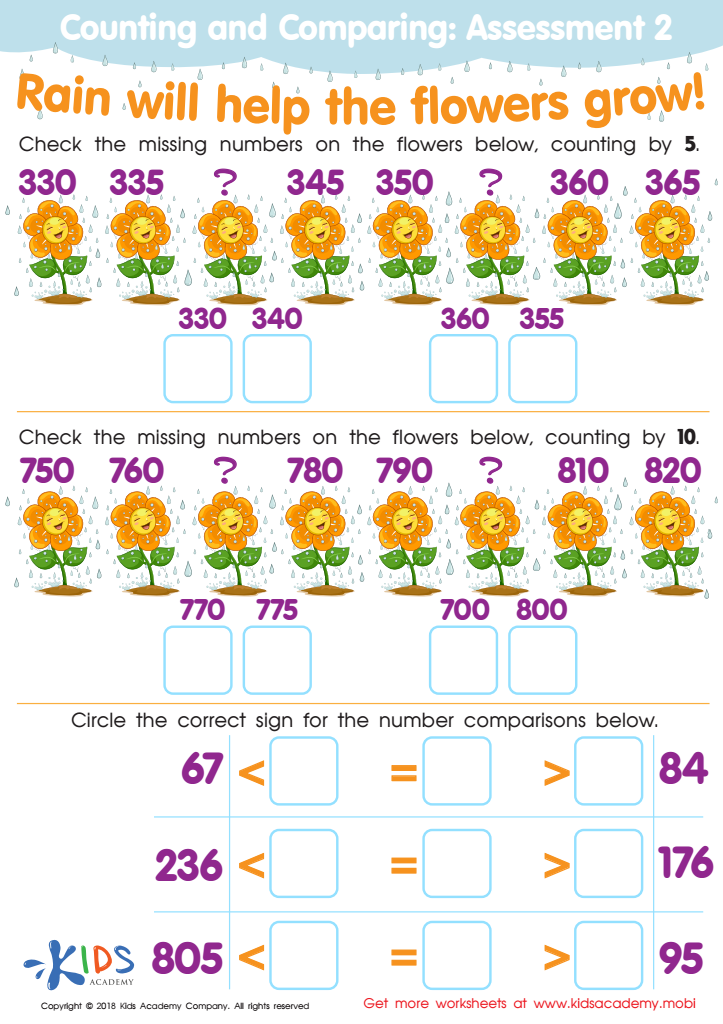
Counting and Comparing: Assessment 2 Worksheet

Counting and Comparing: Assessment 2 Worksheet

This worksheet featuring flowers in the rain is a great way to assess your kids' math skills. Check their number line and comparison sentences accuracy to get an overview of their abilities. Knowing these skills helps with computation, so you can pinpoint where they need extra help.
Counting and Comparing: Assessment 2 Worksheet
Worksheet
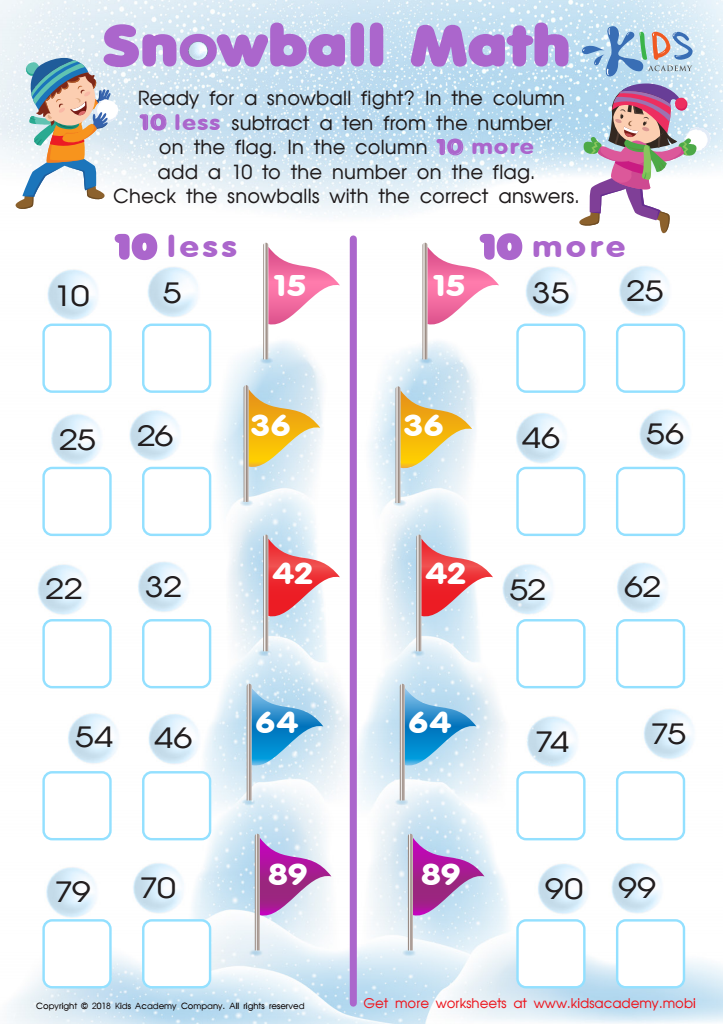
Snowball Math Worksheet

Snowball Math Worksheet

Kids can have a snowball fight and build math skills at the same time with this free worksheet. Kids can use tens to add and subtract for quick math equations and select the correct answers. No need to worry about getting cold either - these snowballs won't chill you!
Snowball Math Worksheet
Worksheet
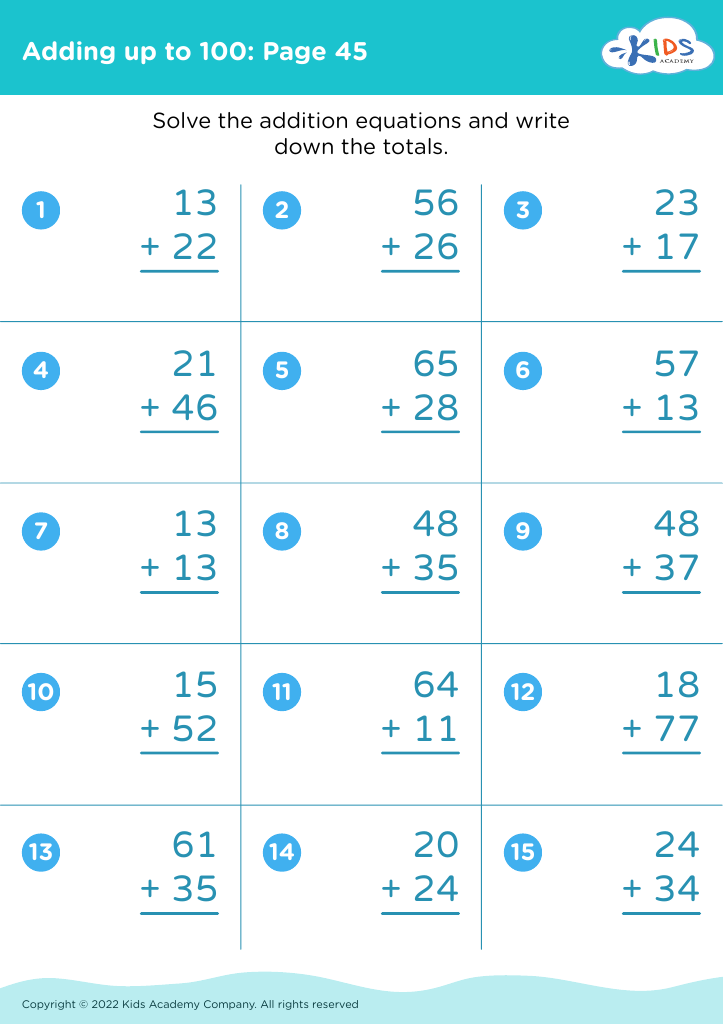
Adding up to 100: Page 45

Adding up to 100: Page 45

Adding up to 100: Page 45
Worksheet
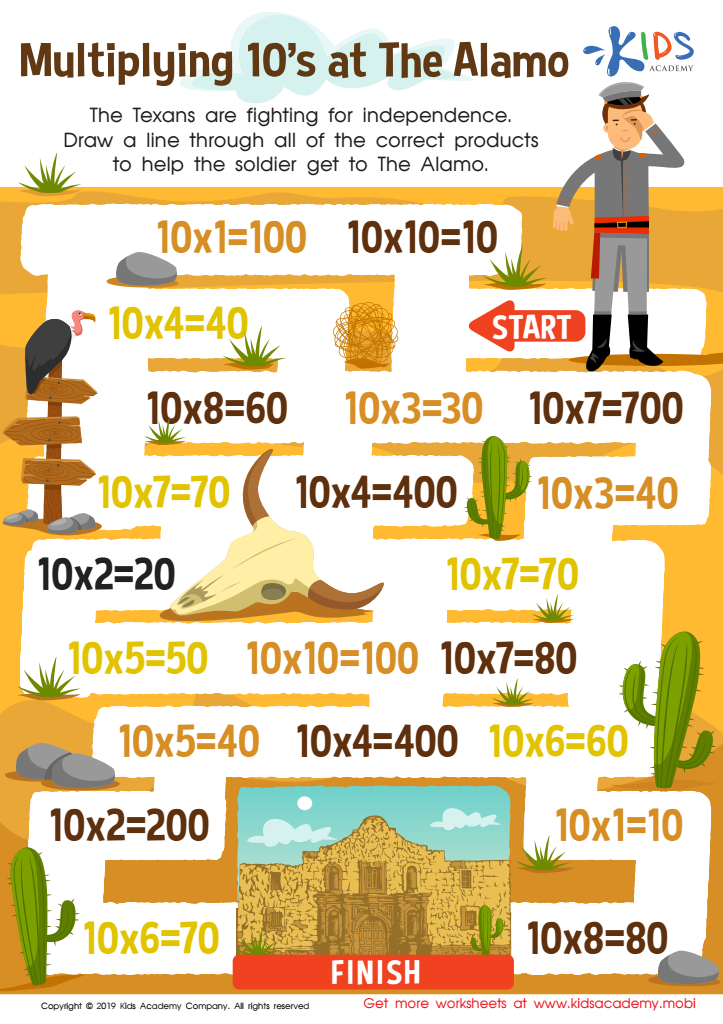
Multiplying 10’s at The Alamo Worksheet
Multiplying 10’s at The Alamo Worksheet

Teach your kids easy tricks to simplify any multiplication problem. For example, when multiplying any number by 10, the result will always end in a zero. To help the Texans in this worksheet, draw a line through all of the correct products to get them to The Alamo.
Multiplying 10’s at The Alamo Worksheet
Worksheet
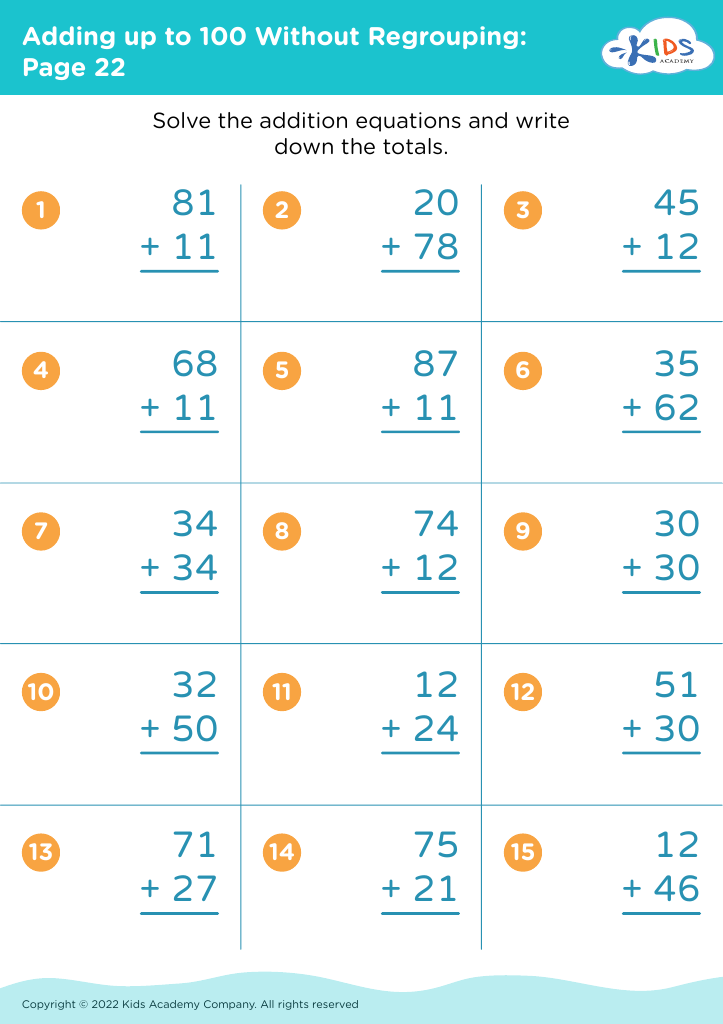
Adding up to 100 Without Regrouping: Page 22
Worksheet
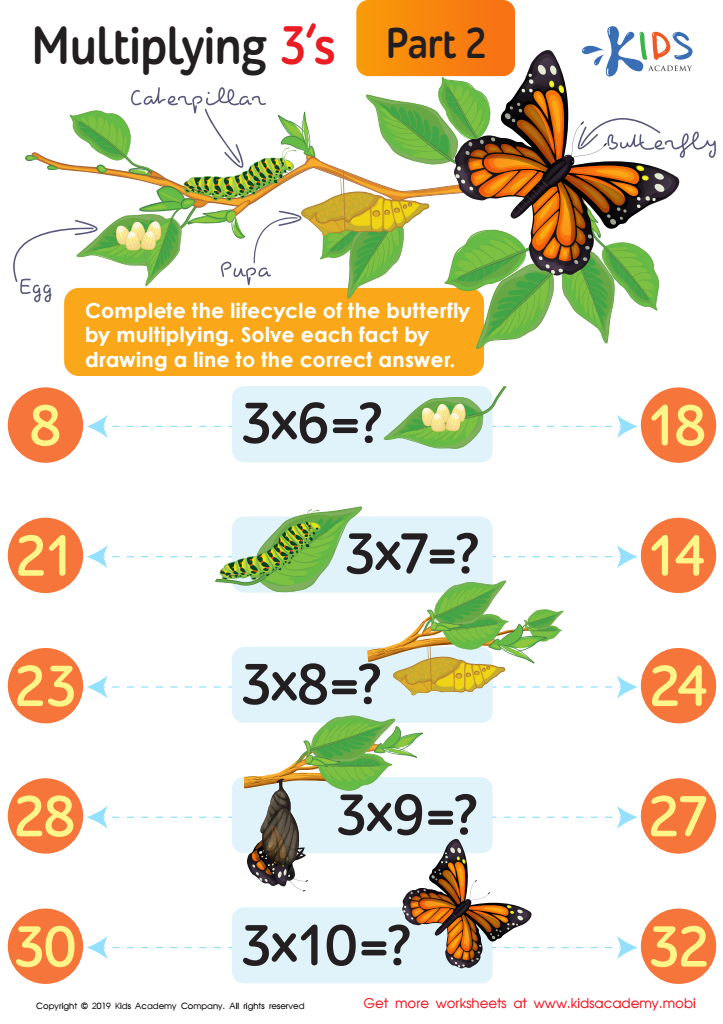
Multiplying 3s Part 2 Worksheet

Multiplying 3s Part 2 Worksheet

Once a tiny egg, a butterfly goes through its life cycle. From egg to caterpillar to cocoon to beautiful winged creature! Ask your kids to complete the lifecycle by solving the facts on the worksheet. Help them draw a line to the right answer and let them marvel at the butterfly's amazing transformation!
Multiplying 3s Part 2 Worksheet
Worksheet
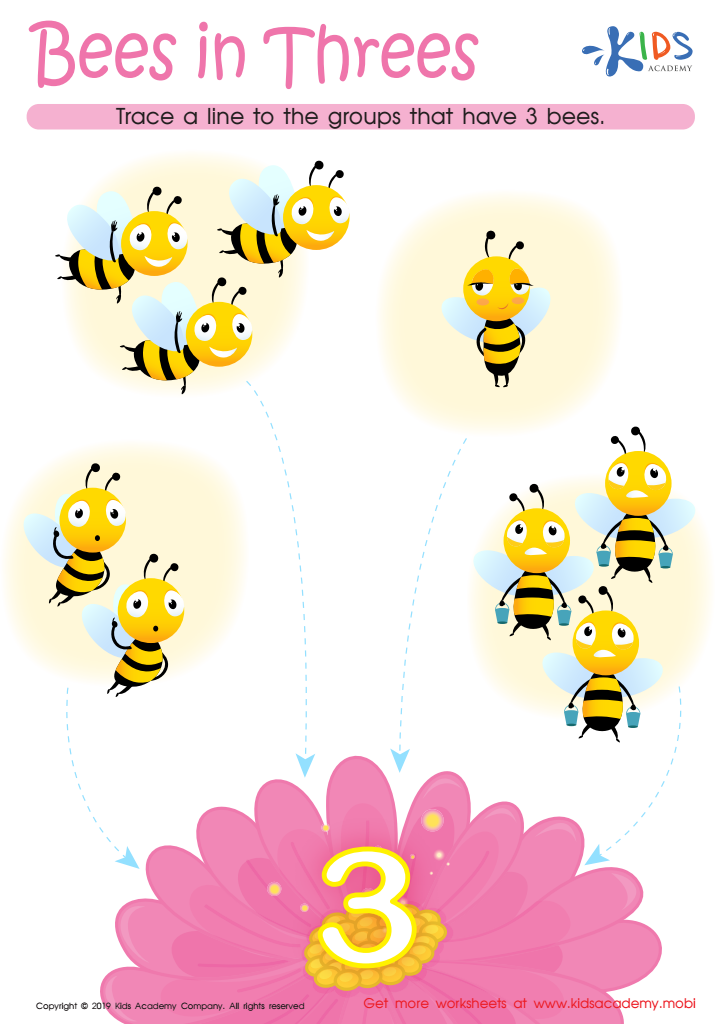
Bees in Threes Worksheet

Bees in Threes Worksheet

Kids love learning numbers, especially 1, 2, 3! Counting bees with this fun worksheet? It's the bee's knees! They'll practice number recognition and counting skills while connecting groups of three to the number three. It's a great way to make math fun at home or school!
Bees in Threes Worksheet
Worksheet
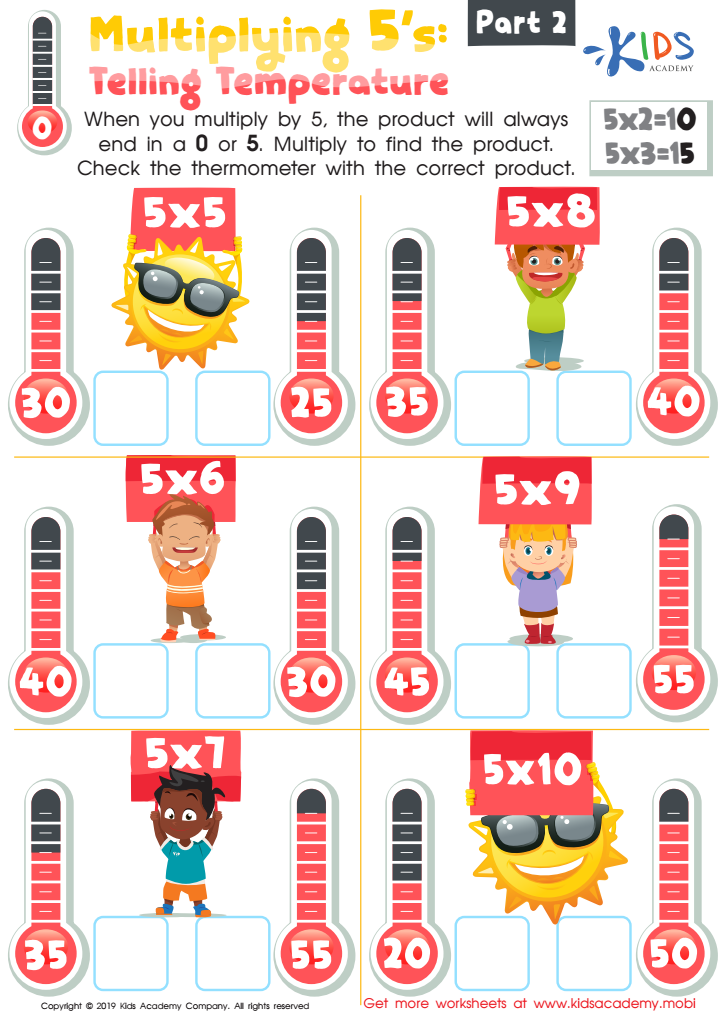
Multiplying 5’s: Telling Temperature Part 2 Worksheet
Multiplying 5’s: Telling Temperature Part 2 Worksheet

To help your child with multiplication, teach them some simple tricks. For example, when multiplying 10's the product always ends in a 0, and when multiplying by 5, the product will end in 0 or 5. Look at the problems in this worksheet and help your child find the product. Then, check the thermometer with the correct answer.
Multiplying 5’s: Telling Temperature Part 2 Worksheet

Worksheet
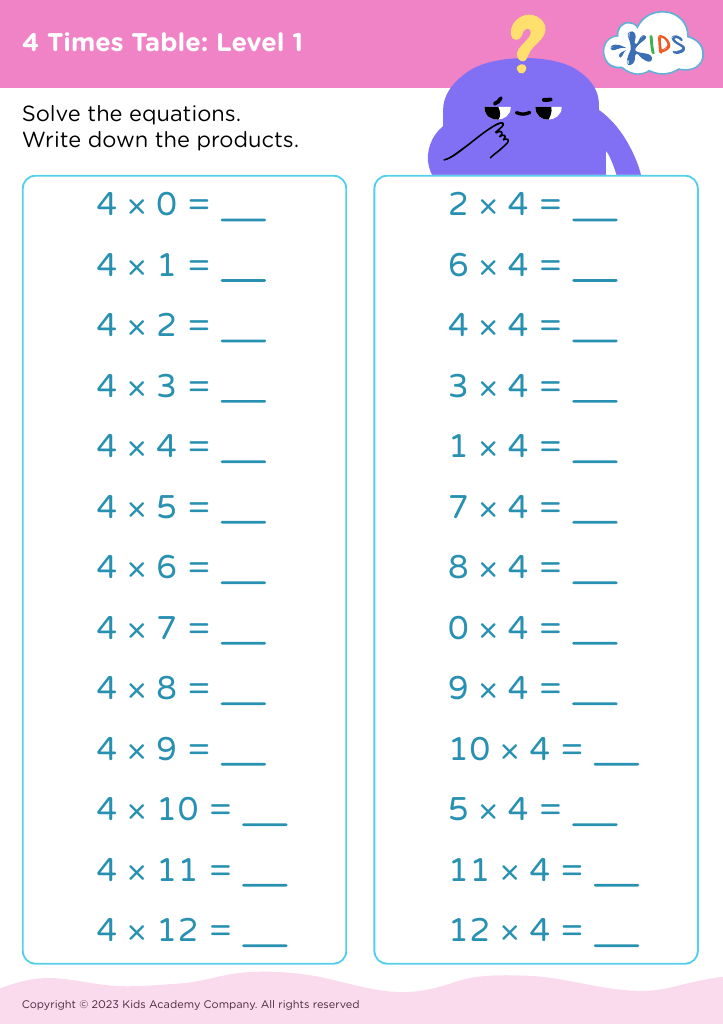
4 Times Table: Level 1

x4 Multiplication Chart

x4 Multiplication Chart
Worksheet
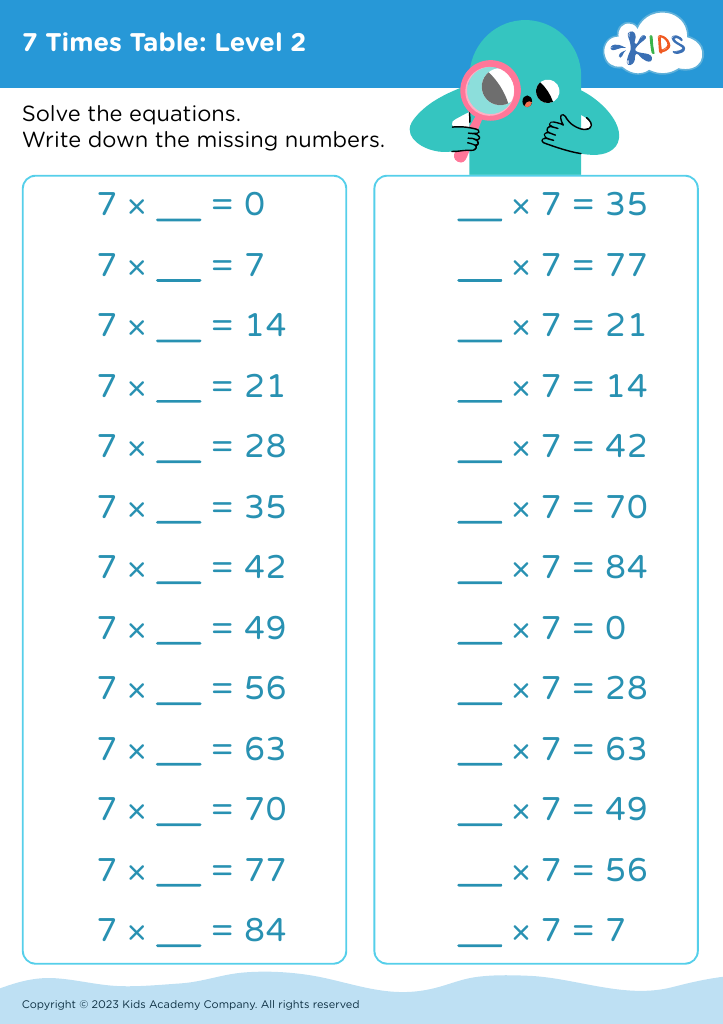
7 Times Table: Level 2

7 Times Table: Level 2

7 Times Table: Level 2
Worksheet


Enhancing calculation speed in math for children ages 4-8 is crucial, as these early years are foundational for their educational development. At this age, children’s brains are exceptionally adaptable and primed for learning foundational skills that will benefit their future academic pursuits.

First, faster calculation speed boosts confidence. When children can quickly solve simple math problems, they experience a sense of achievement, which can foster a positive attitude toward math and learning in general. This confidence can create a domino effect, encouraging them to tackle more challenging tasks with enthusiasm.

Second, early proficiency in basic arithmetic helps free up cognitive resources for more complex problem-solving. When children can rapidly perform simple calculations, they are better equipped to handle more complicated tasks without getting bogged down by basic arithmetic. This allows them to focus on understanding concepts and developing higher-order thinking skills.

In addition, strong math skills support success in other academic areas. Math often overlaps with subjects like science and even gymnastics or music (where counting and rhythm are key). Therefore, quick calculation abilities can improve overall academic performance.

Lastly, fostering quick calculation skills enculturates a habit of mental math, a practical skill that's beneficial in everyday life. Simple tasks like making change, measuring ingredients, or just keeping score in a game become intuitive, enhancing analytical and critical thinking skills useful throughout their lives.