Grammar practice Math Worksheets for Ages 4-8
3 filtered results
-
From - To
Explore our engaging Grammar Practice Math Worksheets designed specifically for children ages 4-8! These worksheets combine essential grammar skills with fun math activities, helping young learners develop their language and mathematical abilities simultaneously. Each worksheet features colorful illustrations and interactive exercises to maintain enthusiasm and interest, making learning enjoyable. Aligned with early educational standards, our resources are ideal for classroom use or at-home practice. By integrating grammar with math concepts, children will strengthen their comprehension and application of language while enhancing their problem-solving skills. Start your child's learning journey today and witness their confidence grow!
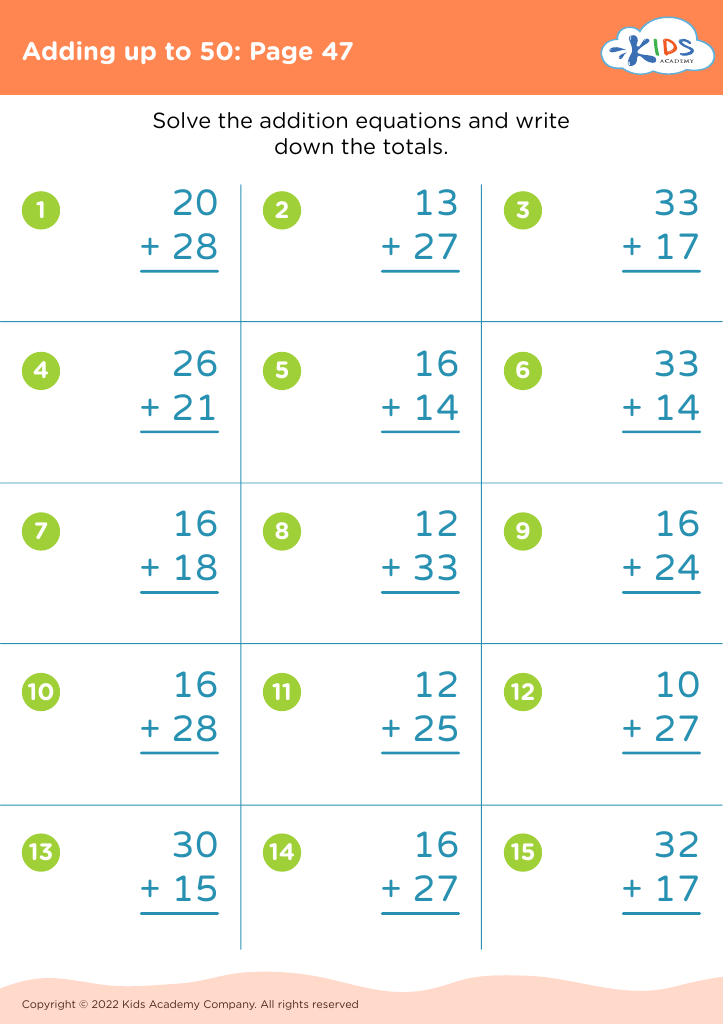
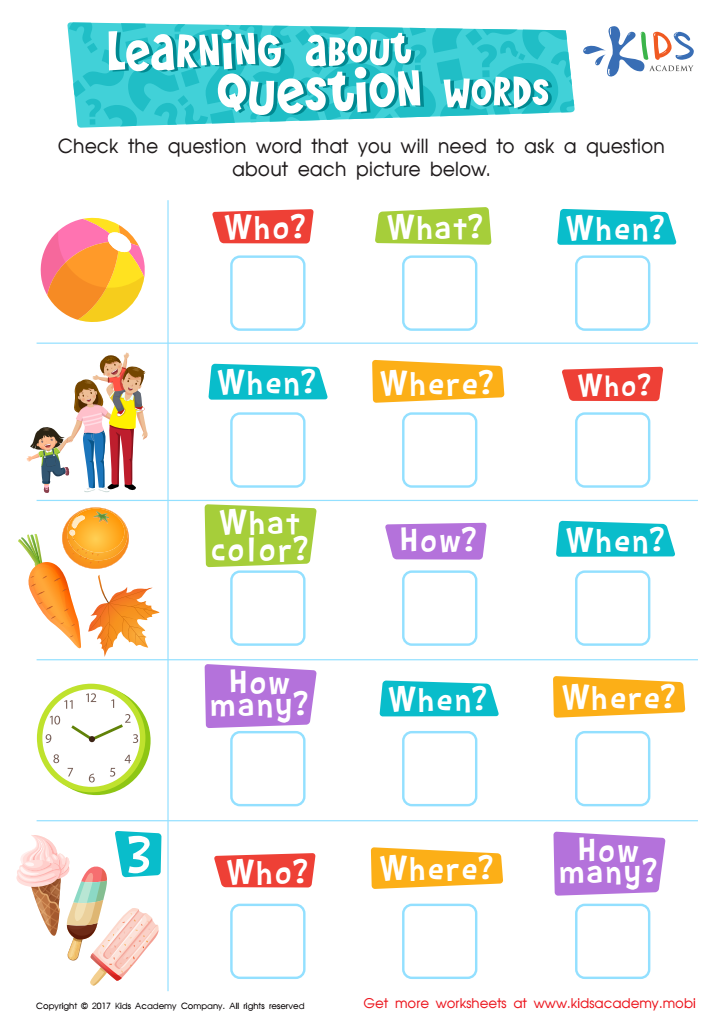
Learning about Question Words Worksheet
 Assign to My Students
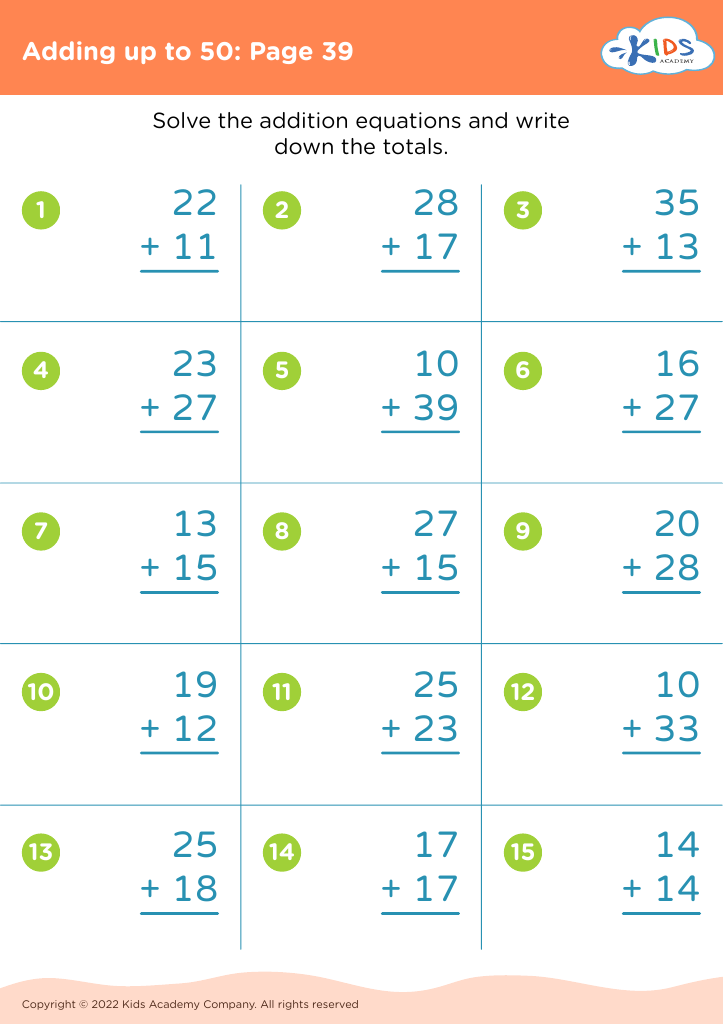







Grammar practice in math for children aged 4-8 is crucial for several reasons. Firstly, language skills and mathematical concepts are interconnected. Early grammar practice aids students in understanding and articulating math problems, thus enhancing their comprehension and problem-solving skills. For instance, identifying the key terms in a math question helps children grasp what is being asked, leading to more effective problem-solving.
Moreover, introducing grammar in the context of math encourages clarity in thought and communication. Children learn how to formulate their ideas clearly, which is essential for sharing their reasoning processes and collaborating with peers. This lays the foundation for better communication skills overall, which are vital in both academic and everyday contexts.
Additionally, at this age, children learn through play and exploration. Engaging math activities that incorporate grammar aspects make learning enjoyable, fostering a positive attitude towards both language and math. This builds confidence and establishes a strong educational groundwork, preparing children for more complex concepts in later grades.
Ultimately, incorporating grammar practice into math loaded with age-appropriate content not only strengthens students' ability to express their understanding but also enriches their overall learning experience, benefiting both academic success and personal development.








