Knowledge reinforcement Math Worksheets for Ages 4-8
3 filtered results
-
From - To
Enhance your child's math skills with our engaging Knowledge Reinforcement Math Worksheets for ages 4-8! Designed to strengthen foundational concepts, these worksheets offer a captivating mix of activities that make learning fun and effective. Young learners will explore math through colorful exercises that build confidence and mastery in addition, subtraction, counting, and more. Each worksheet is aligned with educational standards, ensuring that your child’s learning is both enriching and comprehensive. Perfect for parents and teachers alike, our resources help reinforce essential skills, creating a solid math foundation for years to come. Explore our collection and watch your child excel!
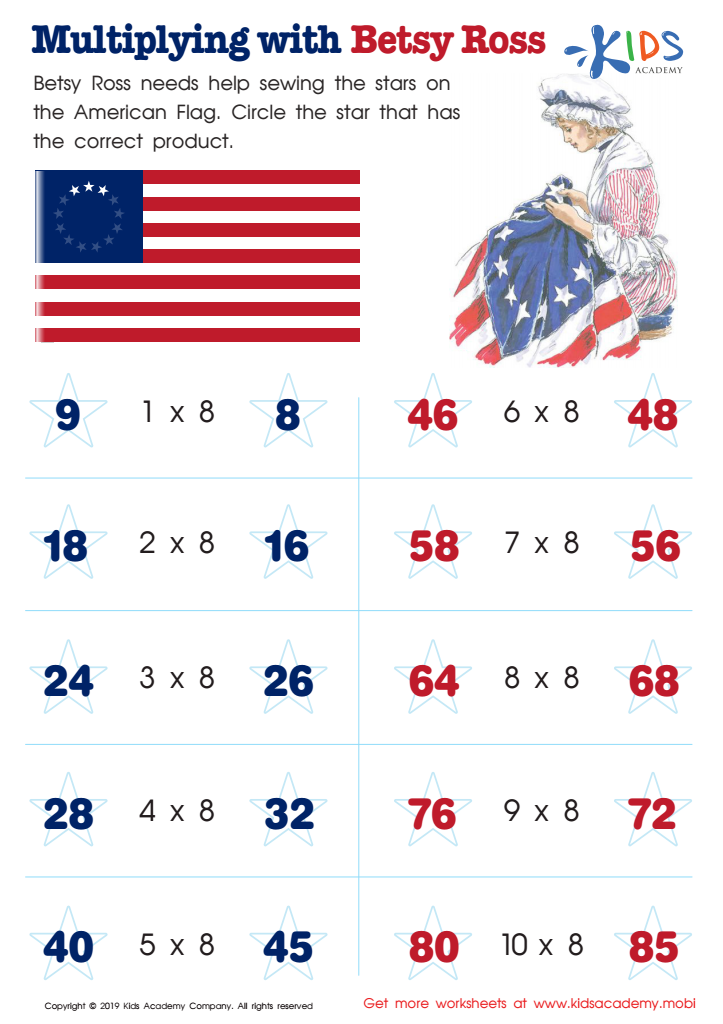
Multiplying with Betsy Ross Worksheet
 Assign to My Students
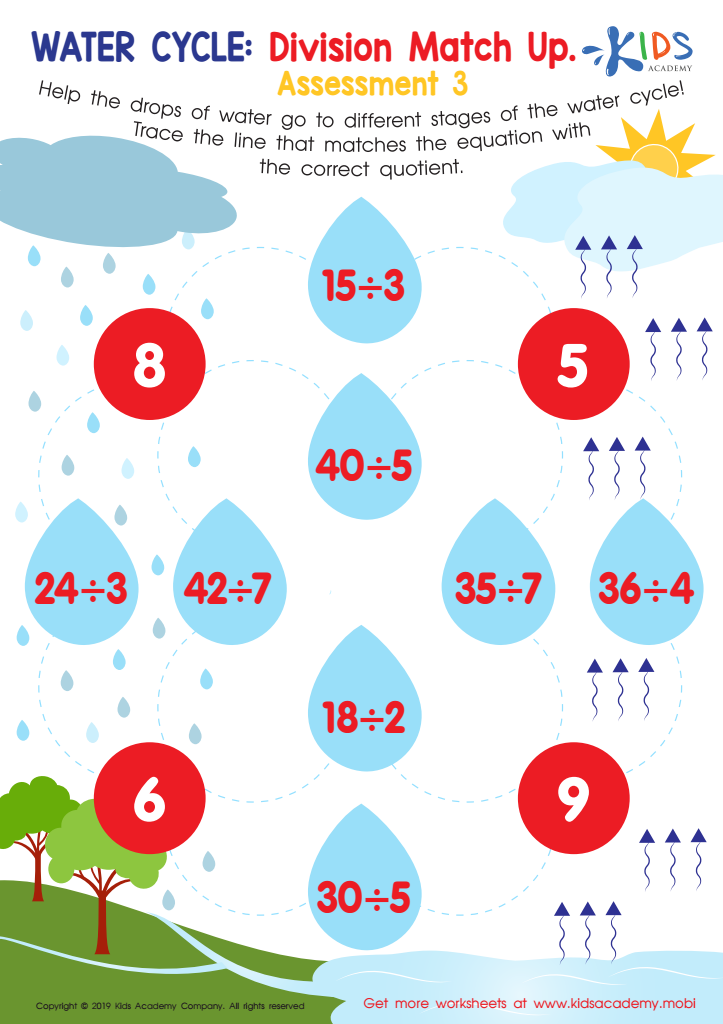
Water Cycle Division Match Up Assessment 3 Worksheet








Knowledge reinforcement in math for children aged 4-8 is crucial for several reasons. At this developmental stage, children are forming foundational skills that set the stage for their future academic success. Reinforcing mathematical concepts through engaging activities enhances understanding and retention, making math less intimidating and more enjoyable for young learners.
Early math skills such as counting, basic addition and subtraction, and recognizing shapes help children develop critical thinking and problem-solving abilities. By fostering a strong mathematical base, parents and teachers can boost students’ confidence, creating a positive attitude towards learning that lasts a lifetime. Knowledge reinforcement ensures that children grasp essential concepts before moving on to more complex topics, preventing gaps in understanding that can result in academic struggles later on.
Moreover, engaging students in fun, hands-on activities helps them apply mathematical knowledge to real-world situations, fostering a love for learning. Collaborative activities also promote social skills, teamwork, and communication. In a world increasingly reliant on technology and analytical skills, early math education is vital for preparing children to thrive in future educational endeavors and everyday life. Therefore, both parents and teachers play an essential role in facilitating this critical cognitive development during these formative years.








