Numerical problem solving Math Worksheets for Ages 4-8
3 filtered results
-
From - To
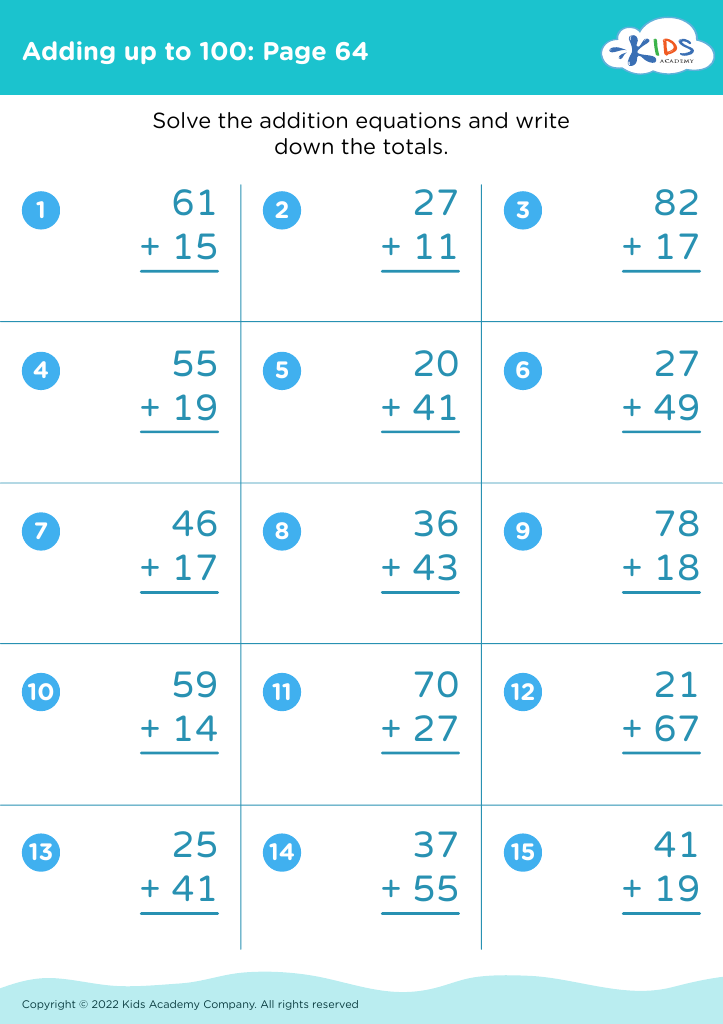
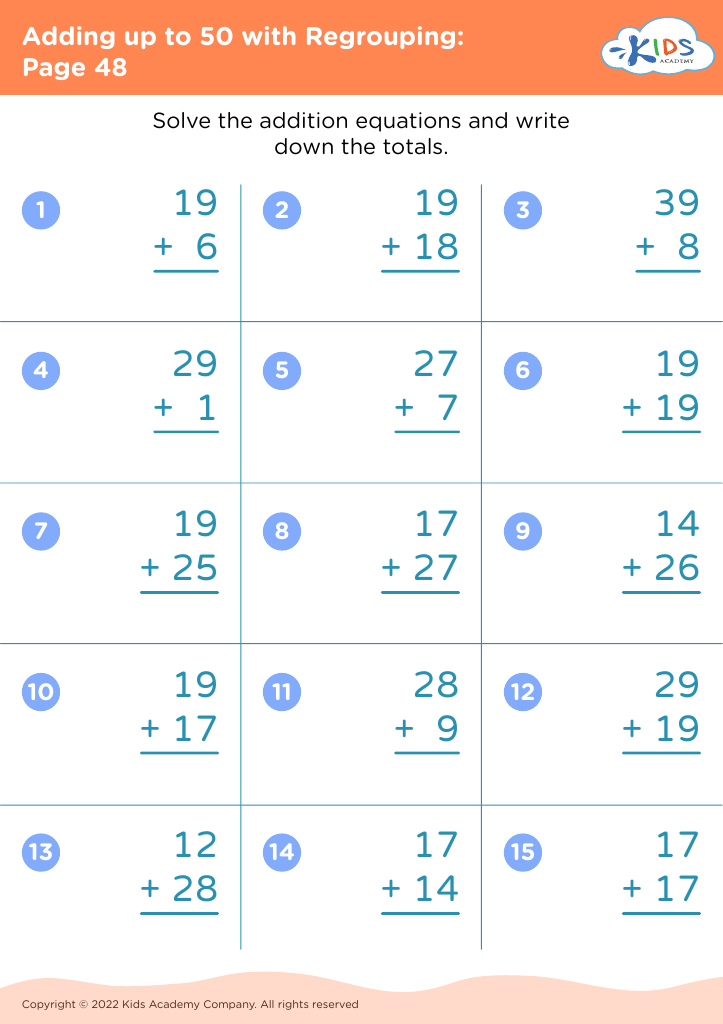
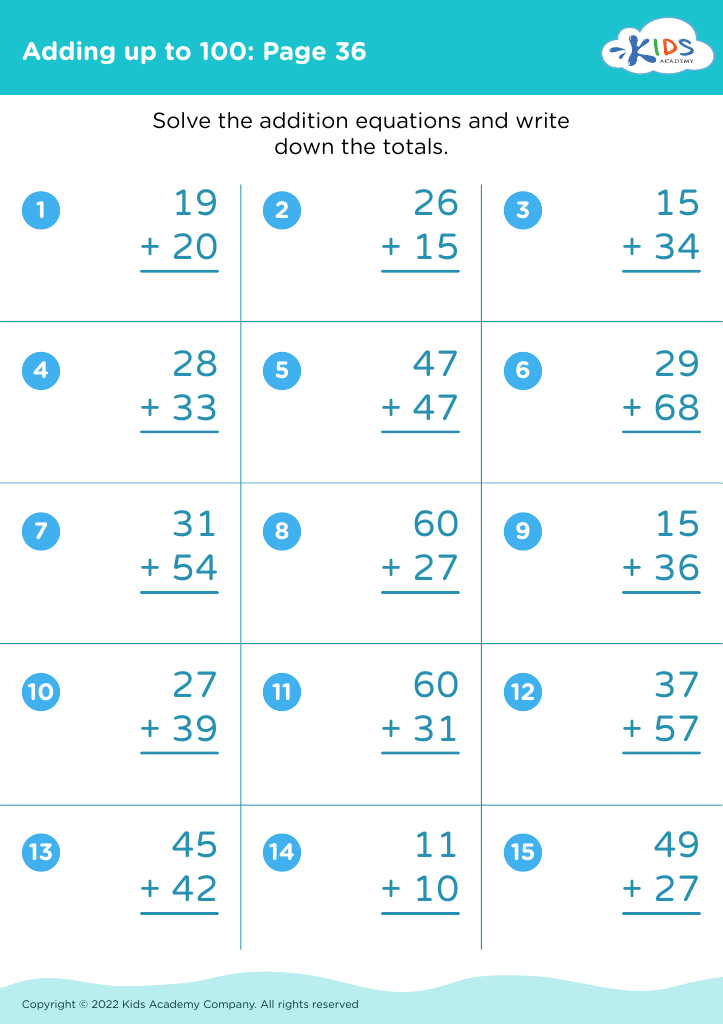
Explore our stellar collection of Numerical Problem Solving Math Worksheets designed for children ages 4-8! Tailored to enhance critical thinking and mathematical skills, our worksheets offer engaging activities that cover everything from basic addition and subtraction to more complex problem-solving exercises. Each printable worksheet is crafted to make learning fun and effective, helping young minds grasp essential math concepts through interactive problems and visual aids. Perfect for both classroom and at-home learning, these resources empower children to build confidence and excel in their numerical abilities. Boost your child's math skills today with Kids Academy!







Numerical problem-solving in early math is essential for children aged 4-8 as it lays the foundational groundwork for future academic success and everyday life skills. At this developmental stage, young minds are particularly receptive to learning patterns, logical reasoning, and the basics of arithmetic. Engaging children with numerical problem-solving activities helps them develop critical thinking and analytical skills, which are invaluable in all areas of life.
For parents and teachers, nurturing these skills early provides children with confidence in their ability to tackle mathematical challenges. This confidence can translate into higher academic achievement across subjects as math proficiency often correlates with better performance in other areas like science and engineering. Furthermore, problem-solving tasks can enhance a child's attention span, perseverance, and ability to work through complex tasks incrementally.
Finally, early numerical problem-solving helps children make sense of the world around them. Whether it’s distributing snacks equally among friends, understanding time, or managing pocket money, these skills have practical applications. When parents and teachers prioritize these mathematical foundations, they are not merely teaching numbers and equations, but equipping children with the analytical tools to navigate a numerically driven world confidently and competently.








