Recognize shapes Math Worksheets for Ages 4-8
9 filtered results
-
From - To
Discover an exciting collection of "Recognize Shapes Math Worksheets for Ages 4-8" at Kids Academy! Our expertly crafted worksheets are designed to help young learners effortlessly identify and understand different shapes. Engaging activities and vibrant illustrations captivate children’s interest, turning learning into a fun adventure. These printable resources are tailored to develop critical early math skills, such as shape recognition, comparison, and spatial awareness. Perfect for classroom or home use, our worksheets enhance learning through play. Boost your child’s confidence and prepare them for future math success by introducing them to the world of shapes today!
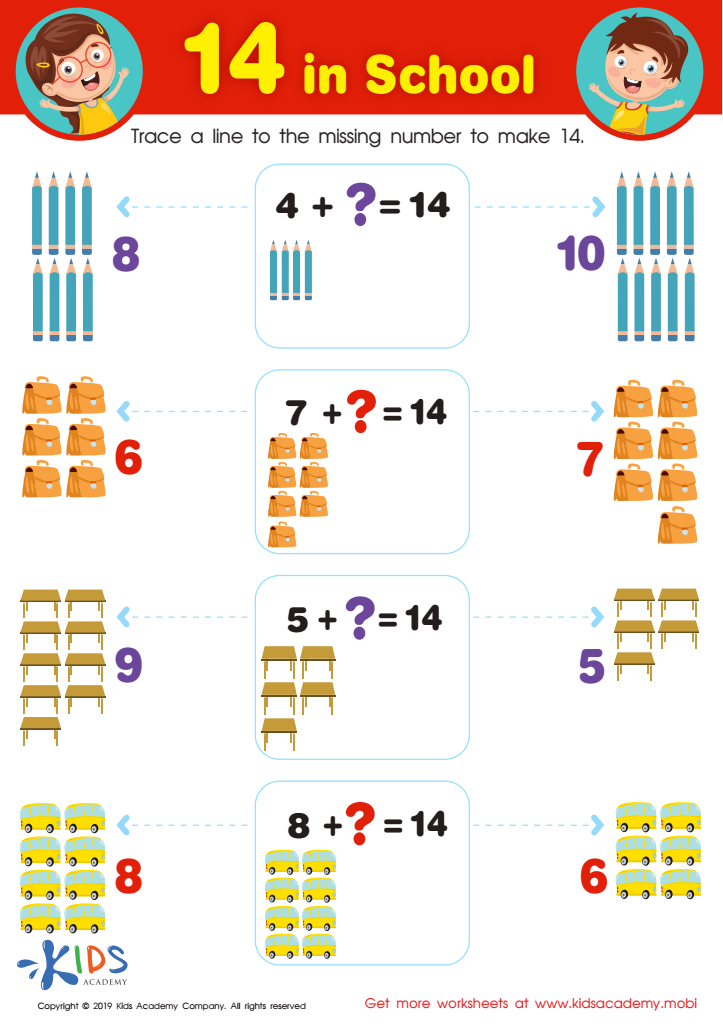
14 in School Worksheet
 Assign to My Students
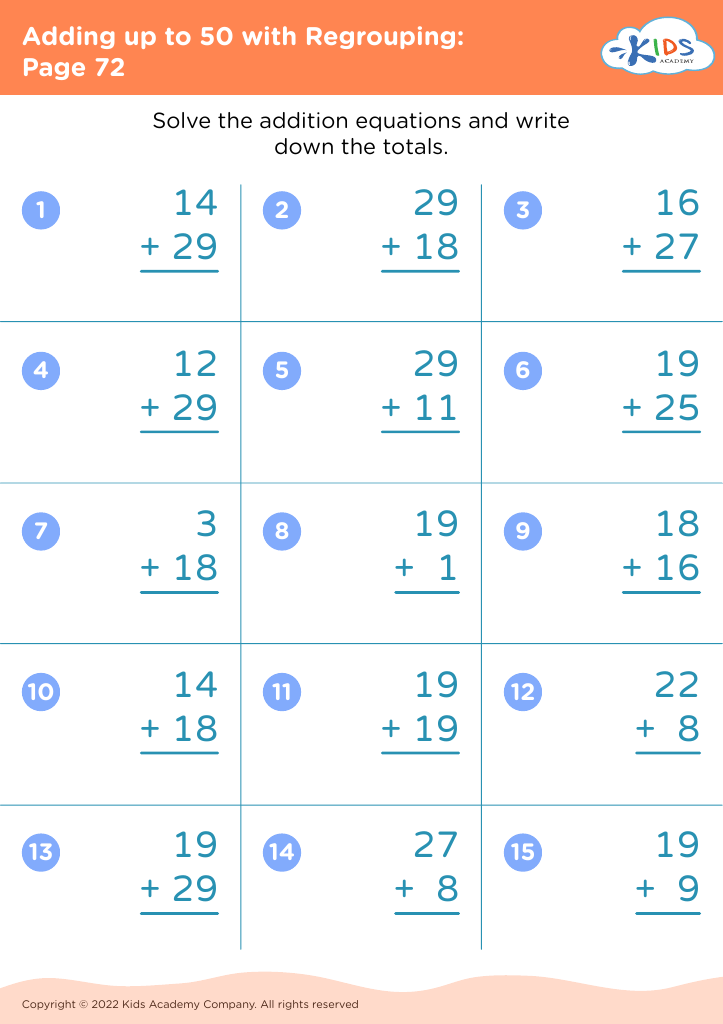








Recognizing shapes is a foundational math skill crucial for children aged 4-8 years, significantly impacting cognitive and academic development. For parents and teachers, fostering shape recognition helps children develop critical early math and spatial reasoning skills. Children learn to identify and distinguish between different geometric shapes such as circles, squares, triangles, and rectangles. This ability is central to more complex math concepts that they will encounter later in their education.
Understanding shapes improves visual-spatial intelligence—a key component in problem-solving and logical thinking. For example, identifying how shapes fit together lays the groundwork for understanding fractions and geometry in later grades. Additionally, shape recognition is foundational in subjects like science, technology, engineering, and art (STEAM), facilitating a robust, interdisciplinary educational experience.
Beyond academic advantages, recognizing shapes enhances everyday decision-making and practical skills. It aids in navigating the physical world, from reading road signs to using technology effectively. Socially and emotionally, succeeding in recognizing shapes builds confidence and enthusiasm for learning. By empowering young children with these essential skills, parents and teachers set the stage for continual, lifelong educational success. Therefore, fostering shape recognition in early childhood is a crucial step in ensuring well-rounded intellectual and practical development.








