Shape identification Math Worksheets for Ages 4-8 - Page 2
33 filtered results
-
From - To
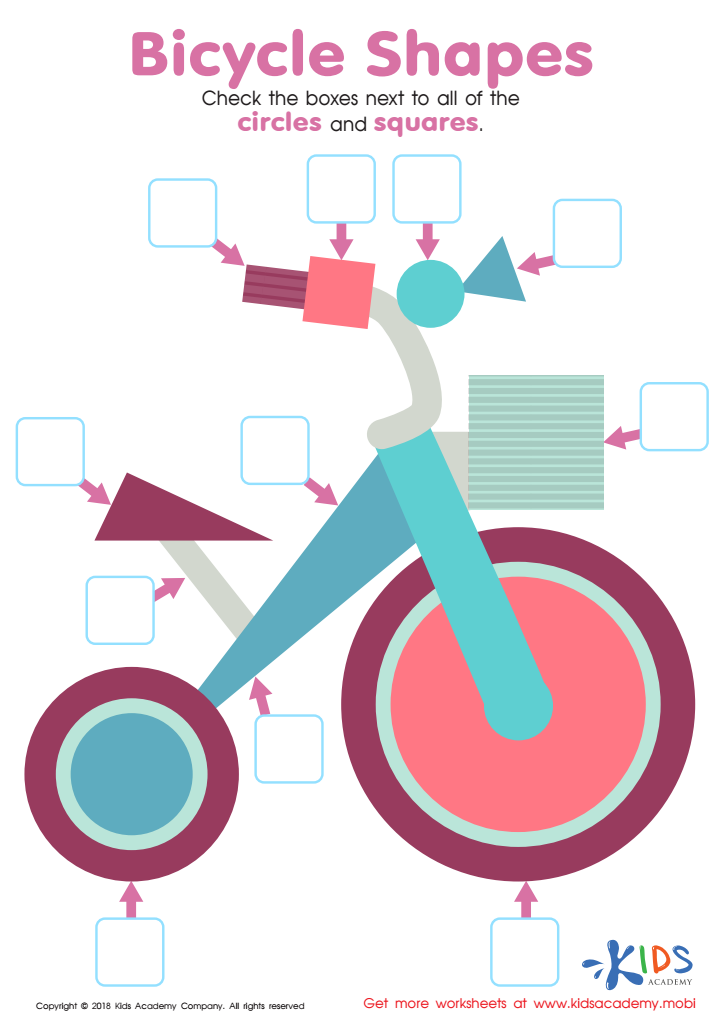
Bicycle Shapes Worksheet
 Assign to My Students
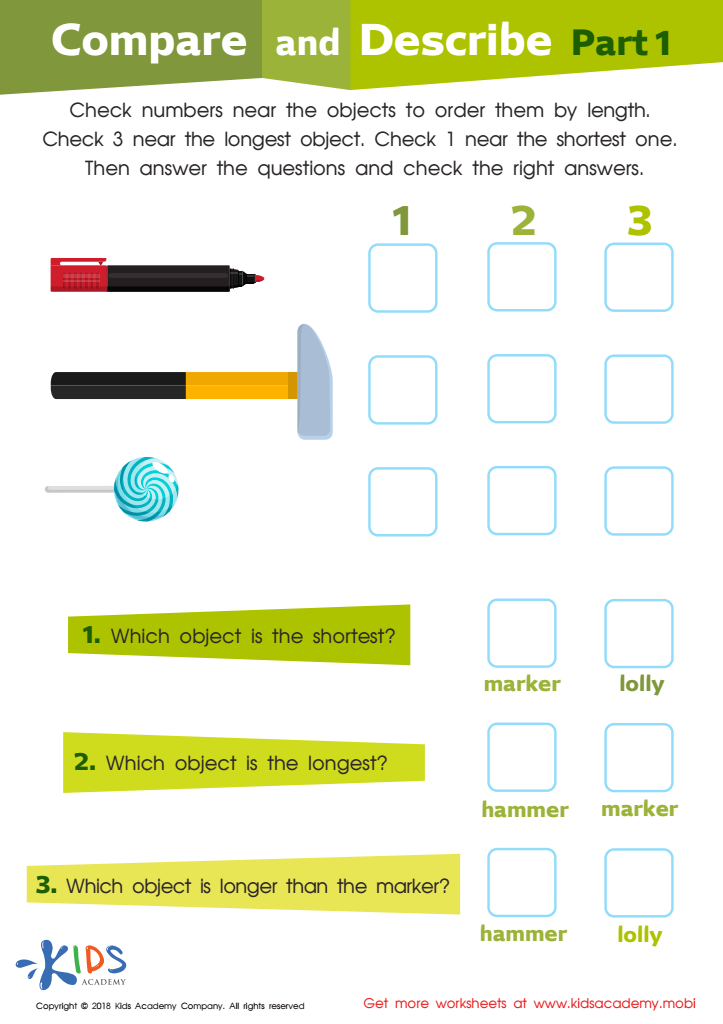
Compare and Describe: Part 1 Worksheet
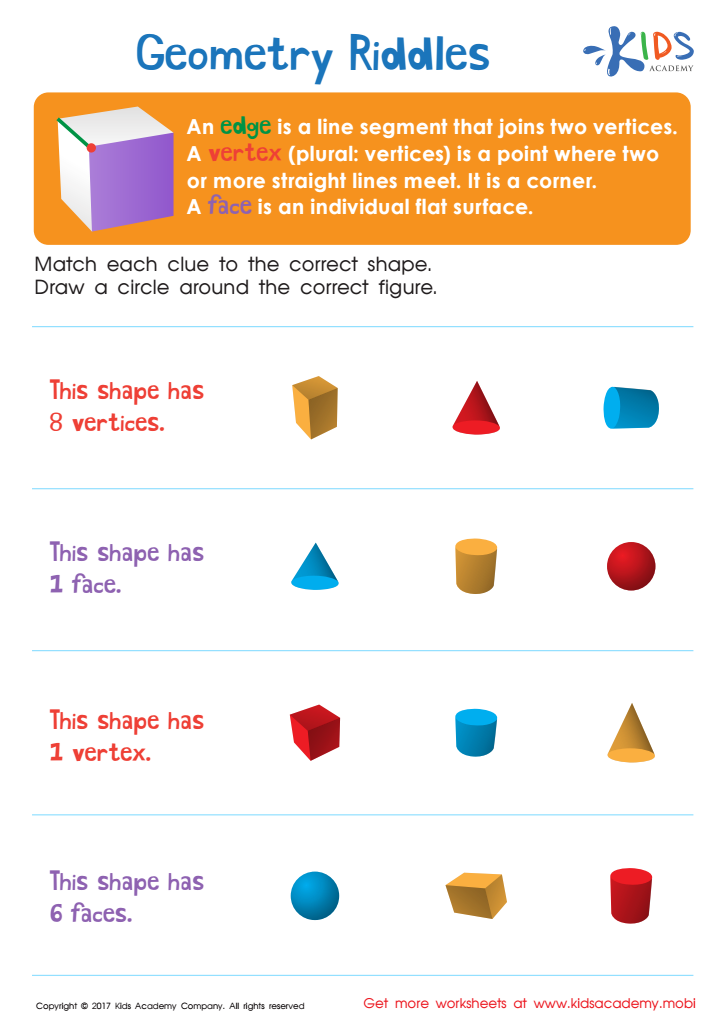
Geometry Riddles Printable
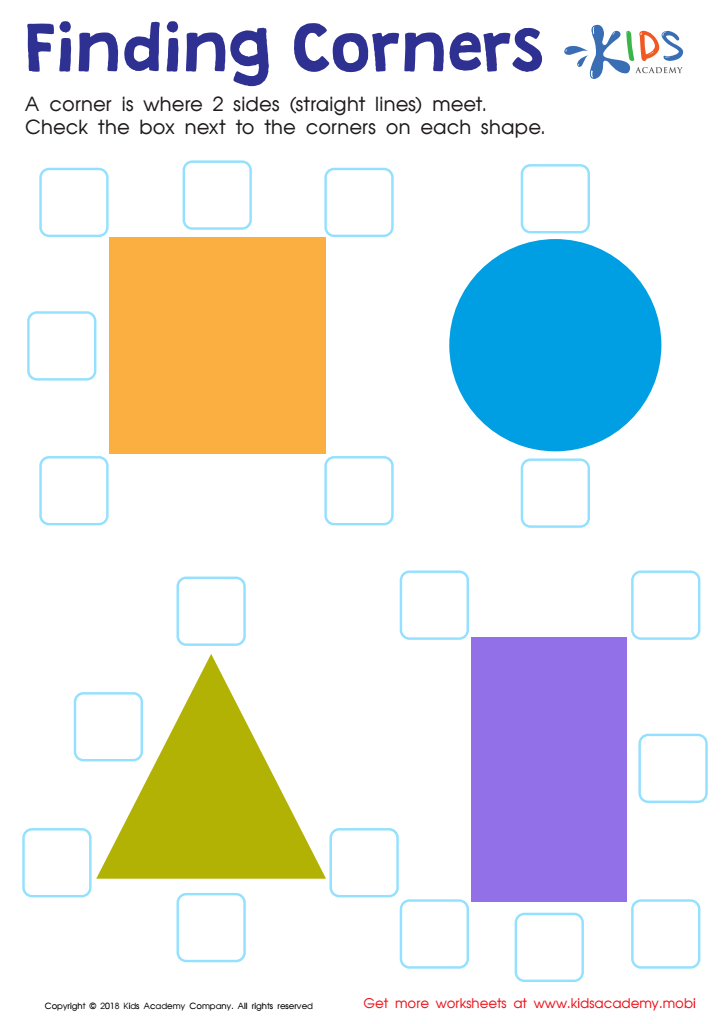
Finding Corners Worksheet
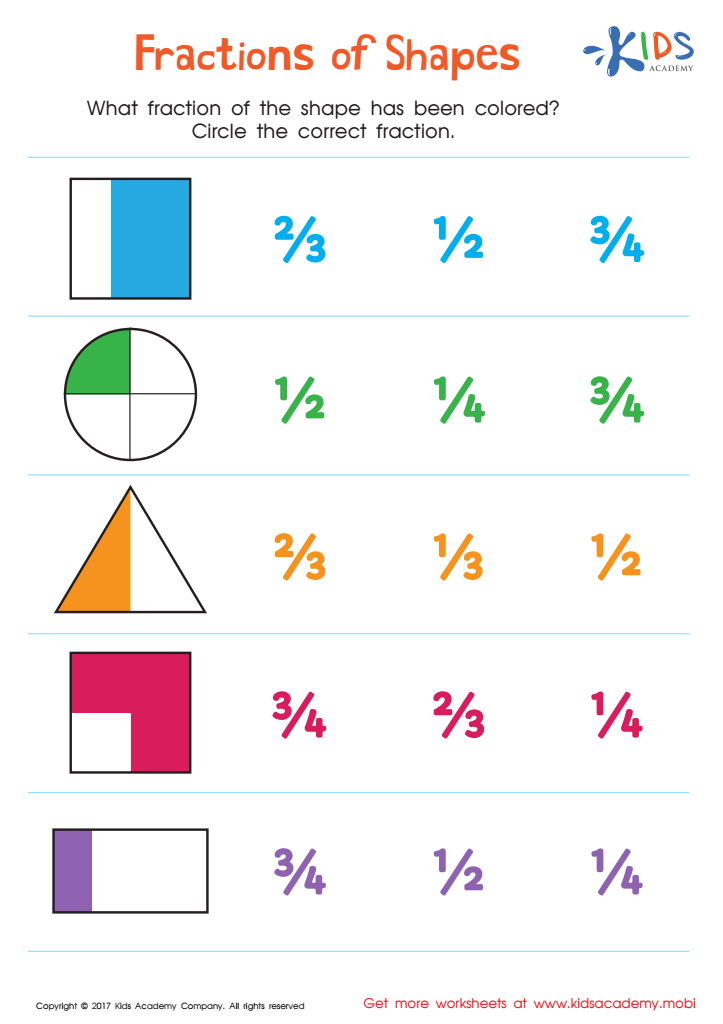
Fractions of Shapes: Math Concept Worksheet
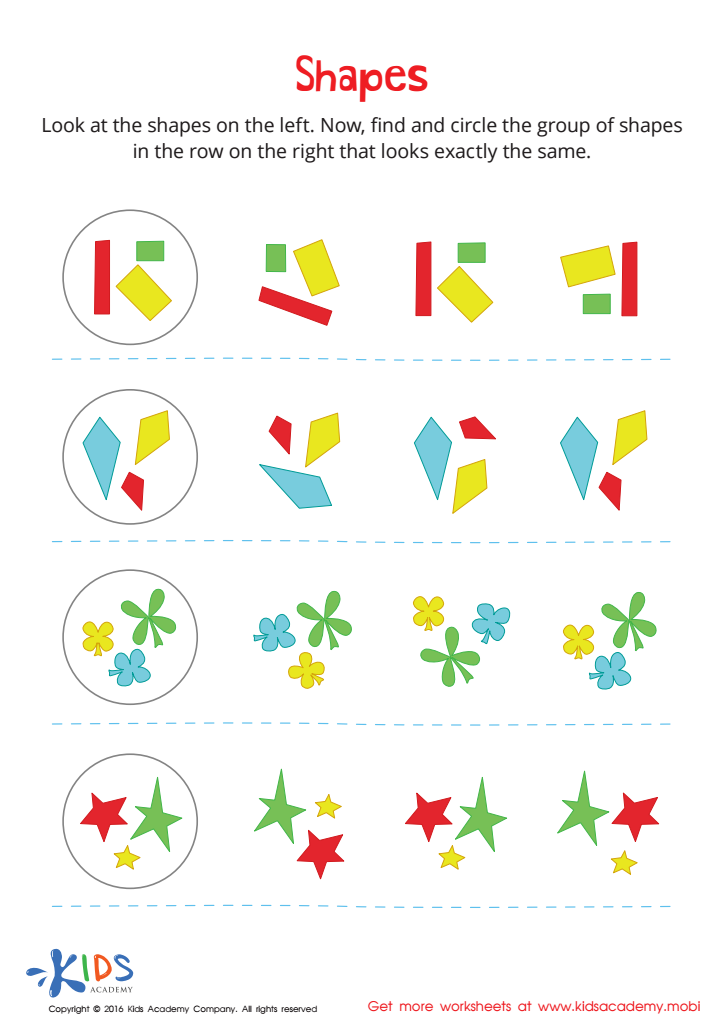
Shapes Worksheet








Shape identification is a foundational skill in early mathematics education for children aged 4-8, and both parents and teachers should prioritize it for several reasons. First, recognizing shapes helps children develop spatial awareness, which is crucial for problem-solving in more advanced math concepts later on. When children can identify, compare, and manipulate various shapes, they build the cognitive skills necessary for understanding complex geometrical concepts.
Second, sequence recognition and pattern formation, which are inherent in shape identification, are gateways to abstract thinking. Kids learn to categorize and analyze objects, fostering critical thinking and reasoning skills that are essential in academic environments.
Additionally, shape identification enhances language development. As children describe shapes using specific terms like "triangle" or "rectangle," they expand their vocabulary and improve communication skills.
Lastly, this skill is foundational for scientific understanding, particularly in subjects like art and engineering. By cultivating shape identification, parents and teachers help children build a solid base for interdisciplinary learning, allowing them to connect math with everyday experiences. Engaging in shape activities can be fun and interactive, turning learning into an enjoyable venture and promoting a lifelong appreciation for STEM concepts.








