
Understanding division Math Worksheets for Ages 4-8
8 filtered results
Difficulty Level
Grade
Age
-
From - To
Subject
Activity
Standards
Discover a fun and engaging way for children aged 4-8 to grasp the concept of division with our specially designed Understanding Division Math Worksheets. These worksheets offer colorful visuals and age-appropriate activities that simplify division, helping young learners relate division to everyday situations. With interactive exercises and step-by-step instructions, kids will build a strong foundation in division skills while developing critical thinking abilities. Perfect for teachers and parents, these resources promote independent learning and provide ample opportunities for practice. Make division an exciting adventure for your little ones with our tailored worksheets, ensuring they gain confidence and mastery in this essential math skill!
Favorites
With answer key
Interactive
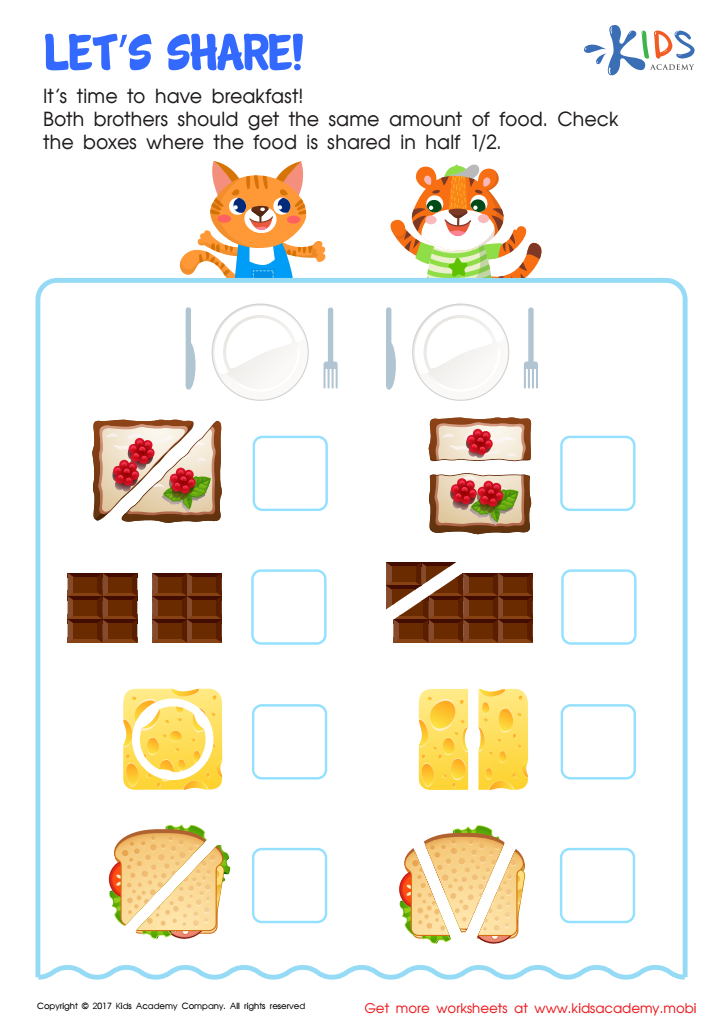
Let's Share Worksheet
It's time to test if your lessons on sharing paid off! With this worksheet, your child can have breakfast and make sure both brothers get equal amounts of food. Have them look at the food images and check the boxes where food is divided equally.
 Assign to My Students
Let's Share Worksheet
Worksheet
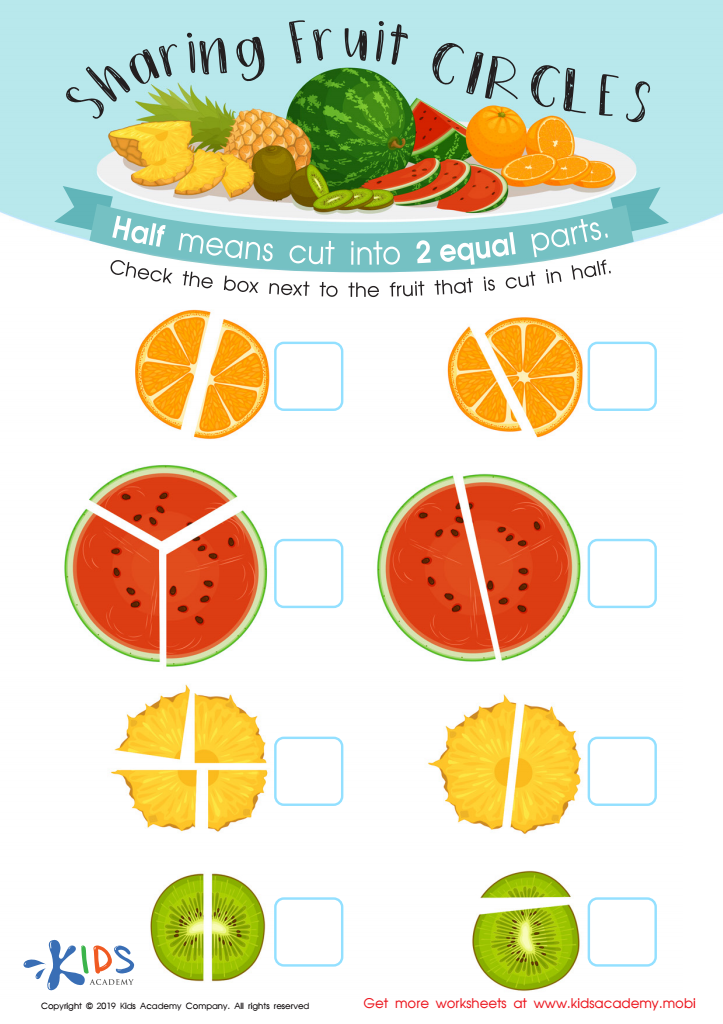
Sharing Fruit Circles Worksheet
Fruits are tasty and bright! Can your kids name some of their favorites? With this worksheet, you can use fruit to teach your kids geometry. Talk about how shapes can be cut into halves. Ask them to tick the box for the fruit halves in the printout.
Sharing Fruit Circles Worksheet
Worksheet
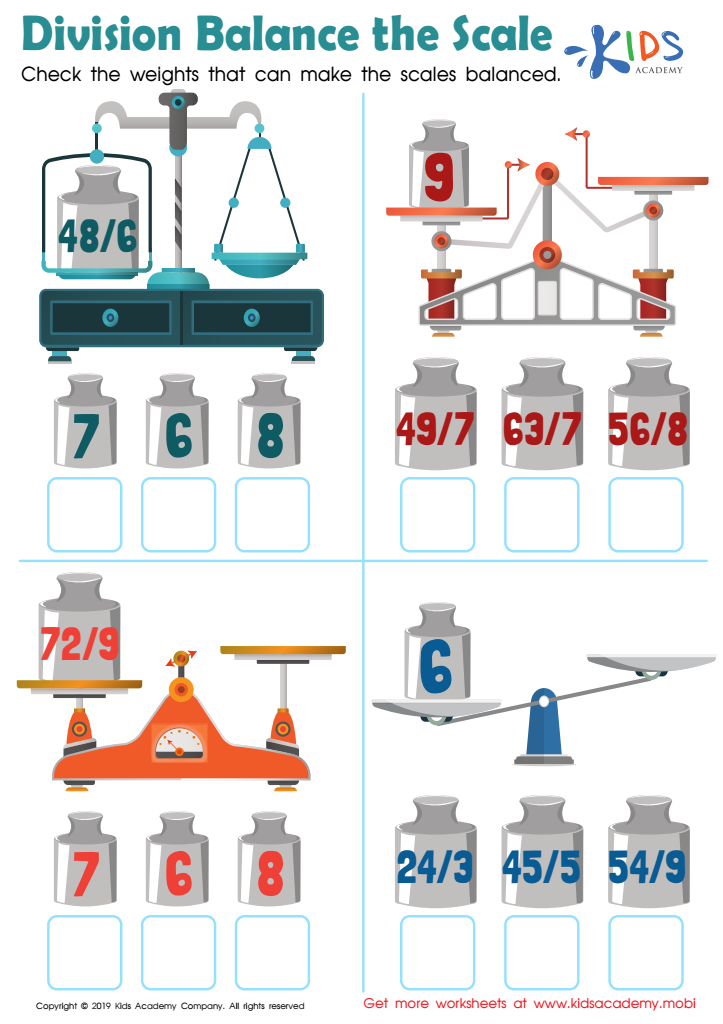
Division Balance the Scale Worksheet
Students can learn math better when they understand the relationships between numbers. This free worksheet helps them practice division: solving problems and matching the correct quotient to balance the scales. Fun visual boxes make it a unique way to engage with the material.
Division Balance the Scale Worksheet
Worksheet
Join Kids Academy for Free
Who is primarily going to use this learning content?






Understanding division is crucial for children aged 4-8, as it lays the foundation for their mathematical development. At this age, children are beginning to grasp basic concepts of sharing and grouping, which are essential to understanding division. When parents and teachers prioritize division comprehension, they help children develop critical thinking and problem-solving skills, fostering a love for math early on.
Division is not just about numbers; it's about making sense of the world around them. For instance, sharing snacks among friends or splitting toys can introduce the concept of fairness and cooperation, encouraging social skills alongside mathematical understanding. Moreover, mastering early division concepts ensures that children are well-prepared for more complex mathematical operations in later grades, reducing anxiety and boosting confidence in their abilities.
By engaging children through hands-on activities and relatable examples, parents and teachers can make division an enjoyable and meaningful learning experience. Fun games and visual aids can capture children’s interest and enhance retention of the concepts. Ultimately, instilling a strong foundational understanding of division empowers children not only in mathematics but also in their overall cognitive development and everyday life skills.








