
Understanding equality Math Worksheets for Ages 4-8
7 filtered results
Difficulty Level
Grade
Age
-
From - To
Subject
Activity
Standards
Explore our "Understanding Equality Math Worksheets" designed specifically for children aged 4-8! These engaging and interactive worksheets help young learners grasp the concept of equality through fun activities and colorful visuals. By completing these worksheets, children will develop their ability to recognize equal and unequal groups, promote critical thinking skills, and enhance their number sense. Our resources foster a strong math foundation, making learning enjoyable and effective. Ideal for classroom settings or at-home practice, these worksheets encourage children to connect mathematical concepts with real-life scenarios. Download now and watch your child's confidence soar as they master the principles of equality!
Favorites
With answer key
Interactive
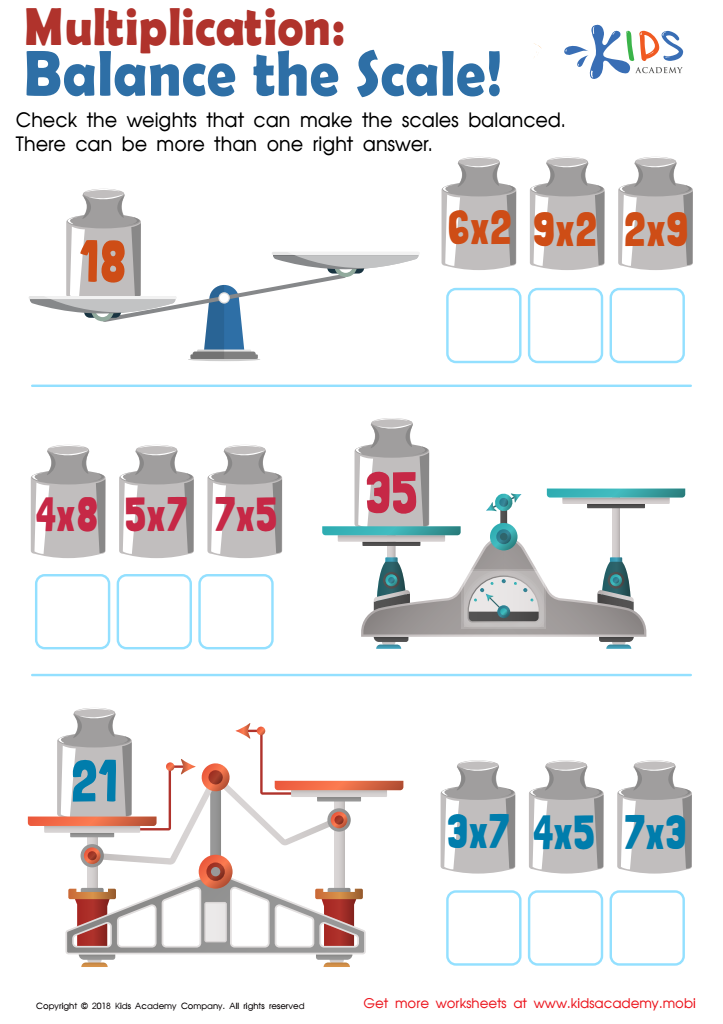
Balance the Scales Multiplication Worksheet
Challenge your child to practice math with our 'Balance the Scales' multiplication worksheet! Get them to solve each multiplication problem and select the weights that make them equal. Hint: it might be more than one!
 Assign to My Students
Balance the Scales Multiplication Worksheet
Worksheet
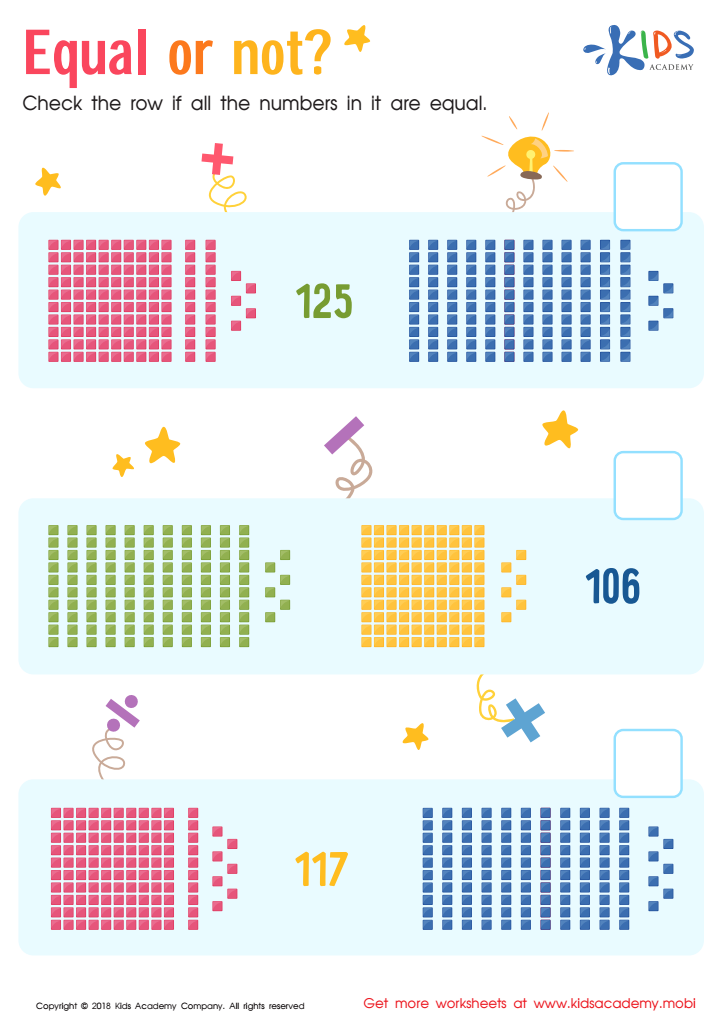
Equal or not Worksheet
To grow your child's learning, challenge them with new tasks. Stimulate their brains with activities that will build their knowledge and thinking skills. Take advantage of this worksheet exercise: ask your child to check the rows where all the numbers are equal. This simple exercise will improve their learning.
Equal or not Worksheet
Worksheet
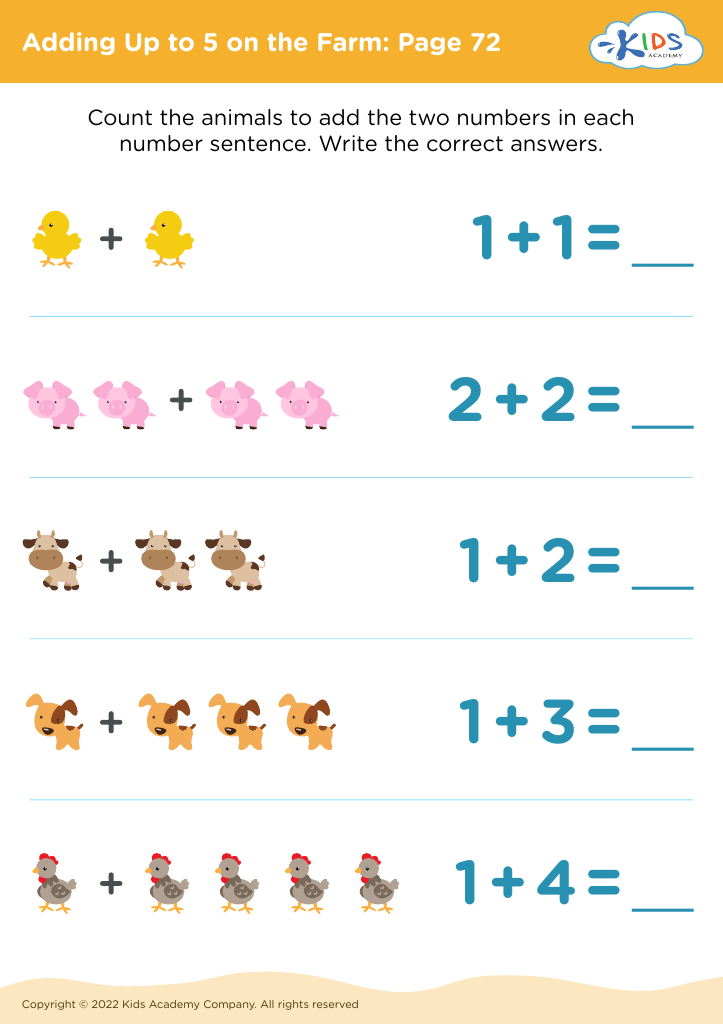
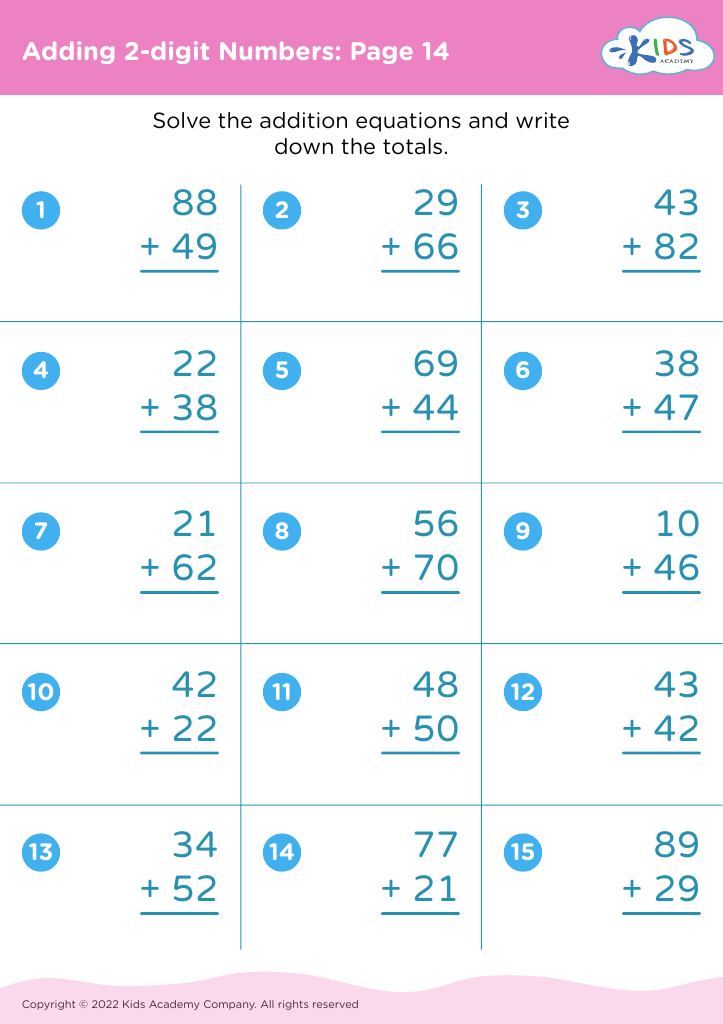
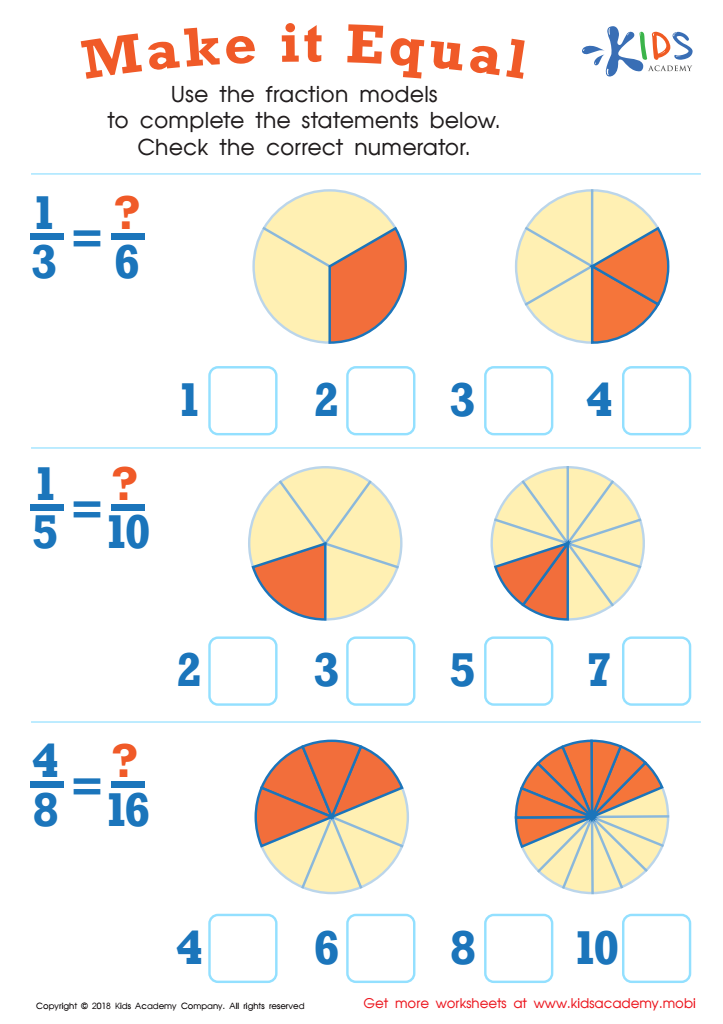
Make It Equal Worksheet
Ask your kids to complete the equations in the worksheet and find the correct numerator. Explain that numerators are the numbers at the top of a fraction and guide them as they count the shaded parts of the shapes. There are three equations to figure out.
Make It Equal Worksheet
Worksheet
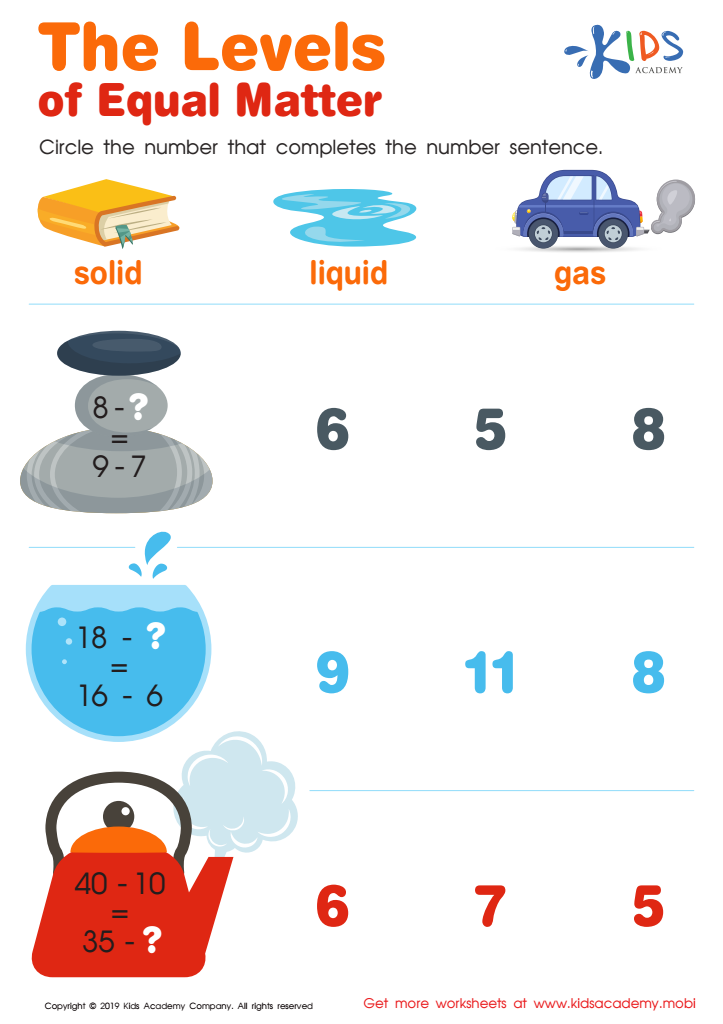
The Levels of Equal Matter Worksheet
Matter is anything that has weight and occupies space. Common examples include people, animals, objects and liquids. Have your kids understand this concept by looking at the levels of matter in this worksheet and completing the number sentence mathematical problems beneath.
The Levels of Equal Matter Worksheet
Worksheet
Join Kids Academy for Free
Who is primarily going to use this learning content?







Understanding equality in mathematics is crucial for children aged 4-8 as it lays the foundation for their future mathematical learning and critical thinking skills. At this stage, children are naturally curious and begin to grasp abstract concepts, making it an ideal time to introduce the idea of equality. Recognizing that quantities can be balanced or equivalent helps them develop problem-solving skills, as they learn to manipulate numbers and understand relationships.
Moreover, establishing a solid understanding of equality can enhance children's self-confidence in math, reducing anxiety about the subject. This understanding also nurtures a growth mindset, encouraging children to explore different methods of solving problems and fostering a love for math.
For parents and teachers, prioritizing understanding equality is essential for progressive learning. It aids in the comprehension of higher mathematical concepts, such as addition, subtraction, and basic algebra, as children advance. Additionally, it encourages collaborative learning, where children can engage with peers in discussions about equalities and inequalities, enriching their social skills.
In summary, investing time and resources in teaching children about equality in math forms a critical educational milestone that supports their intellectual development and prepares them for more complex mathematical challenges in the future.








