Understanding number patterns Math Worksheets for Ages 4-8
6 filtered results
-
From - To
Unlock your child's mathematical potential with our "Understanding Number Patterns" math worksheets, tailored for ages 4-8. These engaging and easy-to-use resources help young learners develop essential skills in recognizing and predicting patterns. Children will enhance their understanding of sequences, numerical relationships, and basic arithmetic through colorful and interactive exercises. Each worksheet is designed to make learning fun and stimulate cognitive growth. Perfect for both classroom and home practice, these worksheets lay a solid foundation for future math success. Foster a love for numbers and problem-solving with our insightful, age-appropriate activities. Start your child’s math journey today!
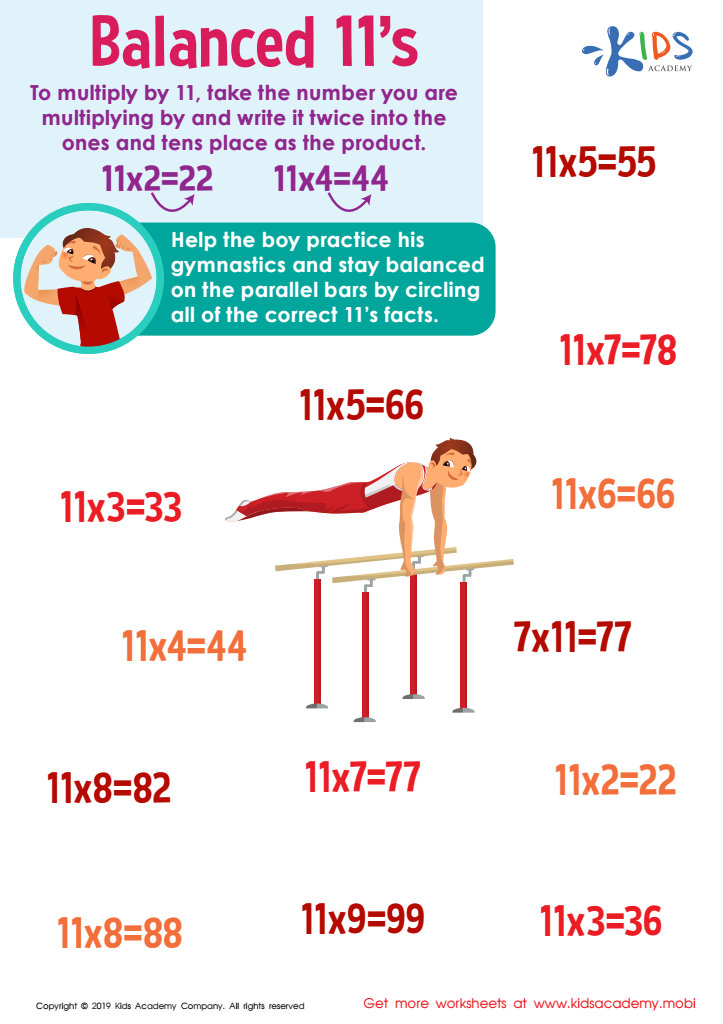
Balanced 11s Worksheet
 Assign to My Students
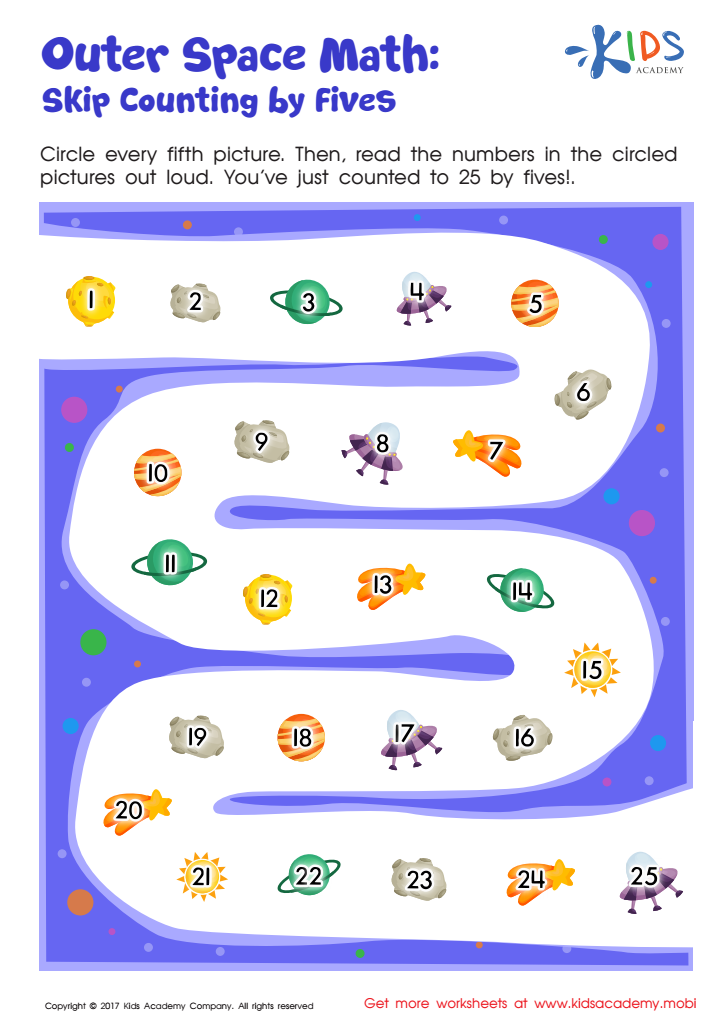
Skip Counting by 5s: Outer Space Math Printable
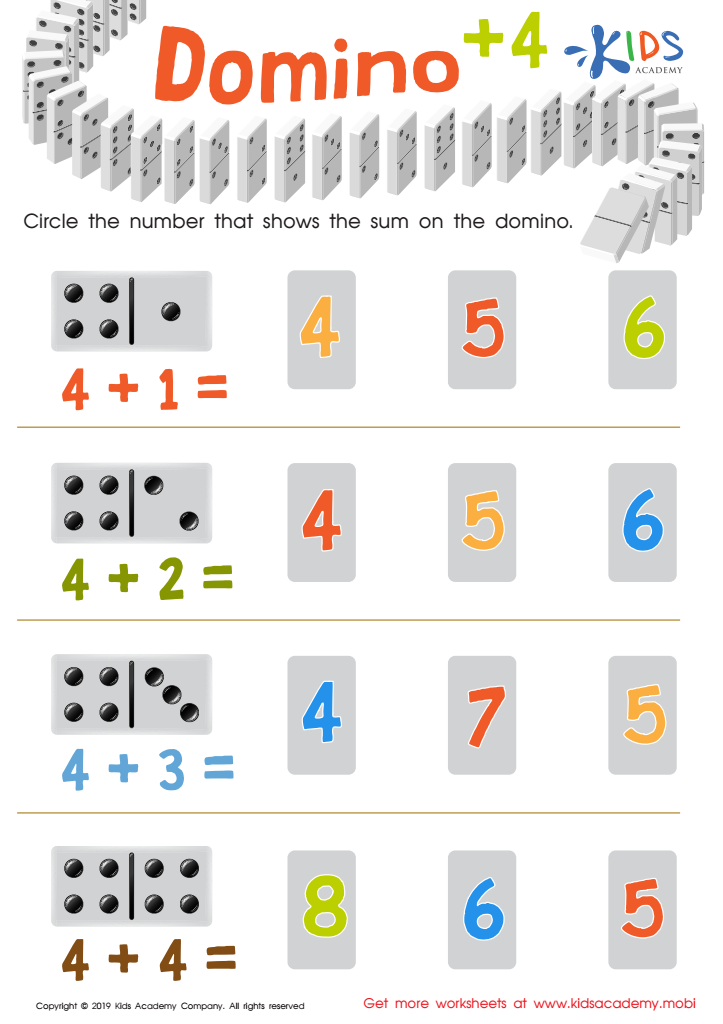
Domino +4 Worksheet
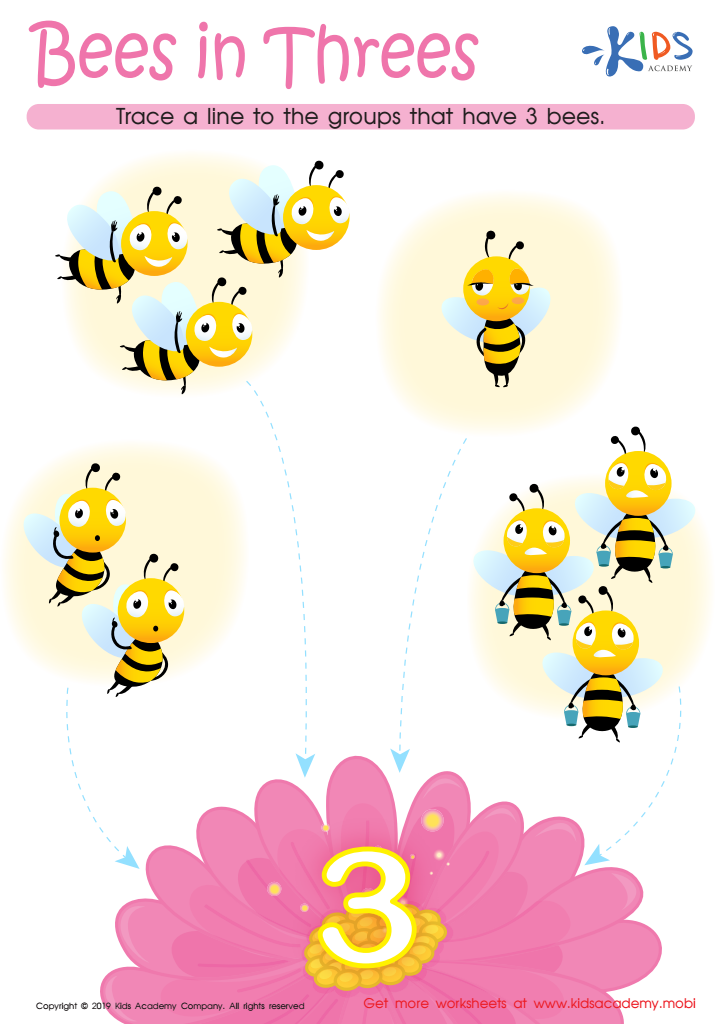
Bees in Threes Worksheet





Understanding number patterns is a foundational math skill that parents and teachers should prioritize for young children ages 4-8. Number patterns are sequences that follow a specific rule, and grasping these helps children develop critical thinking and problem-solving skills. When children recognize and predict patterns, they learn to identify relationships and make connections between numbers, which is a fundamental aspect of math.
For young children, engaging with number patterns can turn abstract mathematical concepts into something more concrete and easier to understand. Learning patterns in numbers also improves their ability to grasp more complex math topics in the future, such as multiplication, division, and algebra. Knowing how to work with patterns helps children understand the consistency and structure in math, paving the way for better learning experiences.
Moreover, understanding number patterns can enhance cognitive development, fostering abilities such as logical reasoning and analytical thinking. These skills are essential not just in math, but in everyday problem-solving situations. By focusing on number patterns, parents and teachers are not only helping children become proficient in mathematics, but are also equipping them with essential life skills that will benefit them across various domains of learning and personal growth. Plus, recognizing patterns can be fun, boosting children's confidence and enthusiasm for math.








