Understanding number sequences Math Worksheets for Ages 4-8
7 filtered results
-
From - To
Explore our collection of "Understanding Number Sequences" Math Worksheets designed for ages 4-8! These engaging worksheets help young learners master counting, addition, and pattern recognition with fun exercises. Perfect for kindergarten and early elementary students, our worksheets make learning to identify and complete number sequences intuitive and enjoyable. With colorful designs and age-appropriate challenges, children will develop essential math skills while gaining confidence in recognizing numerical patterns. Start your child's math journey today with our expertly crafted worksheets, tailored to meet the educational needs of early learners. Join us at Kids Academy and inspire a love for math!
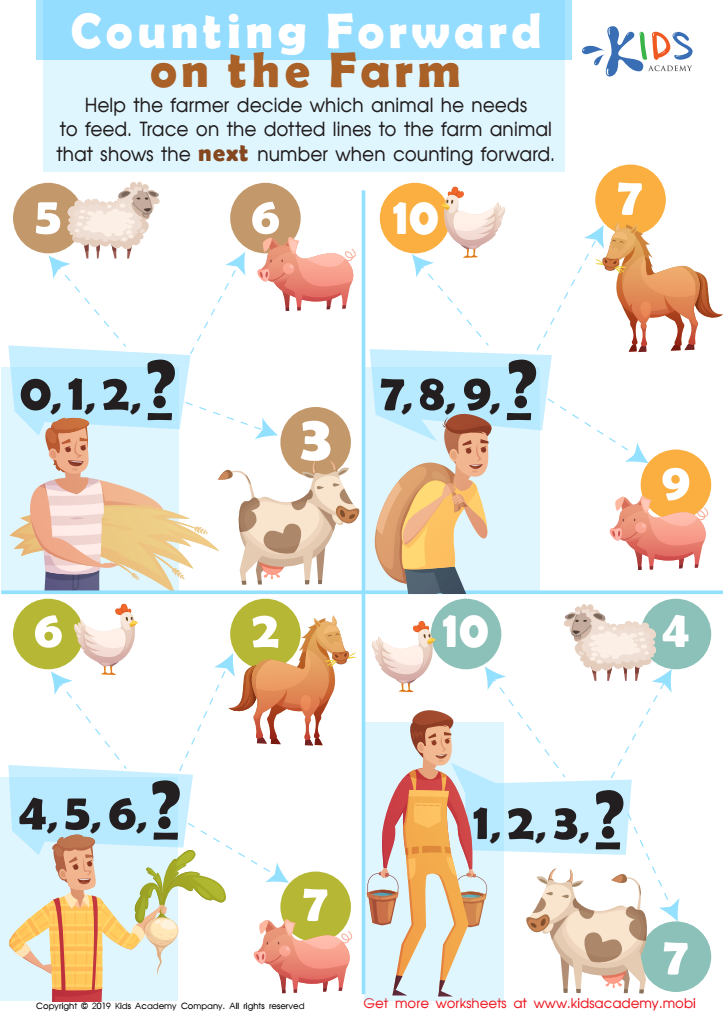
Counting Forward On the Farm Worksheet
 Assign to My Students
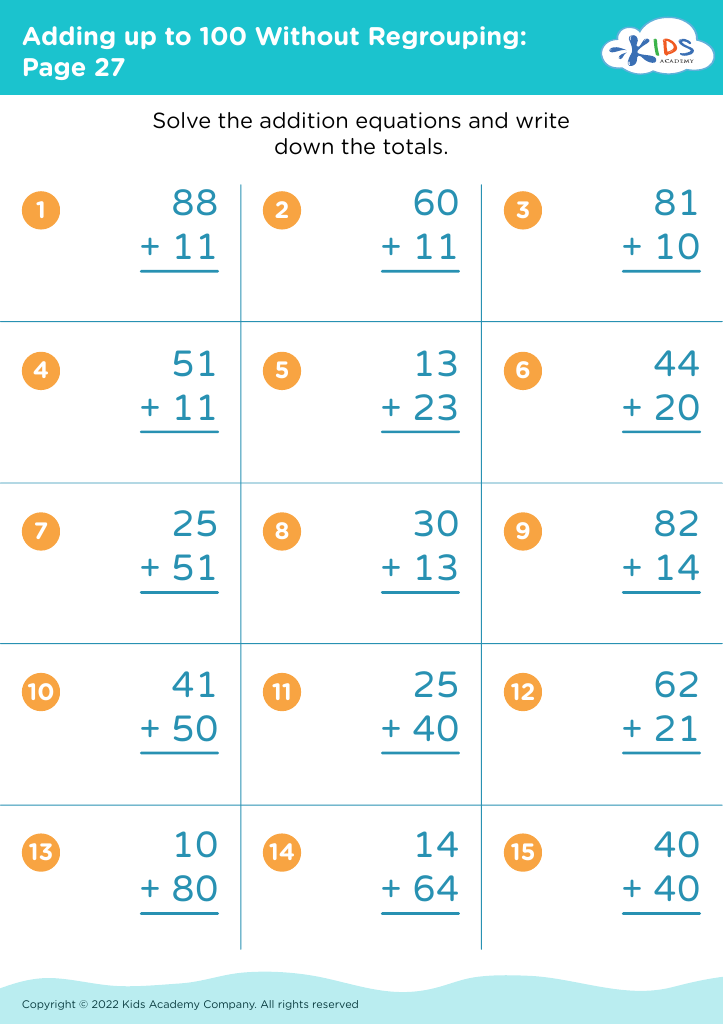
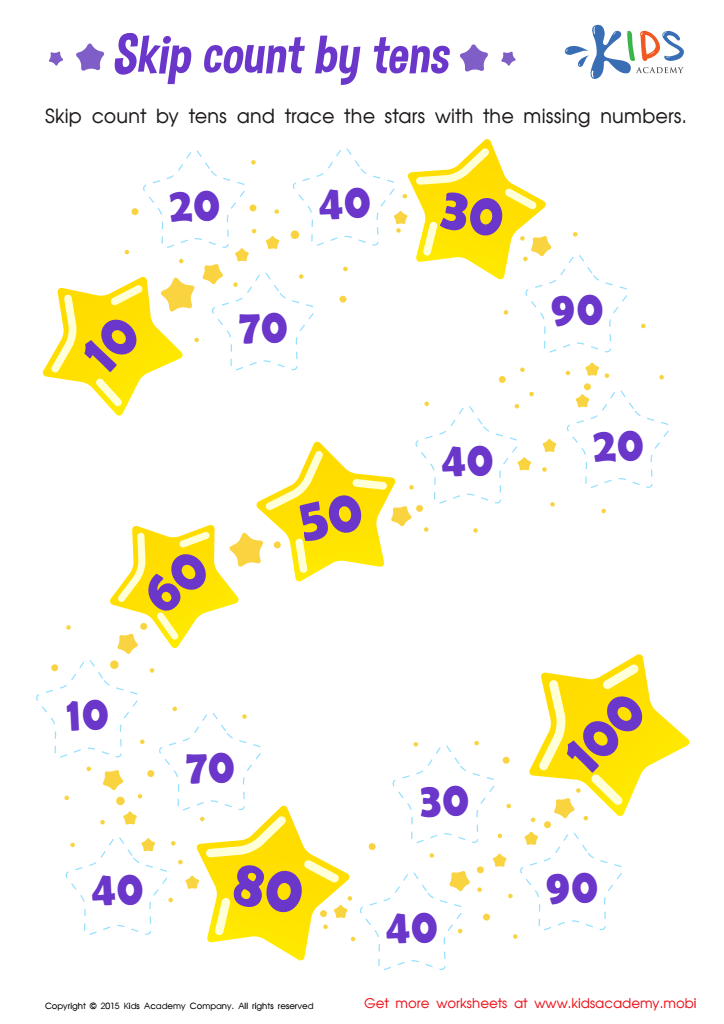
Learn dozens: Skip Count by Tens Printable
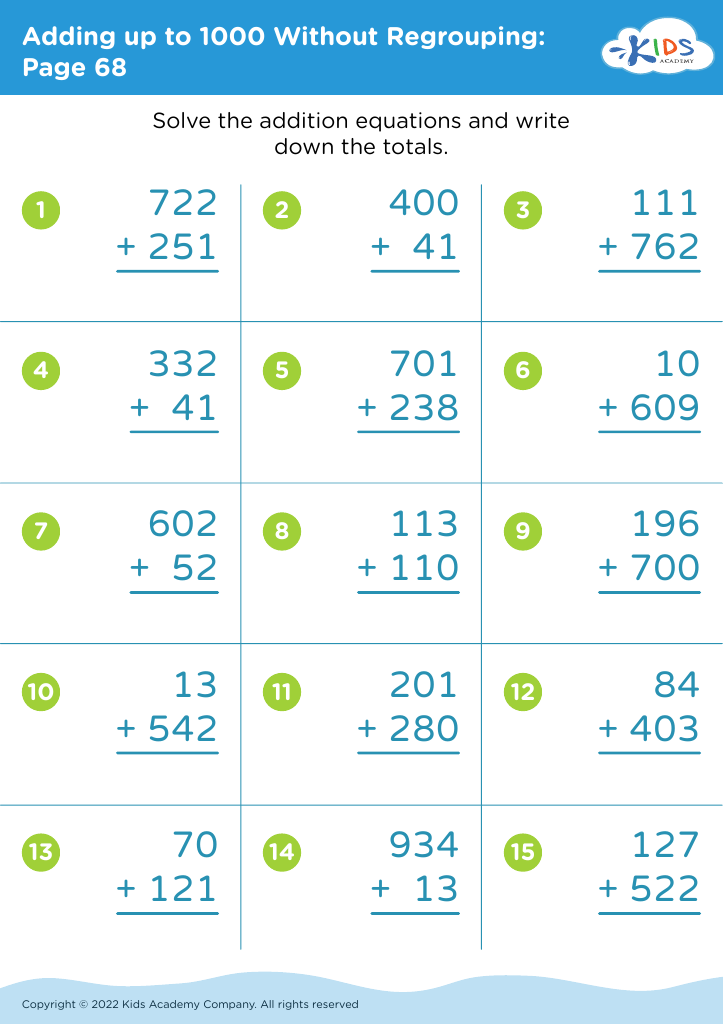
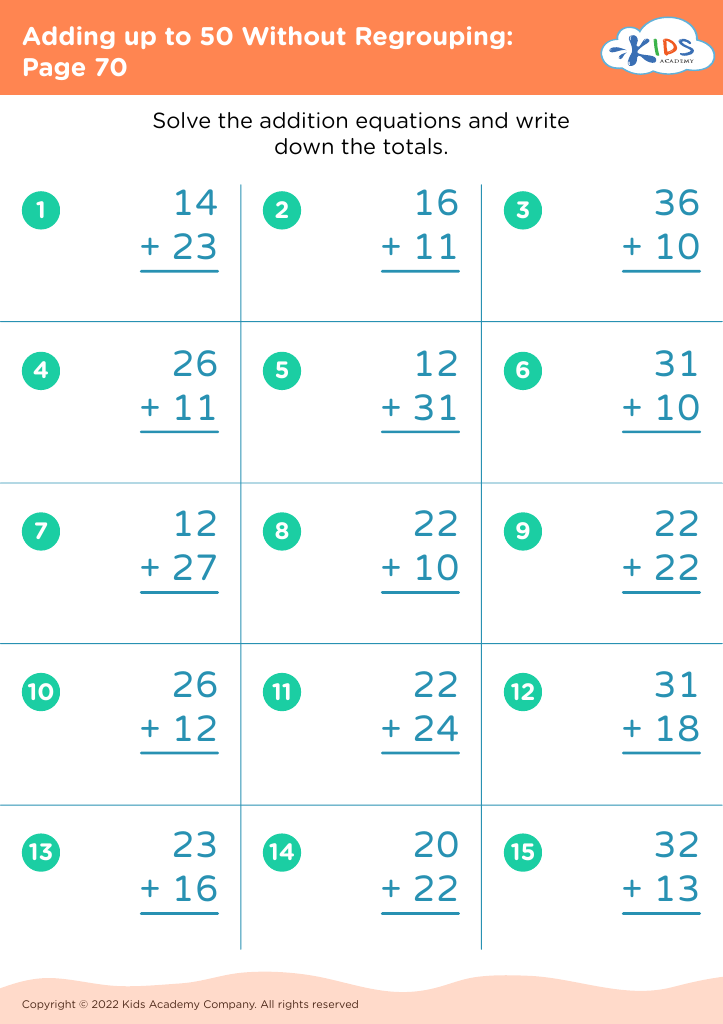
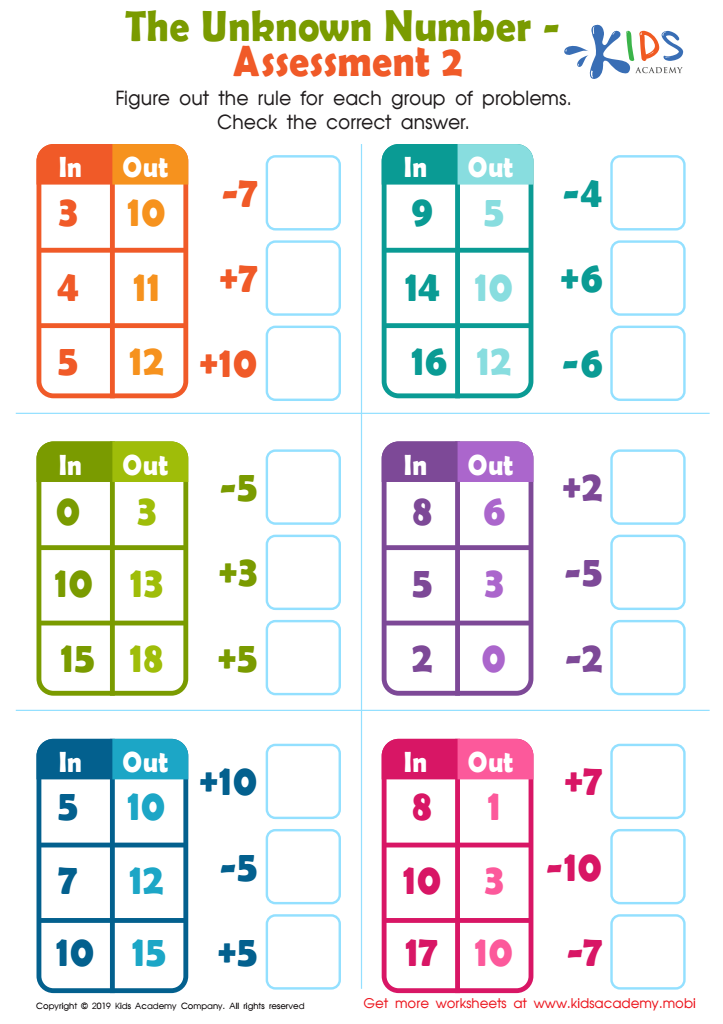
The Unknown Number - Assessment 2 Worksheet
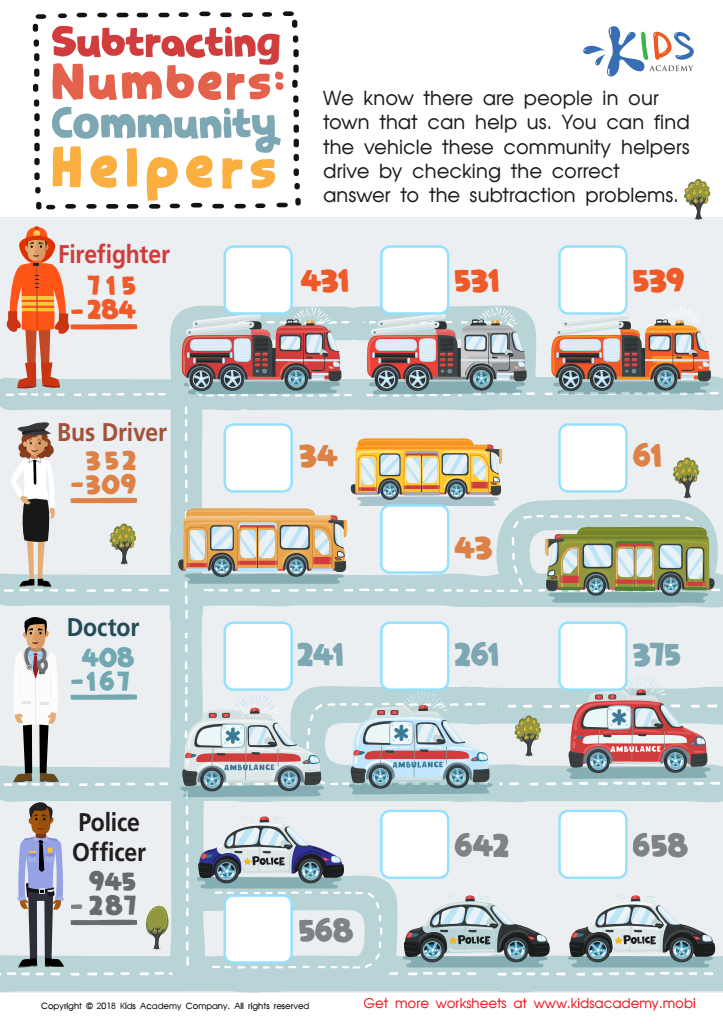
Subtracting Numbers: Community Helpers Worksheet








Understanding number sequences is fundamental for children ages 4-8 as it lays the groundwork for essential math skills. During these formative years, children's brains are highly receptive to learning, making it an ideal time to instill core concepts that will support future mathematical learning and logical thinking.
Number sequences help children grasp the order and relationship between numbers. Recognizing patterns, such as counting by 2s, 5s, or 10s, aids in building a strong numerical foundation. This understanding is pivotal for more complex operations like addition, subtraction, multiplication, and division later on.
Evidence suggests that early proficiency in math predicts later academic success, thus prioritizing number sequences sets a positive trajectory. It fosters an intuitive sense of number, allowing kids to transfer this to real-world situations, such as telling time, handling money, or measuring ingredients for a recipe.
Moreover, engaging with number sequences promotes critical thinking and problem-solving skills. It encourages children to observe, predict, and confirm outcomes, reinforcing logical reasoning and analytical capabilities.
When parents and teachers emphasize number sequences, they’re not just teaching math—they’re also supporting cognitive and developmental growth, both of which are critical for academic and life-long success. Encouraging early numerical skills empowers children, boosts their confidence, and fosters a lifelong interest in learning.








