Understanding opposites Math Worksheets for Ages 4-8
4 filtered results
-
From - To
Enhance your child's math skills with our "Understanding Opposites" worksheets, ideal for ages 4-8. These engaging, printable worksheets, available from Kids Academy, offer fun and interactive exercises that help young learners grasp essential math concepts by identifying and understanding opposites. Perfect for early graders, the worksheets encourage critical thinking and problem-solving skills. With vibrant illustrations and age-appropriate challenges, children gain confidence while developing a strong mathematical foundation. Stimulate their curiosity and foster a love for learning with our expertly crafted resources. Start your child's educational journey today with these thoughtfully designed worksheets!
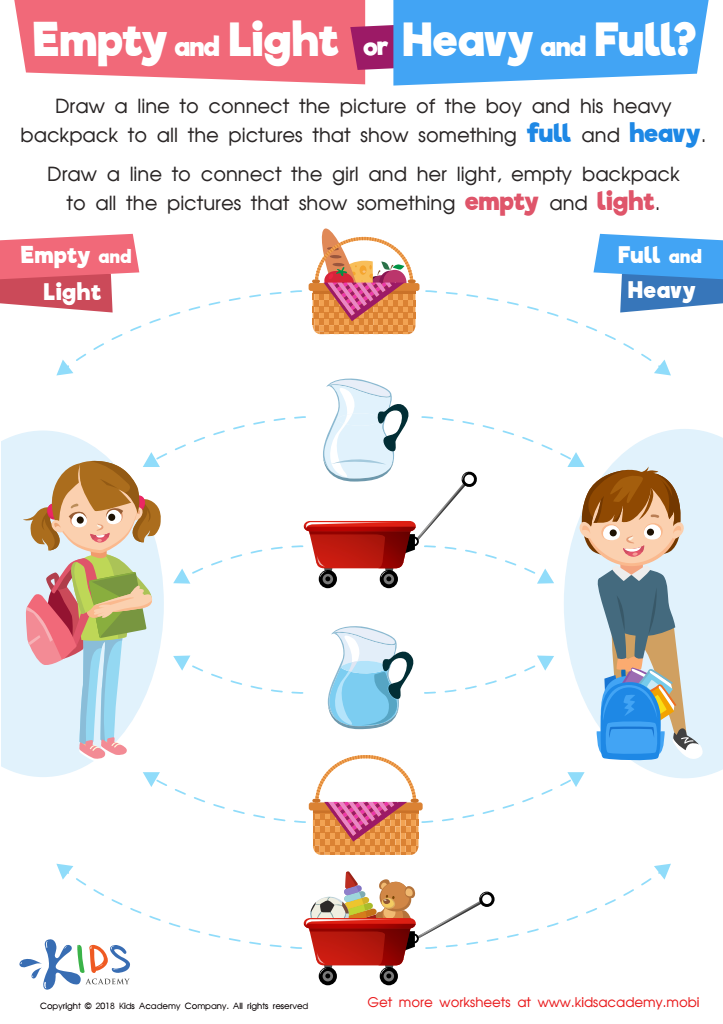
Empty and Light or Heavy and Full? Worksheet
 Assign to My Students
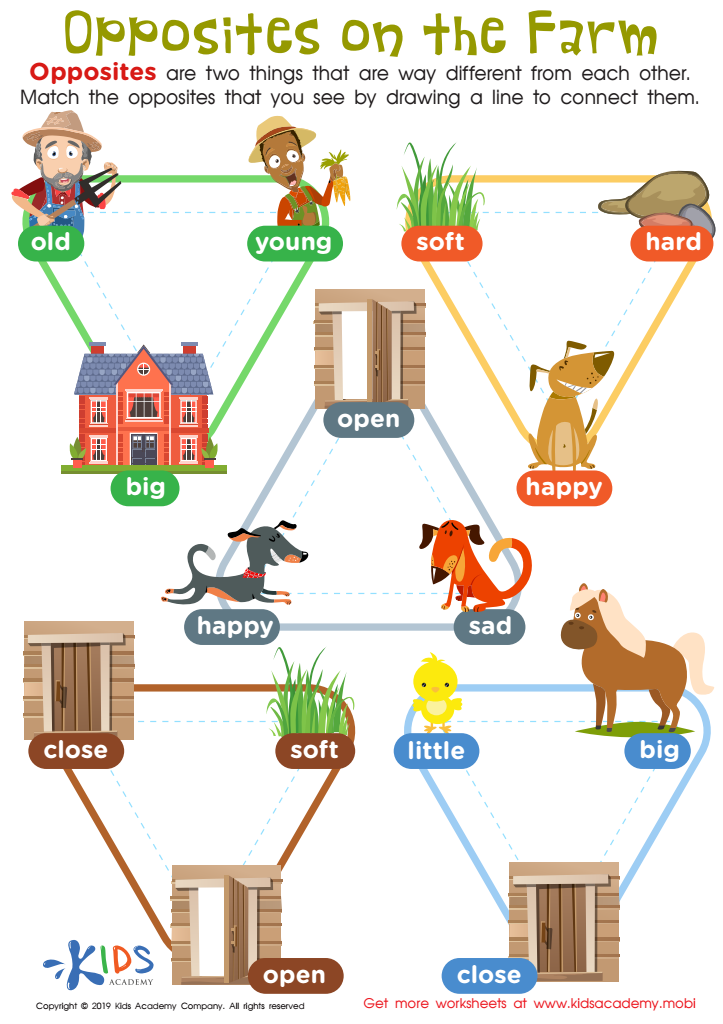
Opposites on the Farm Worksheet
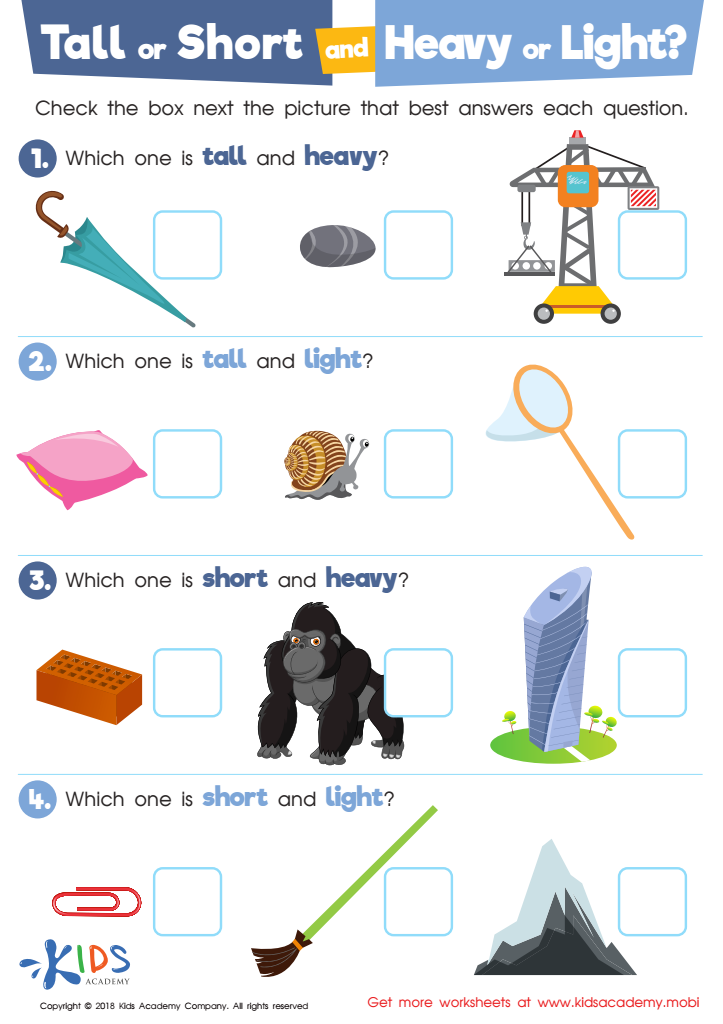
Tall or Short and Heavy or Light? Worksheet
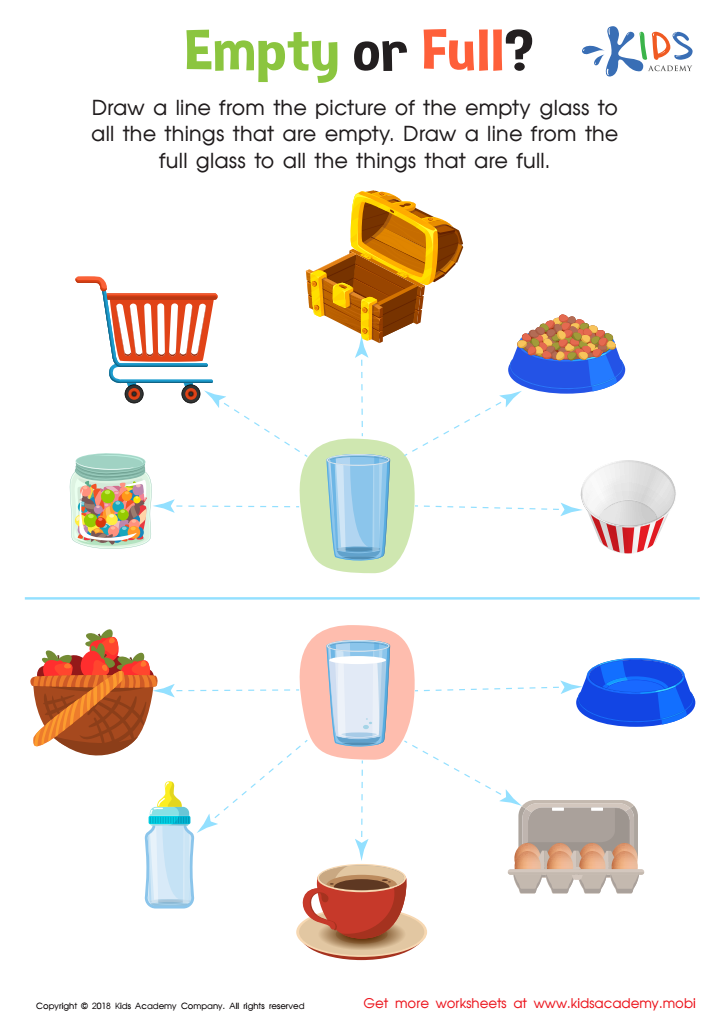
Empty or Full? Worksheet


.jpg)




Understanding opposites in math for children aged 4-8 is crucial for several key reasons. First and foremost, it aids in building foundational cognitive skills necessary for more advanced mathematical concepts. Learning opposites such as high and low, big and small, or even simple numerical opposites like odd and even helps children grasp the idea of contrast and differentiation, which is essential for number sense and pattern recognition.
Moreover, understanding opposites enhances a child's problem-solving abilities. It encourages them to think critically about the relationships between different mathematical elements and to recognize how changing one factor (e.g., increasing a number) affects another (e.g., becoming larger). This kind of logical thinking is fundamental in tackling more complex arithmetic problems later on.
From a developmental perspective, learning opposites also strengthens language skills. Because comprehension of math often goes hand-in-hand with linguistic ability, discussing concepts such as "more/less," "long/short," and "hot/cold" not only reinforces mathematical understanding but also enhances vocabulary.
Additionally, mastery of opposites builds confidence and fosters a positive attitude toward learning. When children understand basic concepts, they are more likely to engage in classroom activities, participate in discussions, and feel competent in their abilities. Therefore, parents and teachers should absolutely value the significance of teaching opposites in math for this age group, setting the stage for future academic success.








