Understanding sequence Math Worksheets for Ages 4-8
6 filtered results
-
From - To
Welcome to our "Understanding Sequence" math worksheets designed for children ages 4-8! These engaging resources focus on teaching young learners the fundamental concept of sequencing, an essential skill in early math development. With colorful visuals and interactive activities, children will enjoy sorting numbers, arranging objects, and recognizing patterns in a fun and playful way. Our worksheets cater to various learning styles and abilities, ensuring that each child can grasp the idea of sequences at their own pace. Help your child build a strong mathematical foundation while enhancing their critical thinking and problem-solving skills through these engaging worksheets!
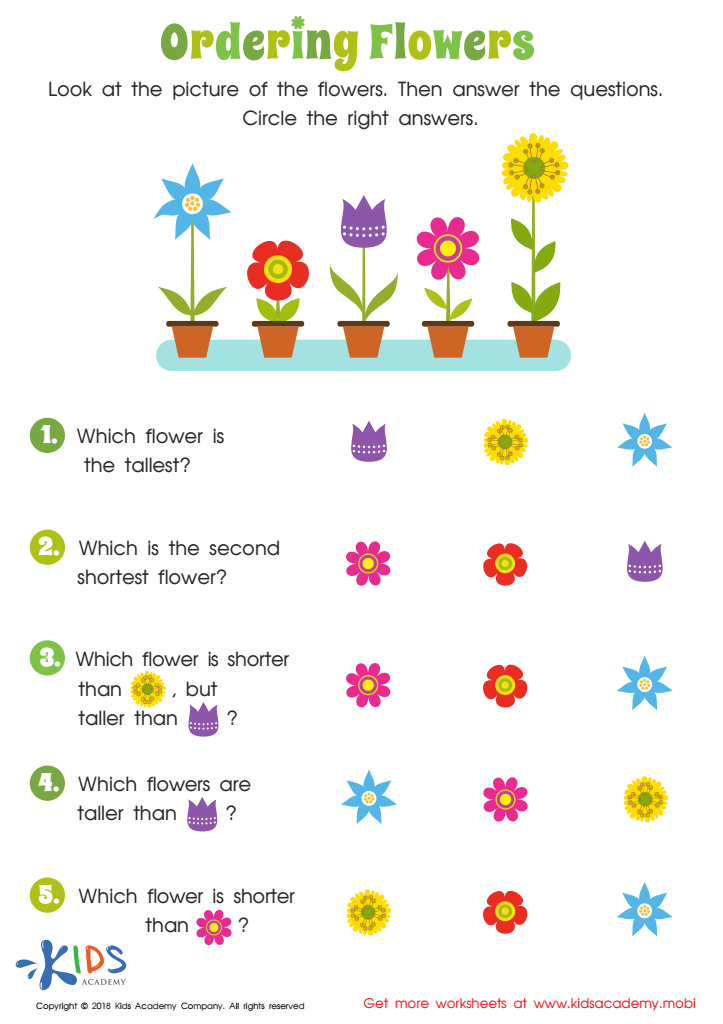
Ordering Flowers Worksheet
 Assign to My Students
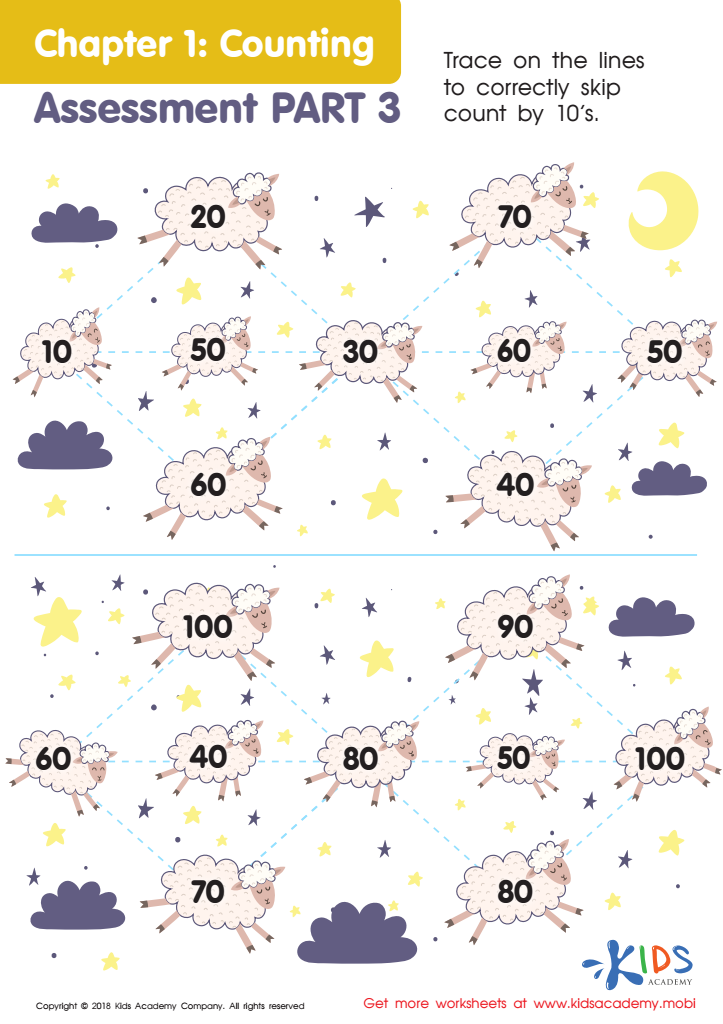
Counting: Assessment 3 Worksheet








Understanding sequences in math is fundamental for children aged 4-8 as it bridges the gap between concrete experiences and abstract thinking. At this early developmental stage, children begin to recognize patterns, order, and relationships, which are crucial skills for advanced mathematical concepts. Sequences lay the groundwork for skills in counting, addition, subtraction, and eventually, algebra.
Parents and teachers should care about sequences because they help children in daily activities, from routine events to problem-solving. For instance, understanding a sequence improves their ability to follow multi-step instructions, helping with tasks like cooking or getting dressed. Incorporating sequencing in playful contexts, such as games or storytelling, enables children to grasp the concept in an engaging manner.
Additionally, mastery of sequences can boost children's confidence and foster a love for math, reducing the anxiety often associated with the subject. It also encourages logical thinking and critical reasoning, essential skills for their future academic success. By recognizing the importance of sequences now, parents and teachers can nurture a solid foundation of mathematical understanding that will serve children throughout their education and in real-life situations. This understanding is the stepping stone to more complex mathematical concepts they will encounter later in life.








