Visual discrimination skills Math Worksheets for Ages 4-8
4 filtered results
-
From - To
Enhance your child's math learning experience with our engaging Visual Discrimination Skills Worksheets, designed specifically for ages 4-8. These worksheets help young learners develop critical visual recognition and differentiation abilities, which are essential for problem-solving and number identification. With fun exercises featuring vibrant images and diverse activities, children will enjoy honing their visual skills while building a strong foundation in math. Our downloadable resources are perfect for use at home or in the classroom, encouraging independent learning and active participation. Tailored to meet the needs of early learners, our worksheets make mastering visual discrimination both effective and enjoyable!
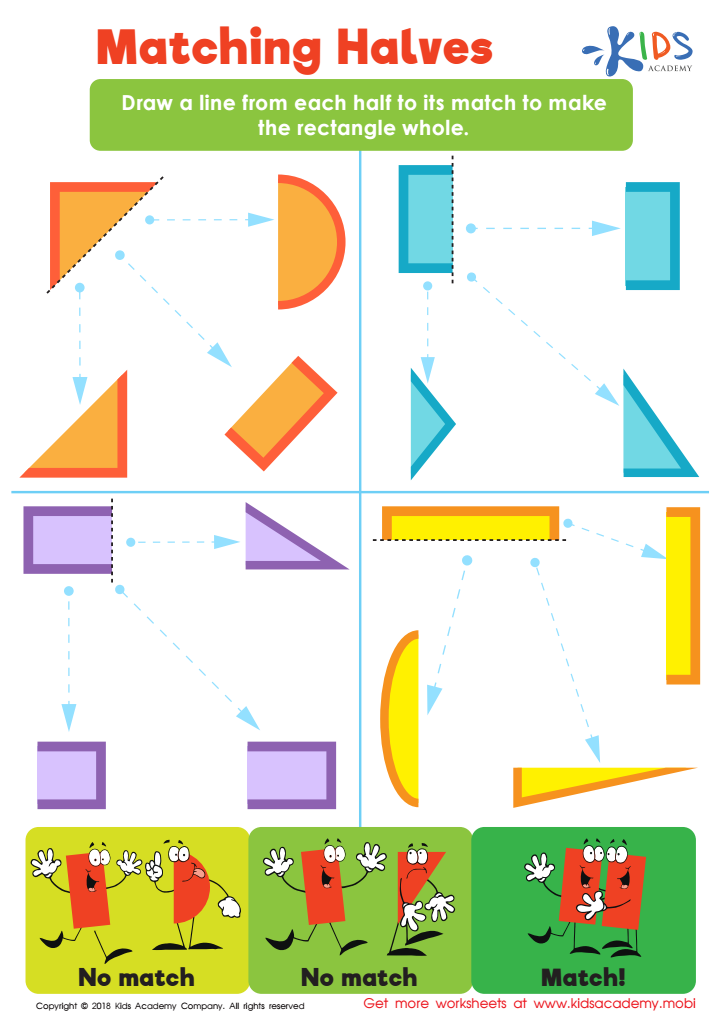
Matching Halves Worksheet
 Assign to My Students
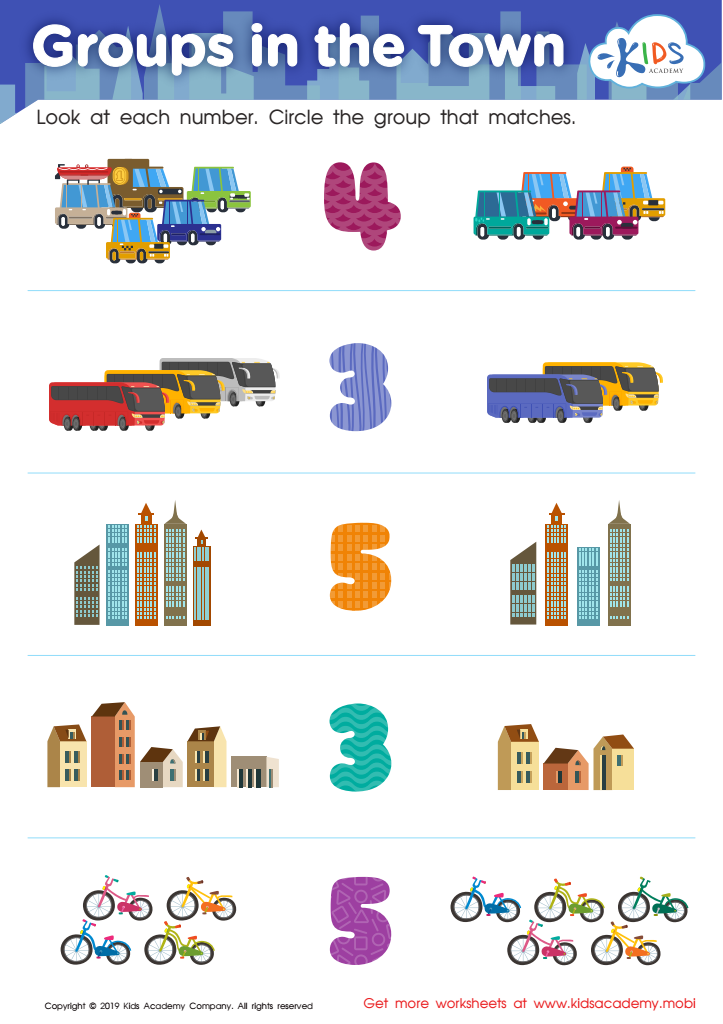
Groups in the Town Worksheet
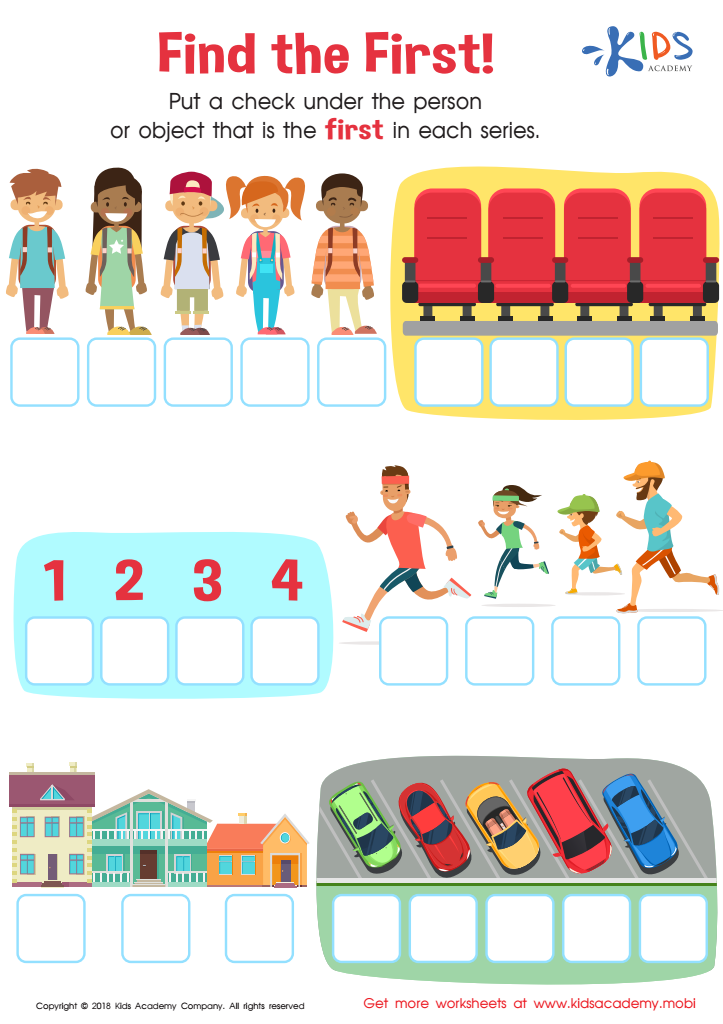
Find the First! Worksheet







Visual discrimination skills are crucial for children ages 4-8, especially in learning mathematics. These skills enable young learners to identify differences and similarities in shapes, sizes, and patterns, which are foundational for developing more complex mathematical concepts. Improving visual discrimination contributes to a child's ability to recognize numbers and understand geometric shapes, enhancing their overall mathematics proficiency.
Parents and teachers should care about these skills because they directly impact a child's problem-solving abilities and spatial reasoning. For instance, recognizing that the number '6' differs from '9' is essential for accurate counting and basic operations. Additionally, visual discrimination aids in pattern recognition, allowing children to grasp concepts related to symmetry and sequences, which are prevalent in early math curriculum.
Moreover, fostering visual discrimination skills can increase a child's confidence in their abilities. When children successfully identify numbers and shapes, they develop a sense of accomplishment that encourages further exploration and learning. Thus, investing time in reinforcing visual discrimination through games, activities, and real-world examples can lead to improved academic success and a stronger foundation for future learning. In essence, a strong grasp of visual discrimination will not only benefit children's math skills but also enhance their overall cognitive development.








