Visual-motor skills Math Worksheets for Ages 4-8
5 filtered results
-
From - To
Kids Academy offers Visual-Motor Skills Math Worksheets designed for children ages 4-8, blending math learning with fun, hands-on activities. These expertly crafted worksheets enhance essential visual-motor coordination through engaging exercises that combine counting, coloring, tracing, and pattern recognition. Ideal for young learners, our worksheets make math concepts accessible while simultaneously boosting fine motor skills. Through playful and interactive tasks, children develop a strong mathematical foundation and improve hand-eye coordination, setting the stage for future academic success. Perfect for parents and educators, these resources make learning enjoyable and effective. Start your child’s educational journey with our Visual-Motor Skills Math Worksheets!
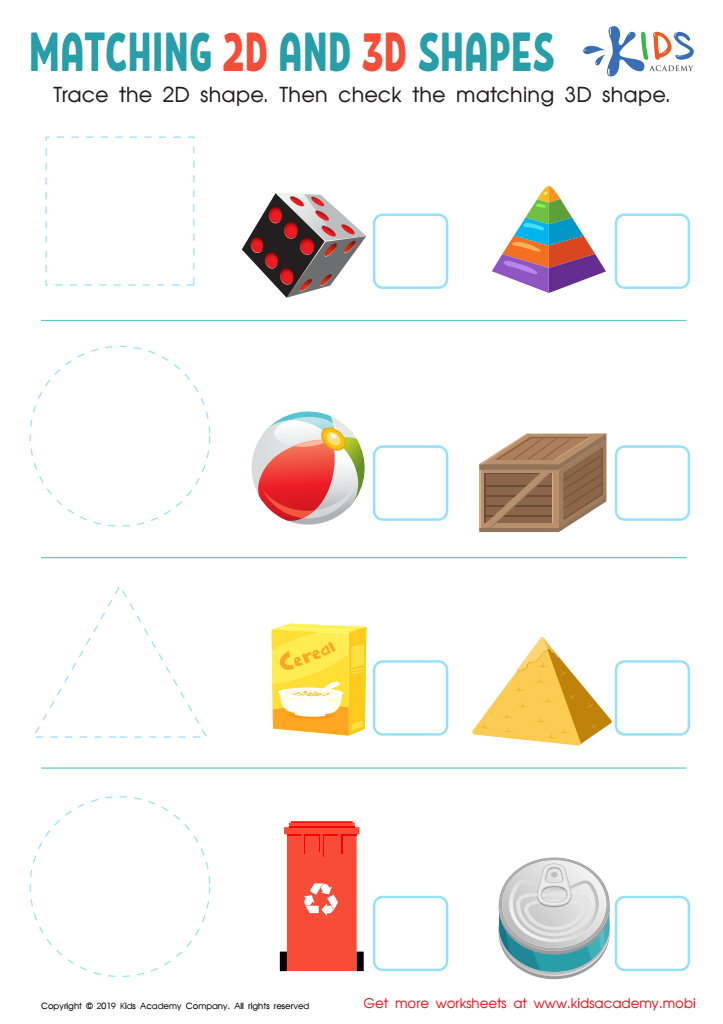
Matching 2D and 3D Shapes Worksheet
 Assign to My Students







Visual-motor integration (VMI) skills are crucial for children aged 4-8 as they bridge the gap between visual perception and motor coordination, which are foundational for effective learning in various subjects, including math. At this age, children's brains are rapidly developing, and fostering VMI skills can significantly enhance their mathematical abilities and overall academic performance.
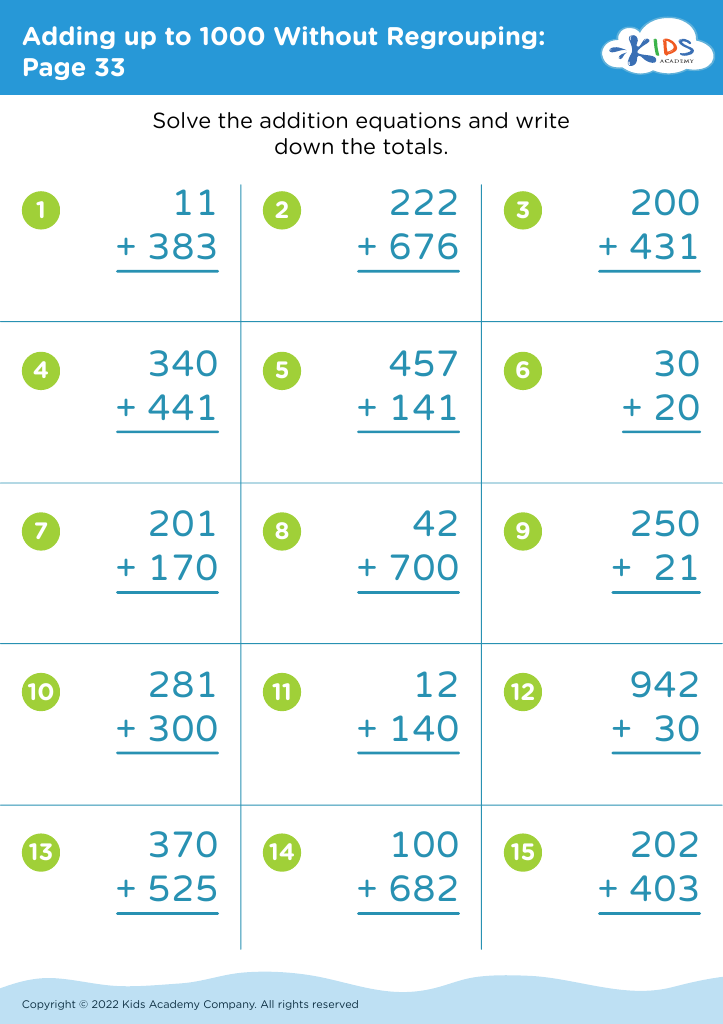
One reason for this importance is that VMI skills facilitate spatial awareness—a critical component in understanding mathematical concepts. For instance, mathematics often requires the ability to comprehend shapes, patterns, and the relationship between objects, all of which depend on strong visual-motor coordination. Children who struggle with these skills may find it difficult to differentiate numbers or letters, align digits in multi-digit calculations, or comprehend geometric shapes and their properties.
Moreover, VMI skills contribute to handwriting readiness, which is essential as writing numbers and solving math problems by hand is still a key part of early math education. Proper pencil grip, the ability to form numbers legibly, and the stamina to write for extended periods are all underpinned by visual-motor integration.
Therefore, by supporting VMI skill development, parents and teachers can help children gain confidence in their math abilities, leading to a positive feedback loop of success and motivation in learning, not just in math but across various puzzel and problemsolving contexts.








