Visual perception development Math Worksheets for Ages 4-8
5 filtered results
-
From - To
Explore our engaging Visual Perception Development Math Worksheets designed specifically for children ages 4 to 8. These worksheets enhance essential visual perception skills through fun and interactive math activities tailored for early learners. By solving these worksheets, young students will improve their ability to recognize shapes, patterns, and spatial relationships, laying a strong foundation for future math skills. Our kid-friendly designs make learning enjoyable while promoting critical thinking and problem-solving. Ideal for use at home or in the classroom, these resources offer an effective way to boost your child's visual perception and mathematical understanding. Start fostering a love for learning today!
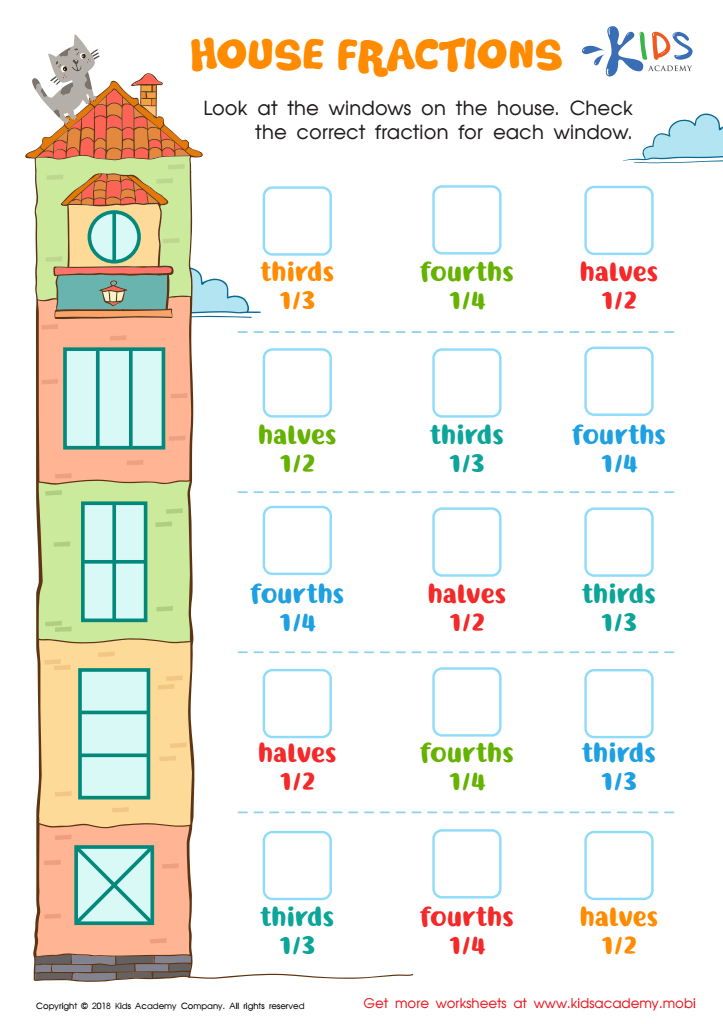
House Fractions Worksheet
 Assign to My Students
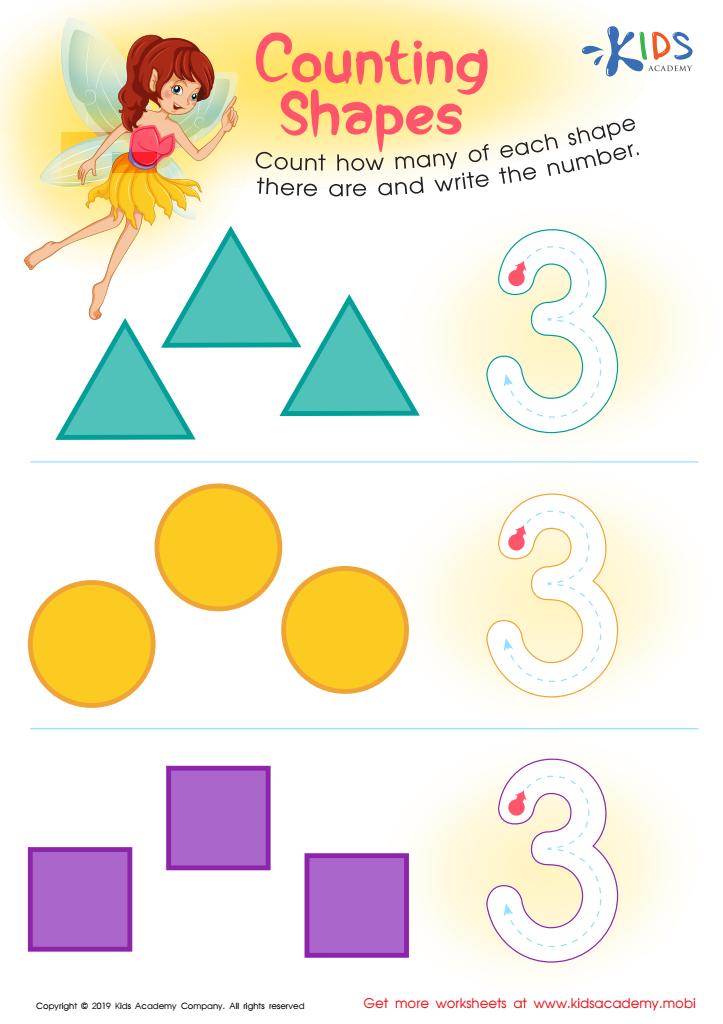
Counting Shapes Worksheet

Math Matching Pairs Game: Monsterв's Socks Worksheet








Visual perception development is crucial for children ages 4-8, especially in the context of math learning. During these formative years, children need to develop the skills to interpret and analyze visual information, which are essential for understanding mathematical concepts.
Firstly, visual perception helps children recognize shapes, patterns, and spatial relationships, which are foundational for arithmetic and geometry. For example, distinguishing between a rectangle and a square or understanding how two shapes fit together builds their problem-solving skills. Moreover, strong visual perception aids in following calculations and understanding graphs, charts, and other visual aids used in math.
Secondly, children enhance their focus, memory, and attention to detail through visual activities. When parents and teachers prioritize visual perceptual skills, children can better grasp complex problems and solve them more efficiently.
Finally, an environment that encourages visual learning can make math more engaging. Incorporating visual tools—like manipulatives, drawings, or digital resources—can demystify challenging concepts and make learning enjoyable. By fostering visual perception in math, parents and teachers not only support academic success but also help children develop critical thinking and lifelong learning skills. Thus, investing in this area ultimately cultivates confident and capable learners.








