
Basic Addition Measurement Worksheets for Ages 4-8
3 filtered results
Difficulty Level
Grade
Age
-
From - To
Subject
Activity
Standards
Introduce young learners to the world of numbers with our "Basic Addition Measurement Worksheets for Ages 4-8." Designed to engage and educate, these printable worksheets seamlessly blend fun with foundational math skills. Children will embark on exciting adventures as they learn to measure and add, making math both easy and enjoyable. Perfect for classroom use or at-home practice, each worksheet is tailored to build a solid base in basic addition and measurement concepts. Set your child on a path to math success with activities that foster confidence, curiosity, and a love for numbers. Download and start learning today!
Favorites
With answer key
Interactive
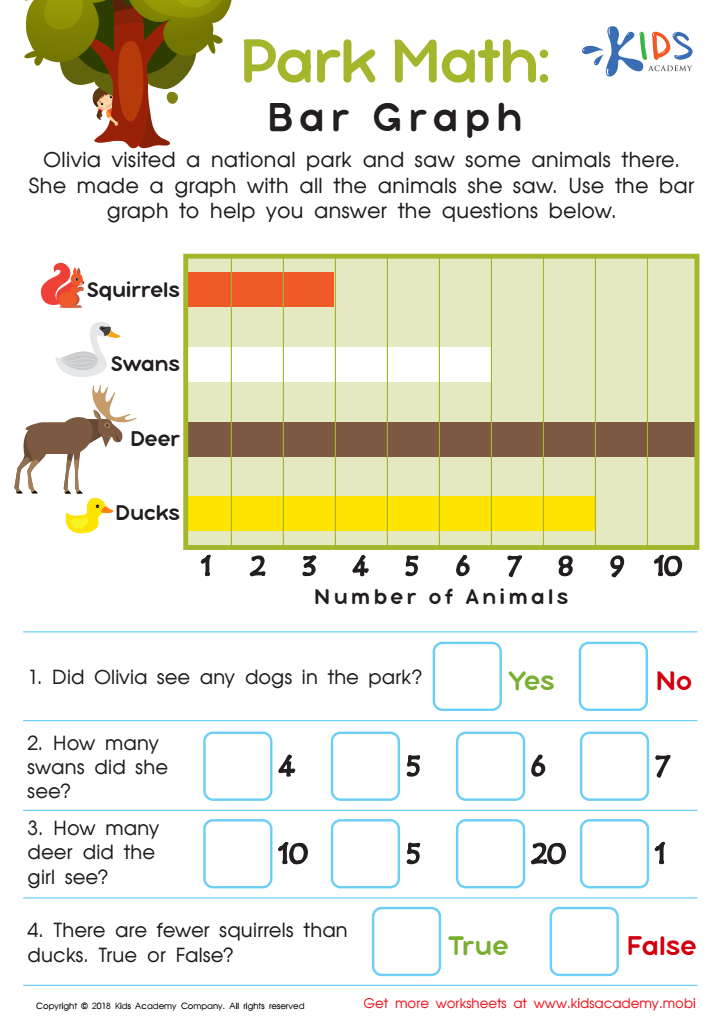
Park Math: Bar Graph Worksheet
Do your children love the park? Ask them to tell you some of their favorite animals. Then, have them look at Olivia's graph. She visited a National Park and recorded all the animals she saw. Use the graph to answer the questions given.
 Assign to My Students
Park Math: Bar Graph Worksheet
Worksheet
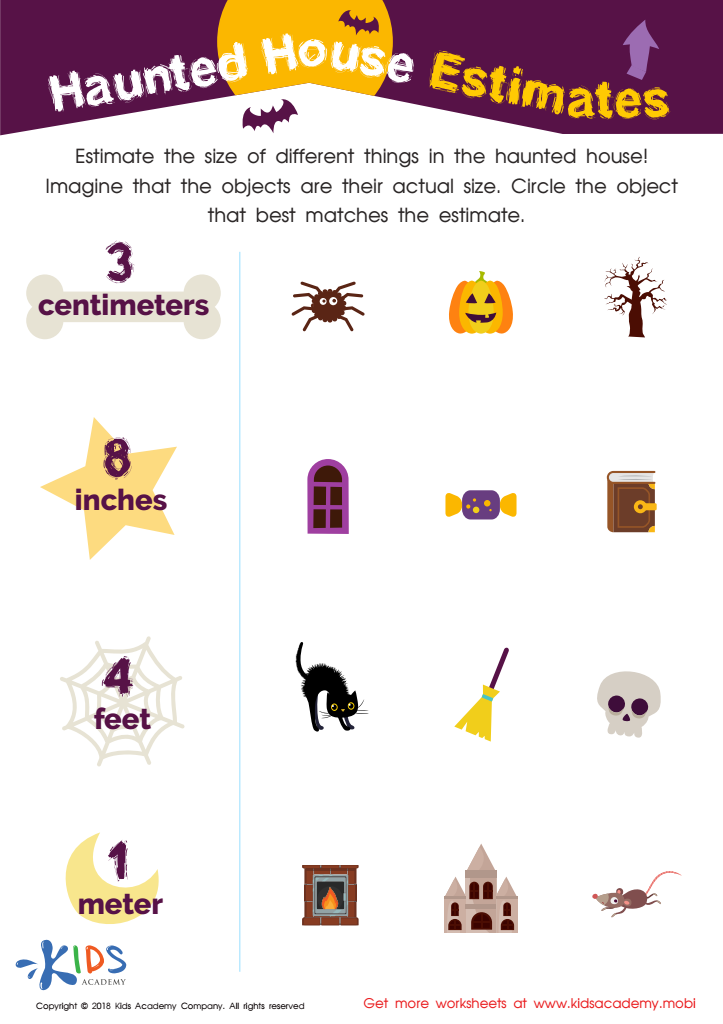
Haunted House Estimates Worksheet
Enliven your kid's learning with this printable worksheet! Have them estimate the size of objects and creatures in a haunted house, then circle the ones that match their estimates. They'll need to understand different measuring units beforehand. It's an exciting way to learn!
Haunted House Estimates Worksheet
Worksheet
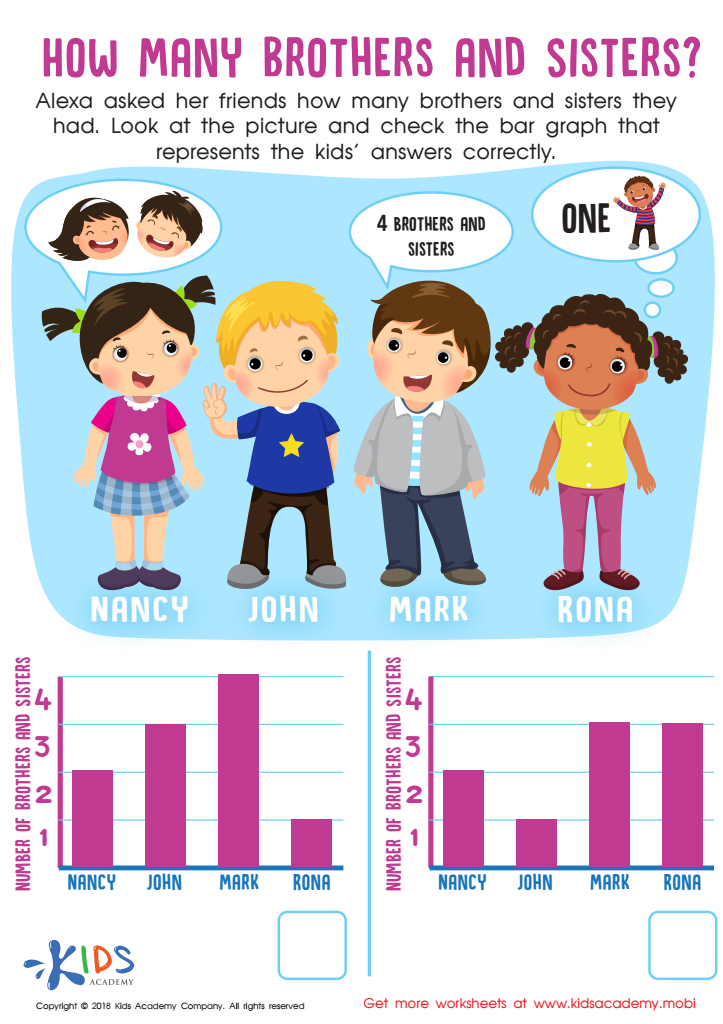
How Many Brothers and Sisters? Worksheet
With this worksheet, Alexa has asked her friends how many siblings they have. Have your child look at the picture and use it to answer the bar graph correctly. Can they tell you how many siblings their friends have? See if they can get it right!
How Many Brothers and Sisters? Worksheet
Worksheet
Join Kids Academy for Free
Who is primarily going to use this learning content?








Basic Addition Measurement is crucial for children aged 4-8 as it forms the foundation of their mathematical understanding and cognitive development. At this formative stage, learning basic addition helps children to develop problem-solving skills and logical thinking, which are essential for daily life and future academic success.
When parents and teachers focus on teaching addition, they are not just enhancing numerical literacy but also encouraging children to understand how numbers relate to one another. This foundational knowledge promotes a sense of confidence and curiosity in young learners, making math feel approachable rather than intimidating.
Moreover, mastering basic addition early on reduces the chances of encountering difficulties in more advanced math topics such as subtraction, multiplication, and division. It also aids in the understanding of measurements, comparisons, and data interpretation, which will be vital across various subjects and real-world scenarios — from cooking and shopping to budgeting and spatial awareness.
Parents' and teachers' involvement in teaching basic addition ensures that children receive consistent reinforcement and encouragement, tailored to their individual learning pace and style. By providing stimulating and supportive environments, adults can foster a positive attitude towards math, making it a joyful and integral part of children's lives rather than a chore. Quality early math education cultivates lifelong learners who are equipped with the skills needed to navigate the complexities of everyday life.








