Comparing object weights Measurement Worksheets for Ages 4-8
3 filtered results
-
From - To
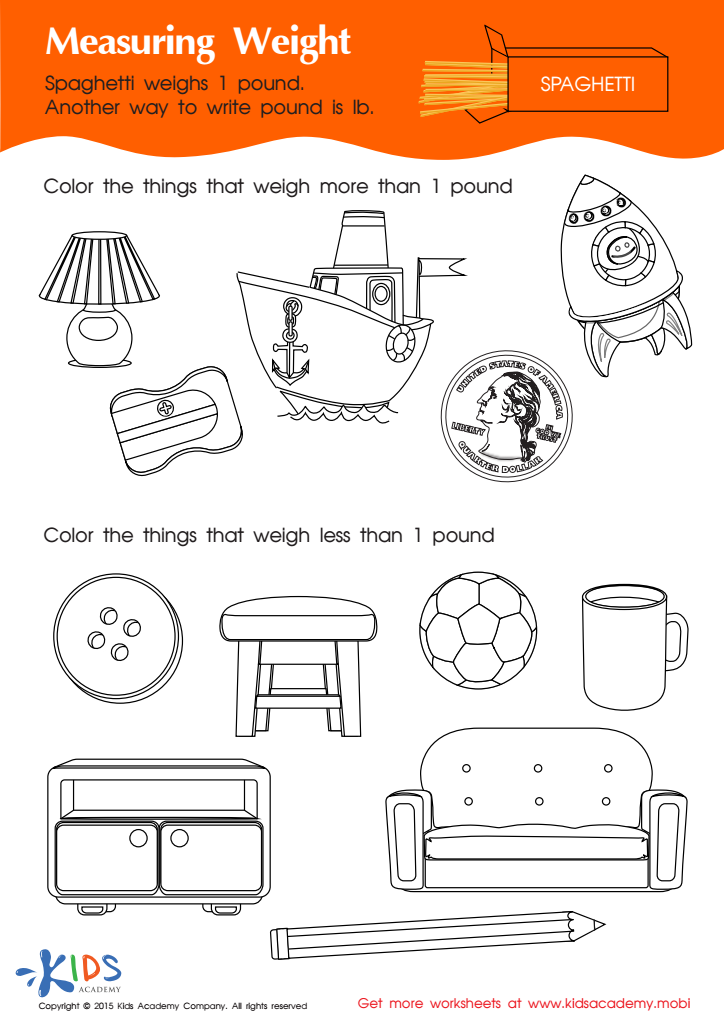
Introduce your young learners to the basics of weight comparison with our fun and educational worksheets designed for ages 4-8. These engaging activities help children develop critical thinking and measurement skills by comparing object weights in an easy-to-understand format. Perfect for early grade students, each worksheet uses vibrant images and relatable items to encourage hands-on learning. Kids will enjoy weighing and contrasting everyday objects, enhancing their comprehension of mass and weight differences. Ideal for both classroom and at-home practice, these worksheets are essential for building a solid foundation in early math measurement concepts. Download now to ignite a love for learning in your child!
 Assign to My Students
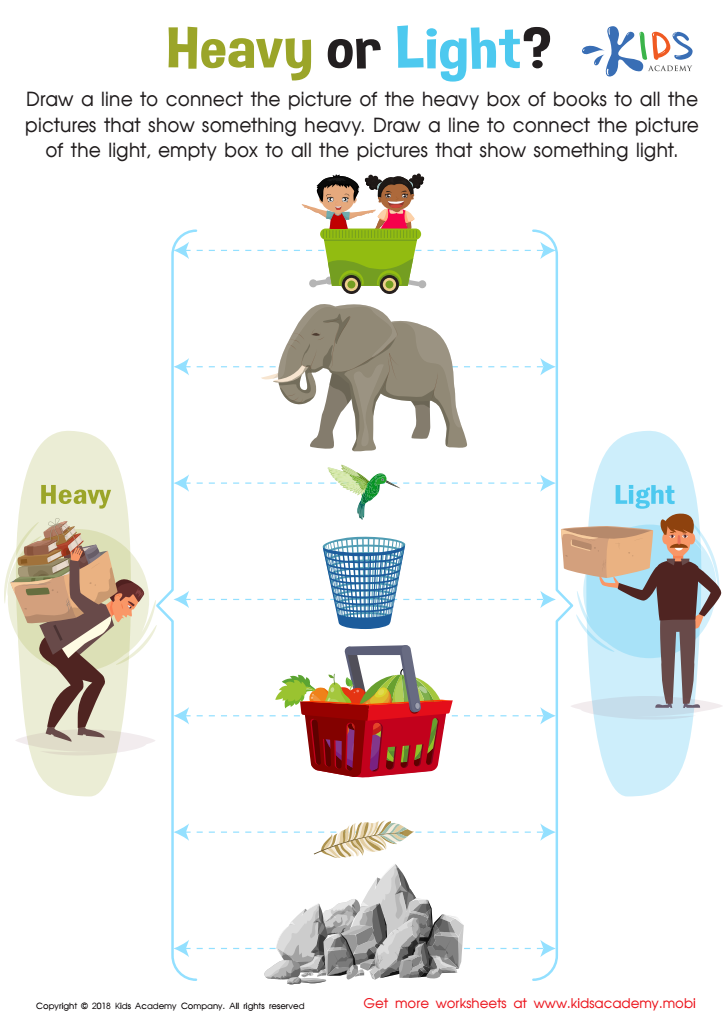
Heavy or Light? Worksheet
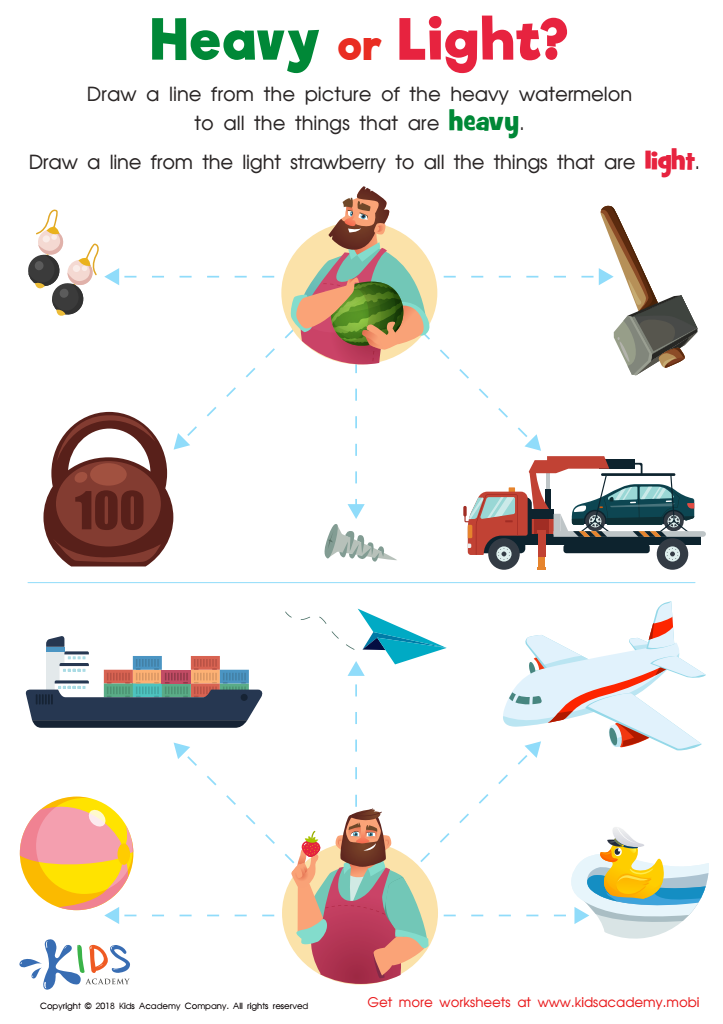
Heavy or Light? Worksheet








Parents and teachers should care about teaching children aged 4-8 to compare object weights because it is a foundational mathematical skill that fosters critical thinking and problem-solving abilities. Early engagement with concepts like weight comparison helps young children develop a concrete understanding of measurement and basic math principles, which are crucial for their academic growth.
By learning to compare weights, children enhance their cognitive abilities and improve their capacity for visual and tactile discrimination. This practice helps sharpen their observational skills and introduces them to mathematical vocabulary, such as "heavier," "lighter," and "equal to," building a robust foundation for future learning.
Additionally, hands-on activities that involve comparing object weights cultivate fine motor skills and hand-eye coordination. These activities are important for overall child development and readiness for more complex tasks and school routines.
Beyond academics, understanding and comparing weights is a practical life skill. It helps children make sense of the physical world around them, understanding how and why objects behave the way they do. Engaging with these concepts early on can spark curiosity, encourage scientific thinking, and enhance children’s ability to make informed decisions in real-life scenarios. Ultimately, such foundational skills set the stage for lifelong learning and curiosity.








