
Time reading skills Measurement Worksheets for Ages 4-8
3 filtered results
Difficulty Level
Grade
Age
-
From - To
Subject
Activity
Standards
Enhance your child's understanding of time with our engaging Time Reading Skills Measurement Worksheets, designed specifically for ages 4-8. These worksheets provide fun and interactive exercises that help young learners master the concepts of telling time on both digital and analog clocks. Through visually appealing activities, your child will build confidence in reading time, identifying hour and minute hands, and solving simple time-related problems. Our resource promotes critical thinking while laying a solid foundation for essential math skills. Perfect for home or classroom use, these worksheets will make learning about time enjoyable and effective for your budding mathematician!
Favorites
With answer key
Interactive
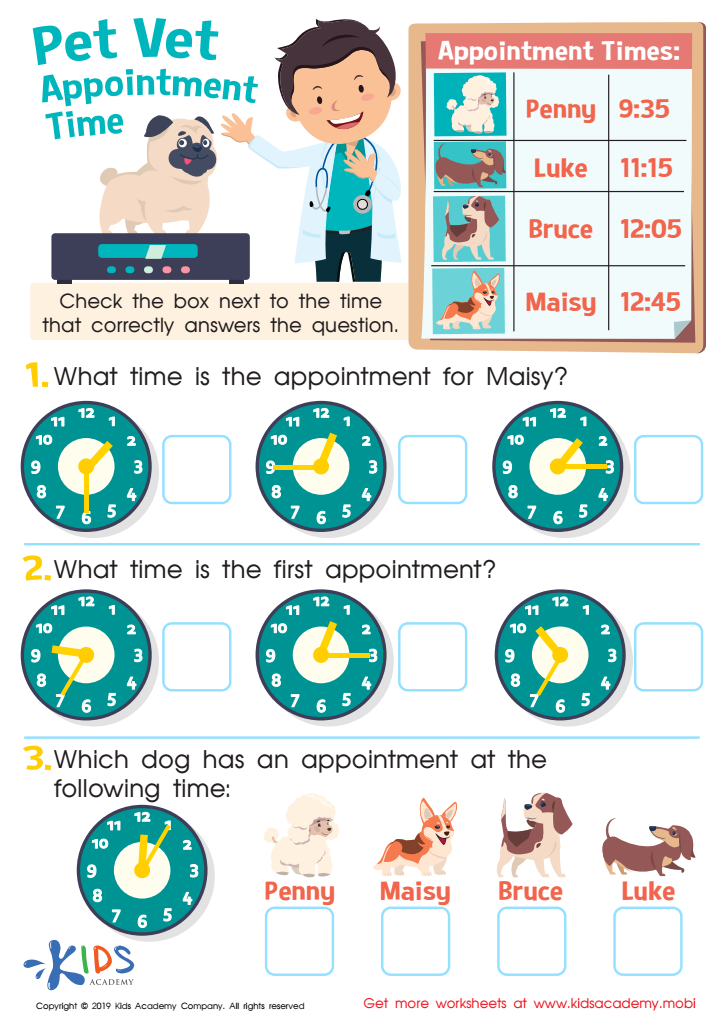
Pet Vet Appointment Time Worksheet
Teach your child how to read the time early, so they can master it. Explain the importance of being able to tell the time. Use this worksheet to have your child practice. Have them look at the clocks and check the box of the time that correctly answers the three questions.
 Assign to My Students
Pet Vet Appointment Time Worksheet
Worksheet
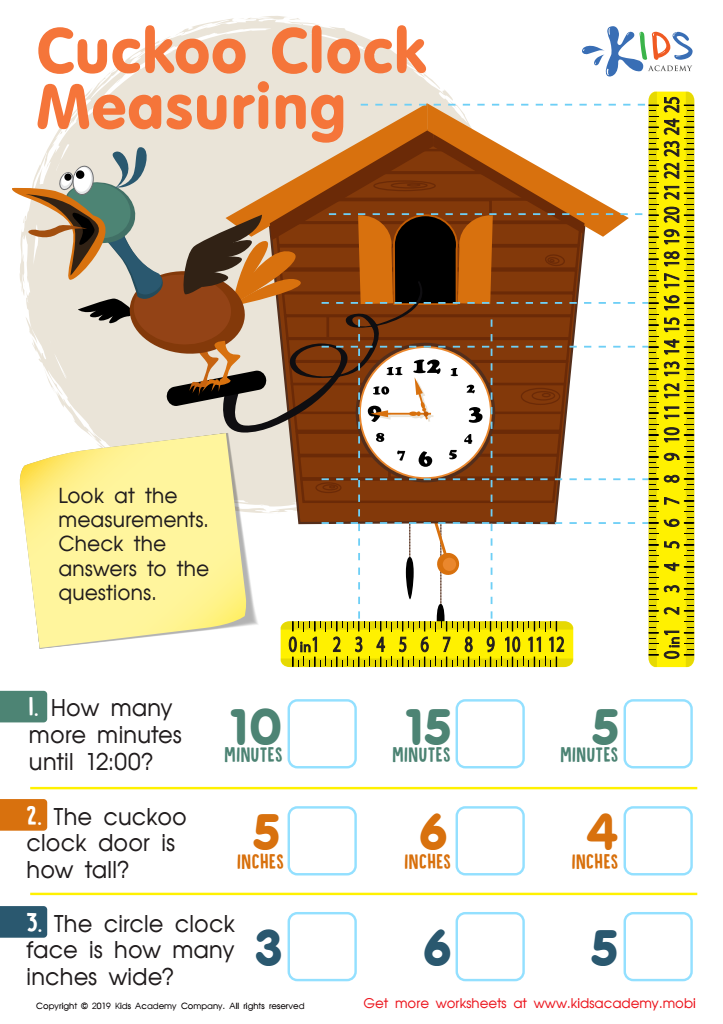
Cuckoo Clock Measuring Worksheet
Check out the fun picture in this worksheet. Ask your kids to identify the object. It's a cuckoo clock - the bird pops out every hour to announce the time. See if your child knows how to measure the clock. Help them answer the 3 questions and test their knowledge of time!
Cuckoo Clock Measuring Worksheet
Worksheet
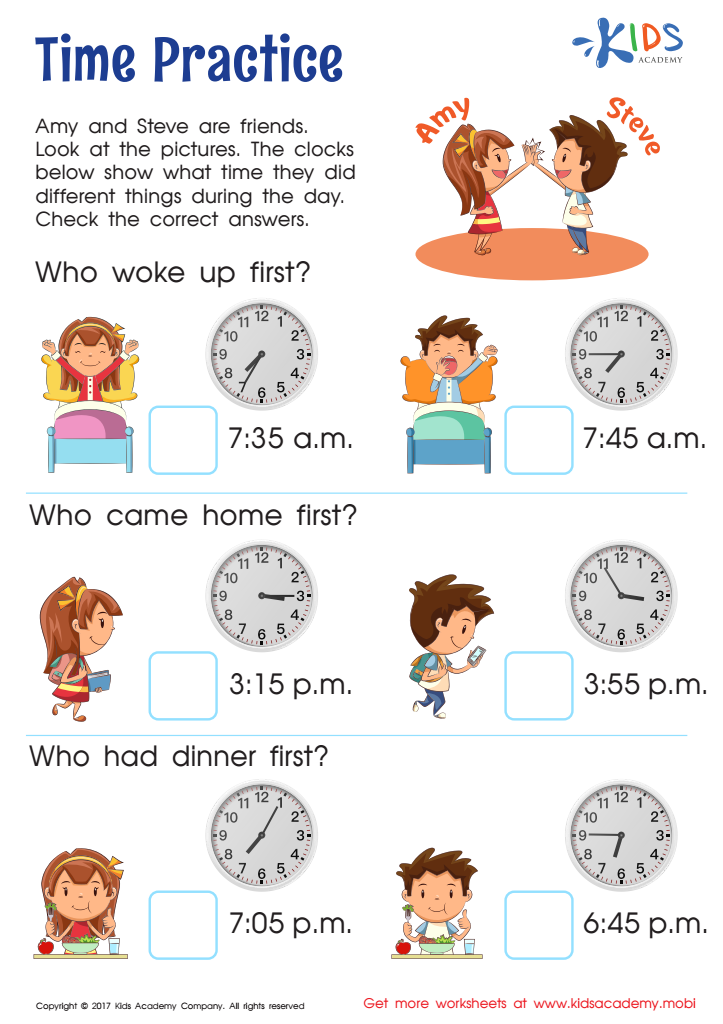
Time Practice Worksheet
It's perfect for 2nd graders as they gain a better understanding of time. Get them to tell the time on analog clocks, improve their math skills, and boost their confidence!
Second graders can brush up on timekeeping with our time practice worksheets. They'll learn to read minutes on analog clocks, honing math and confidence. Perfect for mastering this tricky concept!
Time Practice Worksheet
Worksheet
Join Kids Academy for Free
Who is primarily going to use this learning content?








Reading is a foundational skill that shapes a child's academic journey and overall development. For children aged 4-8, time reading skills measurement is crucial for several reasons. Firstly, early reading proficiency is linked to future academic success. By monitoring and assessing a child's ability to read within a certain timeframe, parents and teachers can identify strengths and areas needing improvement, allowing for targeted interventions.
Understanding a child's reading speed and comprehension helps educators tailor instructional strategies to meet individual needs. This data can guide the selection of appropriate reading materials and strategies that engage children effectively, ensuring they remain motivated and focused. Moreover, these measurements can signal potential reading challenges, such as dyslexia, enabling early intervention which is vital for overcoming obstacles without significant long-term impacts.
For parents, time reading skills measurement offers insights into their child's progress and fosters a collaborative relationship with educators. It empowers them to support their children's reading habits at home, reinforcing the importance of literacy. In conclusion, monitoring reading skills is essential for nurturing confident, competent readers who can thrive in school and beyond, emphasizing the collective responsibility of parents and teachers in this important developmental stage.








