Filters

64 filtered results

Clear all filters
Favorites
With answer key
Interactive

64 filtered results

Difficulty Level

Grade


Check out this FREE Trial Lesson on Multiplication for age 4-8!

A

Favorites
With answer key
Interactive
  • 4-8
  • Multiplication practice
  • Multiplication
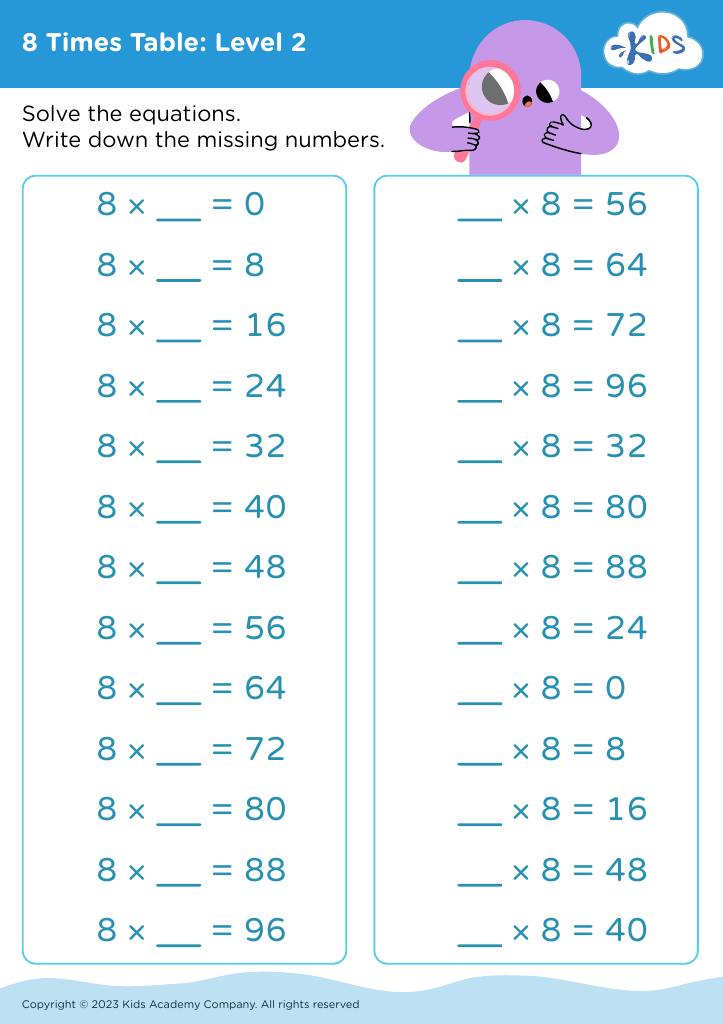
8 Times Table: Level 2

8 Times Table: Level 2

8 Times Table: Level 2
Worksheet
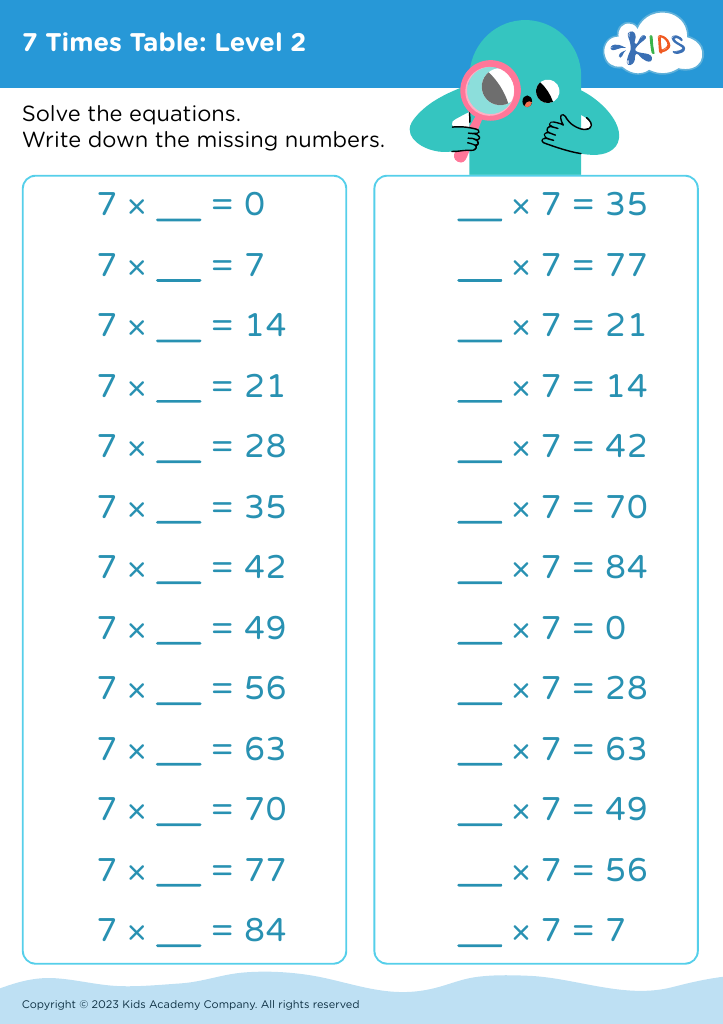
7 Times Table: Level 2

7 Times Table: Level 2

7 Times Table: Level 2
Worksheet
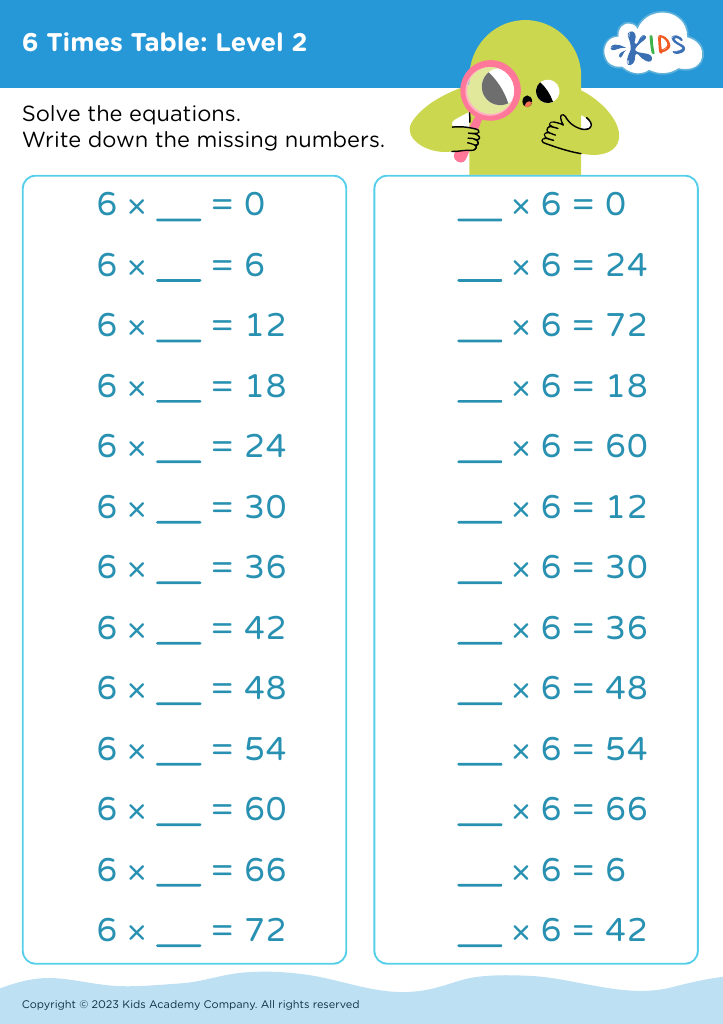
6 Times Table: Level 2

6 Times Table: Level 2

6 Times Table: Level 2
Worksheet
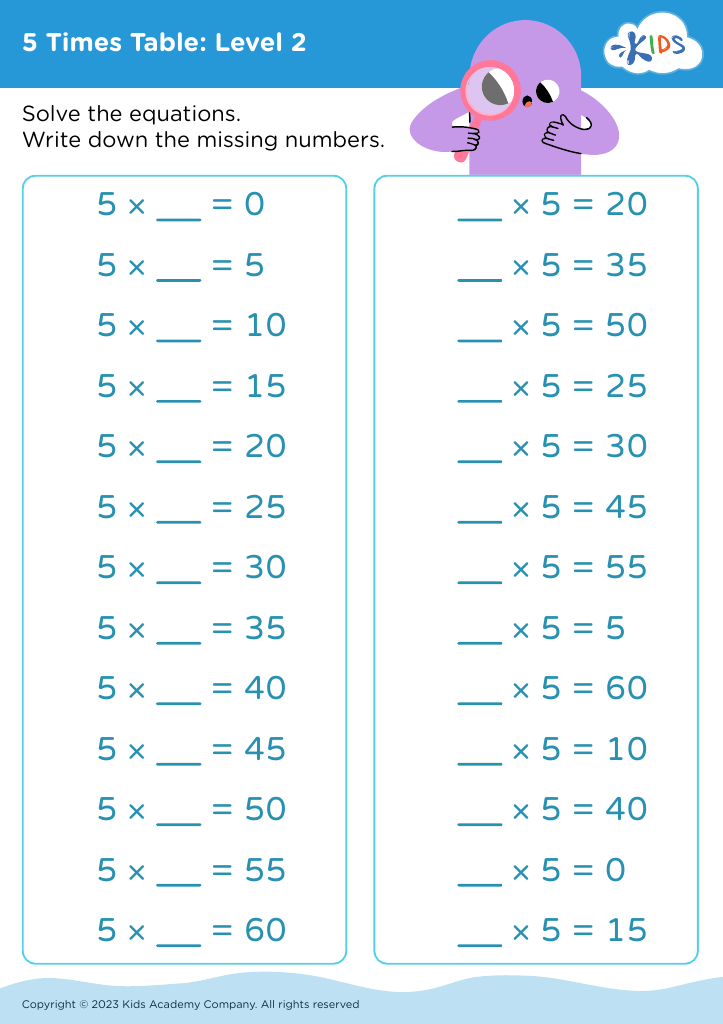
5 Times Table: Level 2

5 Times Table: Level 2

5 Times Table: Level 2
Worksheet
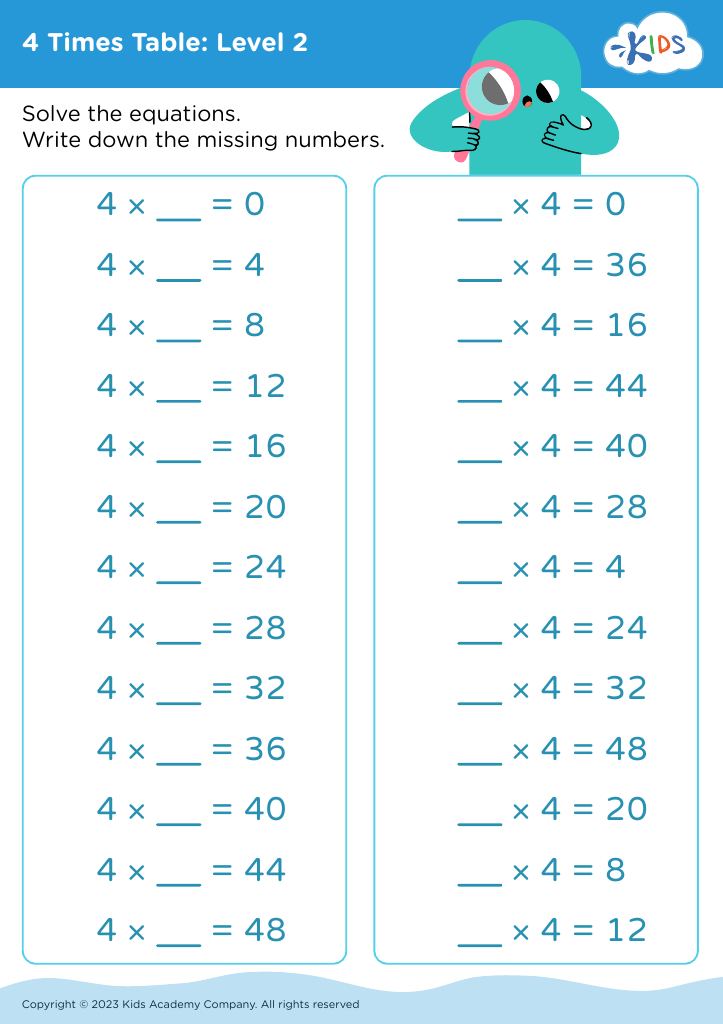
4 Times Table: Level 2

4 Times Table: Level 2

4 Times Table: Level 2
Worksheet
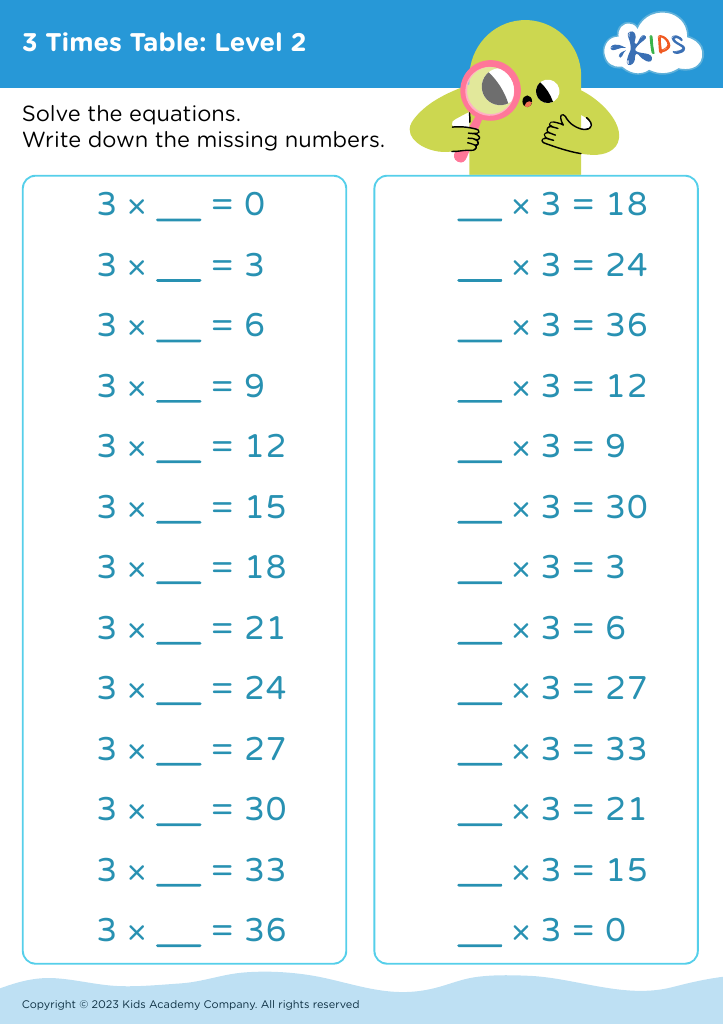
3 Times Table: Level 2

3 Times Table: Level 2

3 Times Table: Level 2
Worksheet
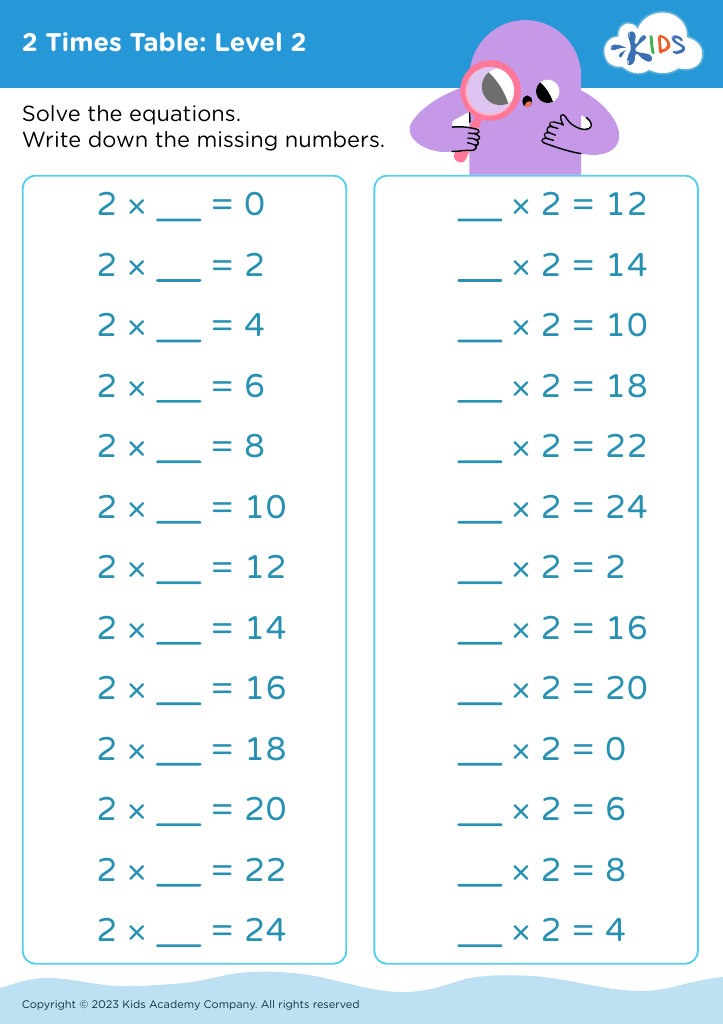
2 Times Table: Level 2

2 Times Table: Level 2

2 Times Table: Level 2
Worksheet
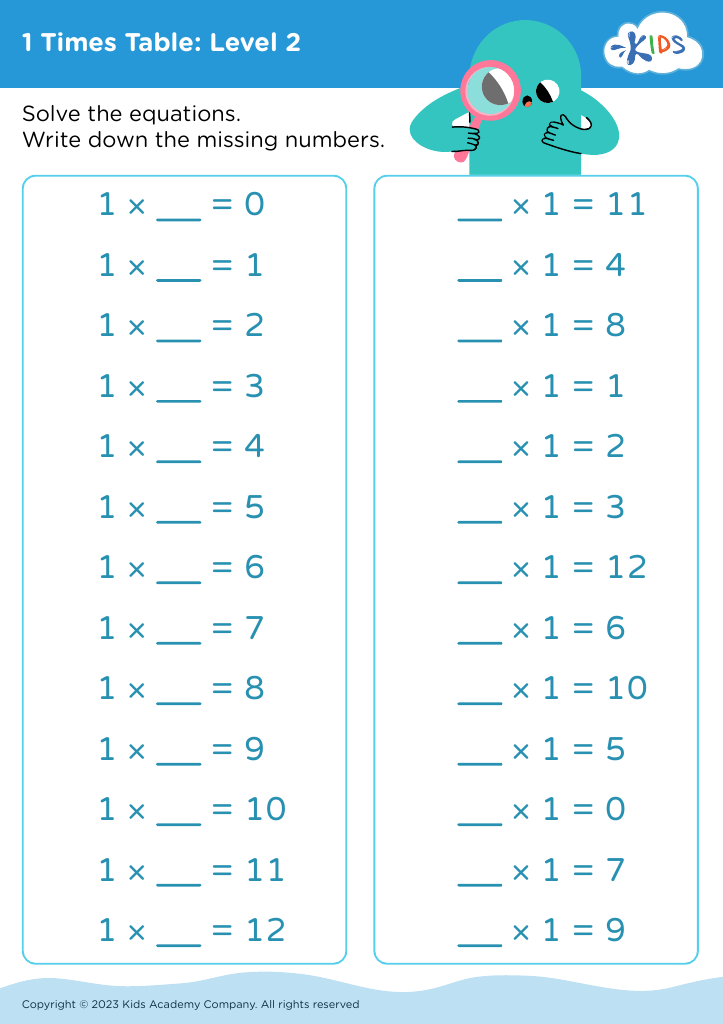
1 Times Table: Level 2

1 Times Table: Level 2

1 Times Table: Level 2
Worksheet
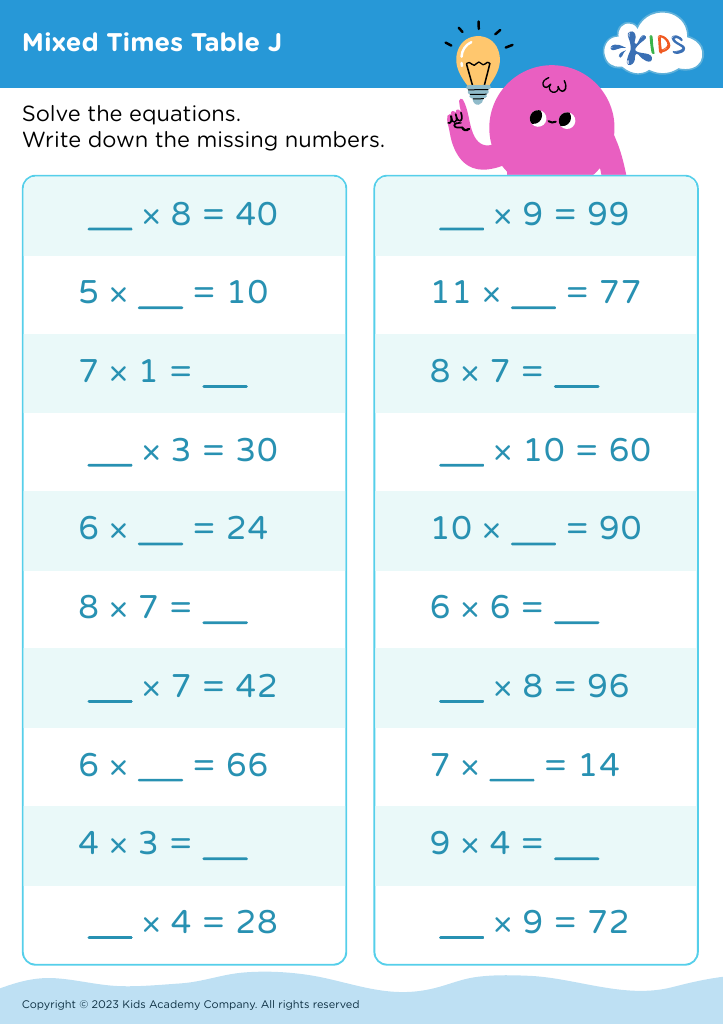
Mixed Times Table J
Mixed Times Table J

Mixed Times Table J

Mixed Times Table J
Worksheet
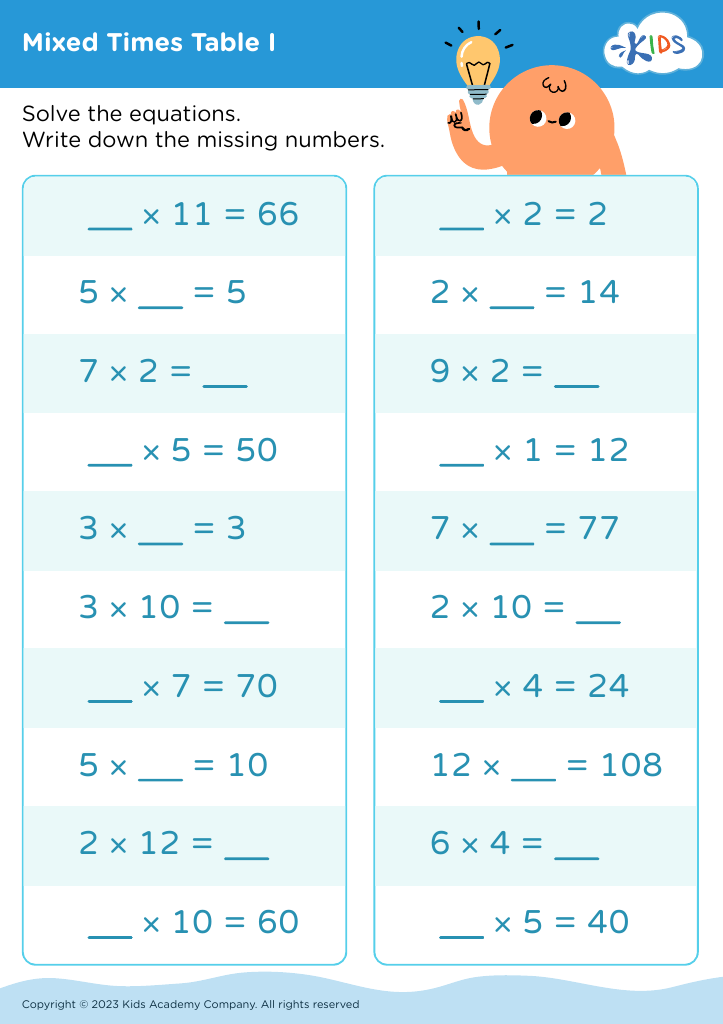
Mixed Times Table I
Mixed Times Table I

Mixed Times Table I

Mixed Times Table I
Worksheet
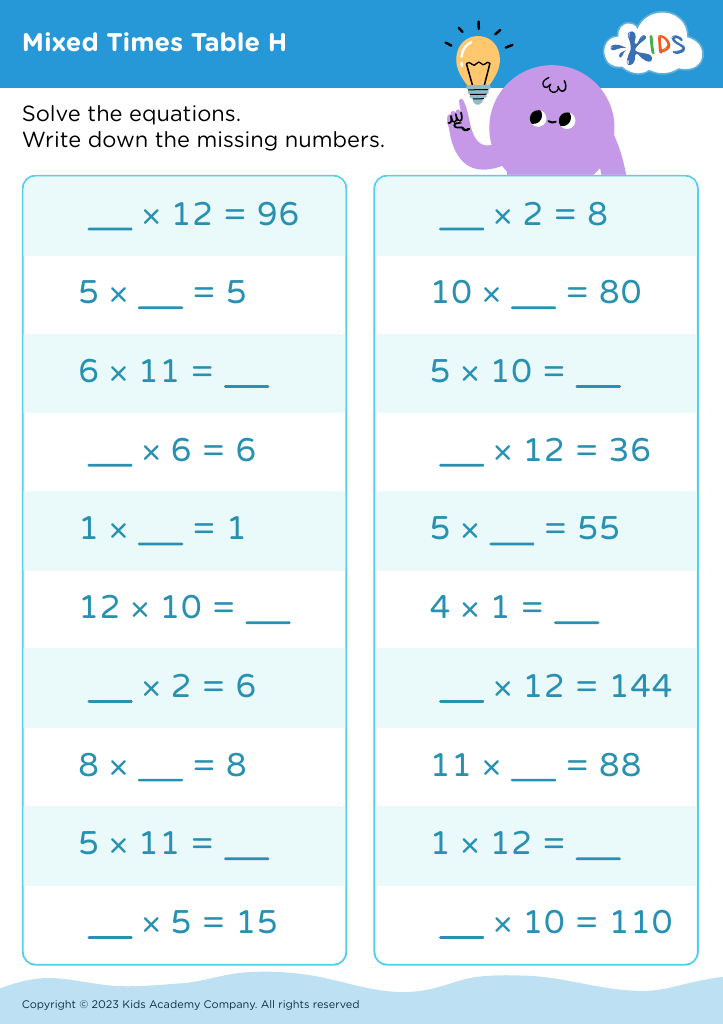
Mixed Times Table H
Mixed Times Table H

Mixed Times Table H

Mixed Times Table H
Worksheet
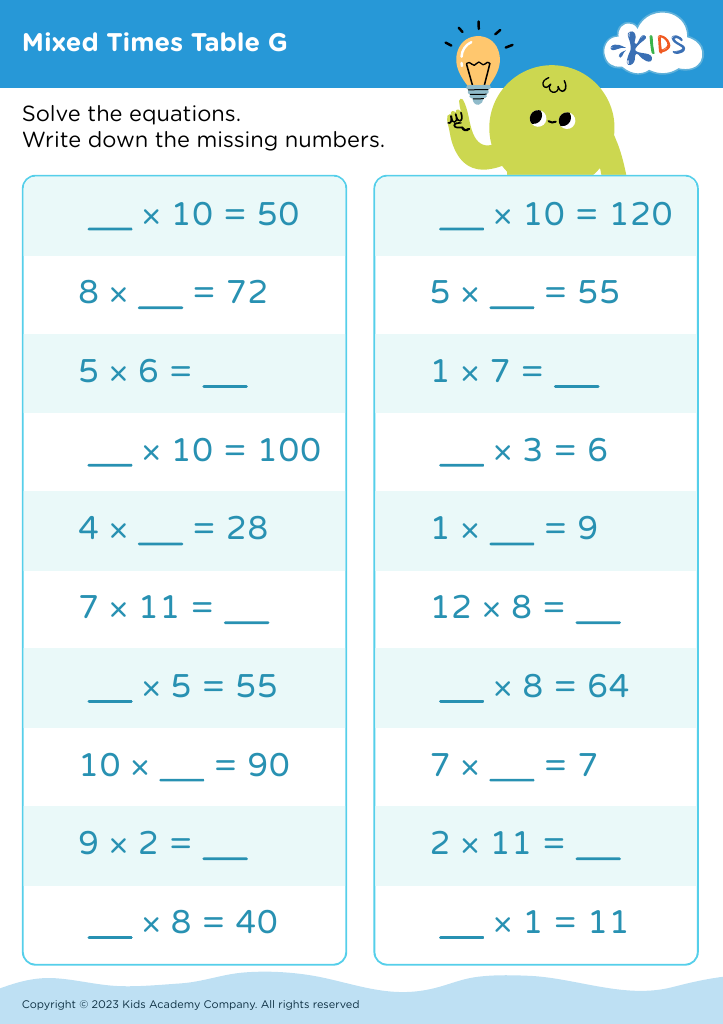
Mixed Times Table G
Mixed Times Table G

Mixed Times Table G

Mixed Times Table G
Worksheet
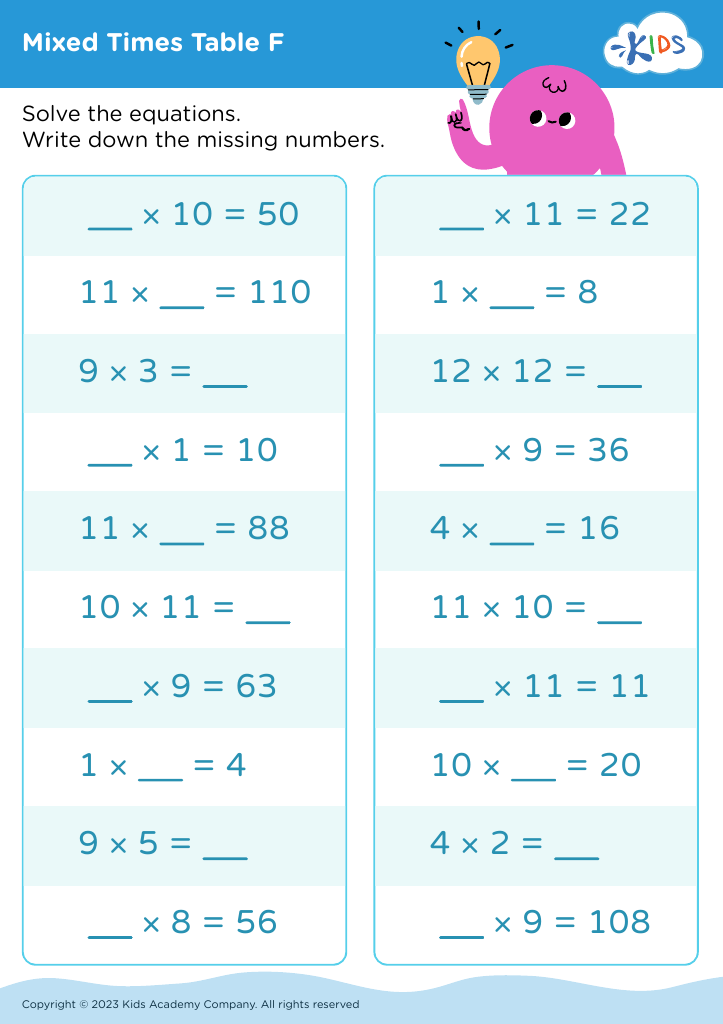
Mixed Times Table F
Mixed Times Table F

Mixed Times Table F

Mixed Times Table F
Worksheet
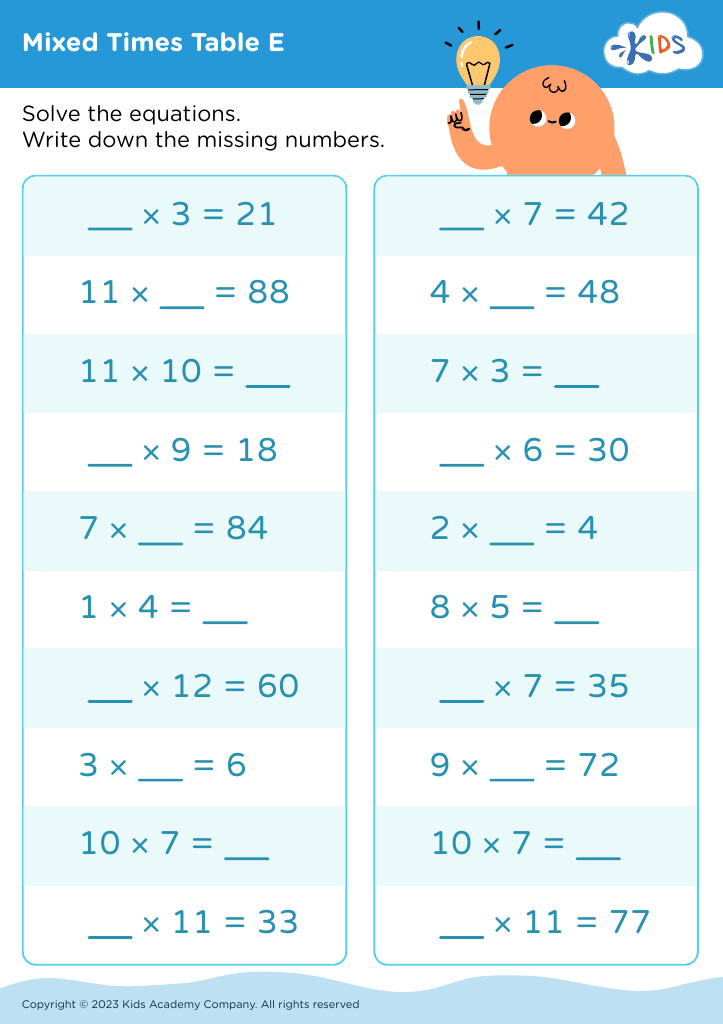
Mixed Times Table E
Mixed Times Table E

Mixed Times Table E

Mixed Times Table E
Worksheet
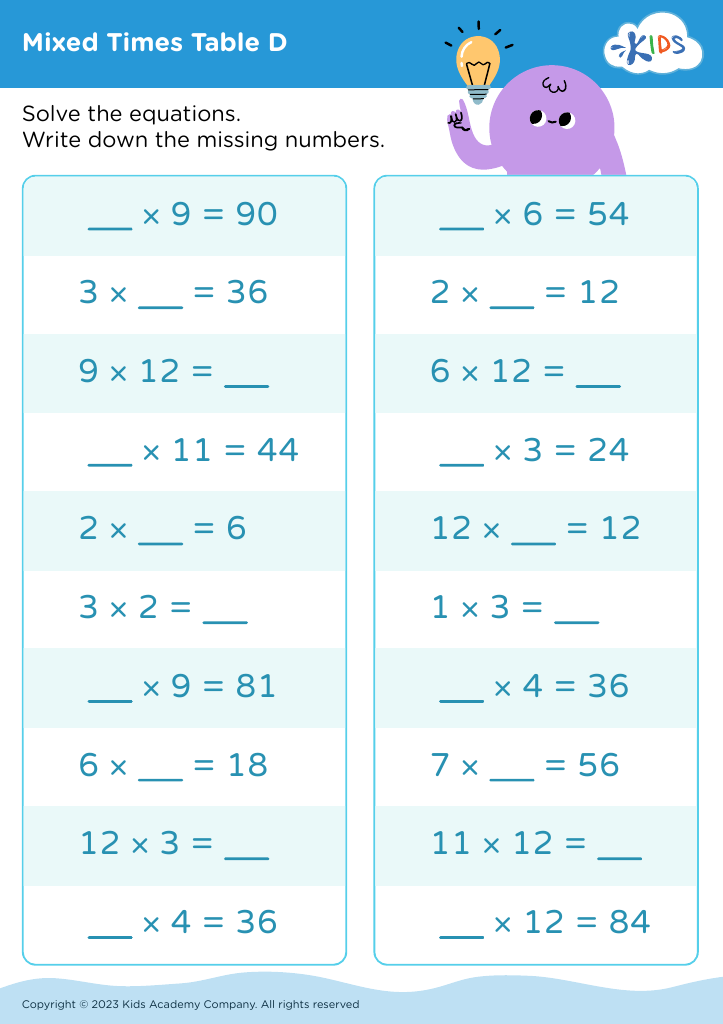
Mixed Times Table D
Mixed Times Table D

Mixed Times Table D

Mixed Times Table D
Worksheet
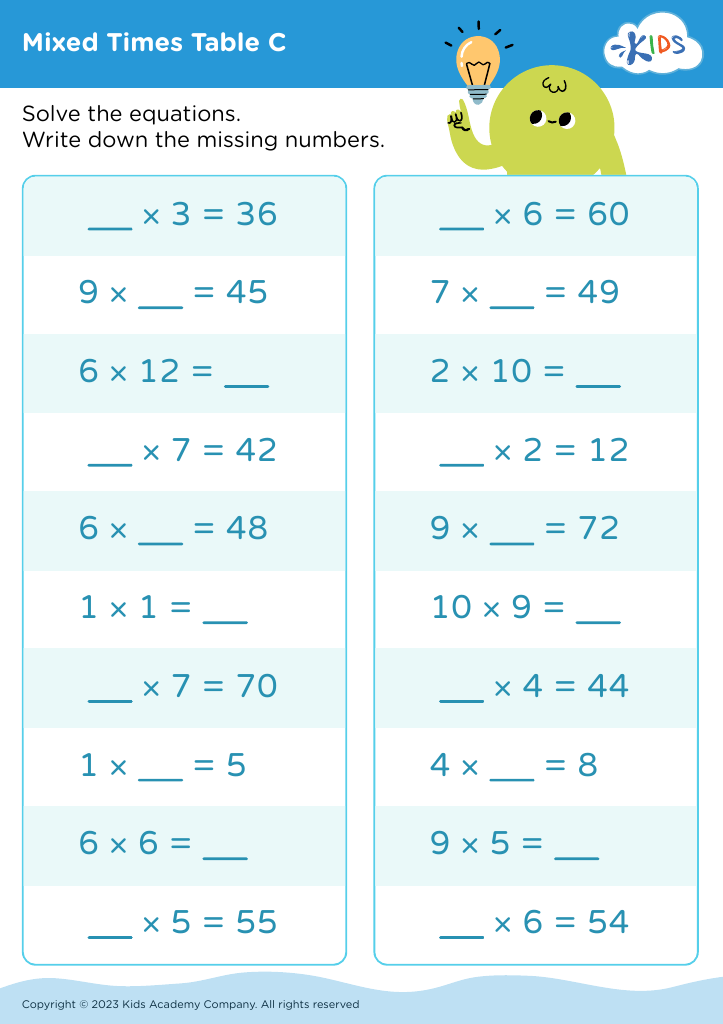
Mixed Times Table C
Mixed Times Table C

Mixed Times Table C

Mixed Times Table C
Worksheet


... 2 3

Multiplication practice for children aged 4-8 is crucial for several reasons. First, it lays the groundwork for a strong mathematical foundation. Early mastery of multiplication promotes confidence in numbers, enhance problem-solving skills, and ensures students can tackle more advanced math concepts in the future.

Moreover, multiplication at this age supports cognitive development, engaging children in critical thinking as they learn to recognize patterns and relationships within numbers. When students repeatedly practice multiplication, they can improve their number sense and develop fluency, making math tasks quicker and easier.

Engaging children in multiplication practice also fosters a growth mindset. When parents and teachers encourage and celebrate progress in mastering multiplication facts, it helps students build resilience and persistence. This attitude positively influences their approach to learning, not only in math but in other academic areas.

Finally, mathematical competence can significantly impact future educational opportunities and career paths. Supporting early multiplication skills ensures children are well-equipped for more complex mathematical concepts and real-world applications, cultivating a generation of confident learners. Thus, parents and teachers should prioritize multiplication practice, recognizing its importance in shaping young minds and encouraging lifelong learning habits.