Number Sequencing Skip Counting Worksheets for Ages 4-8
4 filtered results
-
From - To
Discover our engaging Number Sequencing Skip Counting Worksheets designed for children aged 4-8. These interactive resources help young learners master the concept of skip counting, essential for developing number sense and enhancing foundational math skills. With vibrant illustrations and age-appropriate challenges, our worksheets make learning fun and effective. Kids will practice counting by 2s, 5s, and 10s through enjoyable activities that reinforce their understanding of sequences. Ideal for both classroom and home learning environments, these worksheets encourage independent exploration and foster a love for math. Download your free worksheets today and watch your child thrive in their math journey!
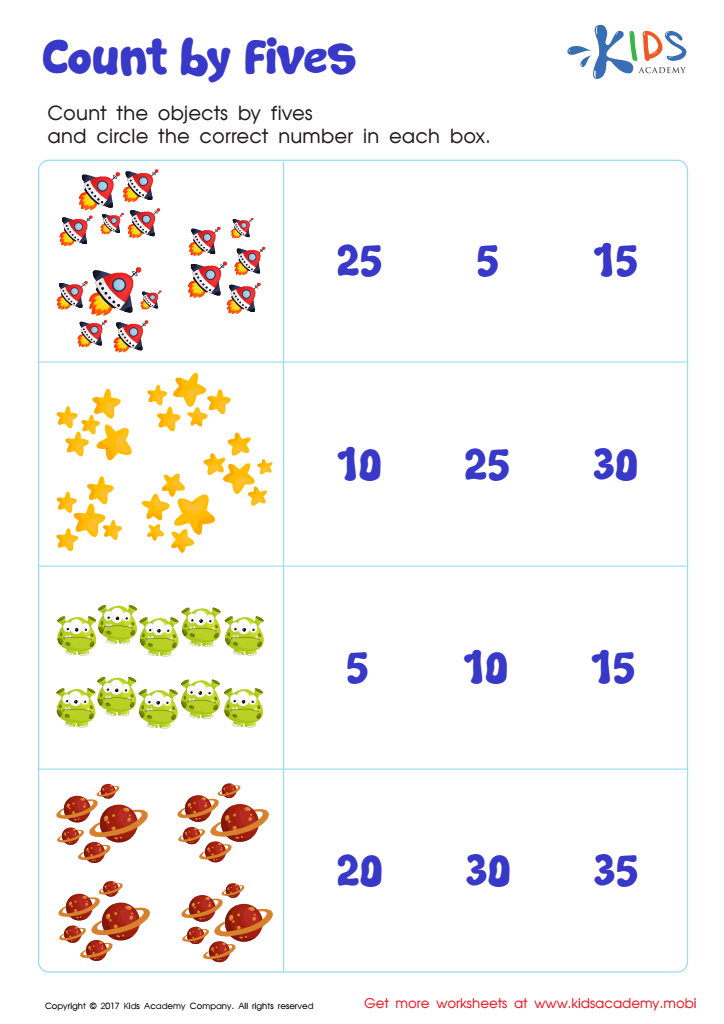
Skip Counting by 5s: Space Math Printable
 Assign to My Students
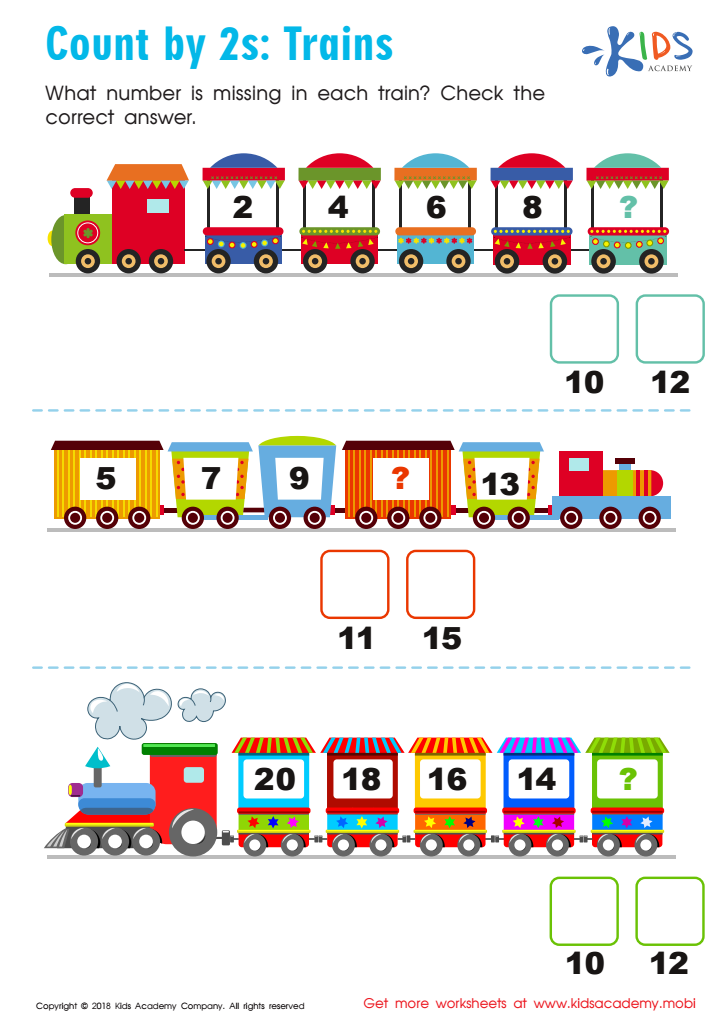
Count by 2's: Trains Worksheet
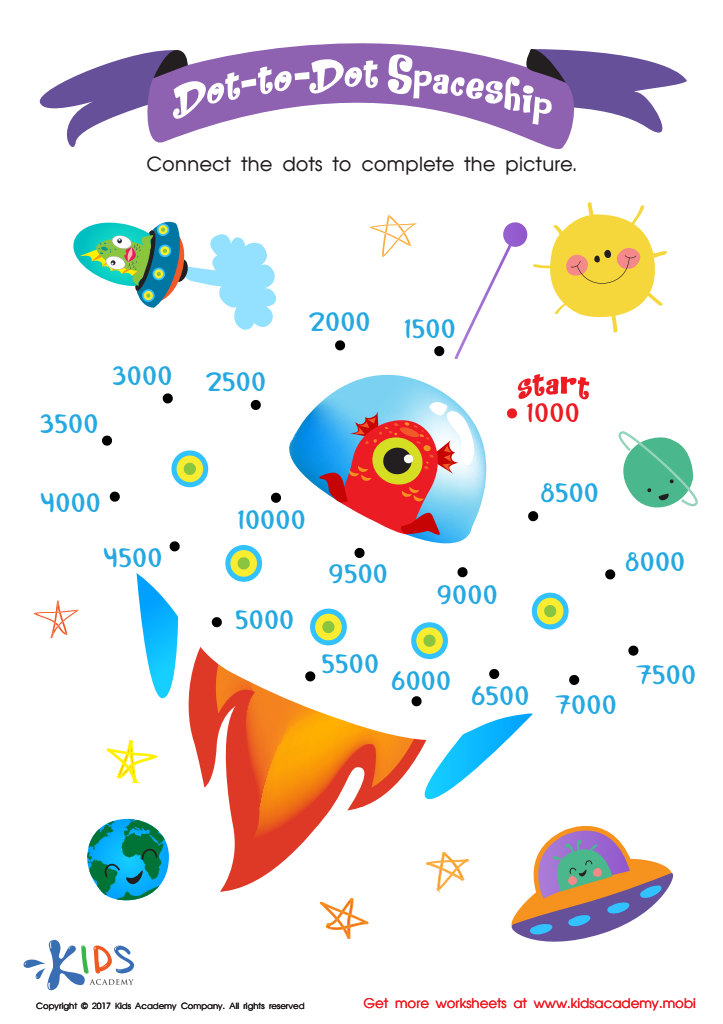
Dot to Dot Worksheet for 3rd Grade
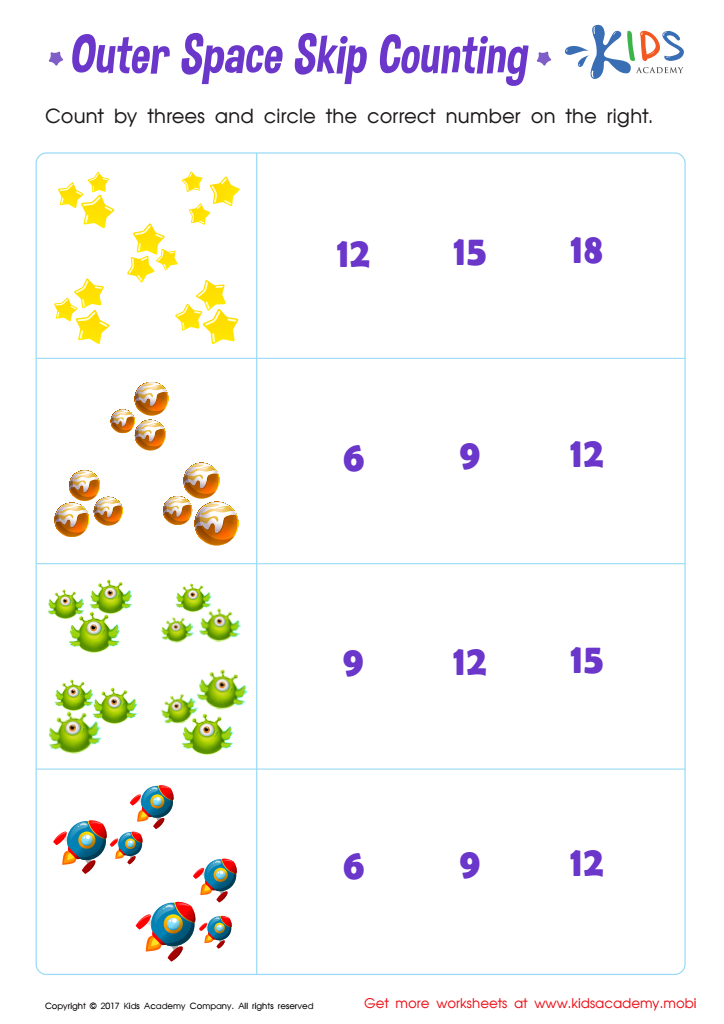
Skip Counting by 3s: Outer Space Skip Counting Printable








Number sequencing and skip counting are fundamental math concepts that bolster a child’s numerical understanding and overall cognitive development. For children aged 4-8, mastering these skills lays a solid foundation for more complex mathematical operations. When parents and teachers emphasize number sequencing, children learn to recognize patterns and order, which enhances their problem-solving abilities and logical thinking skills. This knowledge is essential for daily life, helping them understand routines, telling time, and organizing tasks.
Skip counting, whether by twos, fives, or tens, reinforces the concept of addition and multiplication while making math more approachable and enjoyable. It aids in developing a number sense that allows students to efficiently handle larger mathematical concepts later on, building confidence along the way.
Furthermore, engaging in number sequencing and skip counting activities can be both fun and interactive, fortifying the parent-child or teacher-student bond. These skills can also improve students' performance in standardized tests and real-world math applications, enhancing their academic prospects. In summary, investing time in these foundational concepts is vital, enriching a child's learning experience and ensuring they are prepared for future mathematical challenges.








