Cognitive Development Subtraction Worksheets for Ages 4-8
5 filtered results
-
From - To
Enhance your child's cognitive development with our engaging subtraction worksheets, designed specifically for ages 4-8. These interactive resources focus on building essential math skills while fostering critical thinking and problem-solving abilities. Our worksheets incorporate colorful visuals and fun activities to keep young learners motivated and eager to explore subtraction concepts. With a variety of exercises tailored to different learning levels, these worksheets promote systematic thinking and boost confidence in basic arithmetic. Perfect for classroom use or at-home learning, these cognitive-focused worksheets make mastering subtraction a fun and rewarding experience for every child. Start your child's mathematical journey today!
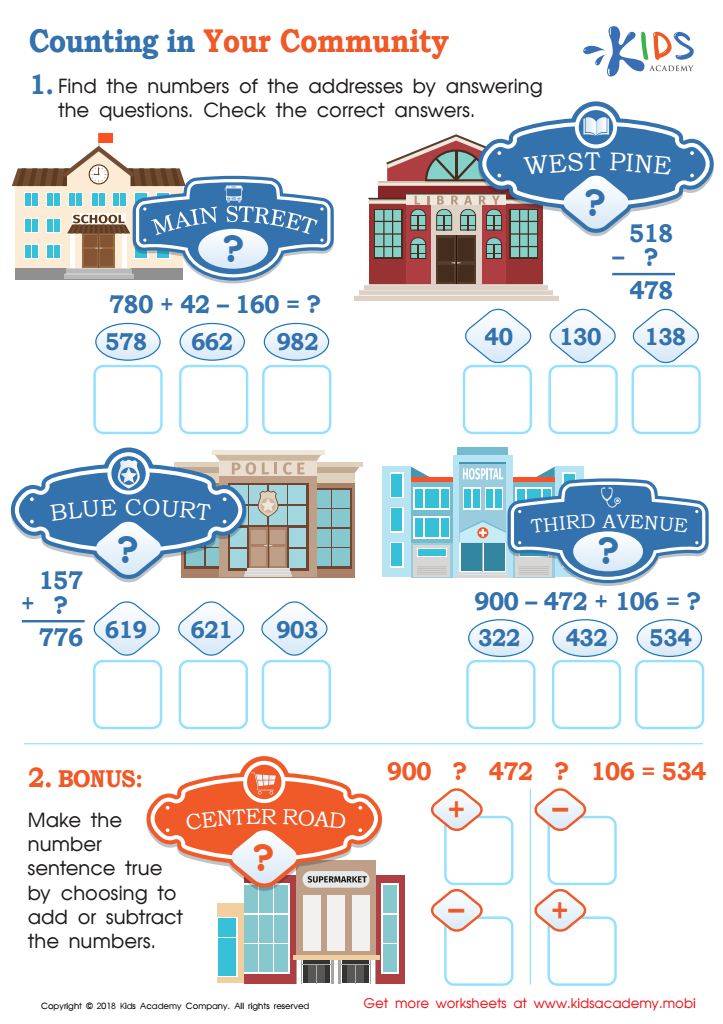
Counting in Your Community Worksheet
 Assign to My Students
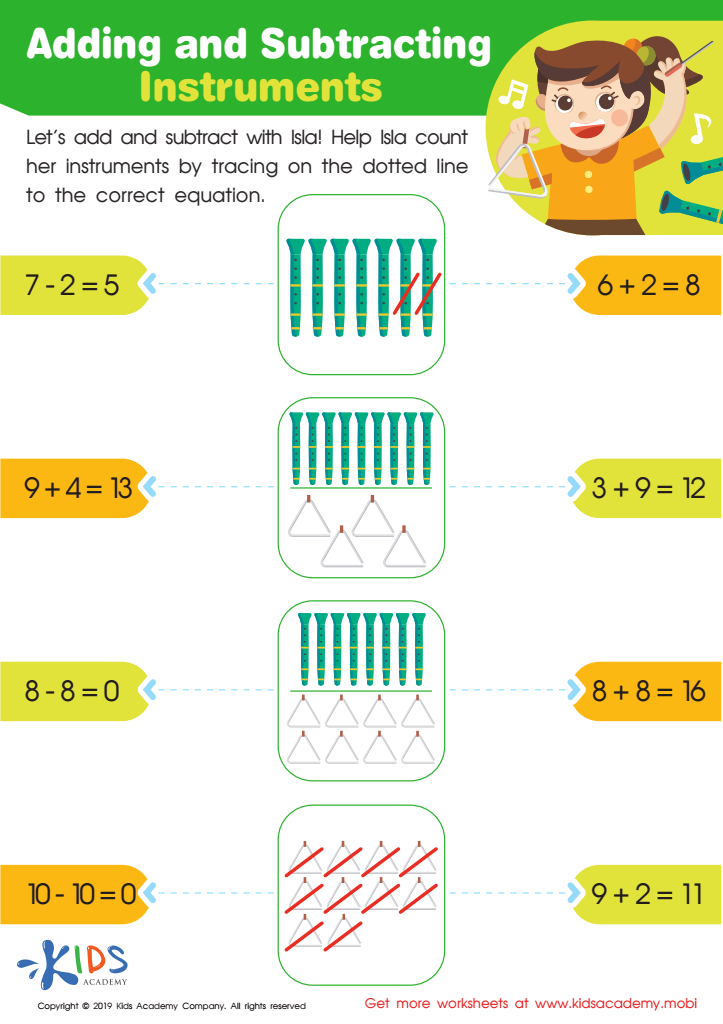
Adding and Subtracting: Instruments Worksheet
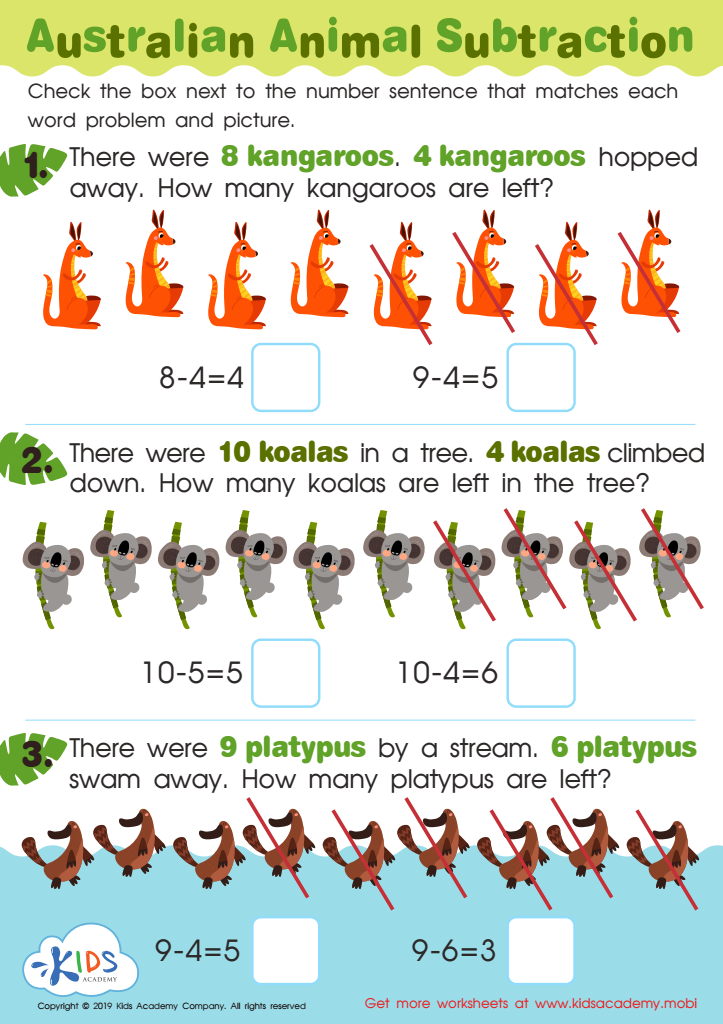
Australian Animal Subtraction Worksheet
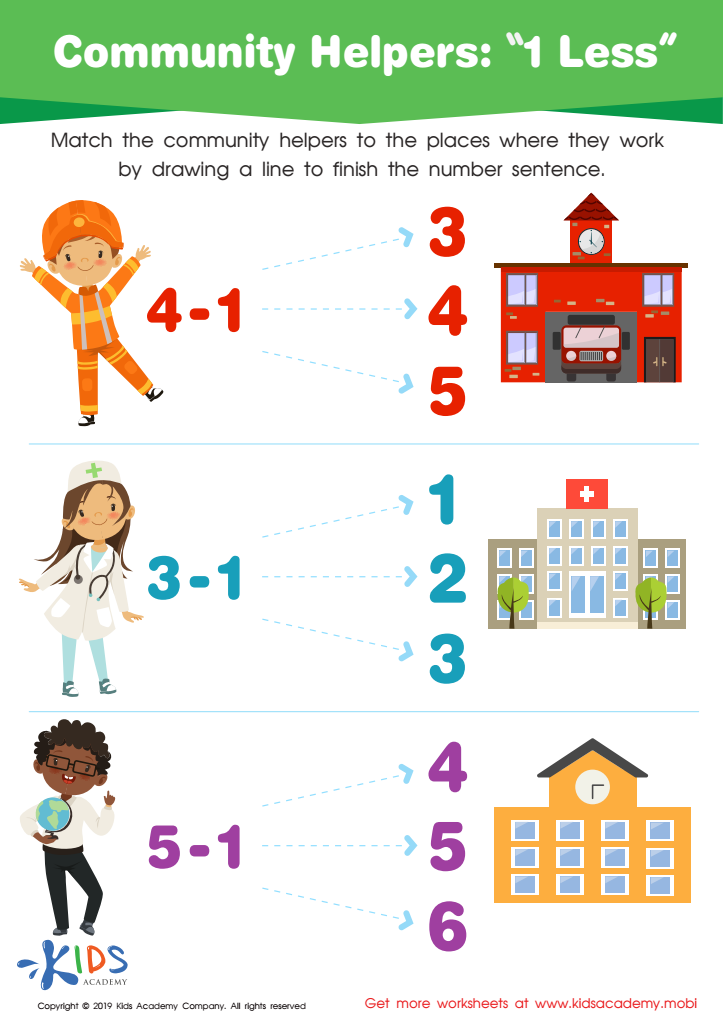
Community Helpers: 1 less Worksheet
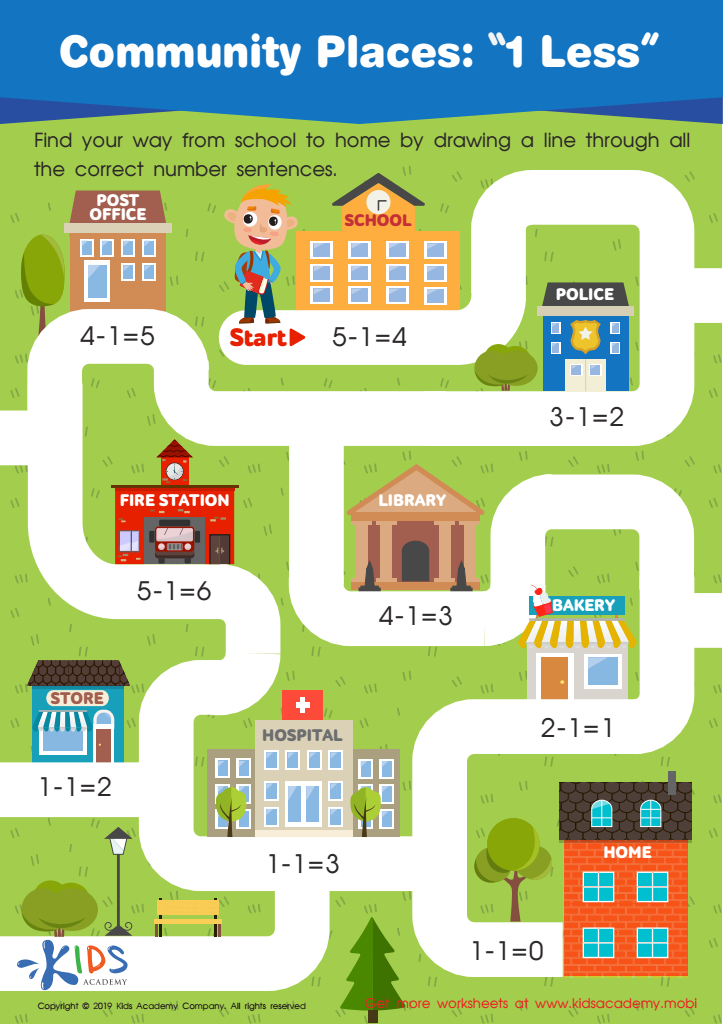
Community Places: 1 Less Worksheet






.jpg)

Cognitive development in young children, particularly concerning skills like subtraction, is crucial for their overall academic and personal growth. Ages 4 to 8 represent a formative period where children transition from basic number recognition to engaging in more complex mathematical concepts. Mastery of subtraction is foundational not only for future math skills but also for critical thinking and problem-solving abilities.
Parents and teachers should prioritize subtraction skills as it helps children develop an understanding of quantity relationships and promotes logical reasoning. As children learn to subtract, they begin to handle concepts such as conservation of number, which fosters more advanced understanding in other subjects. Additionally, subtraction involves various cognitive processes like memory, attention, and spatial reasoning, enhancing children's overall cognitive capabilities.
Furthermore, early experiences with math positively influence children's attitudes toward the subject, increasing their confidence and motivation. When children receive support in mastering such fundamental skills, it sets a strong groundwork for lifelong positive learning habits. Engaging in fun and interactive subtraction activities helps make learning enjoyable, contributing to a well-rounded educational experience. Therefore, prioritizing cognitive development in subtraction during these critical years is essential for both academic success and personal growth.








