
Reading comprehension Subtraction Worksheets for Ages 4-8
5 filtered results
Difficulty Level
Grade
Age
-
From - To
Subject
Activity
Standards
Explore our engaging Reading Comprehension Subtraction Worksheets designed for children ages 4-8! These worksheets seamlessly combine essential reading skills with exciting subtraction problems, helping young learners develop their math and literacy abilities simultaneously. Each activity encourages kids to read carefully, understand context, and solve subtraction problems based on the given scenarios, making learning both fun and effective. Ideal for at-home practice or classroom activities, our worksheets cater to various skill levels, ensuring every child can enhance their comprehension and math skills. Equip your little ones with the confidence they need to tackle subtraction challenges while improving their reading comprehension today!
Favorites
With answer key
Interactive
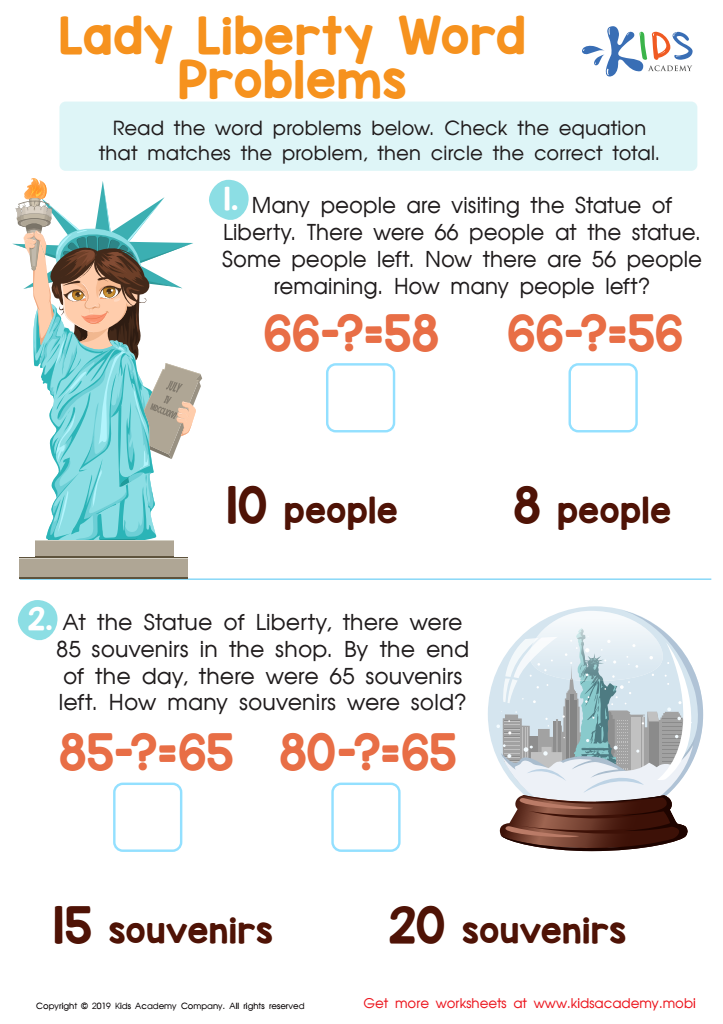
Lady Liberty Worksheet
Have your students ever been to the Statue of Liberty? Ask them to tell you where it is and what it looks like. Every day, the statue draws a crowd admiring its beauty, taking pics and learning more about it. Pose a word problem and help them check the answer. Circle the correct total. (80 words)
 Assign to My Students
Lady Liberty Worksheet
Worksheet
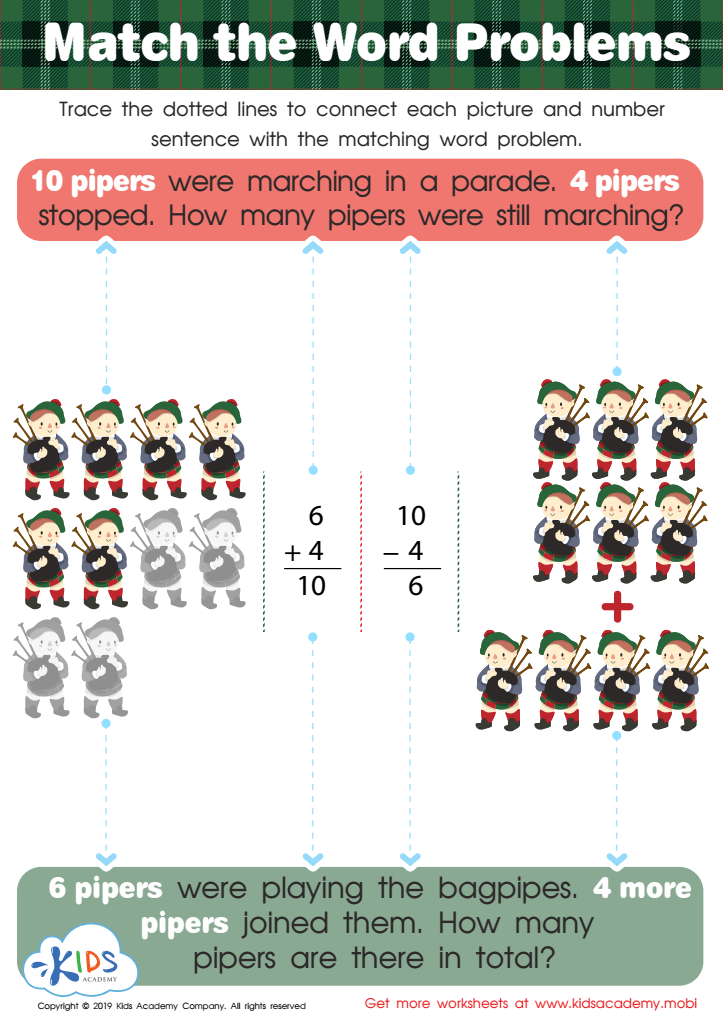
Match the Word Problems Worksheet
Read this word problem to your kids: Help them understand how it can be translated into a number problem. Trace the dotted lines to see how each picture and number sentence match the problem. With this worksheet, you can show your kids how easy it is to transform a word problem into a number problem.
Match the Word Problems Worksheet
Worksheet
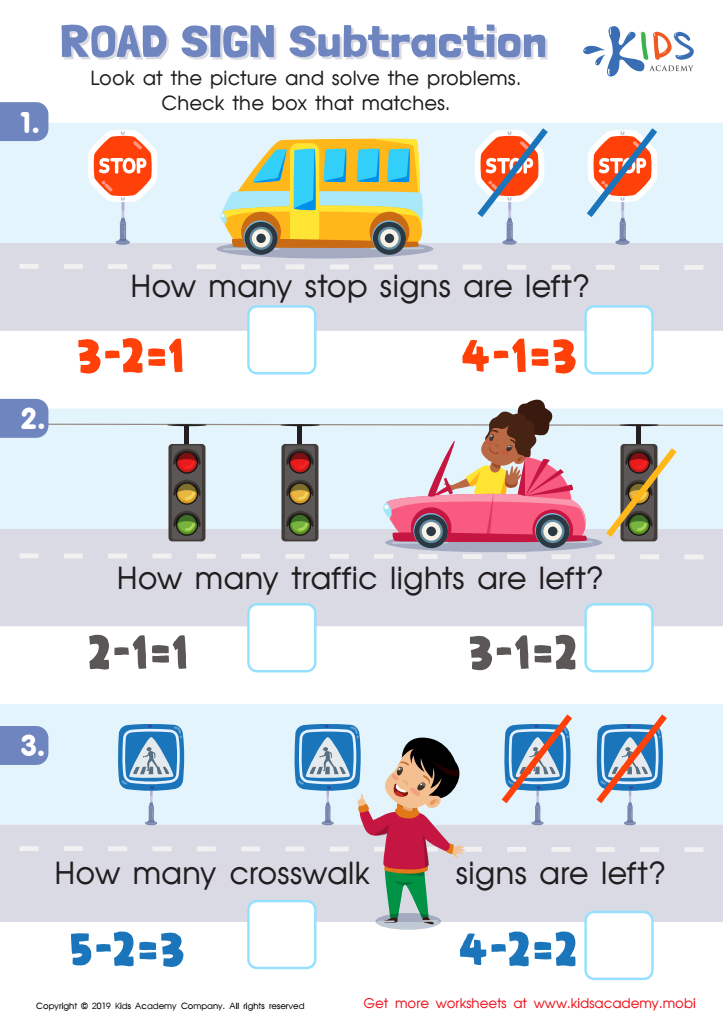
Road Sign Subtraction Worksheet
Help your kindergartners tackle addition and subtraction with fun tips. Show them the picture, have them solve the problems, then help them check the box that matches. With practice and guidance, they'll soon be ready for more complex math!
Road Sign Subtraction Worksheet
Worksheet
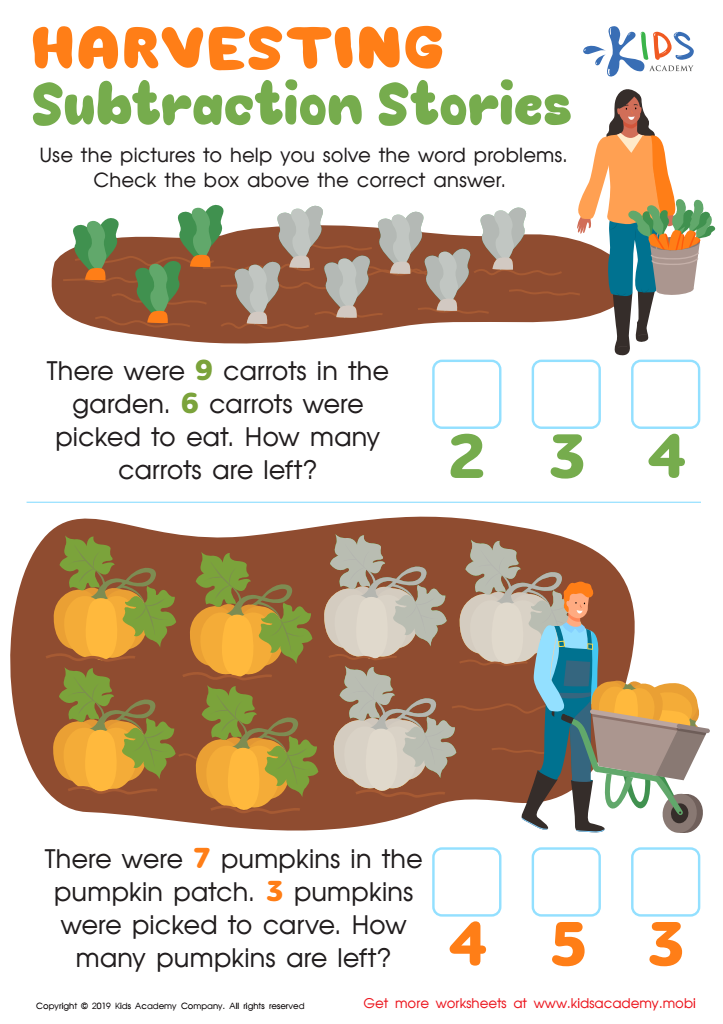
Harvesting Subtraction Stories Worksheet
Before starting the exercise, ask your kids if they know what harvesting is. Show them the pictures and explain if needed. Help them read the word problems, use the pictures to find the answer and check the box above. There are two simple word problems in the printout.
Harvesting Subtraction Stories Worksheet
Worksheet
Jungle Subtraction Word Problems Substraction Worksheet
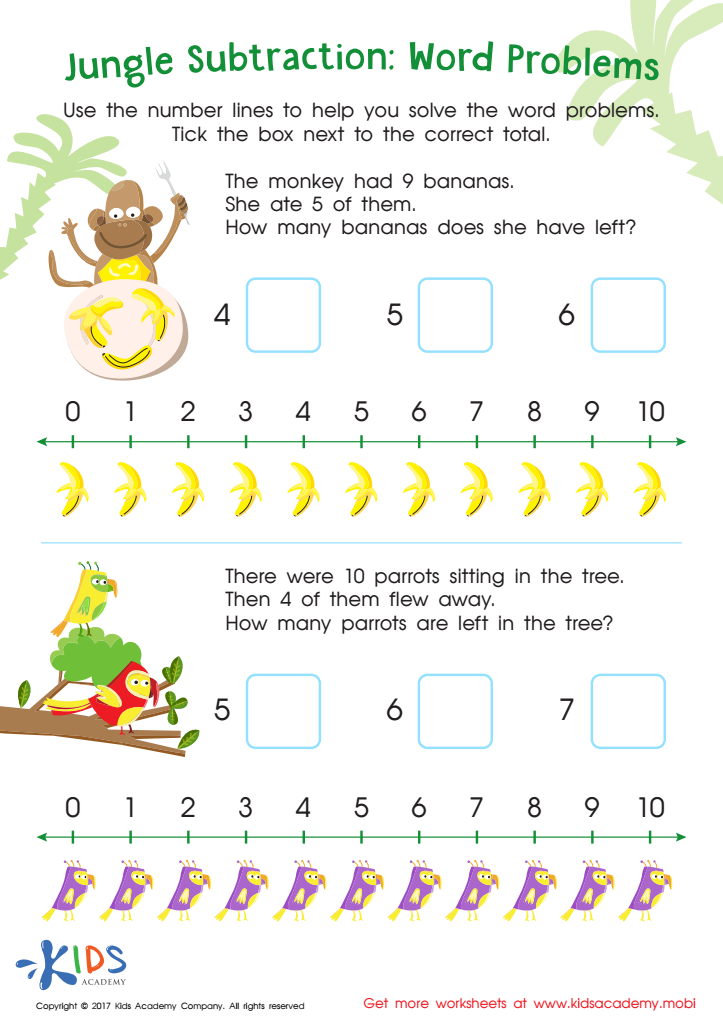
Kids will love this jungle-themed worksheet: subtraction word problems! Help the monkey work out how many bananas he has, using the number line. Encourage your child to use colorful parrots to subtract with ease and make calculations fun!
Jungle Subtraction Word Problems Substraction Worksheet
Worksheet
Join Kids Academy for Free
Who is primarily going to use this learning content?




.jpg)



Reading comprehension and subtraction are foundational skills for children aged 4-8, and both play a crucial role in their overall academic development.
Firstly, reading comprehension enables children to understand and engage with content across all subjects. It's not just about decoding words; it involves making sense of the texts they read, asking questions, and connecting ideas. Strong reading skills enhance vocabulary, foster critical thinking, and improve communication abilities, making them essential for lifelong learning. By nurturing reading comprehension early on, parents and teachers can help children develop a love for reading that fuels their curiosity and learning throughout life.
Similarly, basic subtraction is fundamental in developing mathematical thinking. Early exposure to subtraction supports children in understanding numbers and the concept of 'taking away,' essential for more complex math later. Proficiency in subtraction builds confidence and lays a groundwork for problem-solving skills, which are transferable across subjects.
Both skills require supportive environments where mistakes are seen as learning opportunities. Parents and teachers play a pivotal role by providing engaging reading materials and practical applications for subtraction, thus fostering a holistic learning atmosphere. By prioritizing these areas, adults can empower young learners to thrive academically and socially, setting the stage for future success.








