Time Worksheets for Ages 4-8 - Page 2
25 filtered results
-
From - To
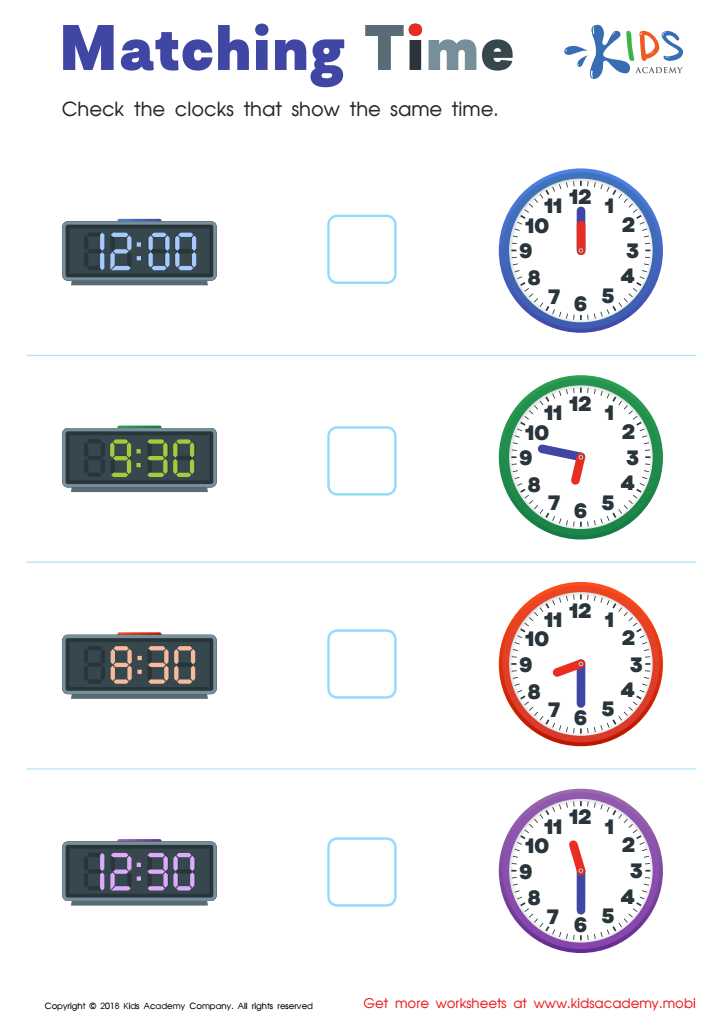
Matching Time Worksheet
 Assign to My Students








Time for Ages 4-8 is crucial for children's development as it equips them with essential skills to understand and manage their daily lives. In these formative years, children begin to grasp the concepts of sequencing, routines, and schedules, which are foundational for cognitive development. Teaching them about time helps improve their organizational skills and promotes a sense of responsibility, as they learn to allocate their time for different activities, such as homework, play, or family responsibilities.
Moreover, understanding time aids in developing critical thinking and problem-solving abilities. For example, recognizing the importance of managing the clock enhances their capacity to follow instructions and navigate social situations. Learning to read clocks, differentiate between morning and evening, and estimate durations also fosters independence, empowering children to plan their day effectively.
From a social perspective, understanding time strengthens communication skills, as it enables children to participate in discussions relating to activities and commitments. For educational settings, teaching time-related concepts can foster discipline and environmental awareness. Overall, fostering a grasp of time in young children has far-reaching benefits, readily equipping them for future academic and life success while enhancing their daily interactions and experiences. Therefore, parents and teachers should prioritize teaching this essential skill.








