Counting practice Tracing Numbers Worksheets for Ages 4-8
3 filtered results
-
From - To
Discover engaging Counting Practice Tracing Numbers Worksheets designed for children ages 4-8! Our printable resources help young learners master number recognition and counting through fun, interactive activities. Each worksheet encourages fine motor skills development as kids trace numbers and practice counting objects. With vibrant illustrations and age-appropriate challenges, these worksheets make learning enjoyable while reinforcing essential math concepts. Perfect for classroom use or at-home practice, these activities can enhance your child's confidence in math. Start your child's learning journey today with our dynamic tracing worksheets that make counting a delightful experience! Visit our website to explore our full range of resources!
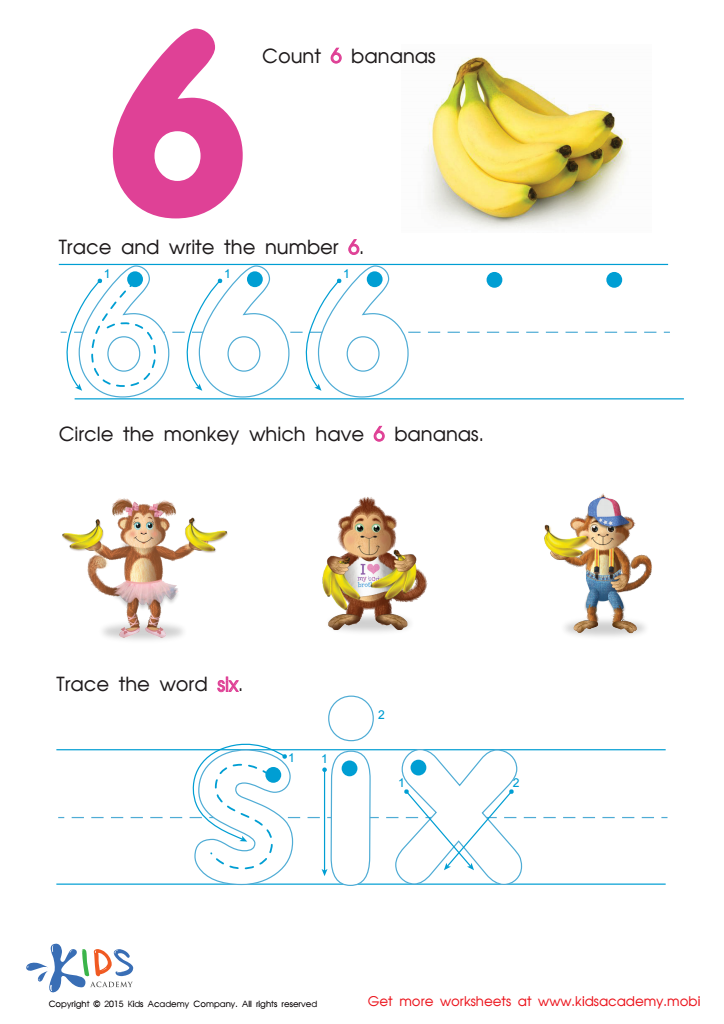
Tracing And Writing Number 6 Worksheet
 Assign to My Students
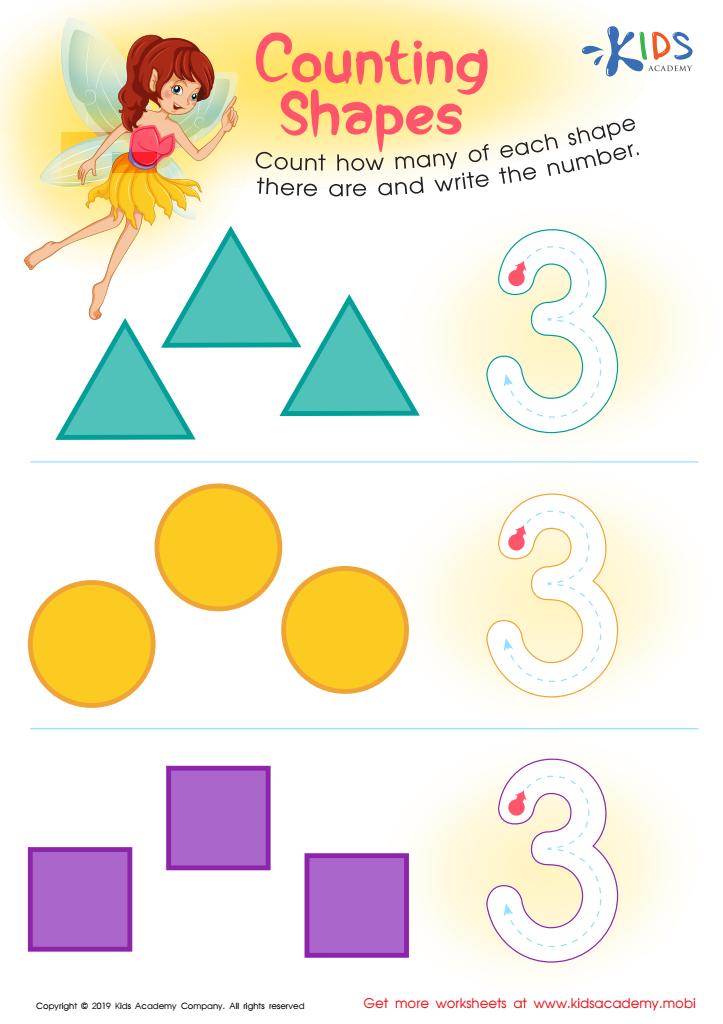
Counting Shapes Worksheet
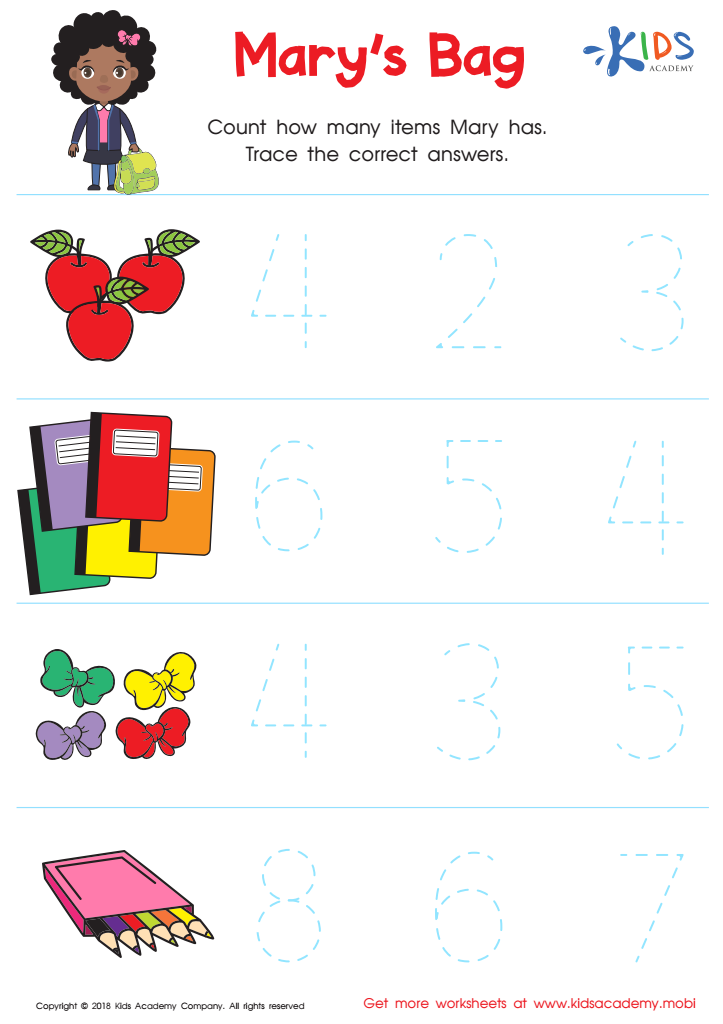
Kindergarten Number Tracing: Mary's Bag Worksheet








Counting practice and tracing numbers are essential activities for children aged 4 to 8, primarily because they form the foundation for mathematical literacy. Engaging in these activities helps children recognize and understand numbers, which is crucial for their cognitive development. By tracing numbers, children enhance their fine motor skills and hand-eye coordination, enabling them to write with more precision as they progress in their education.
Moreover, counting practice fosters mathematical comprehension. It introduces concepts like quantity, order, and basic operations, which are critical as children advance in math. This early exposure lays the groundwork for more complex math skills, such as addition and subtraction, that they'll encounter in later grades.
For parents and teachers alike, facilitating counting and tracing reinforces a child's self-confidence and love for learning. It's an opportunity to create enriching interactions that make learning enjoyable, setting an example of positive learning experiences.
In essence, investing time in counting and tracing not only boosts children's academic readiness but also stimulates their curiosity and problem-solving abilities, making these skills indispensable for their future. Engaging in regular practice can make a significant difference in a child's educational trajectory, forming a strong foundation for lifelong learning.