Word association Building Vocabulary Worksheets for Ages 4-8
3 filtered results
-
From - To
Enhance your child's vocabulary with our engaging Word Association Building Vocabulary Worksheets, designed for ages 4-8! These fun and interactive activities encourage young learners to connect words, boosting their language skills and overall comprehension. Our worksheets feature colorful illustrations and appropriate levels of challenge, ensuring that children stay excited while learning. As they engage in word association exercises, they develop critical thinking, creativity, and contextual understanding, laying a strong foundation for future reading and writing success. Perfect for home or classroom use, these printable worksheets make vocabulary building enjoyable and effective. Explore our collection today and watch your child's language skills flourish!
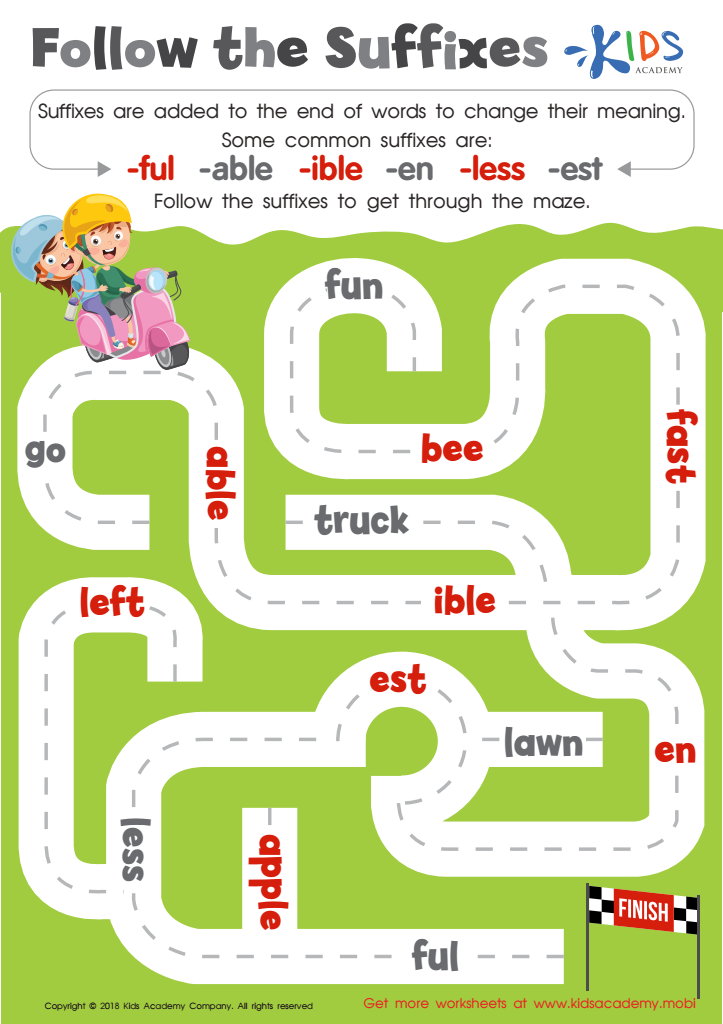
Reading: Follow the Suffixes Worksheet
 Assign to My Students











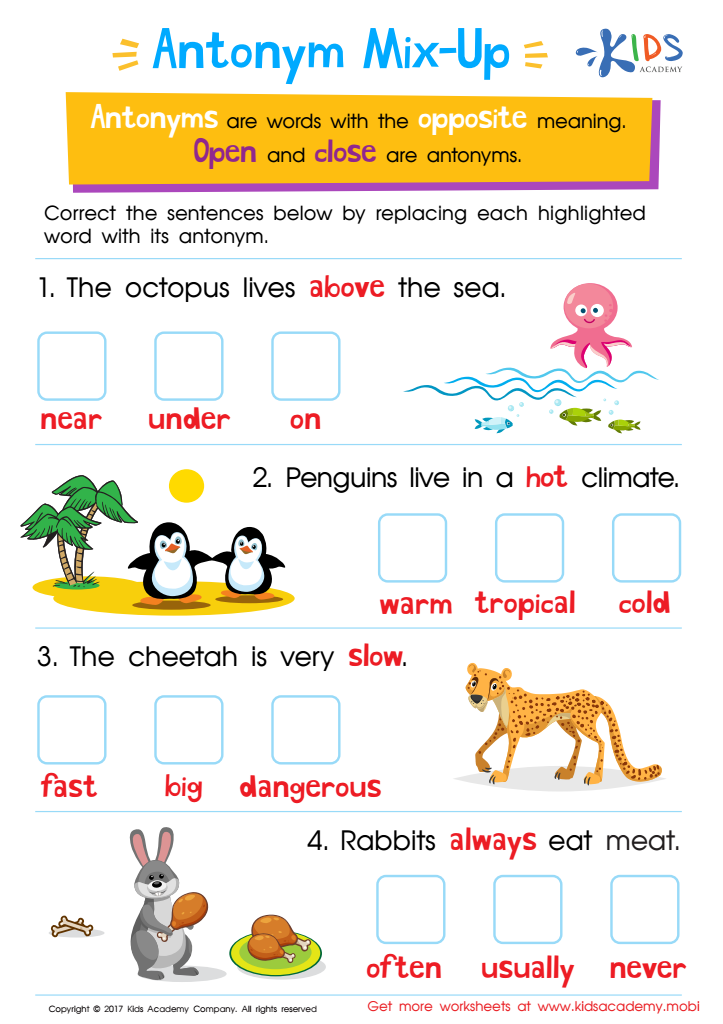
Vocabulary Antonyms Worksheet
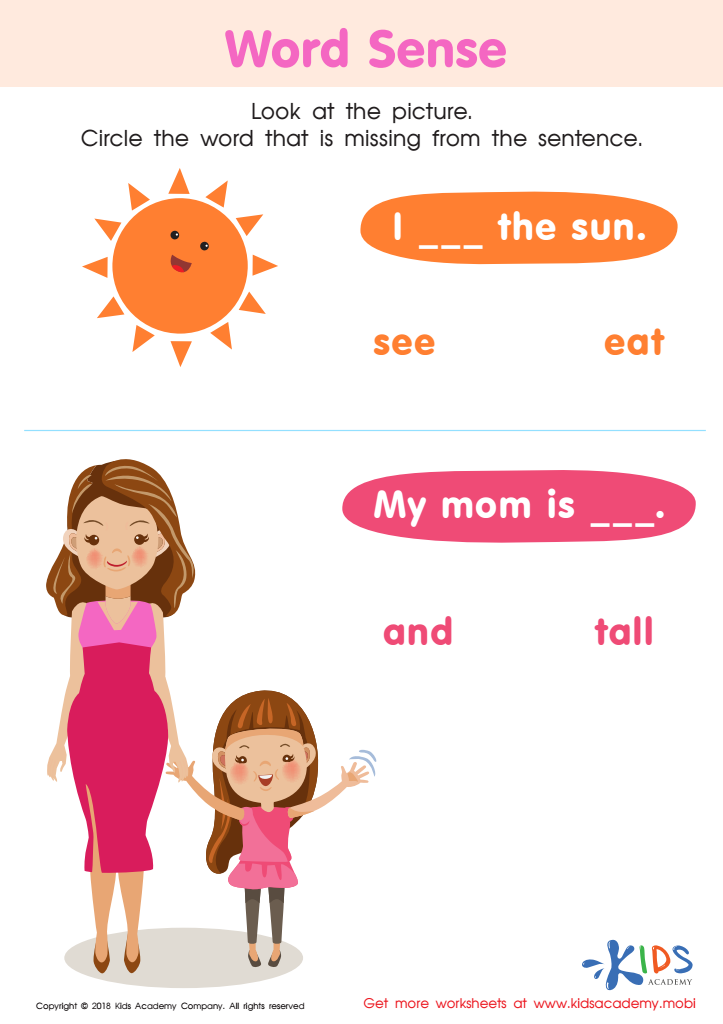
Word Sense Worksheet



.jpg)




Word association is a powerful strategy for building vocabulary in children aged 4-8, and both parents and teachers should prioritize it. At this critical developmental stage, children are particularly receptive to new language concepts, making it an ideal time to enhance their vocabulary skills.
By engaging in word association activities, children learn to connect words with meanings, contexts, and categories, fostering a deeper understanding of language. This not only aids in expanding their vocabulary but also improves their reading comprehension, writing abilities, and overall communication skills. A rich vocabulary enables children to express themselves more clearly and confidently, which can enhance their academic performance and social interactions.
Moreover, word association activities can be fun and interactive, such as games, storytelling, or rhyming challenges, making learning enjoyable and motivating for young learners. When parents and teachers participate in these activities together, they strengthen bonds and promote a collaborative learning environment, reinforcing the importance of literacy.
In today's information-driven world, strong vocabulary skills are essential for success. By focusing on word association, parents and teachers equip children with the tools they need not only for academic achievement but also for effective communication and lifelong learning. This investment in vocabulary development lays a solid foundation for their future.








