Detail identification Reading Worksheets for Ages 4-8
4 filtered results
-
From - To
Discover our engaging Detail Identification Reading Worksheets designed for children ages 4-8. These worksheets help young learners enhance their reading comprehension and critical thinking skills by focusing on identifying key details in texts. Our diverse selection allows children to practice with fun, age-appropriate content that encourages early literacy development. Whether it's recognizing characters, settings, or important events, these worksheets are perfect for reinforcing essential reading skills in a playful manner. Ideal for both classroom and home learning, our Detail Identification Reading Worksheets make learning enjoyable and effective, fostering a love for reading in young minds. Start enriching your child’s reading journey today!
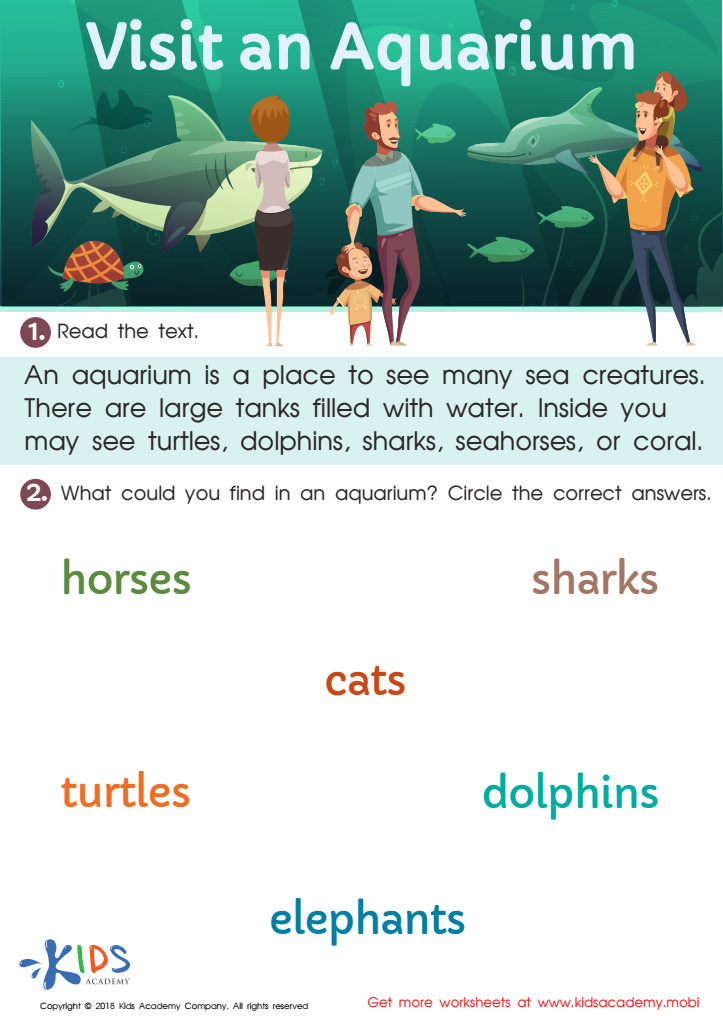
Visit an Aquarium Worksheet
 Assign to My Students
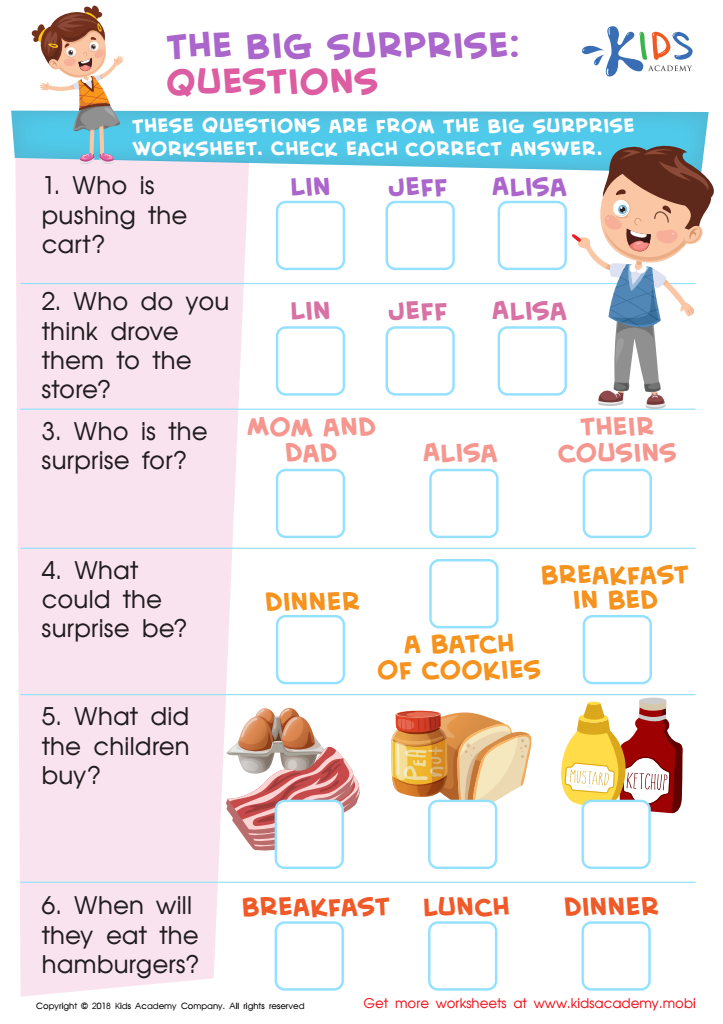
The Big Surprise: Questions Worksheet
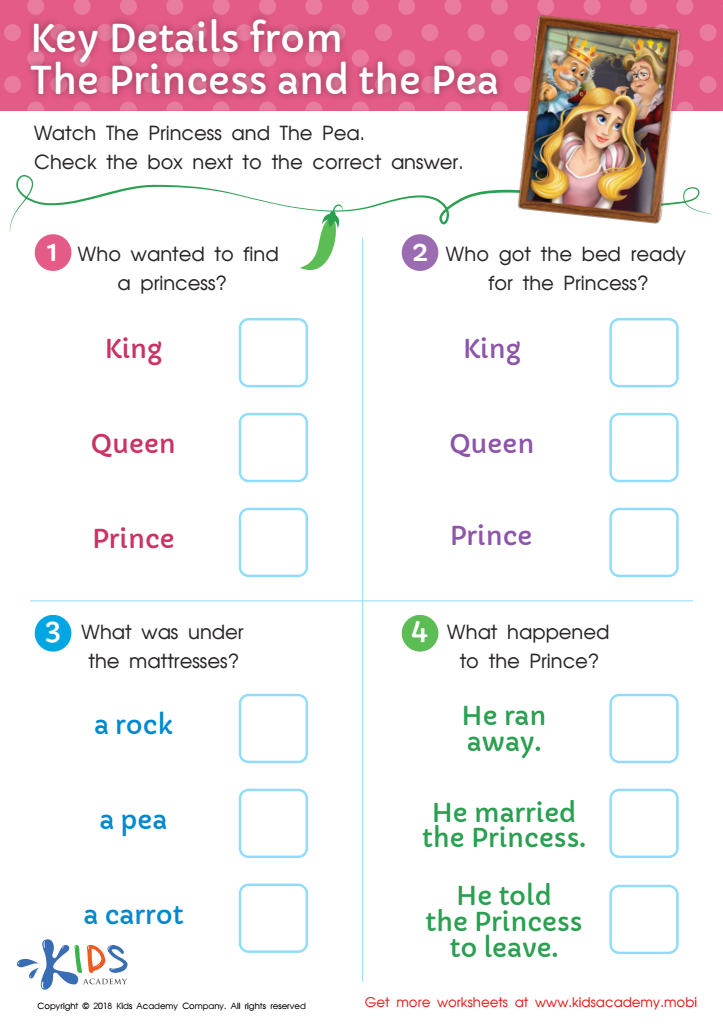
Key Details from the Princess and the Pea Worksheet
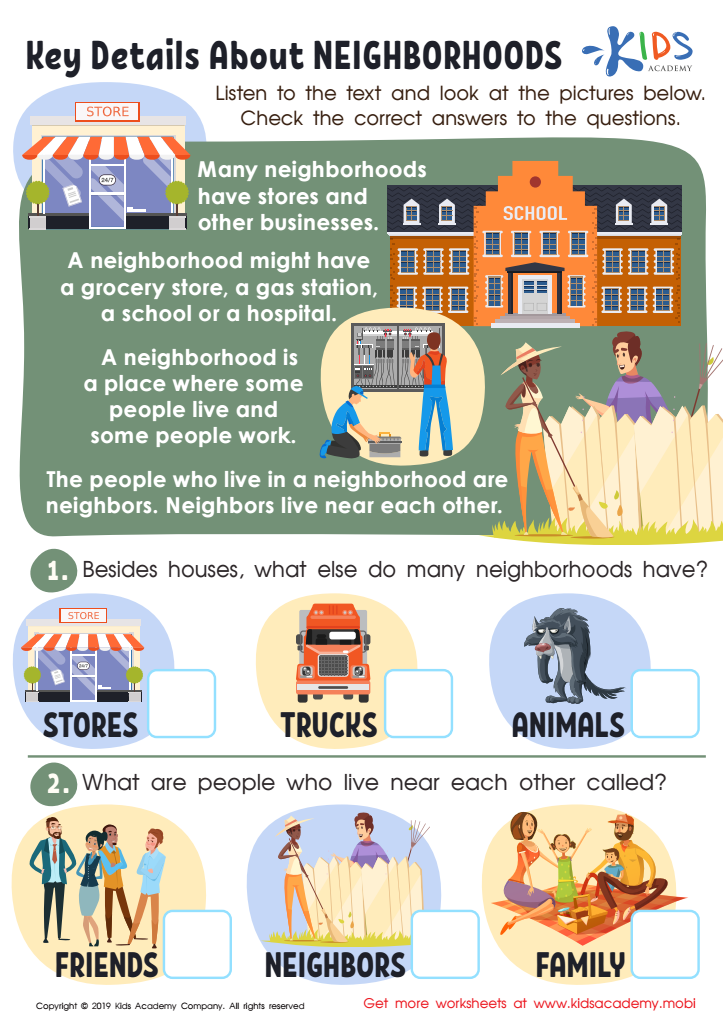
Key Details Neighborhoods Worksheet








Detail identification reading is crucial for children aged 4-8, as it lays the foundation for their reading comprehension and analytical skills. For parents and teachers, fostering this ability ensures that children do not only recognize letters and words but also understand the content and context of what they read.
At this stage, children are naturally curious, and detail identification nurtures this curiosity by encouraging them to pay attention to specifics in a story, such as character traits, settings, and plot details. This skill enhances their ability to follow narratives and builds a deeper appreciation for storytelling, making reading a joy rather than just a task.
Moreover, strong detail identification skills contribute to better academic performance across subjects. As children progress to complex texts, the ability to notice and remember details becomes essential for solving problems and making connections. Additionally, these skills help cultivate critical thinking, as children learn to analyze and interpret information.
Ultimately, engaging in detail identification reading supports children's cognitive development, instills a lifelong love of reading, and prepares them for future academic success. Therefore, parents and teachers should prioritize and incorporate these practices into their reading activities.








