Develop critical thinking Reading Worksheets for Ages 4-8
6 filtered results
-
From - To
Enhance your child's reading journey with our engaging critical thinking worksheets designed for ages 4-8. These interactive resources help develop essential reading comprehension skills while fostering creative problem-solving. With a variety of captivating activities, young learners will explore narratives, deduce meanings, and make connections with texts. Our worksheets encourage children to think deeply, ask questions, and analyze characters or plots, making reading a fun, thought-provoking adventure. Perfect for classrooms or home learning, these worksheets lay the groundwork for lifelong critical thinking abilities, preparing your child for future academic success. Unlock their potential and make reading an enriching experience today!
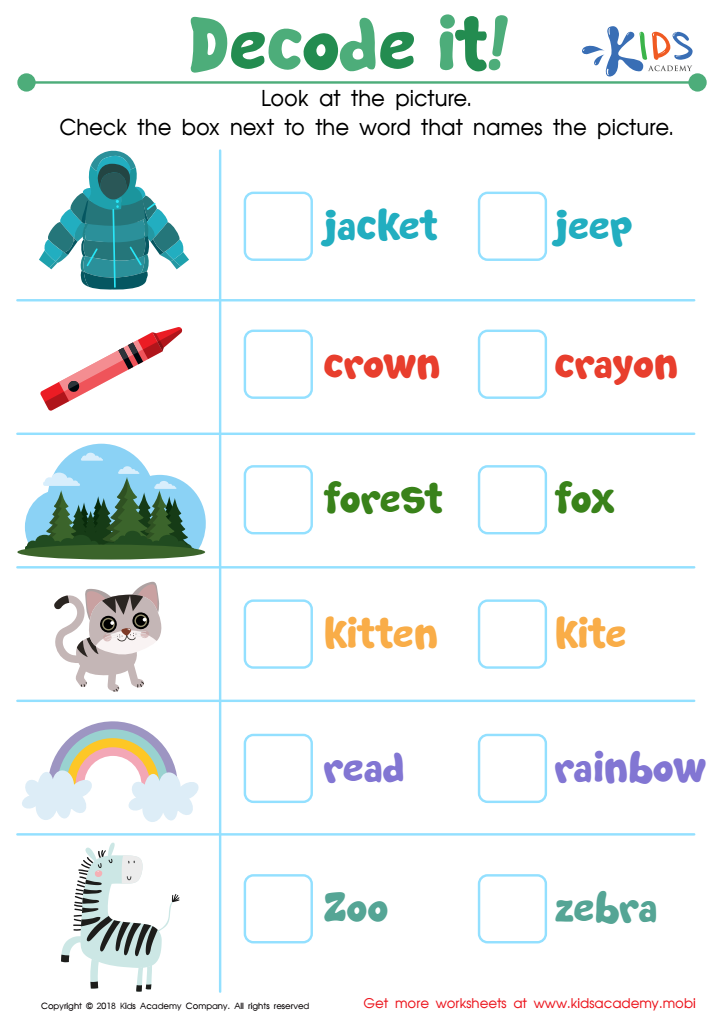
Reading: Decode It Worksheet
 Assign to My Students
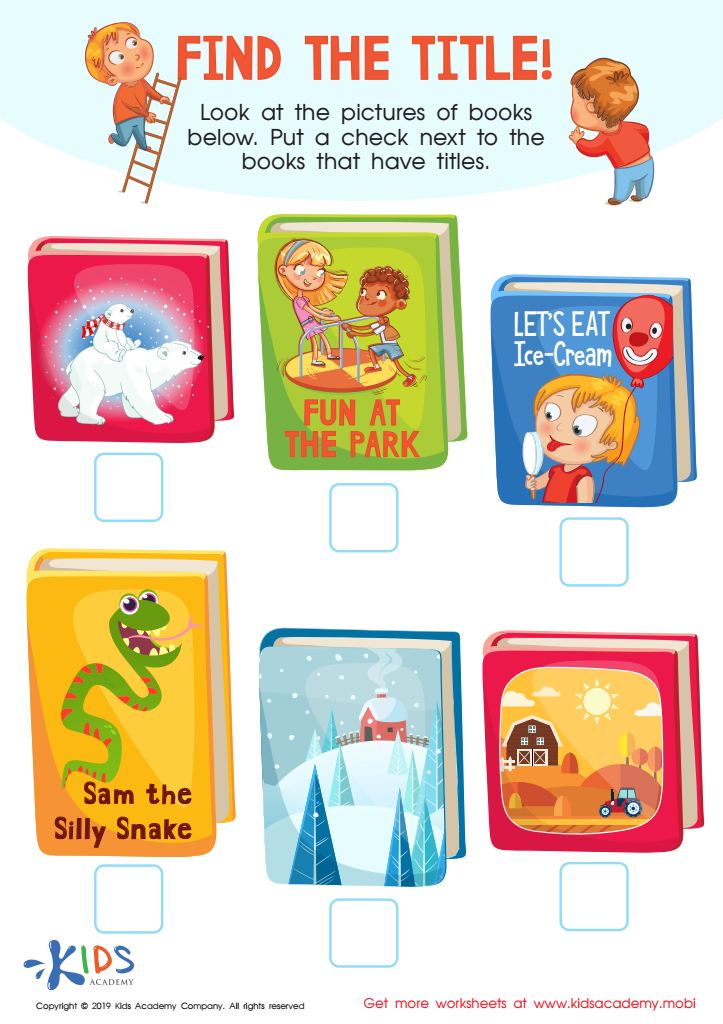
Find the Title Worksheet

Fox Rhyming Words Worksheet
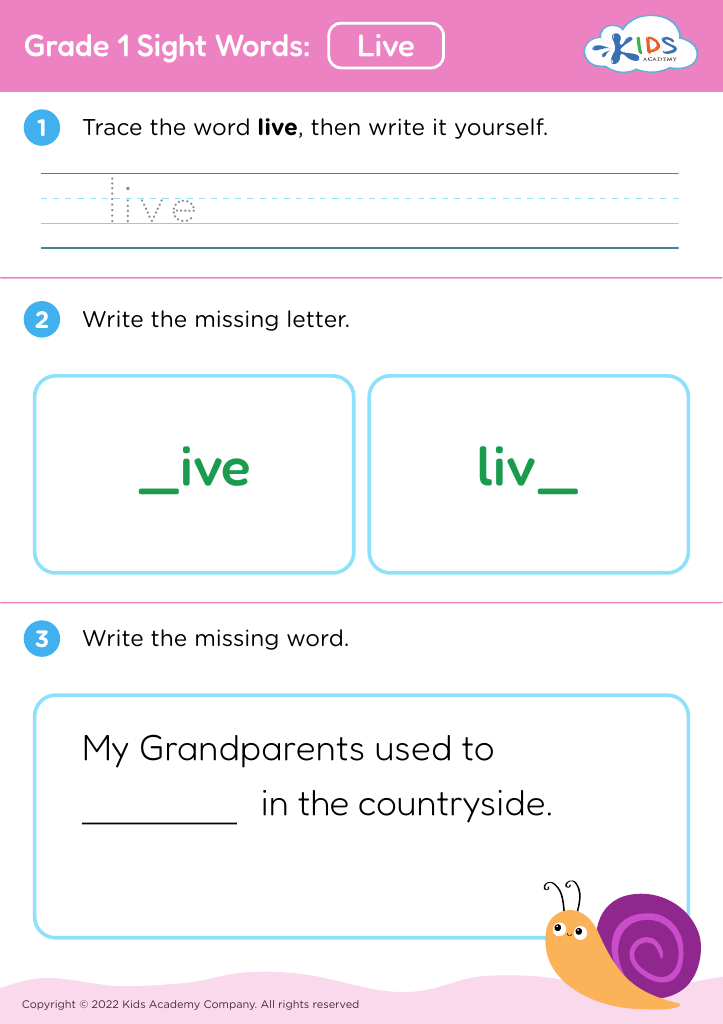
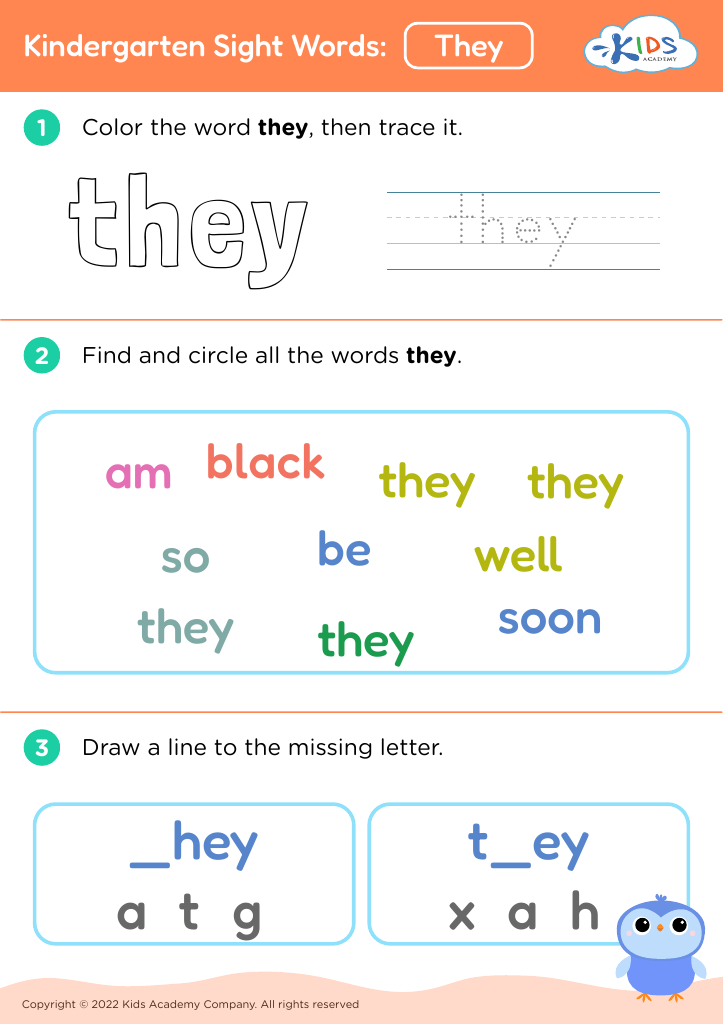
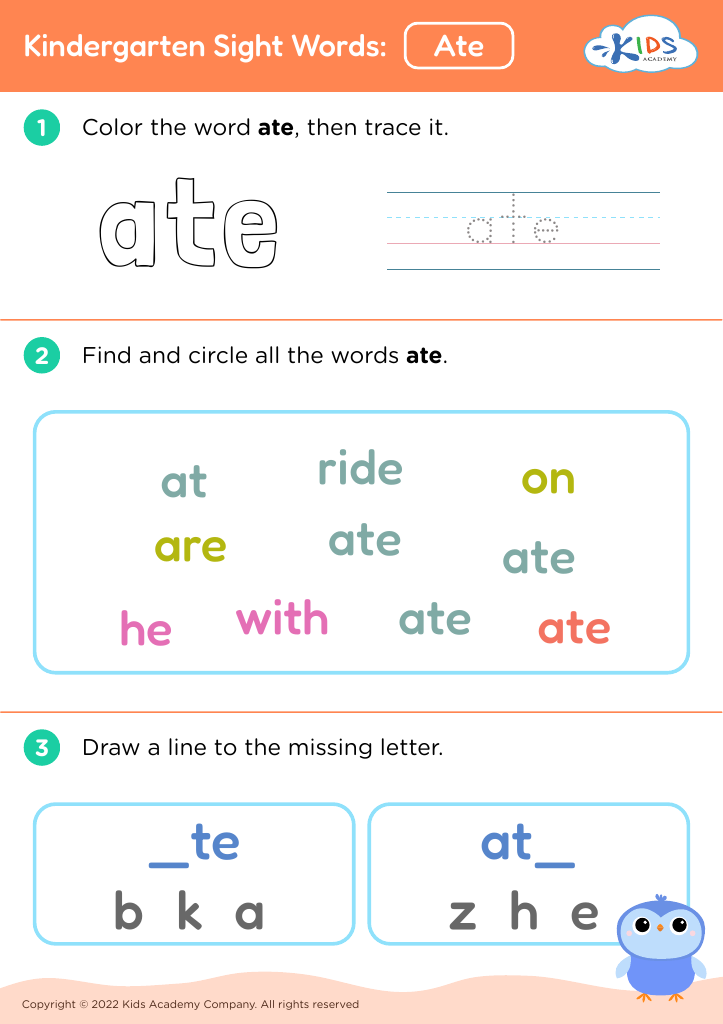








Developing critical thinking skills in young readers, particularly those aged 4-8, is essential for their cognitive and emotional growth. Parents and teachers should recognize that critical thinking lays the foundation for effective problem-solving and decision-making. At this stage, children are forming the ability to analyze information, ask questions, and make connections, which are crucial skills for lifelong learning.
When children engage with texts critically, they not only comprehend words but also infer meanings, assess perspectives, and identify biases. This active reading approach fosters curiosity and encourages children to explore ideas deeply, rather than passively absorbing information. Furthermore, critical thinking promotes creativity and originality, enabling young learners to express their thoughts and opinions confidently.
Equipping children with these skills early on prepares them for the complexities of modern life, where they will confront diverse viewpoints and a vast amount of information. Parents and teachers can instill critical thinking by asking open-ended questions, facilitating discussions about stories, and encouraging imaginative play based on what they read. Ultimately, nurturing critical thinking in young readers empowers them to become informed, thoughtful, and engaged individuals in our increasingly complex world.








