Historical Knowledge Reading Worksheets for Ages 4-8
6 filtered results
-
From - To
Discover our engaging Historical Knowledge Reading Worksheets, designed specifically for children ages 4-8! These worksheets provide a fun and interactive way for young learners to explore history through captivating stories and age-appropriate reading exercises. Kids will uncover fascinating historical figures, events, and cultures while enhancing their reading skills, vocabulary, and comprehension. Our thoughtfully crafted activities encourage critical thinking and connection to the past, making learning a delightful adventure. Perfect for classroom use or at-home learning, these worksheets will inspire curiosity and a love for history in young readers. Join us on a journey through time with our educational resources!
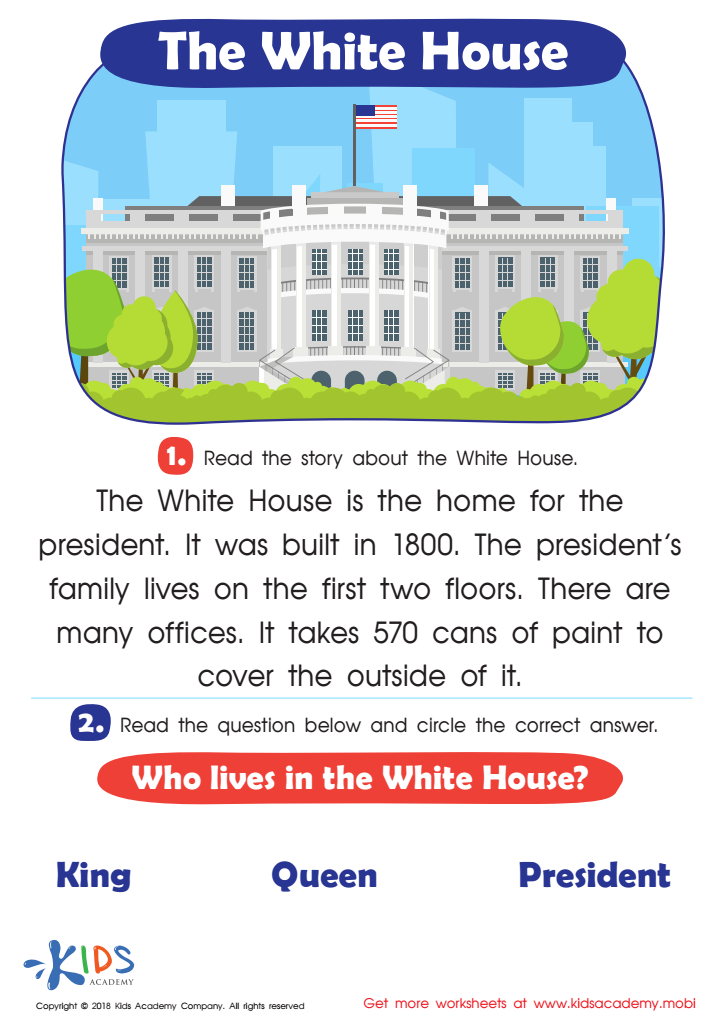
White House Worksheet
 Assign to My Students
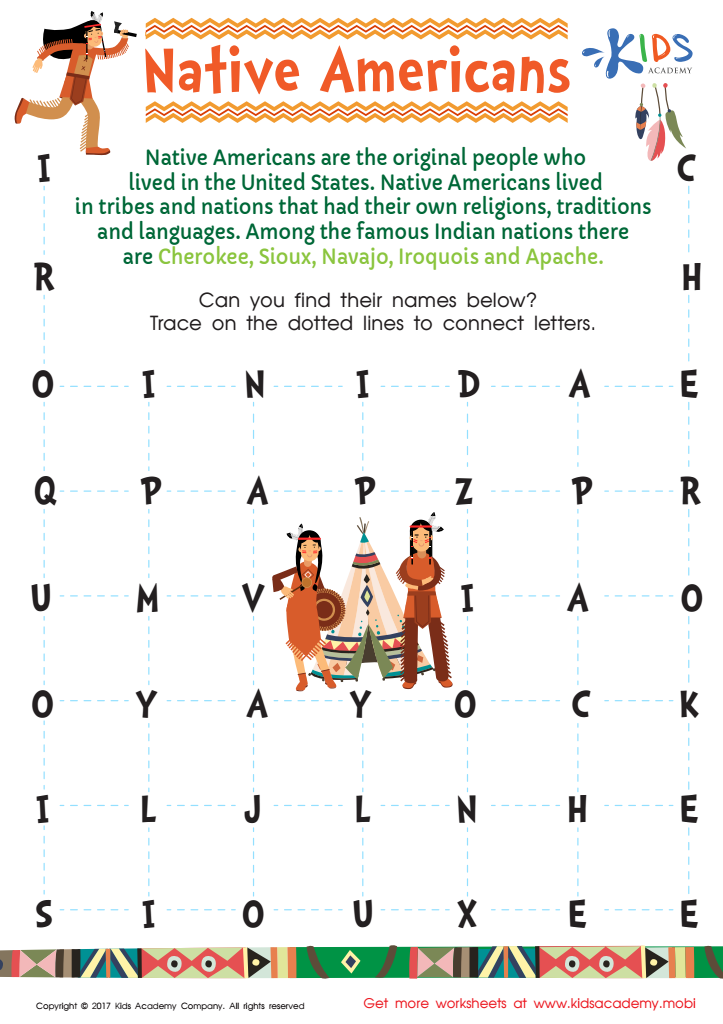
Native American Word Search Printable
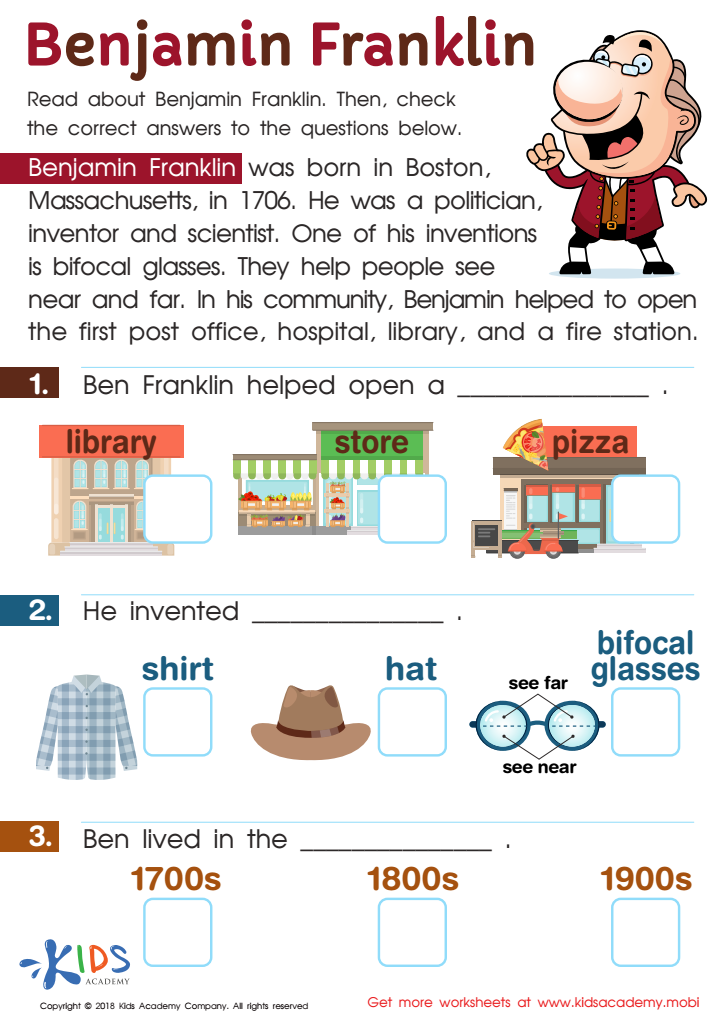
Benjamin Franklin Worksheet
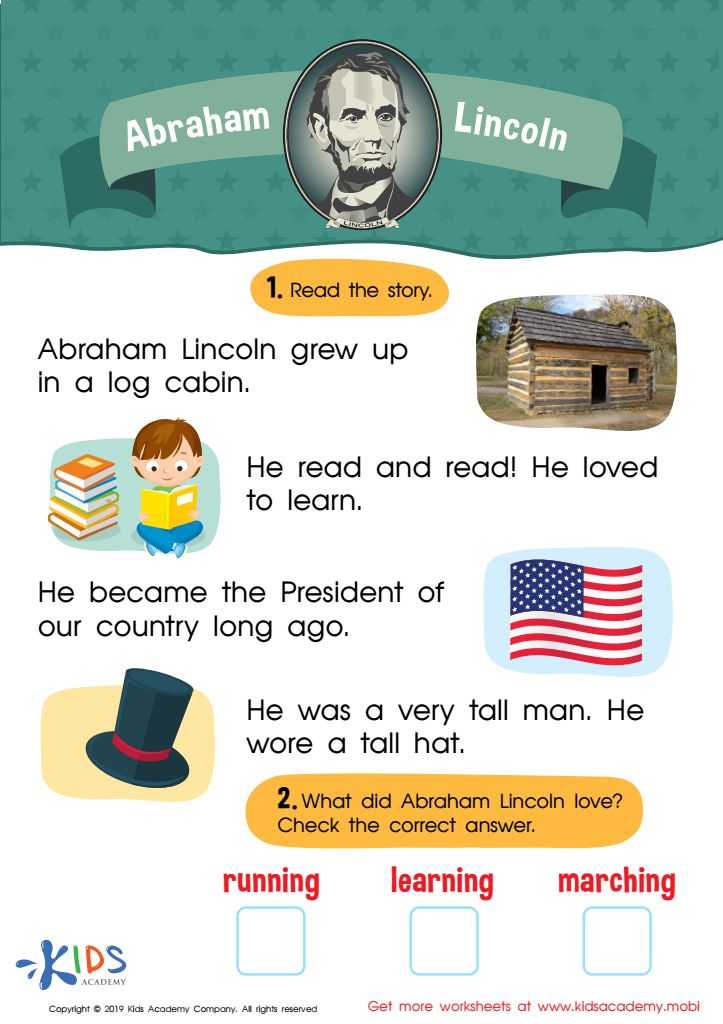
Abraham Lincoln Worksheet
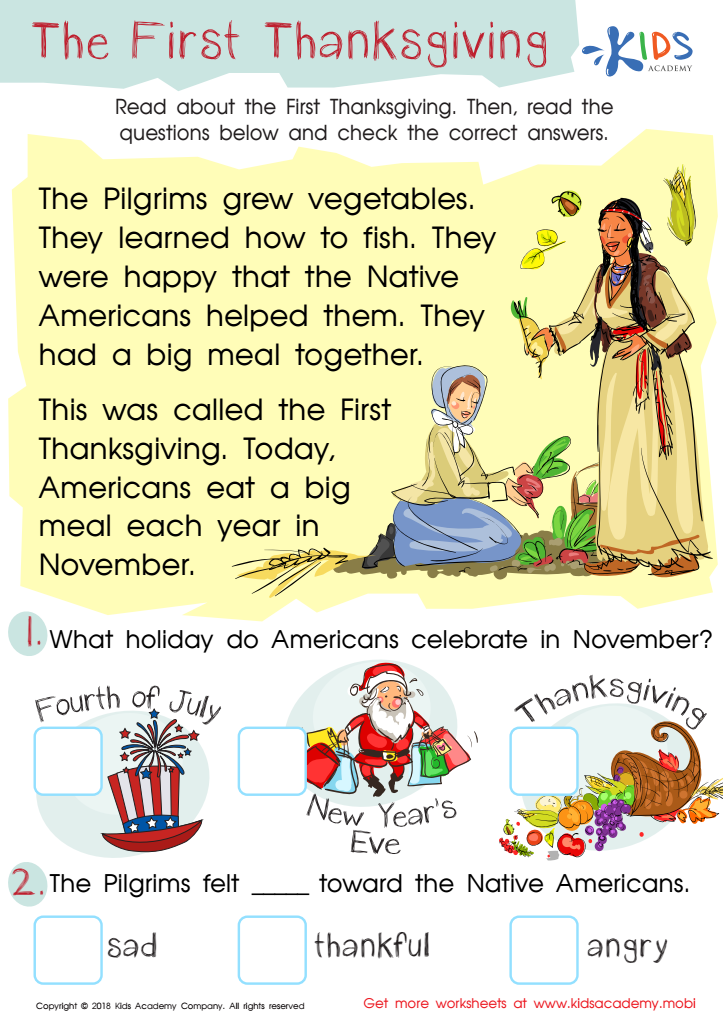
Assessment: First Thanksgiving Worksheet
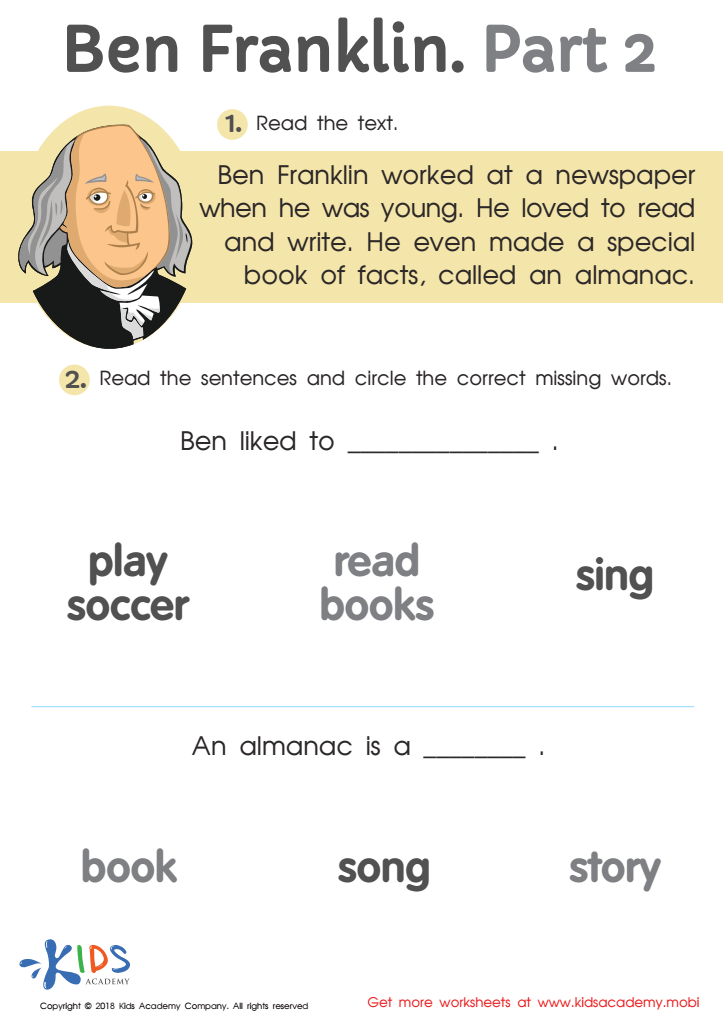
Ben Franklin Part 2 Worksheet







Historical Knowledge Reading for children ages 4-8 is vital for nurturing informed, engaged citizens. At this formative stage, children are developing cognitive skills and a sense of identity, both of which can be enriched through exposure to historical narratives and figures. Engaging young learners with stories from the past cultivates curiosity and a broader understanding of their world, helping them grasp concepts of time, culture, and social dynamics.
Additionally, historical reading aids in the development of critical thinking skills. As children explore different perspectives, they learn to question, analyze, and make connections across time and cultures, fostering empathy and tolerance. These qualities are essential in our diverse society, enabling them to appreciate differences and similarities among people.
Furthermore, historical literacy supports language development and improves comprehension skills. Through stories, children encounter new vocabulary and contextual understanding, enhancing their reading abilities.
When parents and teachers emphasize historical knowledge, they empower children not only to understand the past but also to shape their future by learning from it. By ensuring that young learners engage with historical content, we nurture their growth, helping them become thoughtful, knowledgeable individuals ready to contribute positively to society.








