
Reading practice Reading Worksheets for Ages 4-8
9 filtered results
Difficulty Level
Grade
Age
-
From - To
Subject
Activity
Standards
Discover engaging Reading Practice Worksheets designed for children aged 4-8 on Kids Academy. Our worksheets focus on developing crucial reading skills, including phonics, vocabulary, and comprehension, through fun and interactive activities. With colorful illustrations and age-appropriate content, these printables are perfect for young learners to foster a love for reading. Each worksheet is crafted by educational experts to ensure your child’s learning experience is both effective and enjoyable. Help your child master essential reading skills and transform reading time into an exciting adventure with Kids Academy's Reading Practice Worksheets. Start practicing today!
Favorites
With answer key
Interactive
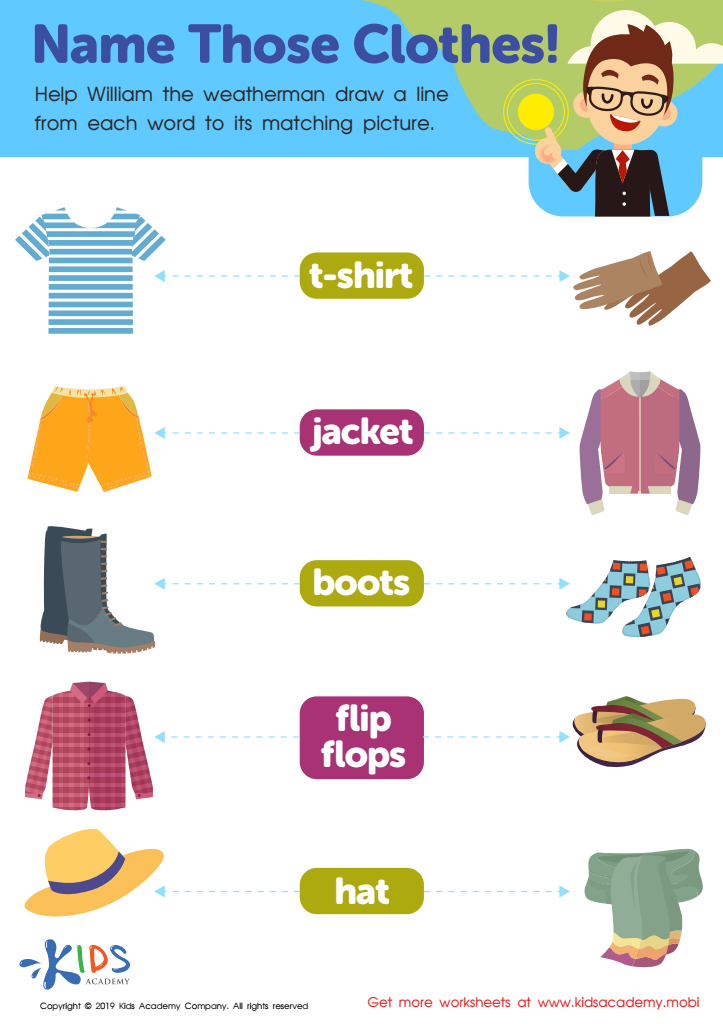
Name Those Clothes Worksheet
This worksheet will help your preschooler build their vocabulary, develop life-skills and work on fine motor skills. They'll analyze which clothing goes with the weatherman and match it to the word. It's a fun and interactive way to recognize high-frequency words.
Name Those Clothes Worksheet
Worksheet
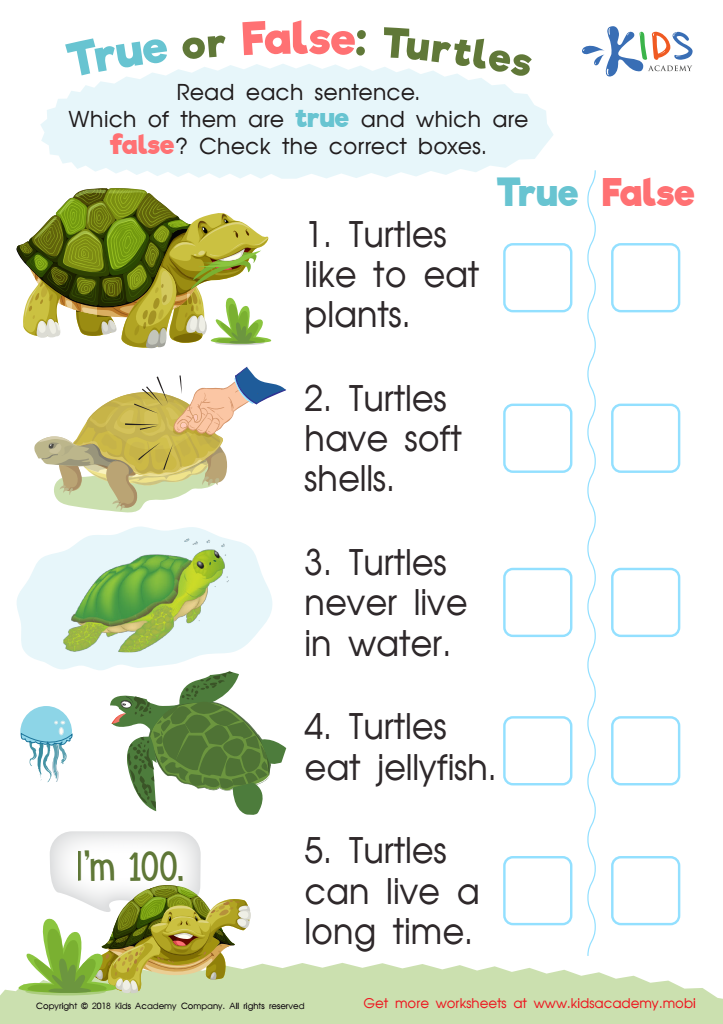
True or False: Turtles Worksheet
Print this free downloadable worksheet to strengthen your child's reading comprehension. Assist them to read each sentence and recall facts about turtles. Check true or false for each statement to verify their knowledge. Perfect for early learners!
True or False: Turtles Worksheet
Worksheet
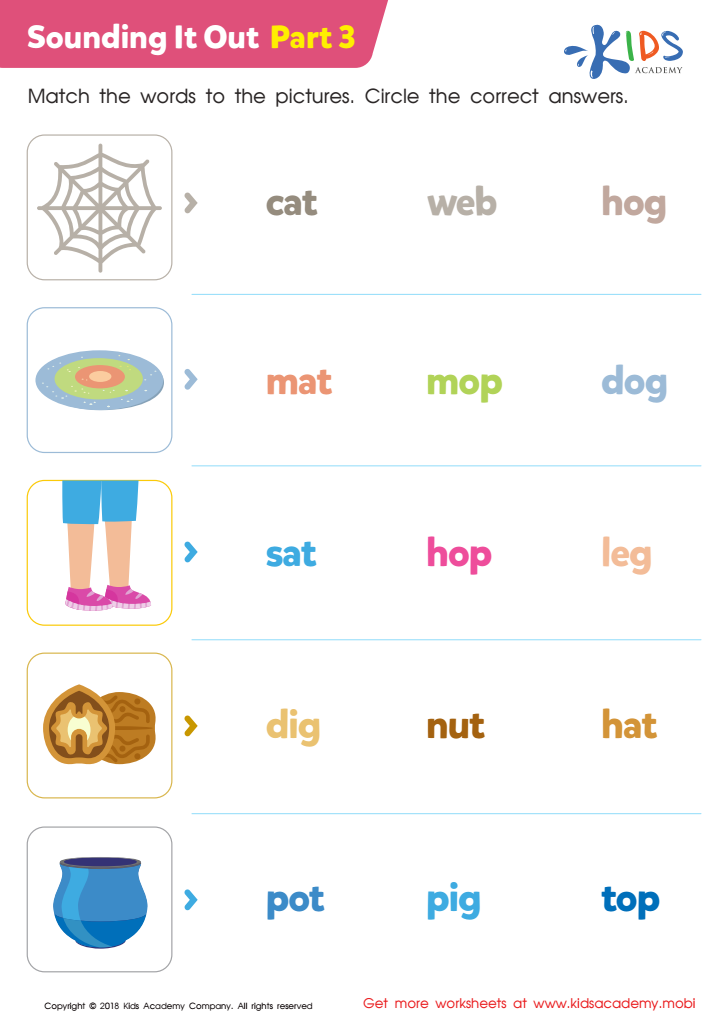
Sounding it Out: Part 3 Worksheet
Once Parts 1 and 2 are complete, this printable phonics worksheet will help kids take their reading skills to the next level! As they gain confidence, give them hints less often and direct their attention to three words in a row. Ask them to read and circle the correct word to complete!
Sounding it Out: Part 3 Worksheet
Worksheet
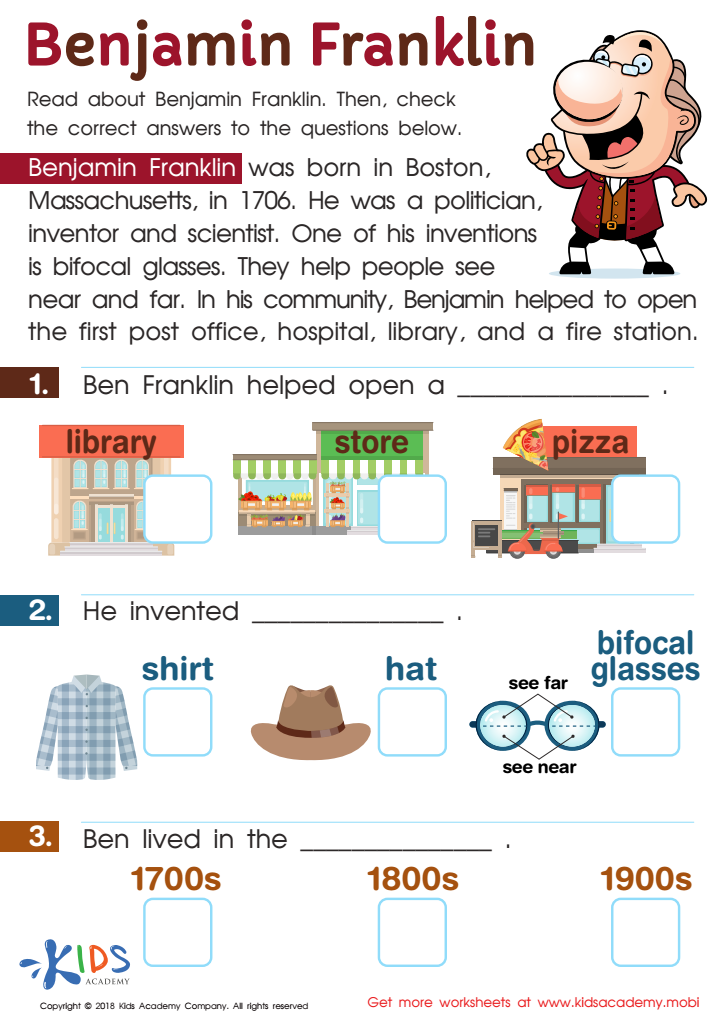
Benjamin Franklin Worksheet
Introduce your kids to one of history's most important figures - Benjamin Franklin! Tell them all about his remarkable contributions to the world and then use this worksheet to teach them even more. Read the text to them and check their answers against the questions afterwards.
Benjamin Franklin Worksheet
Worksheet
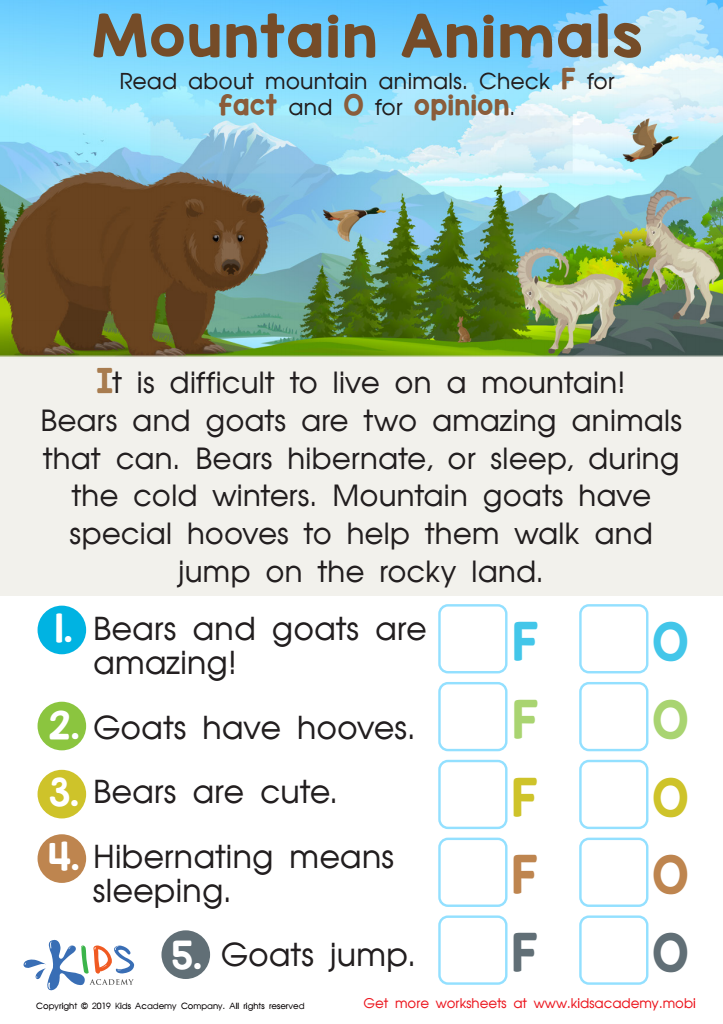
Mountain Animals Worksheet
Is mountain wildlife amazing? Fact or fiction? Help your child sharpen critical-thinking skills with this engaging worksheet. Featuring a fun nonfiction passage about animals like bears and goats, your child will read through the text and identify each statement as fact or fiction. Perfect for boosting reading comprehension and analytical abilities!
Mountain Animals Worksheet
Worksheet
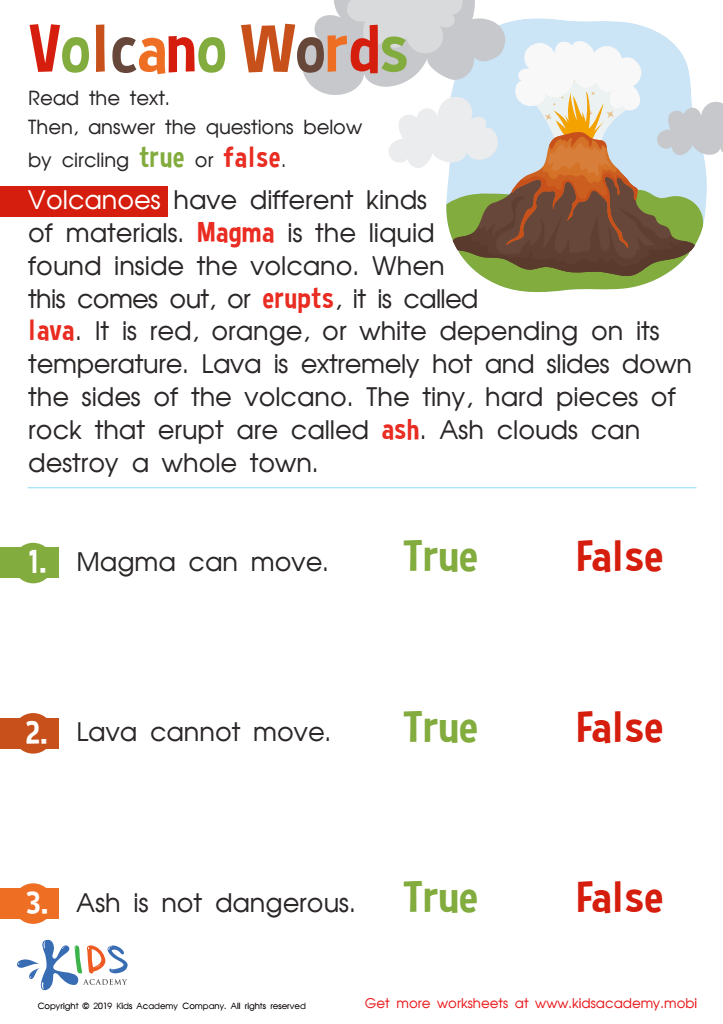
Volcano Words Worksheet
This worksheet helps kids focus and improve their reading comprehension skills. Start by reading a passage about volcanos and noting the bolded red words. Then answer true/false statements below, double-checking in the text if needed.
Volcano Words Worksheet
Worksheet
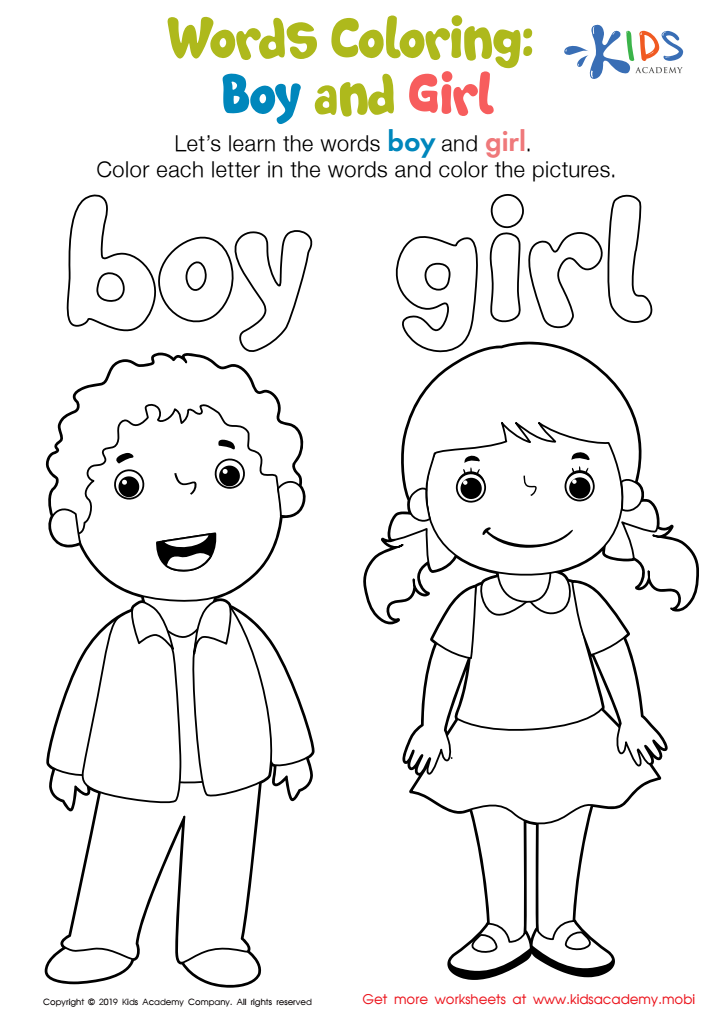
Boy and Girl Words Coloring Worksheet
Help your students build their sight word vocabulary! Early readers may not be able to sound out all words, so this worksheet teaches them to read two important sight words: boy and girl. They will color the letters and a picture of each, making it a fun and educational way to learn. Download the PDF now.
Download (PDF)
 Assign to My Students
Assign to My Students
Boy and Girl Words Coloring Worksheet
Worksheet
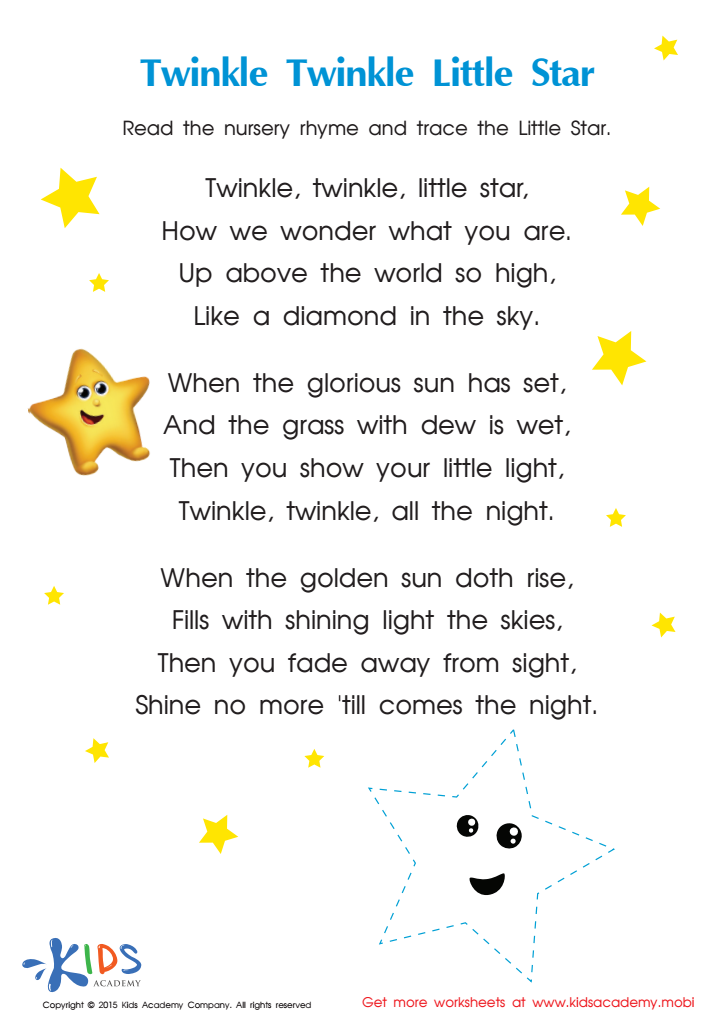
Nursery Rhymes: Twinkle Little Star Worksheet
Introduce your kindergartener to nursery rhymes using this printable worksheet. Sing Twinkle Little Star with your child and incorporate some simple actions. Even as a lullaby, it's a great way to teach letters and counting - have your child find and count all the letter 'S's in the song. For extra fun, try the Twinkle Little Star coloring page.
Nursery Rhymes: Twinkle Little Star Worksheet
Worksheet
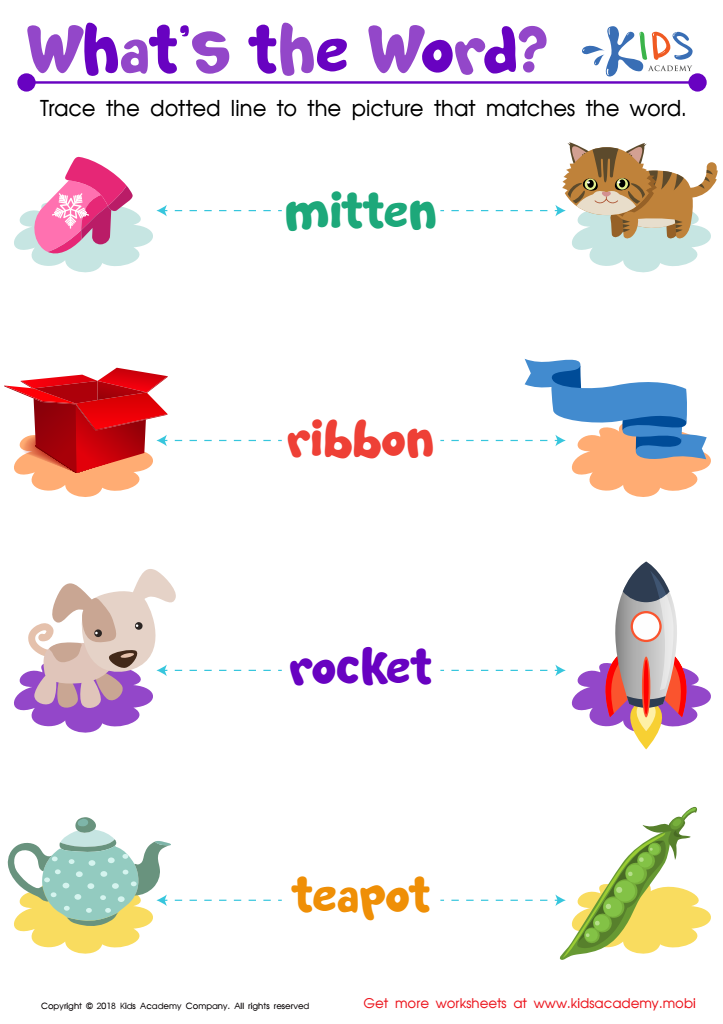
Reading: What's Word Worksheet
Teaching reading? This worksheet can help! Students read the word and draw a line to the picture for clues if needed. This will boost their vocabulary and fluency, increasing confidence and reading skills. Watch their progress as new words are added!
Reading: What's Word Worksheet
Worksheet
Join Kids Academy for Free
Who is primarily going to use this learning content?








Reading practice for children aged 4-8 is crucial because these early years are foundational for a child's literacy and overall cognitive development. At this stage, the brain is highly receptive to learning new skills, and reading fosters essential skills such as language development, critical thinking, and concentration. When children engage in regular reading, they not only expand their vocabulary and comprehension but also improve their ability to express themselves clearly.
Moreover, reading practice has a profound impact on academic success. Strong reading skills are predictors of future academic achievement, as they are integral to understanding and excelling in other subjects such as math, science, and social studies. Early positive experiences with reading can foster a lifelong love of books, encouraging continuous learning and curiosity.
For parents and teachers, supporting reading practice also strengthens bonds with children. Activities like reading aloud create opportunities for one-on-one interaction, helping children feel valued and heard. They can also address specific learning needs, personalize the child's education, and identify any learning difficulties early on. Ultimately, investing time in reading practice equips children with essential tools for learning, enjoying stories, and navigating the world effectively, making it a fundamental aspect of early education.








