Rhyme recognition Reading Worksheets for Ages 4-8
5 filtered results
-
From - To
Unlock the joy of reading with our Rhyme Recognition Reading Worksheets designed for children ages 4-8! These engaging worksheets help young learners develop critical phonemic awareness by identifying and matching rhyming words. Featuring colorful illustrations and fun activities, children will love practicing their reading skills while enhancing their ability to recognize sound patterns. Perfect for both classroom and home use, our worksheets cater to diverse learning styles, making literacy enjoyable. Boost your child's confidence and foundational skills in reading with our easy-to-use resources. Explore our Rhyme Recognition Worksheets today and nurture a love for language learning in your little ones!
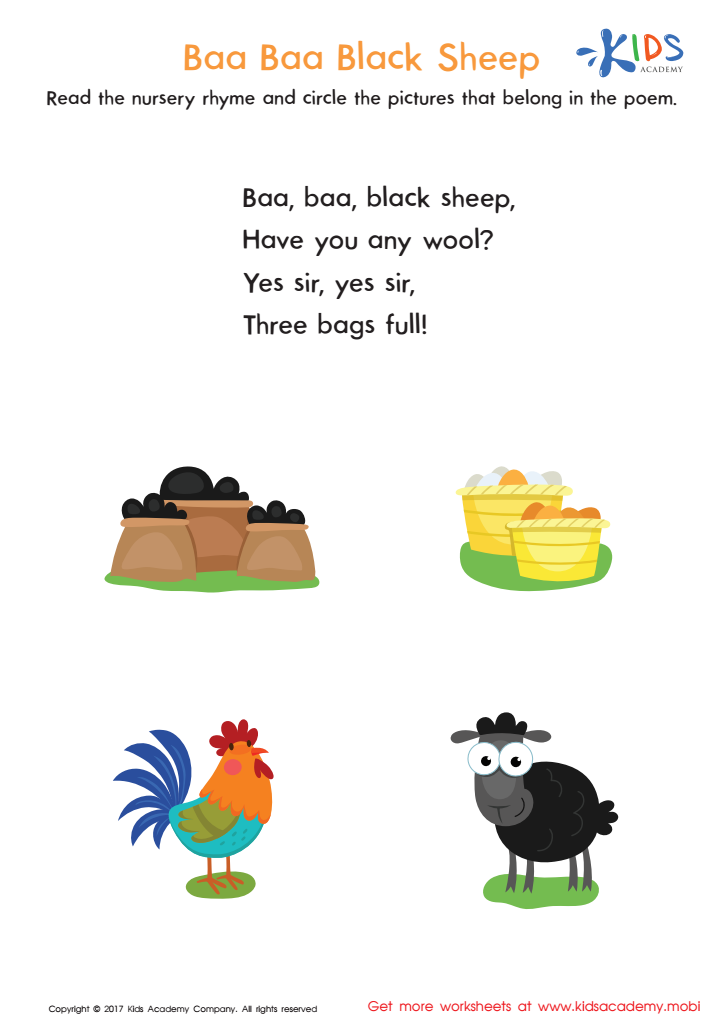
Baa Baa Black Sheep Printable
 Assign to My Students
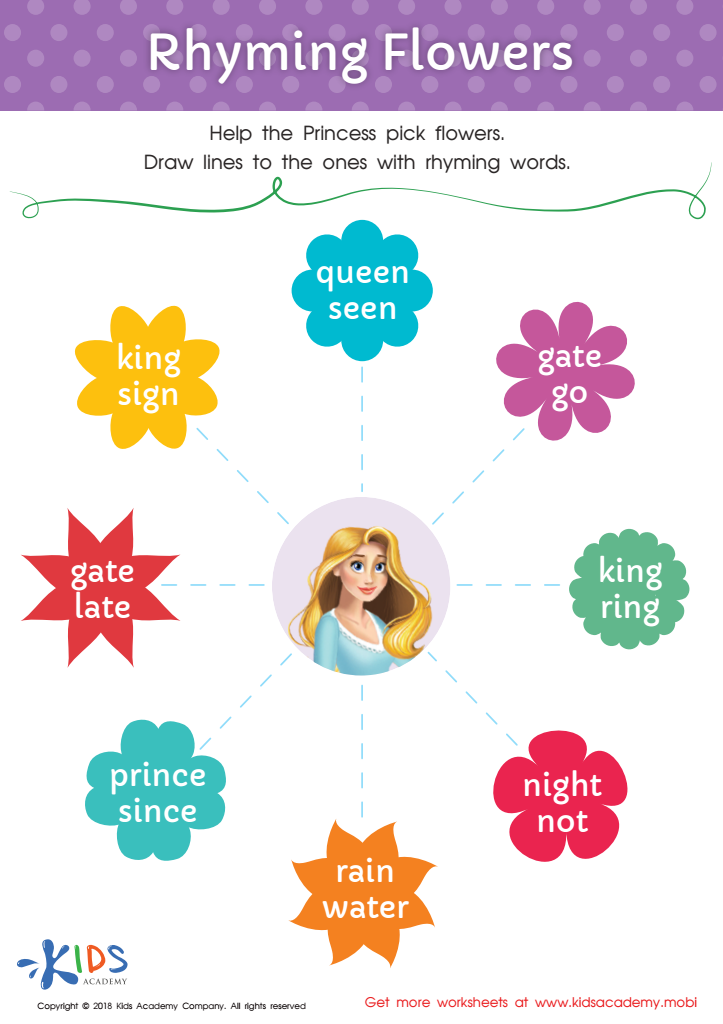
Rhyming Flowers Worksheet
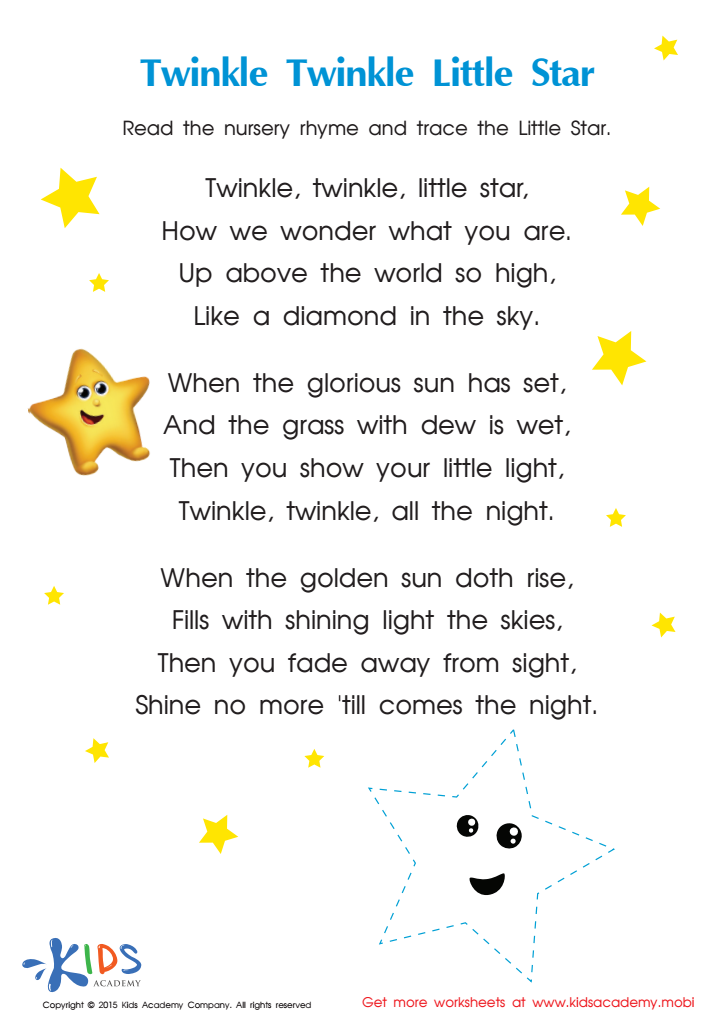
Nursery Rhymes: Twinkle Little Star Worksheet
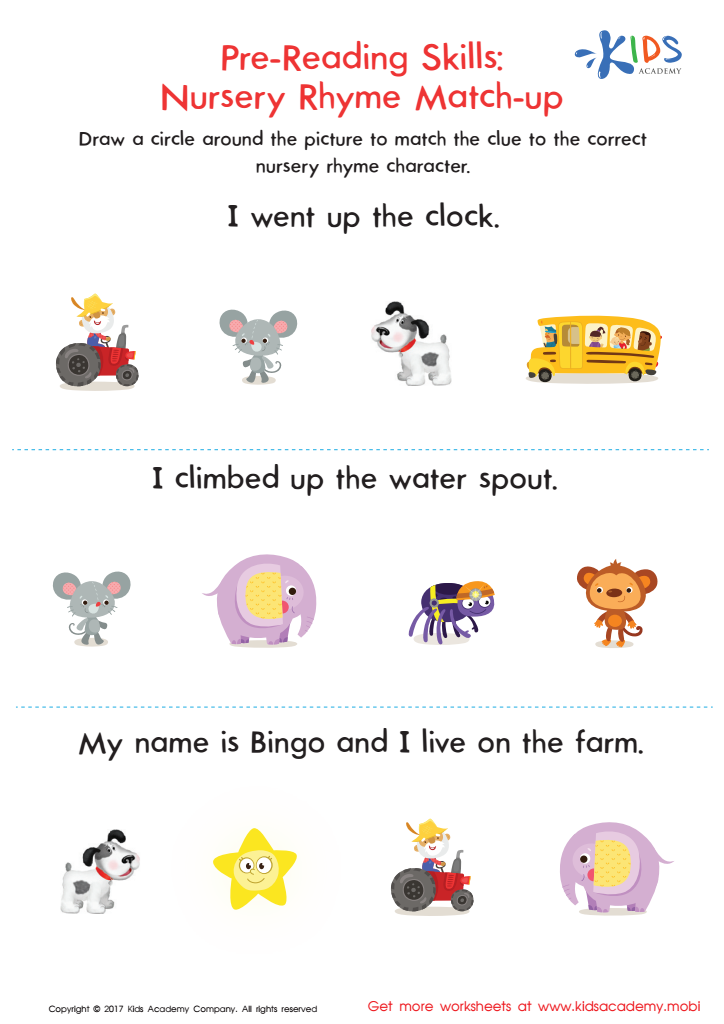
Nursery Rhyme Match–Up Worksheet
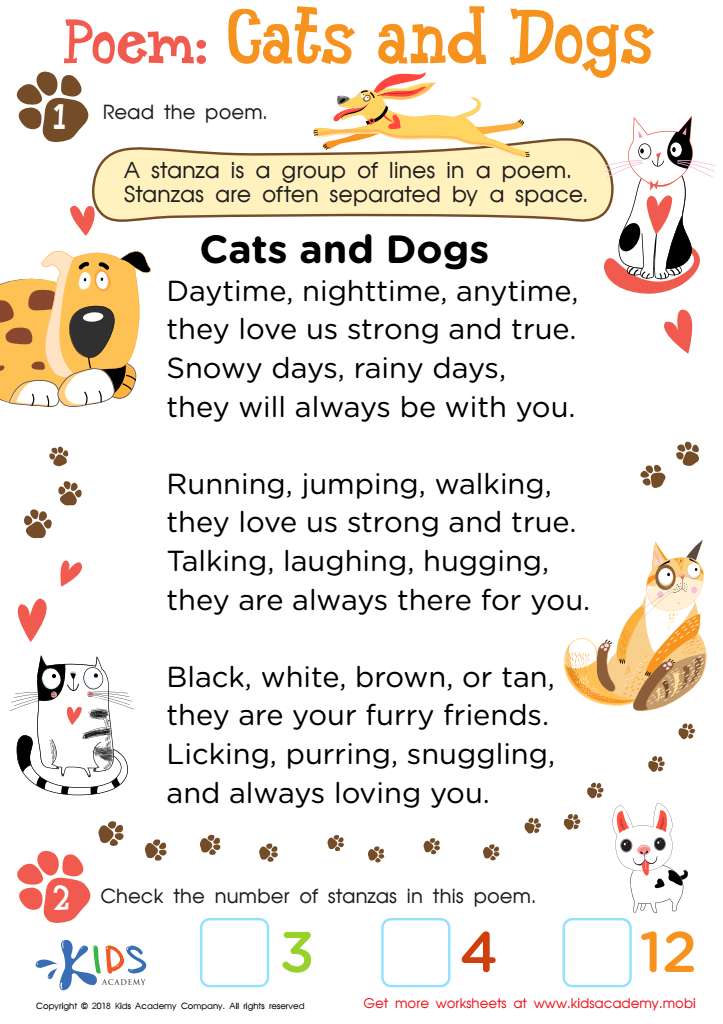
Poem: Cats and Dogs Worksheet






Rhyme recognition is a crucial skill in early literacy development for children aged 4-8, and both parents and teachers should prioritize it for several reasons. Firstly, recognizing rhymes enhances phonemic awareness, which is the understanding of how sounds function in words. This skill is a foundational component of reading, as it helps children decode and blend sounds, paving the way for successful word recognition and reading fluency.
Furthermore, engaging with rhymes promotes language development, expanding vocabulary and improving auditory discrimination. Children exposed to rhythmic patterns and sound repetitions develop a joyful attitude towards language, fostering a love for reading that can last a lifetime. Rhyme recognition also enhances memory skills; catchy rhymes and songs help children retain information more effectively.
In addition, the use of rhymes in storytelling and poetry helps develop imagination and creativity. It stimulates cognitive growth by encouraging children to think critically about sounds and patterns.
By incorporating rhyme recognition into reading activities, both parents and teachers create an enriched literacy environment, allowing children to thrive both academically and socially. In essence, prioritizing rhyme recognition is investing in the overall linguistic and cognitive development of young learners.








