Detail identification Reading Comprehension Worksheets for Ages 4-8
4 filtered results
-
From - To
Unlock your child's reading potential with our Detail Identification Reading Comprehension Worksheets, specially designed for ages 4-8! These engaging, printable worksheets focus on enhancing critical skills such as recognizing details, understanding context, and improving vocabulary. With colorful illustrations and age-appropriate texts, children will enjoy captivating stories while cultivating their comprehension abilities. Each worksheet offers varied activities, including multiple-choice questions and fill-in-the-blanks, encouraging tailored learning experiences. Perfect for at-home learning or in-class activities, our resources support young readers in building the foundational skills necessary for academic success. Start your child's reading journey today with fun and educational detail identification practices!
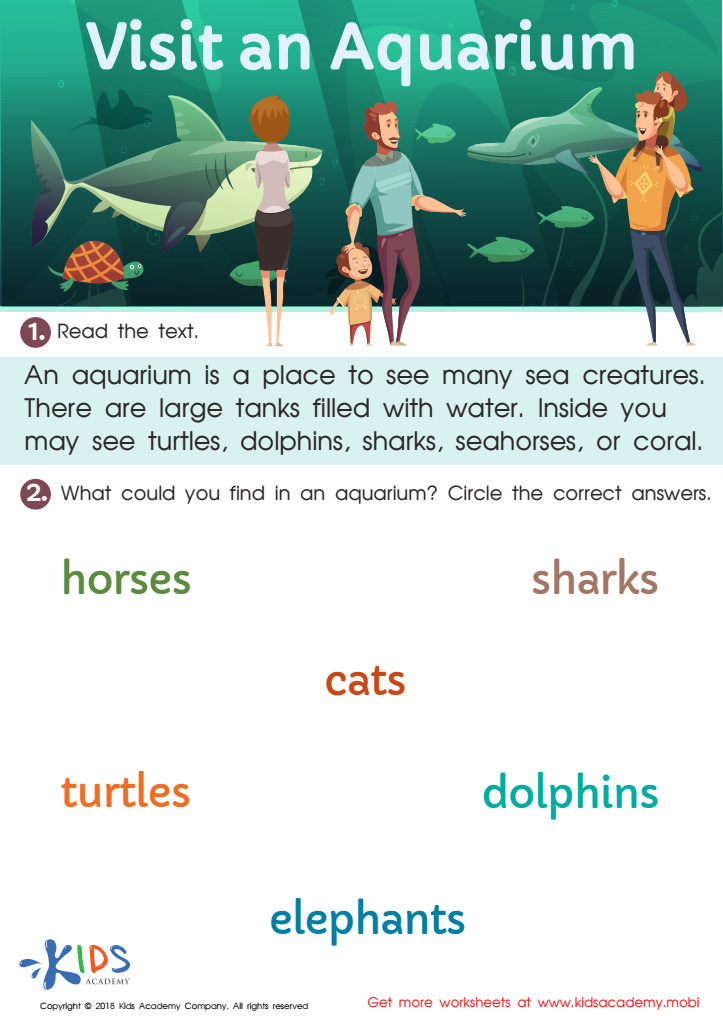
Visit an Aquarium Worksheet
 Assign to My Students
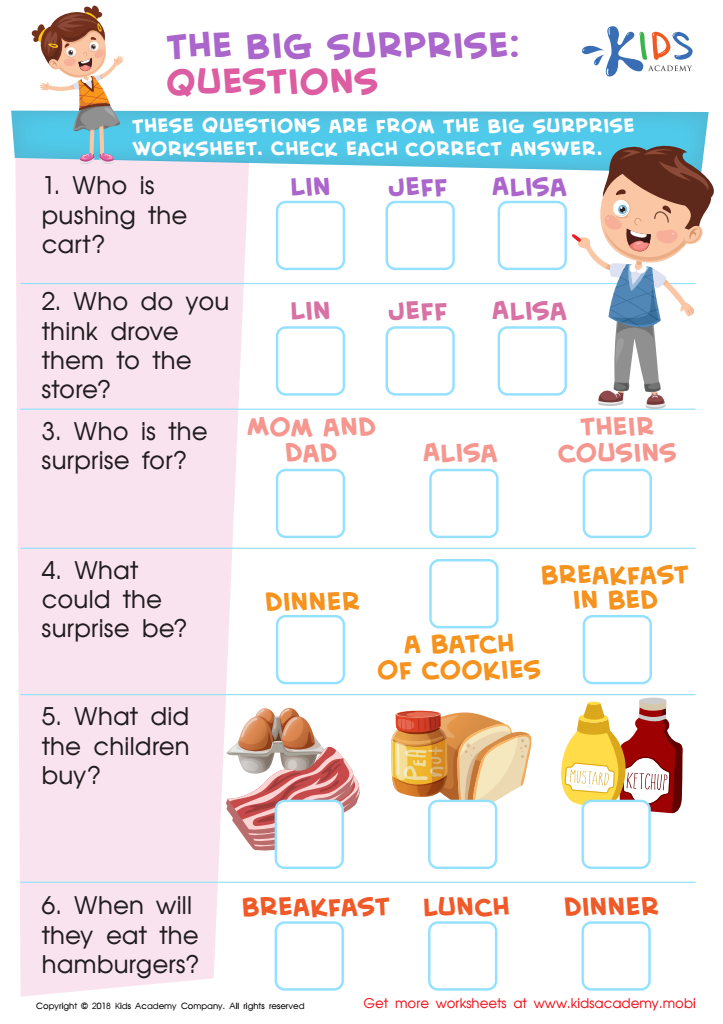
The Big Surprise: Questions Worksheet
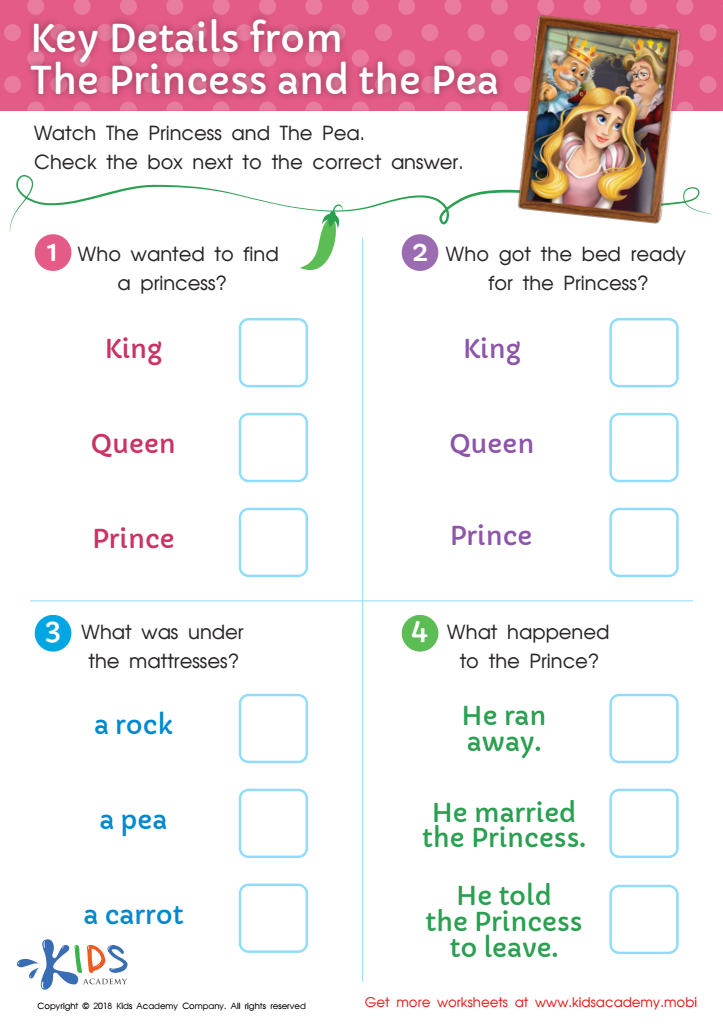
Key Details from the Princess and the Pea Worksheet
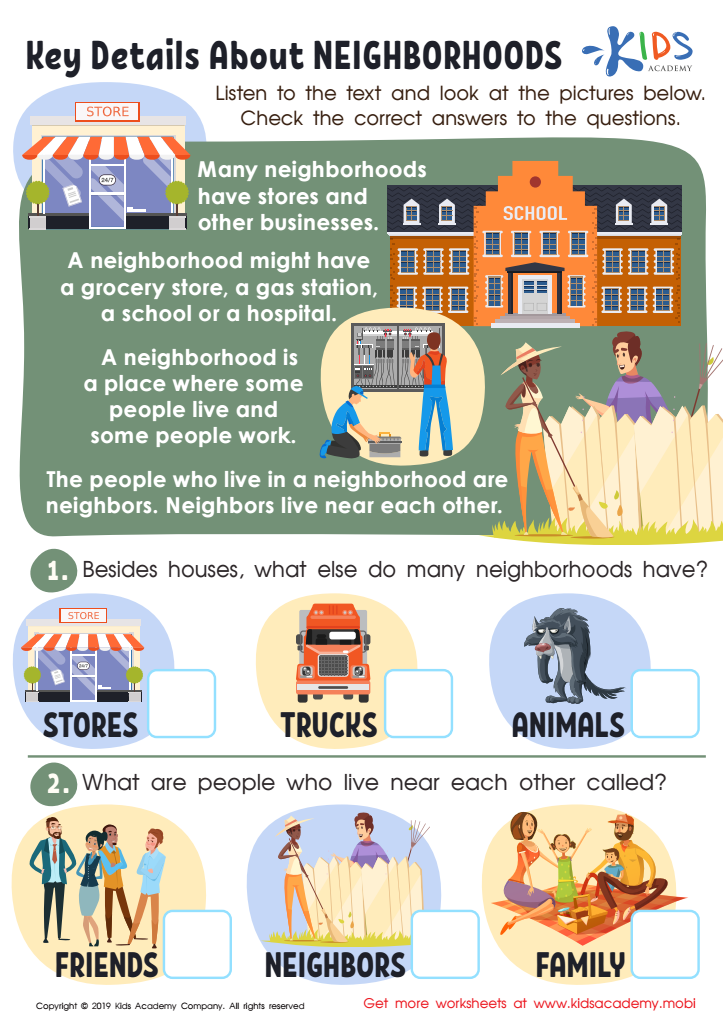
Key Details Neighborhoods Worksheet








Detail identification in reading comprehension is a crucial skill for children aged 4 to 8, as it plays a fundamental role in their overall literacy development. At this age, children are beginning to understand stories and information at a deeper level. By focusing on detail identification, parents and teachers can help children improve their ability to recall facts, characters, and specific events within a text. This skill enhances critical thinking, allowing children to make connections between different pieces of information and develop a clearer understanding of the narrative structure.
Moreover, detail identification promotes vocabulary growth and improves sentence construction skills, as children learn to identify and articulate important components of a story. This crucial step in literacy lays the groundwork for more advanced comprehension skills later on, making it essential for academic success.
Additionally, fostering a love for reading through engaging texts that emphasize detail identification makes reading a more interactive and enjoyable experience. By encouraging discussions and questions about details in stories, parents and teachers can enhance a child’s analytical skills and boost their confidence in expressing ideas.
In summary, investing in detail identification in reading comprehension supports foundational literacy skills that are essential for lifelong learning and academic achievement.








