Moral understanding Reading Comprehension Worksheets for Ages 4-8
5 filtered results
-
From - To
Enhance your child's moral understanding with our engaging Reading Comprehension Worksheets designed specifically for ages 4-8. These thoughtfully crafted worksheets provide an exciting way for young learners to explore essential moral concepts through entertaining stories and activities. Each worksheet fosters critical thinking, empathy, and ethical reasoning by encouraging children to reflect on characters' choices and values. Ideal for classrooms or at-home learning, our resources promote language skills while nurturing a deep sense of right and wrong. Start your child's journey toward becoming a compassionate, educated individual with our user-friendly moral understanding reading comprehension worksheets today!
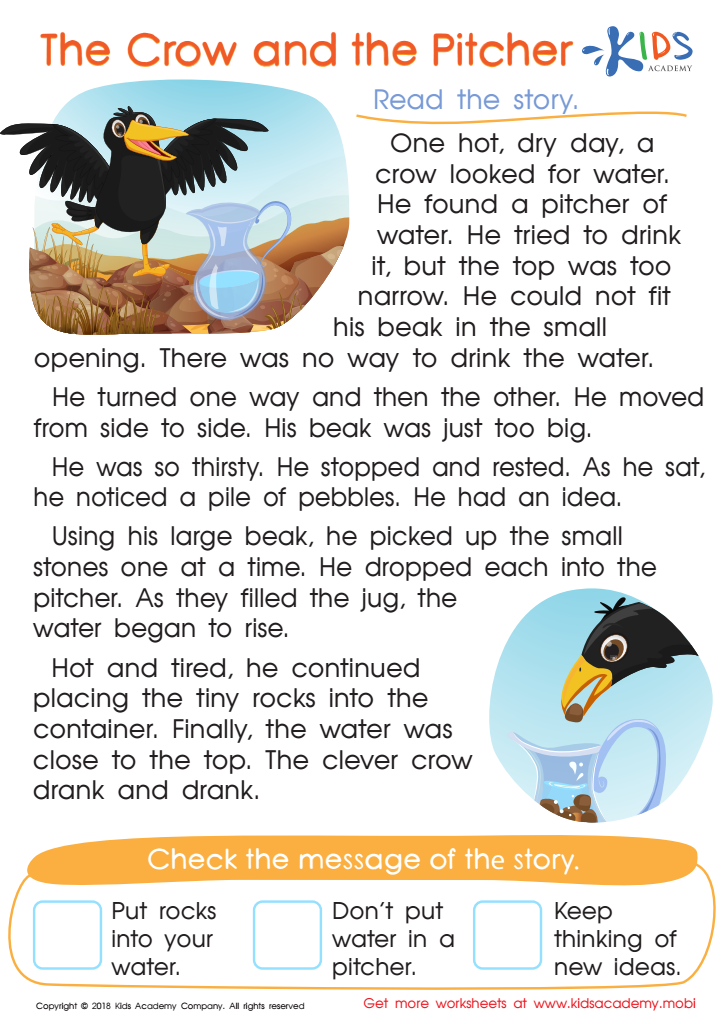
The Crow and the Pitcher Worksheet
 Assign to My Students
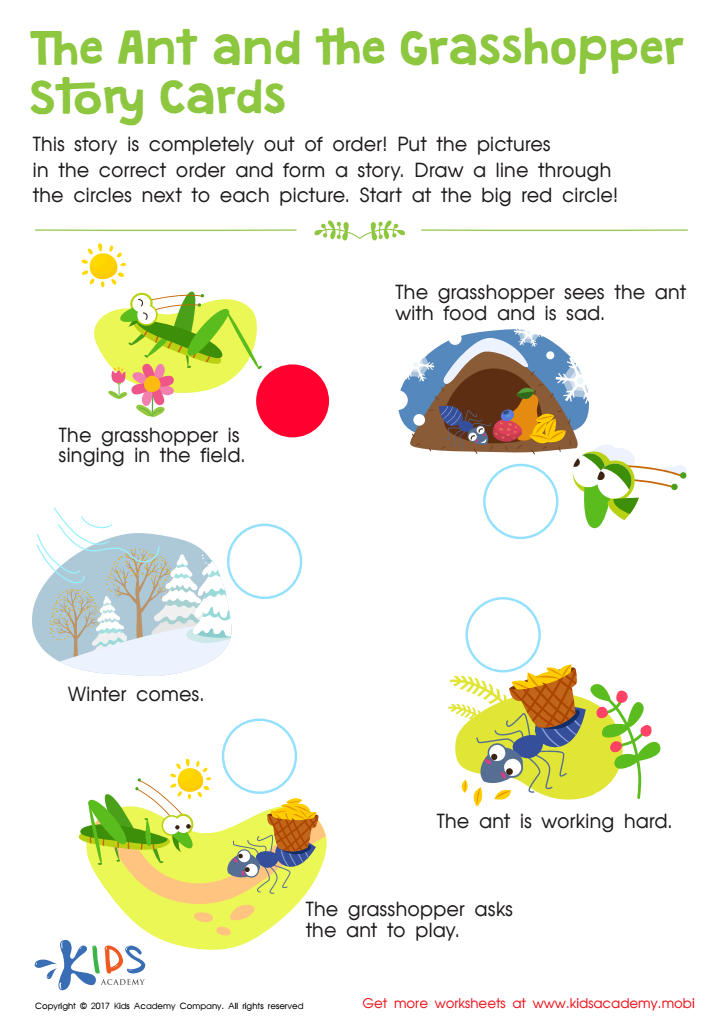
The Ant and The Grasshopper Worksheet
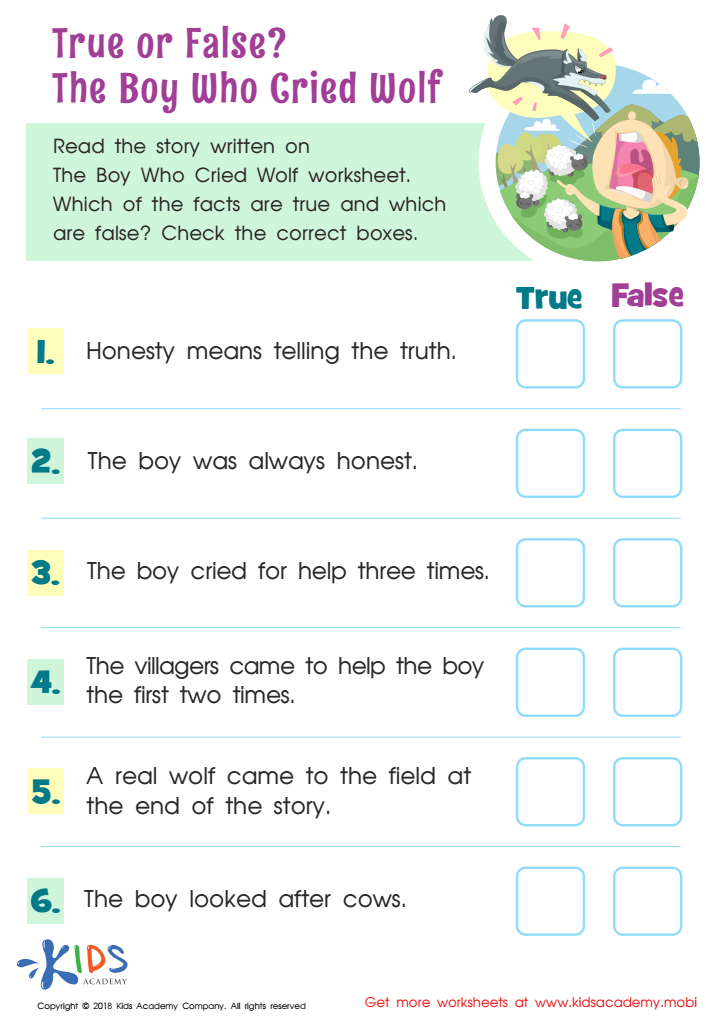
True or False? The Boy Who Cried Wolf Worksheet
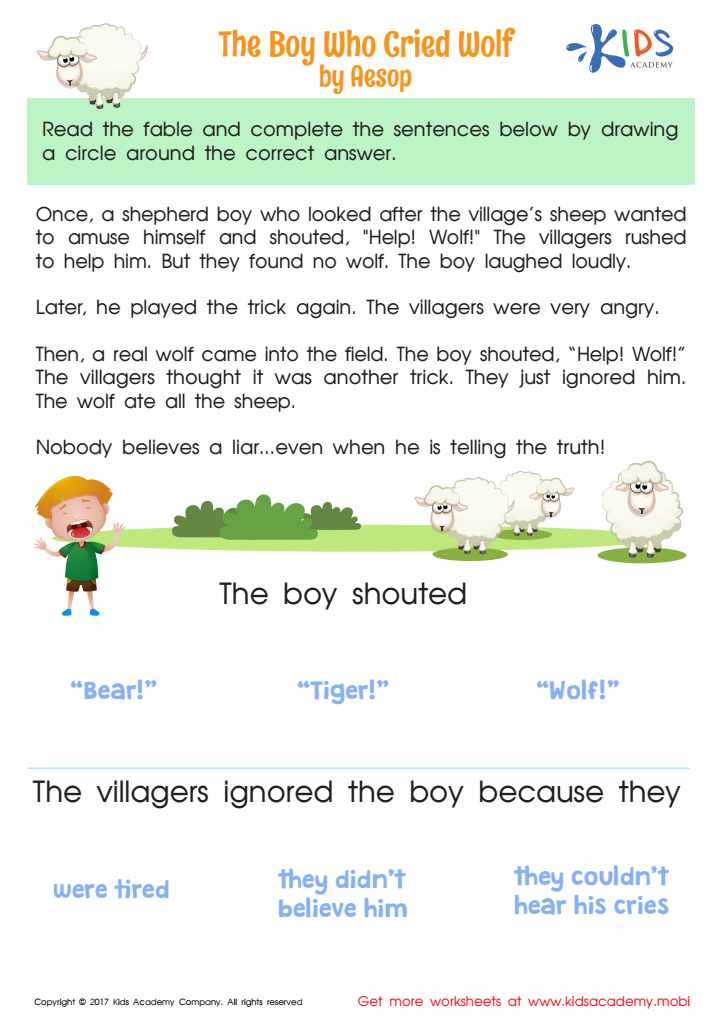
The Boy Who Cried Wolf Worksheet
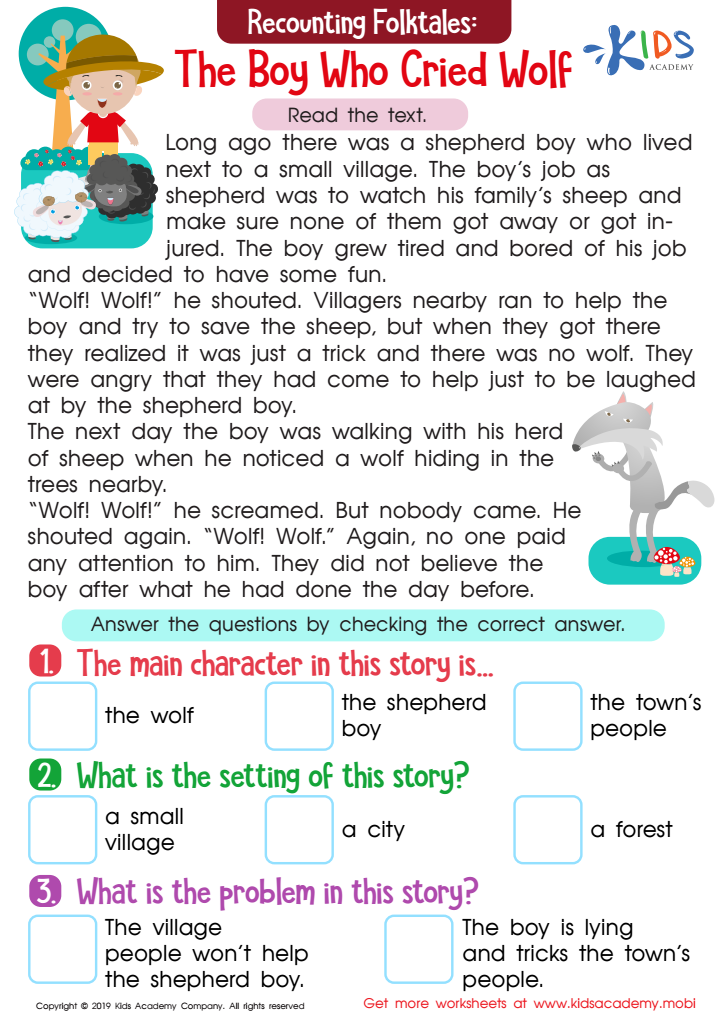
The Boy Who Cried Wolf Part 1 Worksheet








Moral understanding in reading comprehension is crucial for children aged 4-8 because it fosters empathy, ethical reasoning, and social skills. At this developmental stage, children are shaping their values and beliefs, making literature an essential tool for teaching lessons on kindness, honesty, and respect. When parents and teachers guide children through stories that highlight moral dilemmas and character choices, they provide opportunities for reflection and discussion about right and wrong.
Engaging with stories that emphasize moral themes helps children interpret characters' feelings and motives, enhancing their ability to connect with others. This emotional literacy is vital for building lasting relationships and resolving conflicts in healthy ways. Additionally, comprehension skills become intricately linked to moral understanding; when children decode a narrative's plot and its underlying messages, they not only improve their reading skills but also cultivate critical thinking.
By prioritizing moral understanding within reading comprehension, parents and teachers can nurture socially responsible and emotionally intelligent individuals. This foundation will equip children to navigate the complexities of life, encouraging them to be thoughtful and compassionate members of society. Ultimately, fostering moral comprehension in early readers sets the stage for their personal and academic growth in the years to come.








