
Sequencing events Reading Comprehension Worksheets for Ages 4-8
3 filtered results
Difficulty Level
Grade
Age
-
From - To
Subject
Activity
Standards
Enhance your child's reading comprehension with our Sequencing Events Worksheets, designed specifically for ages 4-8. These engaging activities focus on the essential skill of putting events in order, helping young learners develop critical thinking and storytelling abilities. Each worksheet features vibrant illustrations and age-appropriate texts that capture children's interest, making learning fun and effective. As students work through the exercises, they'll improve their understanding of narrative structure and enhance their ability to summarize stories. Perfect for classroom use or home learning, these worksheets provide a valuable resource for parents and educators aiming to boost early literacy skills. Start your journey today!
Favorites
With answer key
Interactive
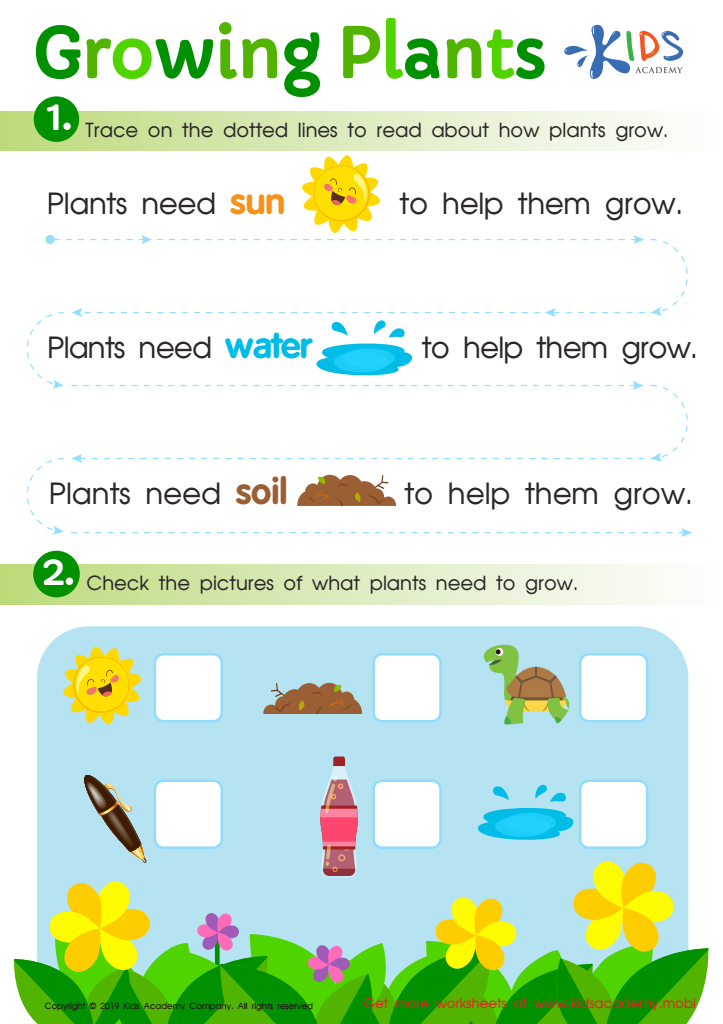
Growing Plants Worksheet
Young gardeners and scientists can learn about what helps plants grow with this fun PDF worksheet. Kids will trace lines to practice left-to-right patterning and use pictures from the rebus story to guide them. Learn that plants need sunshine, water and soil, then check off pictures of what each plant needs. It's an engaging and educational way to help their plants become big and strong.
 Assign to My Students
Growing Plants Worksheet
Worksheet
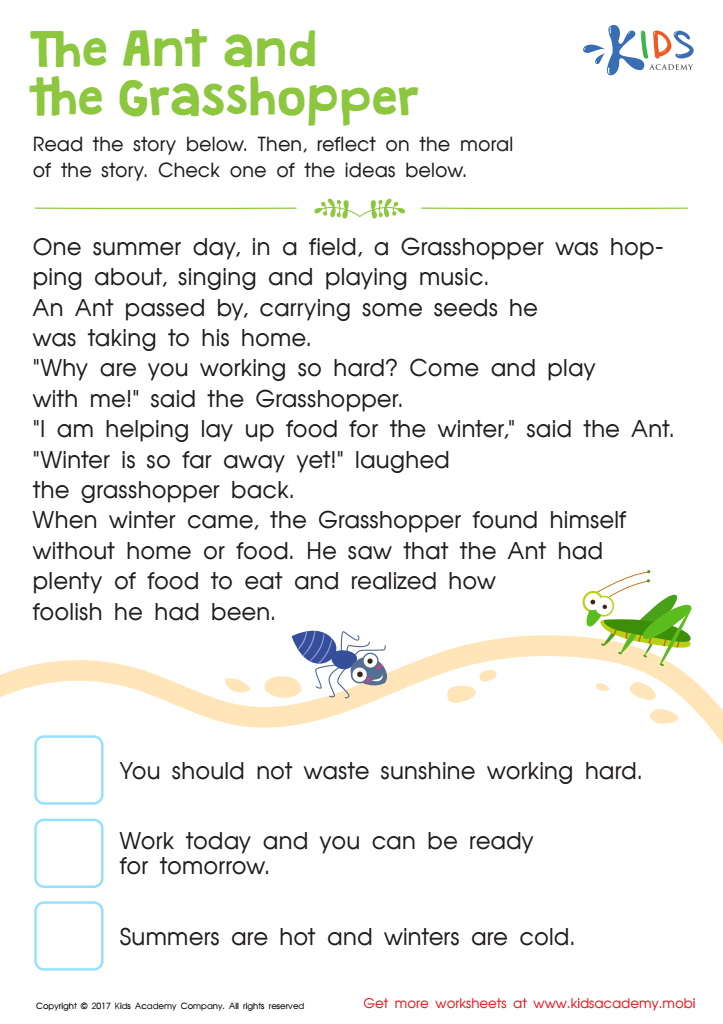
The Ant and The Grasshopper Printable
Aesop's fables have clear messages, which make them memorable and loved by children and adults. Use Kids Academy's ant and grasshopper worksheet to help your child reflect on stories and discover the life lesson.
The Ant and The Grasshopper Printable
Worksheet
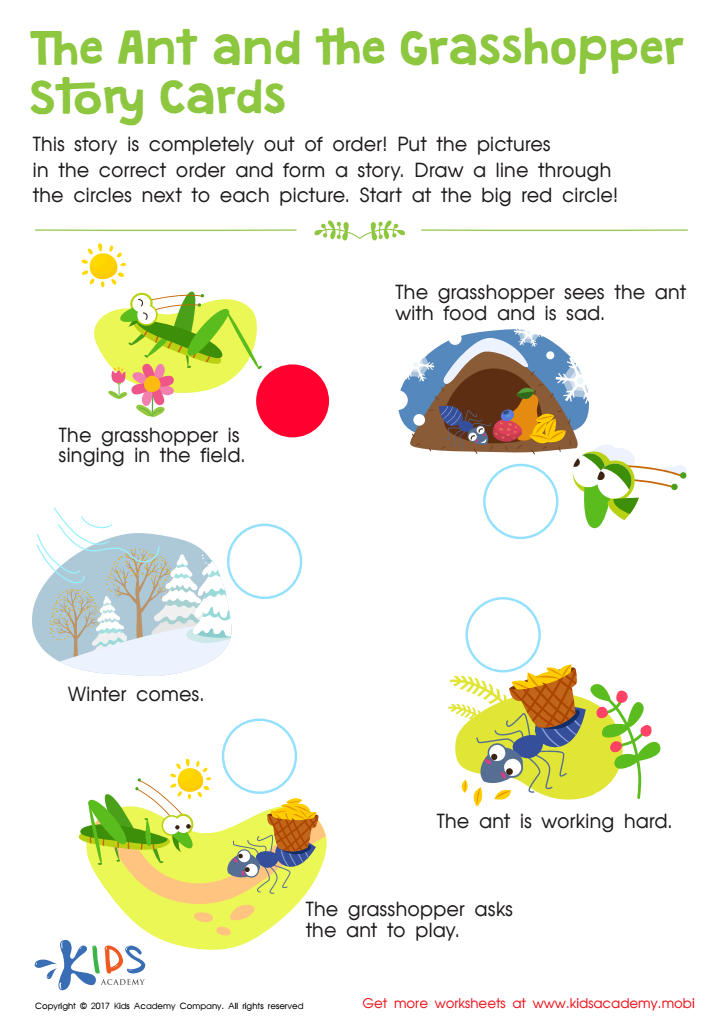
The Ant and The Grasshopper Worksheet
This worksheet uses the beloved childhood fable "The Ant and the Grasshopper" to teach your child about plot and order of events. Your child must read the events and put them in the right order. Once completed, review the story with your child to ensure its accuracy.
The Ant and The Grasshopper Worksheet
Worksheet
Join Kids Academy for Free
Who is primarily going to use this learning content?








Sequencing events in reading comprehension is crucial for children aged 4 to 8, as it lays the foundation for critical thinking, storytelling, and overall literacy skills. Understanding the sequence of events helps young readers recognize the progression of ideas and actions in a story, enhancing their ability to follow narratives and comprehend plots. When children grasp the order of events, they can better predict outcomes and make connections, fostering deeper engagement with the text.
Additionally, sequencing encourages children to develop organizational skills. It aids them in understanding how events relate to each other, setting the stage for complex reasoning in later reading experiences. Parents and teachers play an essential role in reinforcing these skills through discussions about stories, asking questions like, "What happened first?" or "What happened next?" Engaging children in activities that involve sorting pictures or retelling tales boosts their ability to recall and recount stories accurately.
Moreover, mastering sequencing helps improve writing skills since children learn to structure their thoughts coherently. By prioritizing sequencing events in reading, caregivers support enhanced literacy, critical thinking, and creativity, preparing children not just for academic success, but also for effective communication in everyday life.








