Analytical thinking Reading Fiction Worksheets for Ages 4-8
4 filtered results
-
From - To
Boost your child's analytical thinking skills with our engaging reading fiction worksheets designed specifically for ages 4-8! These worksheets provide young readers the opportunity to explore storyline elements, character motivations, and plot development through fun, interactive activities. As children read diverse fictional texts, they'll sharpen their ability to think critically, make inferences, and understand context. Each worksheet is crafted to enhance comprehension and encourage discussion, fostering a love for storytelling and deepening cognitive skills. Ideal for both classroom and at-home learning, our resources ensure a holistic approach to literacy development while making reading a delightful adventure. Explore our collection today!
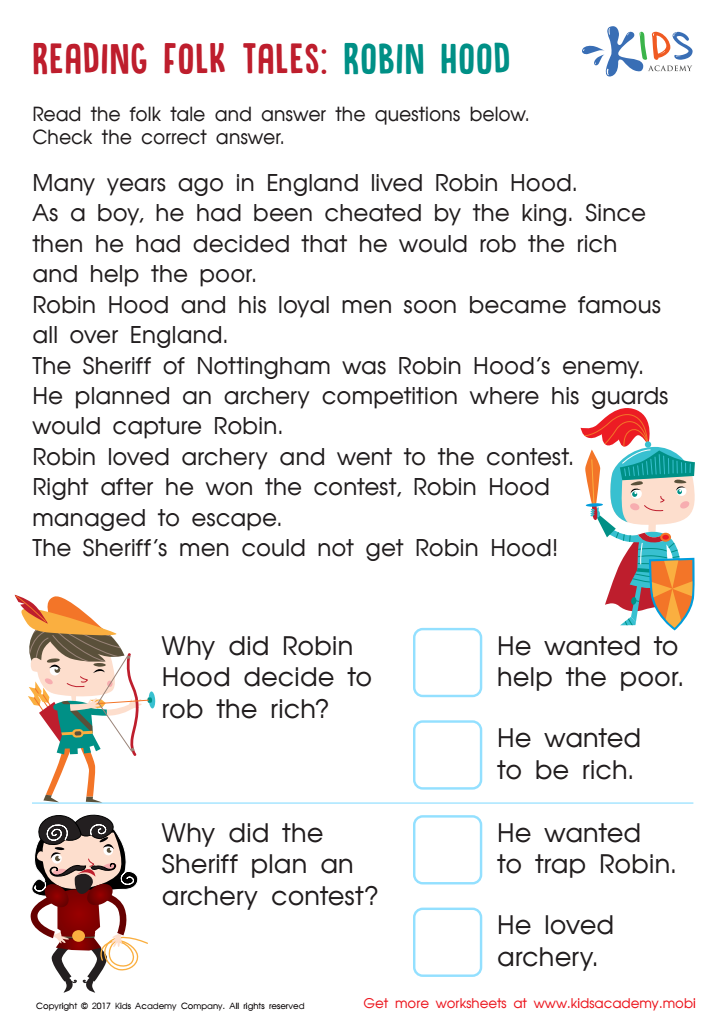
Robin Hood Folktale Worksheet
 Assign to My Students
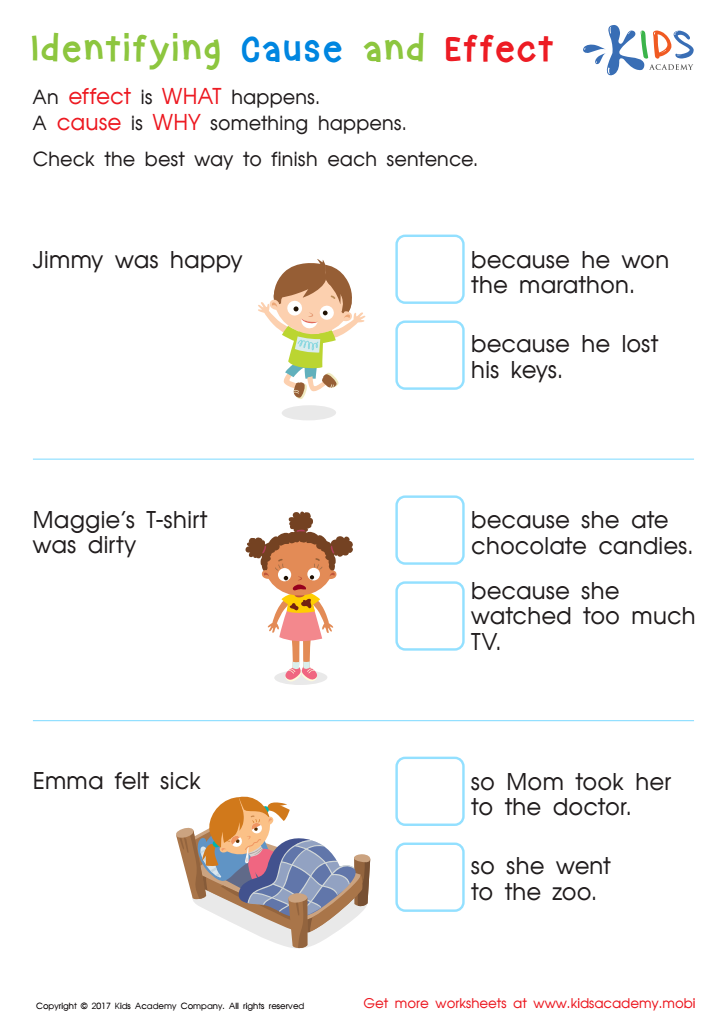
Indentifying Cause and Effect Worksheet
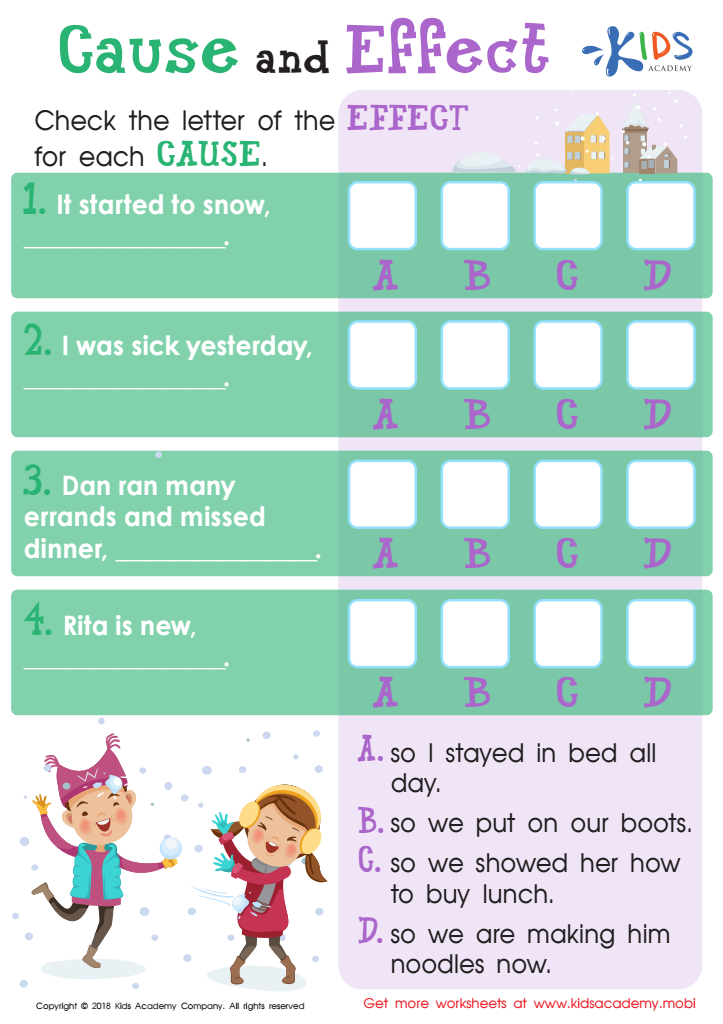
Cause and Effect Worksheet
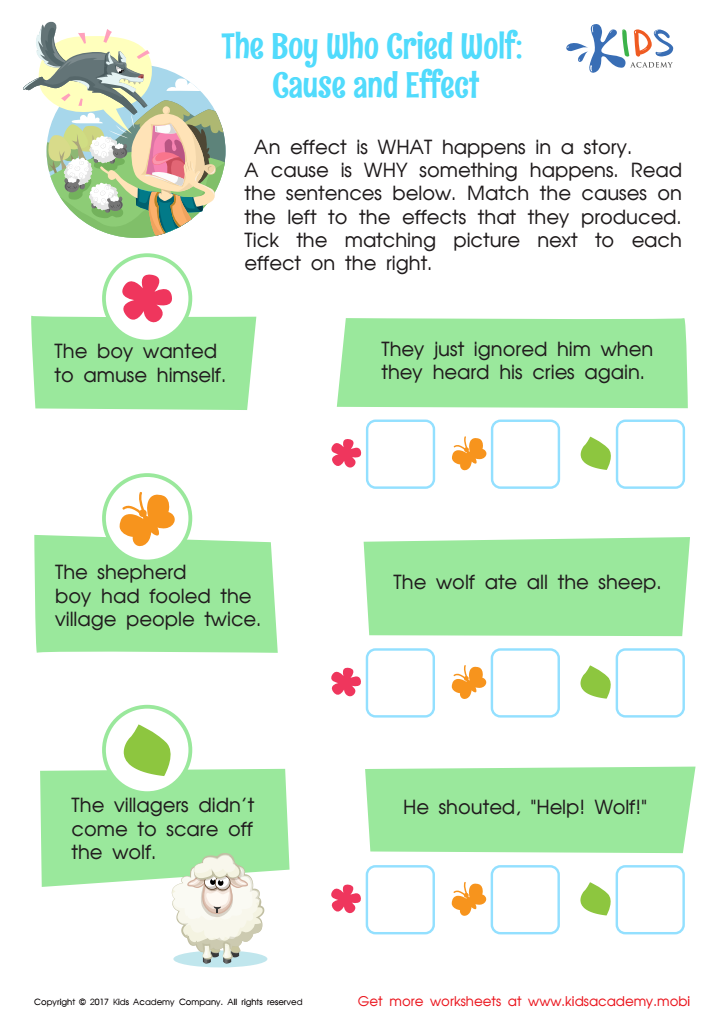
The Boy Who Cried Wolf: Cause and Effect Worksheet







.jpg)
Analytical thinking is a vital skill that develops through various activities, including reading fiction. For children aged 4-8, engaging with stories enhances their cognitive abilities in profound ways. When parents and teachers encourage analytical thinking during fictional reading, they help children learn to identify characters, settings, and plot structures, promoting comprehension and critical thinking.
Fiction allows young readers to explore different perspectives and cultures while enabling them to make predictions and draw connections between the story and their own lives. By discussing characters’ motivations and the consequences of their actions, children develop empathy, reasoning, and problem-solving abilities. Moreover, this practice helps improve their vocabulary and language skills as they encounter diverse expressions and narrative styles.
Fostering analytical thinking in reading not only enhances academic performance but also equips children with the skills they need for everyday decision-making. Through collaborative discussions about stories and questioning established norms within the narratives, children learn to think critically and communicate effectively. Ultimately, parents and teachers play a pivotal role in nurturing these skills, laying a strong foundation for lifelong learning, personal growth, and responsible citizenship. Thus, promoting analytical thinking through reading fiction is incredibly beneficial for the development of children aged 4-8.








